


Ukraine’s one-way attack drones decimate Russian supply ships

4 min read
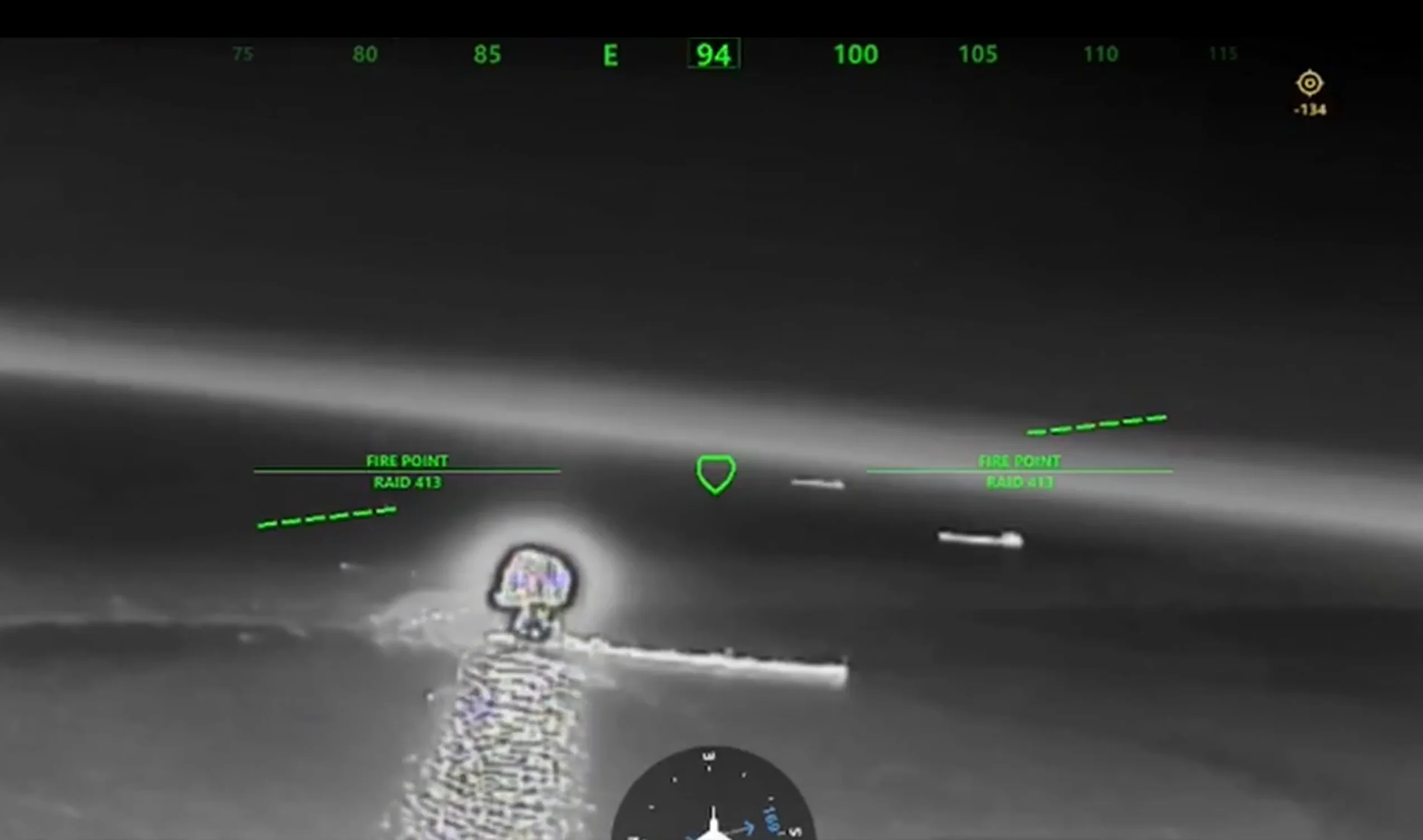
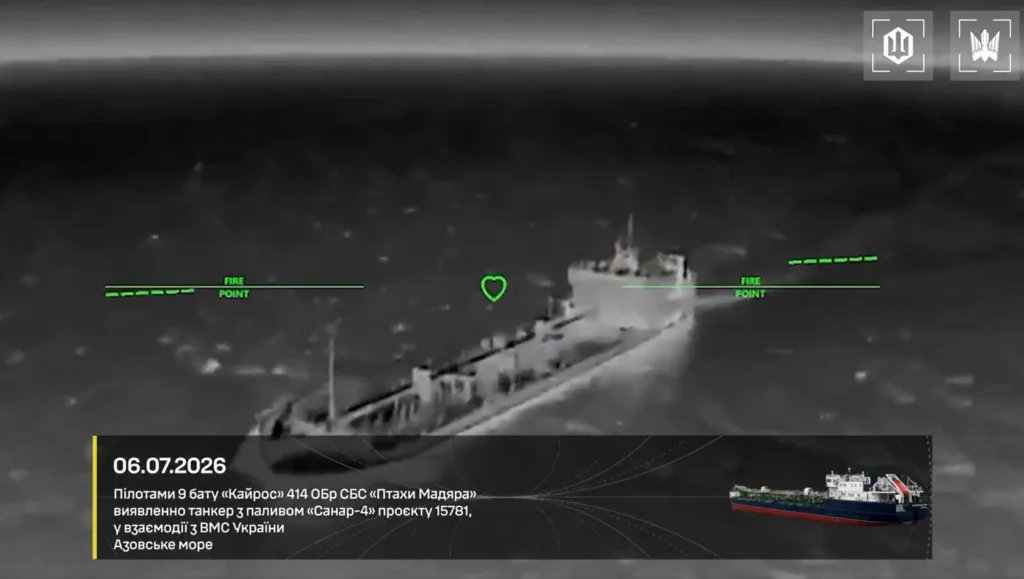
Yesterday, Ukraine announced it had struck fifteen more Russian vessels in the Sea of Azov. The development is part of Ukraine’s wider blockade of Crimea to make the peninsula unsustainable for Russia and transform it from being a logistical asset to a liability.
Ukraine’s one-way attack drones decimate Russian riverine tanker fleet
In June, AGN reported that Ukraine’s Firepoint FP-1/FP-2 (and other drones) had progressed to the point that not only were they hunting down Russian naval vessels in the Black Sea, but also in the Caspian Sea, the Baltic Sea, and riverine transit links within Russia.
Magyar: Shadow fleet massacre continues.
— 414 Magyar's Birds (@414magyarbirds) July 9, 2026
🔥 14 vessels hit overnight on July 9 in the Sea of Azov by the Birds of the Unmanned Systems Forces.
The worms’ shadow fleet keeps shrinking: 35 tankers, cargo ships, and auxiliary vessels hit within the past 96 hours.
(Full timeline… pic.twitter.com/PNwRY7cg0F
Over the last four or five days, it appears Ukraine has directed its efforts to crippling the 5,000-tonne riverine oil tankers and other support ships keeping Crimea supplied.
In the last 96 hours, Ukraine has claimed to have attacked 35 vessels (most riverine tankers), making up around 10% of Russia’s total fleet of 341 aging riverine tankers (per the Russian Media Paluba). Ukraine has released the imagery to prove most of these strikes, while some are visible in satellite imagery.
Daily Ukraine map thread for Thursday 9th July 2026
— Ukraine Control Map (@UAControlMap) July 9, 2026
On top of the 15 or so ships hit today (bringing the total above 30 for the last few days), substations across Crimea have been whacked heavily. The ones circled below are just some of those we've seen footage of since July 1st… pic.twitter.com/p6FPcFO8Hd
AGN has previously reported how Ukrainian drones are targeting supply trucks, bridges, power stations, air defence, and ferries to isolate the peninsula. As of mid-July, Crimea’s fuel and electricity are in a state of collapse while its air defence network continues to be picked apart.
Ukraine’s mid-strike and long-range strike campaign
Since early 2026, there has been a noticeable uptick in Ukraine’s so-called mid-strike campaign (at ranges of around 50–200 kilometres from the frontline).
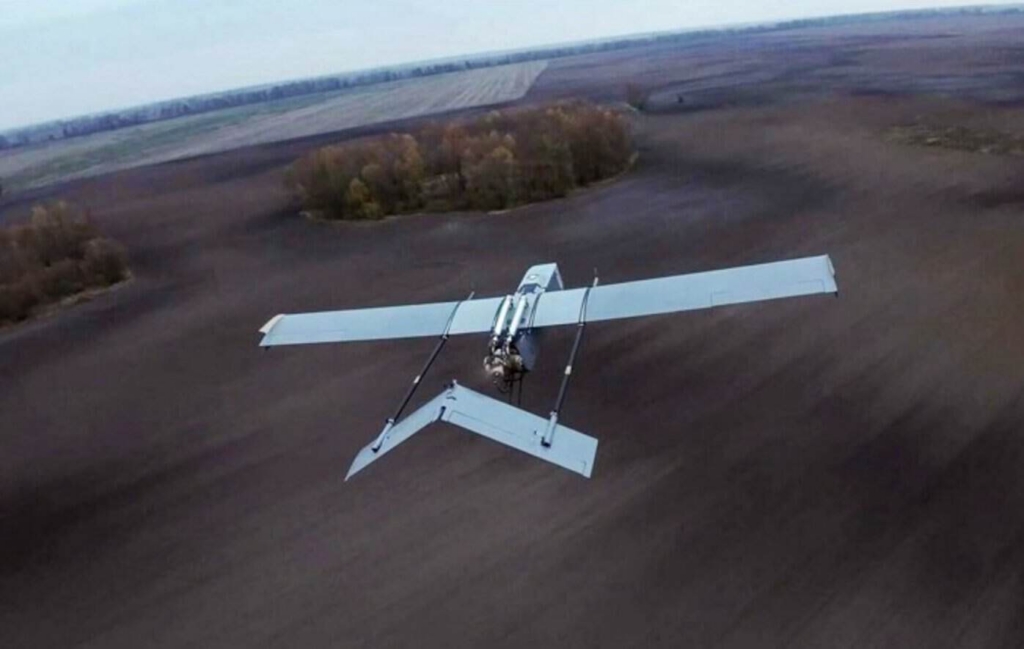
This started with drones like Ukraine’s FP-1/-2-type and An-196 Liutyi drones. These drones saw a noticeable upgrade in capabilities and began picking off Russia’s air defence equipment (Tor, Buk, Pantsir, S-300/-400) at an unsustainable rate for Russia.
It also saw Ukraine expand its list of targets, forcing Russia to spread its weakening air defence network to protect more assets, including doubling down on defending Moscow at the expense of the front and strategic assets.
As Ukrainian drone capabilities and numbers increased and Russian air defence frayed, Ukraine has been able to strike ever more targets.
/2. Photo 1 shows the drone used in the Omsk strike, while photos 2–4 show the standard FP-1 with its usual straight rectangular wing. pic.twitter.com/wa62GOn6Lr
— Special Kherson Cat 🐈🇺🇦 (@bayraktar_1love) July 7, 2026
Ukraine has doubled down on striking Russian oil refineries, including in Omsk (deep in Siberia), around 3,000 kilometres from the front.
Looking for solutions to counter these drones, Russia has turned to its rare remaining A-50U AEW&C aircraft and tasked its limited numbers of Su-57 Felons as drone hunters (at least in Omsk).
Get the latest aerospace defence news here on AGN.
Ukraine’s arsenal of one-way attack drones
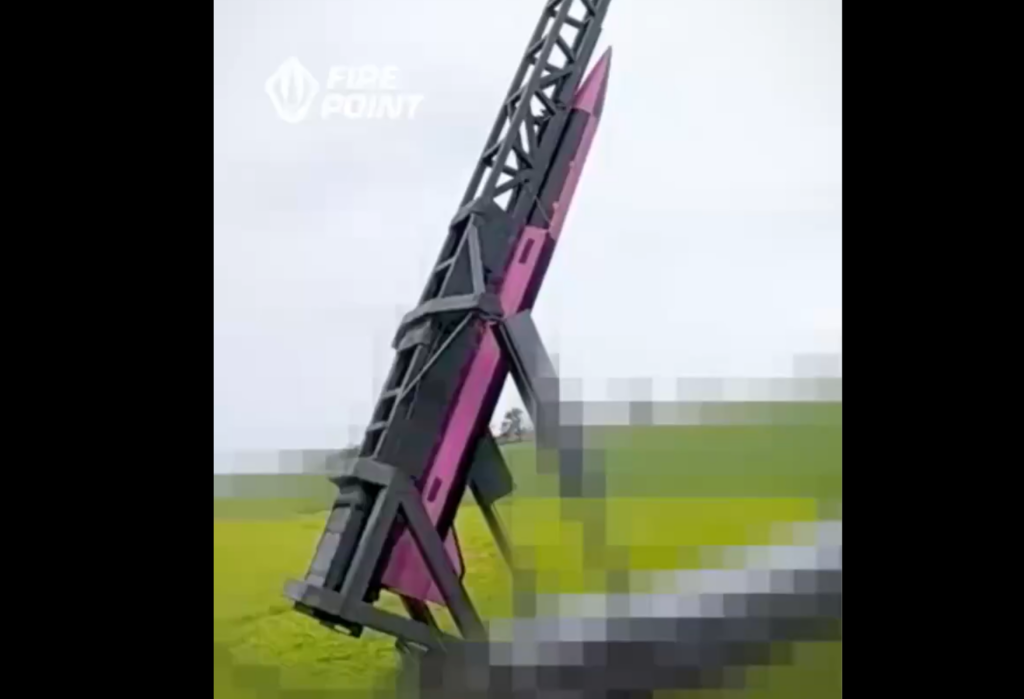
The backbone of Ukraine’s long-range one-way attack drones appears to be Fire Point FP-1 twin boom drones, larger Antonov/Ukroboronprom An-196 Liutyi drones, and possibly the UJ-26 Bober (Beaver) and Zozulia.
These have a range of at least around 1,000 kilometres, with some upgraded variants getting to 2,700 kilometres or more.
Notable medium-range one-way attack drones (300 to 1,000+ kilometres) include the FP-2, Shahed-like Sichen / Behemoth, the tandem-wing AQ-400 Scythe, and the light aircraft-style UJ-22 Airborne.
Crucially, the less-capable drones (around 300 km range) are incredibly cheap, around $400 to $6,000 per unit, allowing them to be economically used on Russian logistics trucks. For reference, a standard 155mm artillery shell costs around $800 to $3,000 per round.
Ukraine also has many Western-supplied drones that are highly capable, from the German Helsing HX-2 to the British Altius-700M.
It is not possible to list and detail all of Ukraine’s rapidly expanding arsenal of one-way attack drones and cruise missile-type drones. One of the best open-source summaries is provided by independent defence analyst H I Sutton.
While Russia has its own arsenal of one-way attack drones, mostly famously its Shahed/Geran-2 one-way attack drones, it is clear that as of mid-2026, it is falling behind Ukraine in quantity, quality, navigation, and targeting. It is unclear how long this disadvantage will last.
Featured Image: Ukraine military/414 Magyar’s Birds


