


Ukraine establishes mid-range drone superiority to isolate Crimea

6 min read
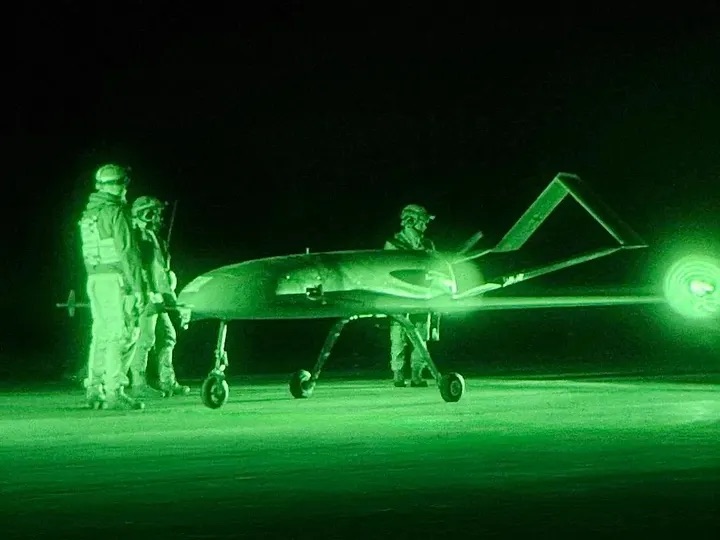
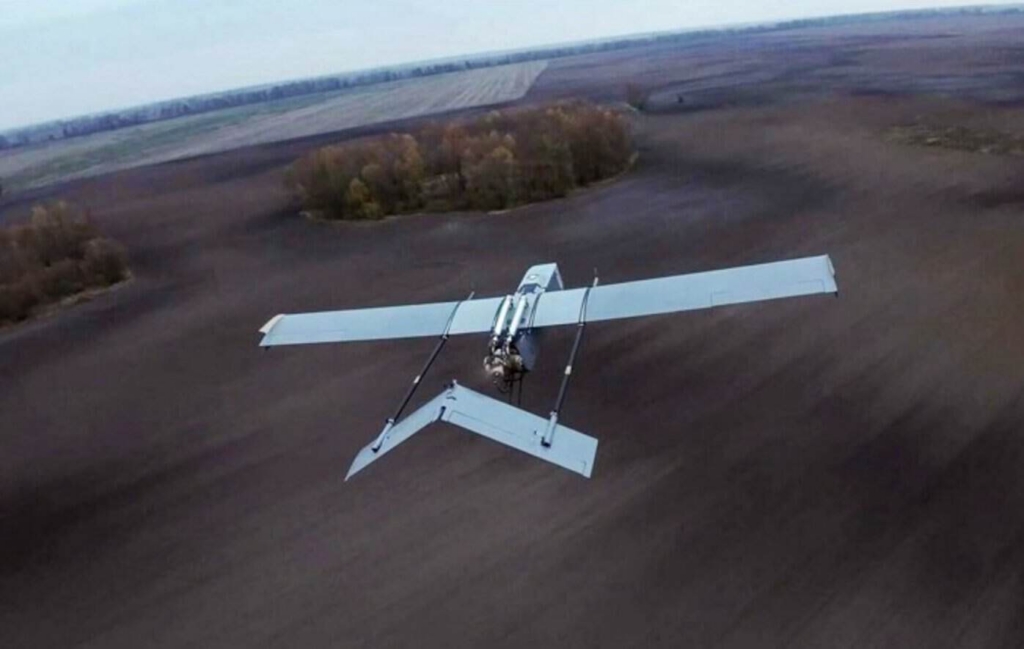
While Ukraine does not have fighter jet air superiority in the conventional sense over the southern front and Crimea, 2026 has seen it establish a form of mid-range drone superiority. These drones include FP-1/2, Morok, Behemoth, and AN-196 Lyuty drones, as well as the Bars cruise missile.
Ukraine is now using its advantage to isolate Crimea and make the peninsula untenable for Russia. Russia increasingly faces the dilemma of prioritizing the needs of the civilian population on the peninsula or those of its armed forces at the front.
Ukraine’s drone strikes on ferries supporting Crimea
A couple of weeks ago, AGN reported how a leap in one-way attack drone capabilities was enabling Ukraine to strike significant amounts of Russia’s fleets in the Black Sea and even the Baltic and Caspian Seas.
Not one, but three ferries used to transport heavy trucks between Port Kavkaz and Kerch have been knocked out.
— Special Kherson Cat 🐈🇺🇦 (@bayraktar_1love) June 21, 2026
The vessels were a critical part of Crimea’s supply network, as heavy trucks are banned from crossing the Crimean Bridge and must instead use the Kerch ferry crossing. https://t.co/mjj9IrW0m5 pic.twitter.com/WeJ8s3HuBh
Since then, Ukraine has hit at least one more merchant ship in the Black Sea, two tugs, and yesterday, three important rail ferries. An analysis of these ferries is provided by the OSINT account, Intelschizo.
Those rail ferries are an important logistical link to keeping Crimea supplied, a link that Ukraine is actively severing.
Following the attacks on the three ferries and more oil facilities, local Russian authorities announced a complete (temporary) ban on petrol sales to civilians in Crimea.
In the last couple of weeks, rationing cards had been issued for fuel purchases, and sometimes miles-long queues had formed at petrol stations.
While the Crimea Bridge linking the peninsula to Russia stands, it has been hit repeatedly and is only open to light traffic. Trucks are banned from using it.
The Crimean Bridge is protected by some of the densest air defence in the world. These have repeatedly successfully intercepted Ukraine’s airborne attacks on the bridge since the beginning of the war.
BREAKING: The SBU says two Pantsir air-defense systems deployed directly on the Crimean Bridge were among the targets hit during the latest strikes on Russian military infrastructure in occupied Crimea. https://t.co/EwQmbaLFFZ pic.twitter.com/4zigynq5LY
— Special Kherson Cat 🐈🇺🇦 (@bayraktar_1love) June 21, 2026
But yesterday’s drone attacks also saw Ukrainian drones apparently destroy two Pantsir short-range air defence systems and the valuable radars of two S-400 long-range systems.
Get the latest aerospace defence news here on AGN.
Severing Crimea’s land route
Ukraine has also been targeting the bridges leading into the peninsula from the overland route in occupied Ukraine.
Ukraine 🇺🇦 has now targeted around 500 russian 🇷🇺 trucks and vehicles during the last 48 days.
— Clément Molin (@clement_molin) June 18, 2026
Mid-range strikes continue to expand across occupied territories, on roads, bridges and rear base. This continues to slow down russian offensive.
🧵THREAD🧵1/13 ⬇️ pic.twitter.com/WAHLmNHhsr
Ukraine Control Map notes, “The strikes at the crossings north of Crimea have worked enough to slow down the passage of logistics, and now the logistics can be picked off in truck parks.”
OSINT account, Clement Molin posted that in three days, “90 new Russian trucks and vehicles hit by the Ukrainians, which means that the targeting rate is now around 30 a day.”
Russian pickup trucks with mounted guns are now escorting trucks, although these are largely ineffective.
A Russian fuel tanker dodges an attack by a strike drone at the last moment. pic.twitter.com/1sbn6Ysu69
— Special Kherson Cat 🐈🇺🇦 (@bayraktar_1love) June 20, 2026
Molin adds, “Contrary to what I have sometimes read, the mid-range strike campaign is not slowing down and is not suffering from the Russian adaptation thanks to an increase in the number of drones used.”
Meanwhile, Ukraine is also expanding its drone attacks on Russian trains in occupied southern Ukraine and in Crimea. Ukraine’s drones are squeezing Russia’s ability to move supplies by sea, road, and rail, while fuel shortages are making this worse.
Ferry services across the Kerch Strait will be suspended starting June 21, according to authorities in Russia’s Krasnodar region.
— Special Kherson Cat 🐈🇺🇦 (@bayraktar_1love) June 21, 2026
With heavy trucks already banned from using the Kerch Bridge, freight traffic will now have to rely on alternative land routes
📷POV: “alternative… https://t.co/mjj9IrW0m5 pic.twitter.com/e1aEMlHIMy
A massive airlift operation into the peninsula is out of the question by an order of magnitude. AGN has previously reported how collapsing Russian military airlift capacity is already forcing it to turn to civilian aircraft. This is also partly due to avoiding sanctions and red tape.
Seperately, before the war, the Port of Sevastopol in Crimea was Russia’s primary Black Sea fleet. What remains of the fleet abandoned Sevastopol some time ago and has become a fleet in being in Novorossisk. Even there, Ukrainian drone attacks are attriting it.
The bigger picture, using Ukrainian drones to shape front
The mid-range drone campaign is allowing Ukraine to wreak havoc on Russia’s logistics in a way that previously would have only been possible without traditional air superiority.
😎 Magyar: Crimea will put Moscow down, this is a psychological breaking point. All dictatorships collapse suddenly.
— MAKS 26 🇺🇦👀 (@Maks_NAFO_FELLA) June 21, 2026
Moscow and the bunker grandfather will hold on to Crimea to the last, as the main trophy of war, even in the "island" mode.
Ukrainians in the occupied… pic.twitter.com/YwwGBfyGty
By attacking Russian logistics far behind the lines, Ukraine is weakening Russia’s ability to adequately supply its troops on the frontline.
This can lead to those troops being less able to carry out offensive operations. If the disruptions become more severe, it may force sections of the front to completely go over to the defensive.
If Ukrainian drones can sustain heavy interdiction of Russian supplies, it can make sections of the front unsustainable. There are unconfirmed reports that Russian soldiers were forced to abandon the Kinburn Spit after supplies dried up.
👀🏃♂️ According to ATESH, the actions of the Ukrainian military to cut off supply routes forced the occupiers to hastily evacuate from the Kinburn Spit.
— MAKS 26 🇺🇦👀 (@Maks_NAFO_FELLA) June 8, 2026
Units of the 337th regiment are leaving their positions. The delivery of ammunition, fuel and food has stopped.
Due to… pic.twitter.com/TxW7ORnqR0
But isolating Crimea and transforming it into a shooting gallery serves another function.
Russia can acknowledge it can’t protect it, allow the local economy to collapse, and let it cease to be a holiday destination (important for Russians).
Or Russia can move ever more resources into the region to replace those destroyed (e.g., the air defenses on the bridge). This pulls resources away from other regions and from the front, allowing Ukraine to strike other now-undefended targets (e.g., training camps, air bases).
For now, serious analysts are not talking about Ukraine marching in and reclaiming Crimea anytime soon. But the speed at which Ukraine is transforming it into a shooting gallery and creating a logistical dilemma for Moscow is rapid.
Featured Image: 14th UAS Regiment


