NASA astronauts complete 100th US ISS spacewalk: Here’s how spacewalks work

7 min read
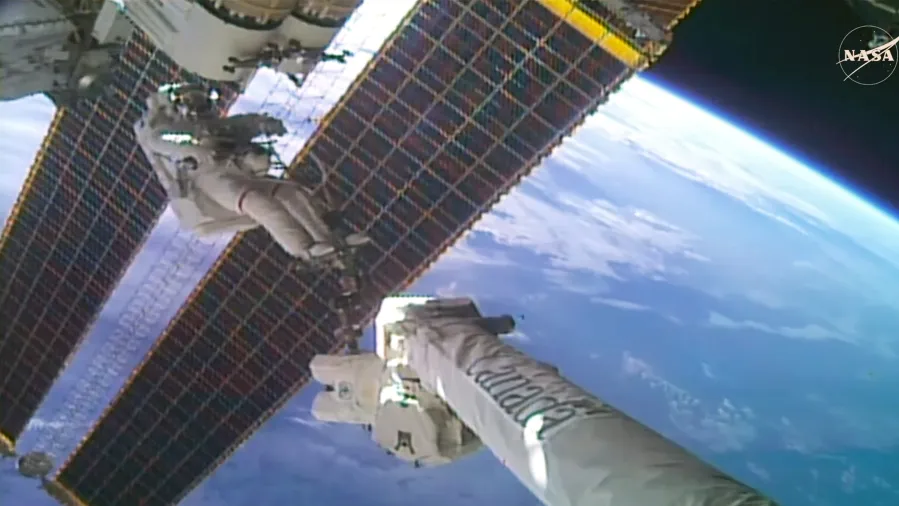
Two astronauts have completed a seven-hour spacewalk outside the International Space Station (ISS), installing and deploying a new solar array in a mission that marked the 100th US spacewalk from the orbiting laboratory.
NASA astronaut Anil Menon and Canadian Space Agency astronaut Joshua Kutryk spent seven hours and 11 minutes working outside the station on 29 October. They returned to the Quest airlock at 3:08 p.m. Eastern Time after successfully installing the seventh of eight planned roll-out solar arrays.
Although it was the 100th US spacewalk conducted from the ISS without a visiting space shuttle docked to it, the mission was the 285th spacewalk overall in support of the station. The larger figure includes 66 spacewalks from the Russian segment and 119 carried out by visiting space shuttle crews.
The new equipment will help provide electricity for the station’s experiments, life-support systems and other operations. NASA says the additional power will also support the ISS’s eventual safe and controlled return to Earth.
The spacewalk was Menon’s fourth but Kutryk’s first. It was also the first by a Canadian astronaut since April 2019, when David Saint-Jacques ventured outside the station with NASA astronaut Anne McClain.
A seven-hour job outside the space station
Menon and Kutryk began their spacewalk at 7:57 a.m. Eastern Time, leaving the station through its Quest airlock.
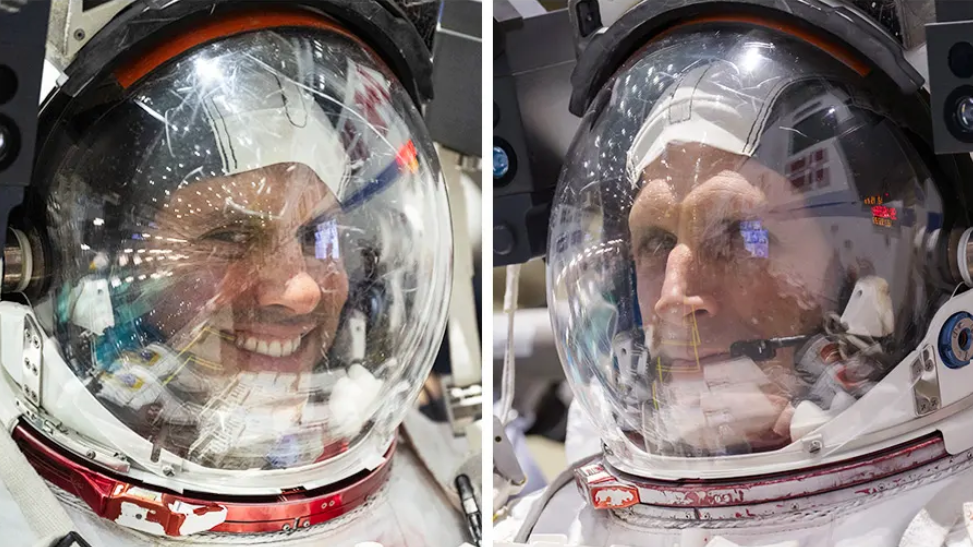
Menon wore a spacesuit marked with red stripes, while Kutryk wore an unmarked white suit, allowing mission controllers and television viewers to distinguish between them.
Their principal task was to install an International Space Station Roll-Out Solar Array, known as an IROSA, on the station’s 2A electrical power channel.
The equipment had been delivered earlier in October aboard a SpaceX Dragon cargo spacecraft. It was temporarily stored on a platform outside the ISS until the astronauts could install it.
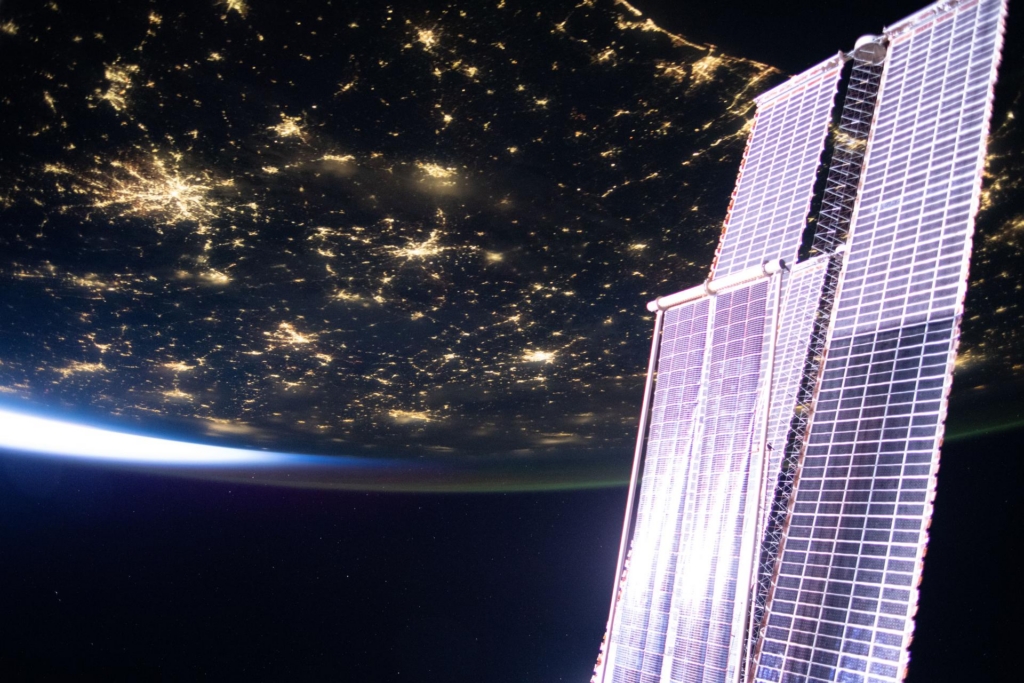
The solar array weighs approximately 340 kg and measures about three metres long in its packed configuration.
After releasing it from its temporary mounting, Menon attached himself to the end of Canadarm2, the station’s Canadian-built robotic arm. Carrying the folded solar array, he travelled on the arm towards the installation site on the station’s port-side structure.
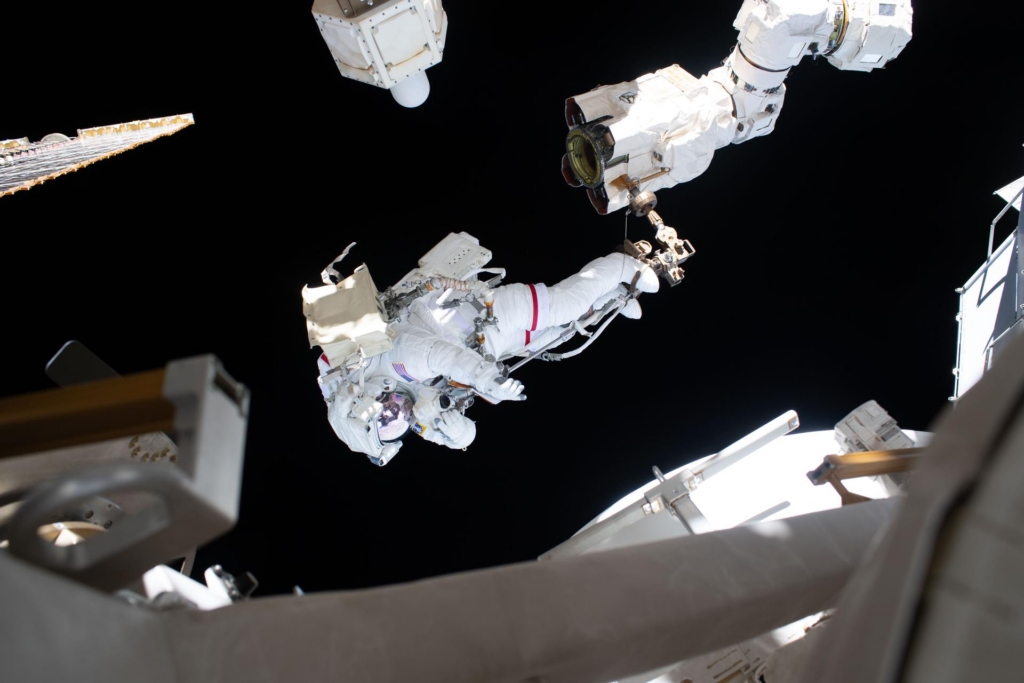
Kutryk made his way separately along the station’s framework, remaining secured by safety tethers.
Once together at the worksite, the astronauts mounted the equipment and connected it to the station’s electrical system.
Unlike conventional solar panels that require motors to unfold, the new array uses stored energy in flexible carbon-composite supports to unroll itself.
The panel extended to approximately 19 metres in length. It took about just over 11 minutes to deploy fully.
The astronauts also completed additional preparatory work for the next spacewalk, including tasks involving the mounting equipment for the eighth and final roll-out array.
Why the space station needs more electricity
The ISS has relied on large solar panels to generate electricity since its assembly began in orbit.
But the original arrays have exceeded their intended 15-year service life, and their power output has declined with age.
NASA has been adding smaller, more efficient roll-out arrays alongside the older panels rather than replacing the entire original system.
The new panels partly cover the existing arrays while generating additional electricity.
When all eight roll-out arrays are installed, NASA expects the station’s available power to increase by up to 30%, raising its generating capacity from approximately 160 kilowatts to 215 kilowatts.
The extra electricity will support scientific research, station equipment and essential operations during the remaining years of the ISS programme.
It will also help maintain the systems needed for the station’s planned controlled deorbit at the end of its operational life.
Menon and Kutryk are scheduled to conduct another spacewalk on 5 November to install the eighth and final roll-out array on the 3B electrical power channel.
That installation is expected to complete the station’s solar power upgrade programme.
How the astronauts prepared for the spacewalk
The work outside the ISS was the result of several days of preparation by the station’s Expedition 75 crew.
Earlier in the week, Menon and Kutryk rehearsed the movements needed to carry the solar array from its storage platform to the installation site.
Their colleagues, NASA astronauts Jessica Watkins and Luke Delaney, practised operating Canadarm2 and reviewed the camera positions and lighting conditions needed to monitor the work.
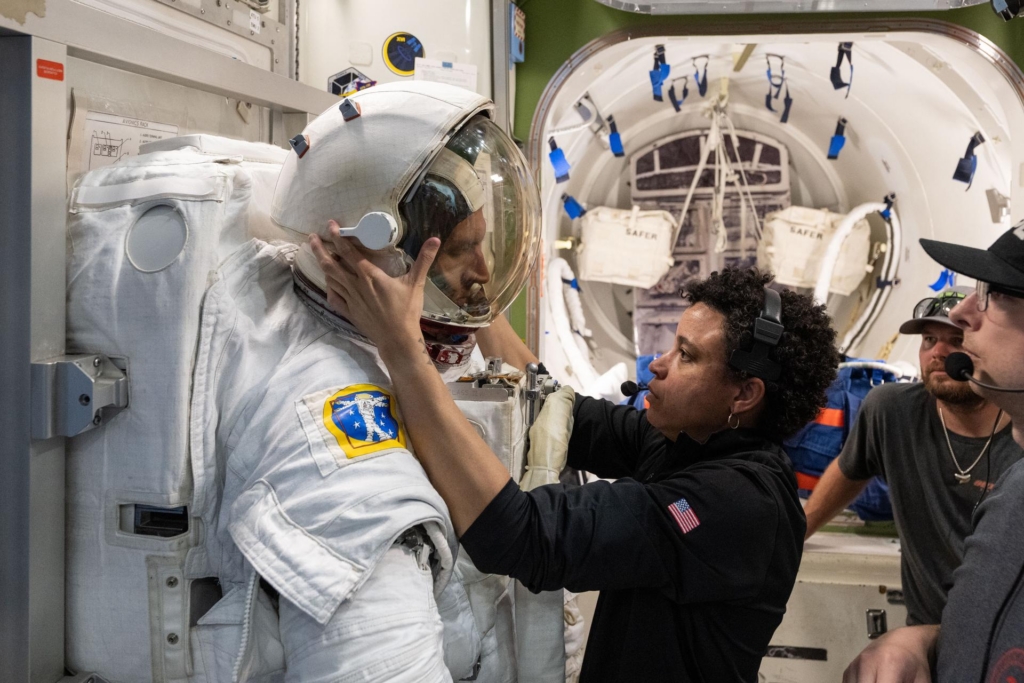
The two spacewalkers organised their tools inside the Quest airlock and prepared small checklists that could be attached to the cuffs of their spacesuits.
They also checked their suits’ oxygen, cooling, water and communications systems. Their emergency jetpacks were inspected to ensure that the batteries, fuel supplies and thrusters were working.
On Wednesday, the four astronauts held final discussions with specialists on Earth, reviewing the installation procedure and the robotic arm’s movements.
Watkins and Delaney remained inside the station during Thursday’s operation, helping the spacewalkers prepare and supporting the work outside.
What is a spacewalk and how is it done?
A spacewalk is any activity in which an astronaut leaves a spacecraft while in space. NASA calls it an extravehicular activity, or EVA.
Despite the name, astronauts do not actually walk. In the absence of normal gravity, they move by holding onto handrails, pulling themselves along structures or using equipment such as robotic arms.
Spacewalks allow astronauts to repair equipment, install new hardware and carry out experiments that cannot be performed inside a spacecraft.
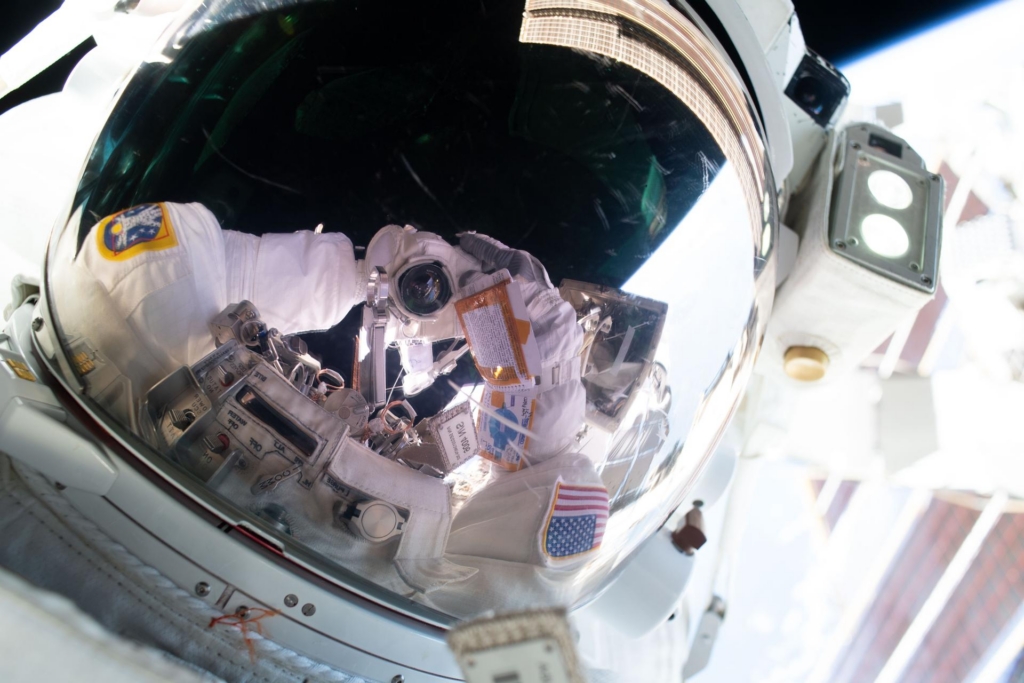
Before leaving the station, astronauts put on specially designed spacesuits that function much like miniature spacecraft. They provide oxygen for breathing, regulate body temperature, maintain pressure and allow communication with the crew and mission controllers.
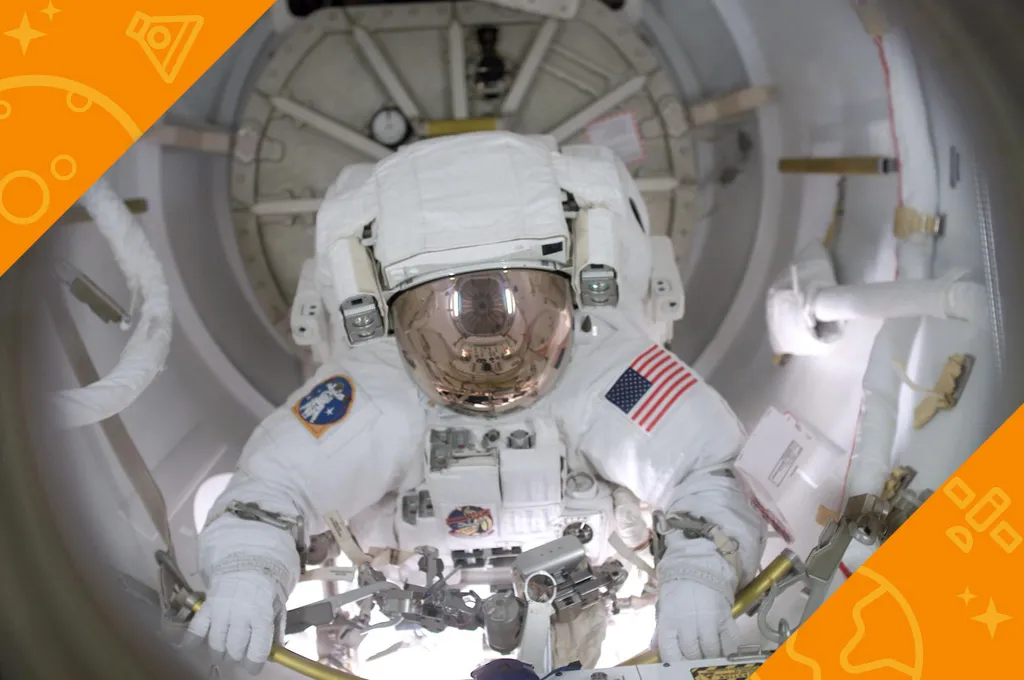
Preparation begins several hours before the astronauts go outside.
One important precaution is breathing pure oxygen to remove excess nitrogen from the body. Without this procedure, changes in pressure could cause nitrogen bubbles to form in the bloodstream and tissues, producing a painful condition known as decompression sickness, or the bends. Scuba divers face a similar risk.
Astronauts leave through an airlock, a small chamber with two doors. The inner door is closed before air is removed from the chamber, allowing the outer hatch to open without releasing the station’s atmosphere into space.
Once outside, astronauts remain attached to the station by safety tethers. Their tools are also secured to prevent them from floating away.
They carry an emergency device called SAFER, short for Simplified Aid for EVA Rescue. Worn like a backpack, it uses small thrusters that an astronaut can control with a hand-operated device to return to the station if accidentally separated from it.
A typical ISS spacewalk lasts between five and eight hours, depending on the work involved.
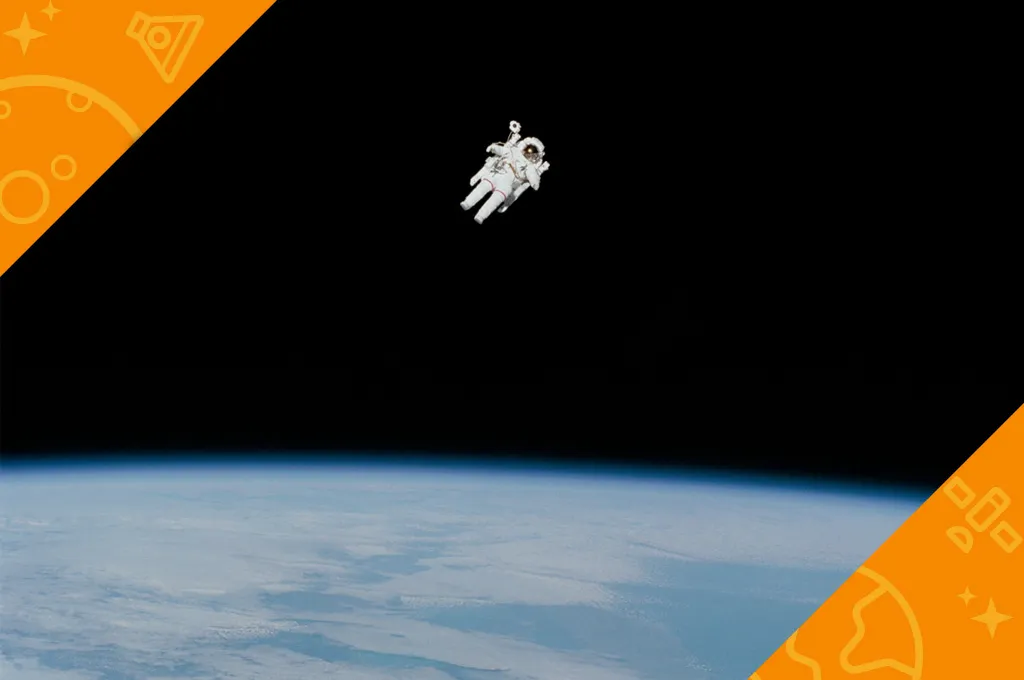
Training for work in the vacuum of space
Long before astronauts attempt these operations in orbit, they practise on Earth.
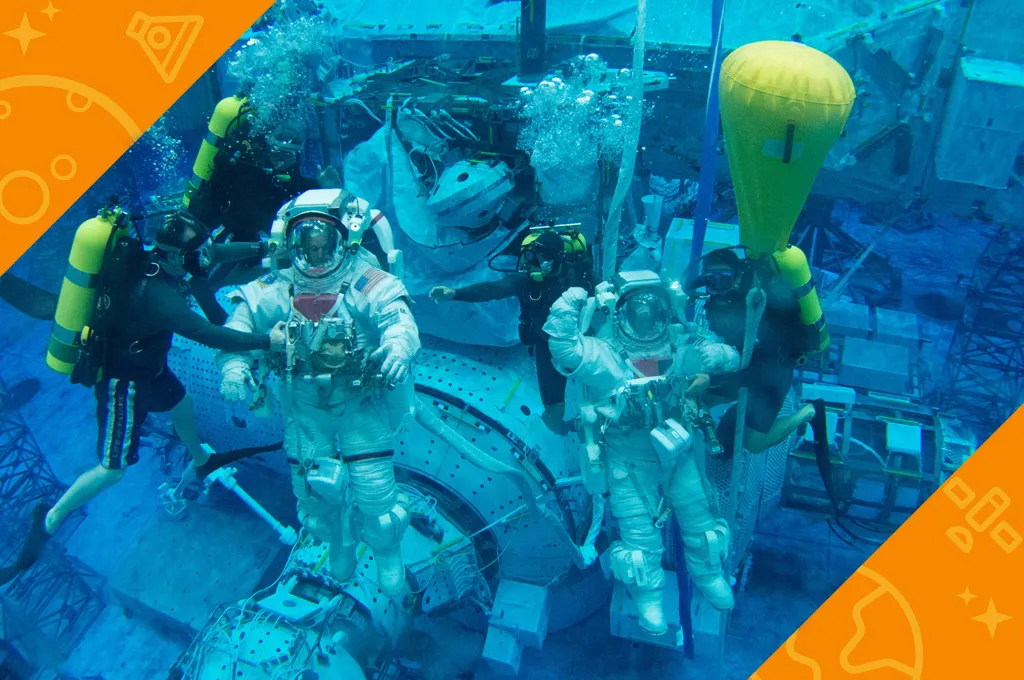
One of NASA’s main training facilities is the Neutral Buoyancy Laboratory near Johnson Space Center in Houston, Texas.
The enormous swimming pool contains approximately 6.2 million gallons of water and allows astronauts wearing training spacesuits to rehearse tasks around submerged replicas of spacecraft structures.
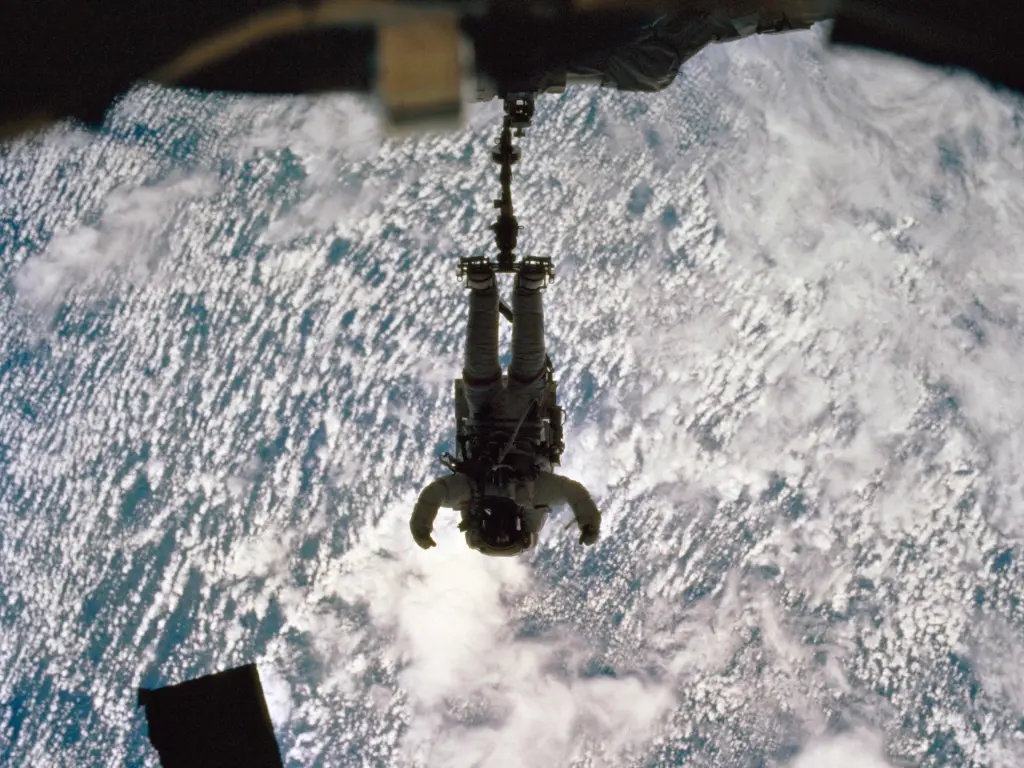
By carefully adjusting their buoyancy, instructors can recreate some of the difficulties of moving and handling equipment in weightlessness.
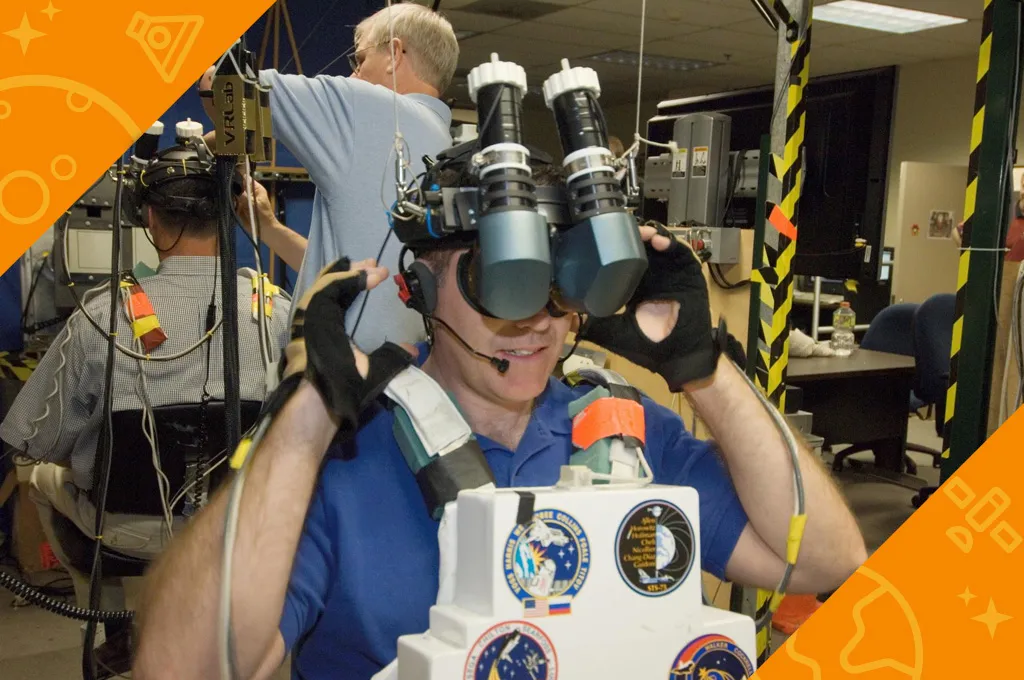
Astronauts also use virtual reality systems to practise working outside the station. Special headsets and gloves allow them to rehearse movements, become familiar with their surroundings and prepare for complicated operations.
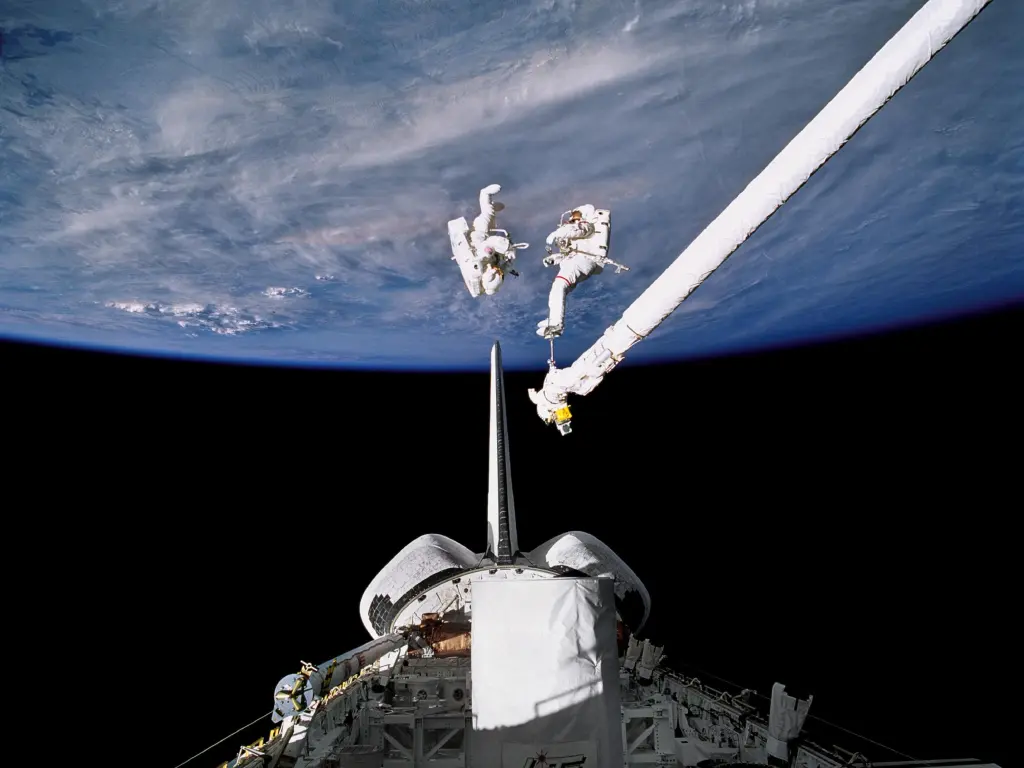
These rehearsals are especially important because even simple tasks can become difficult in bulky, pressurised spacesuits.
From the first spacewalk in 1965 to the ISS’s 100th US excursion
The history of spacewalking began more than six decades ago.
On 18 March 1965, Soviet cosmonaut Alexei Leonov became the first person to leave a spacecraft in orbit. His historic spacewalk lasted about ten minutes.
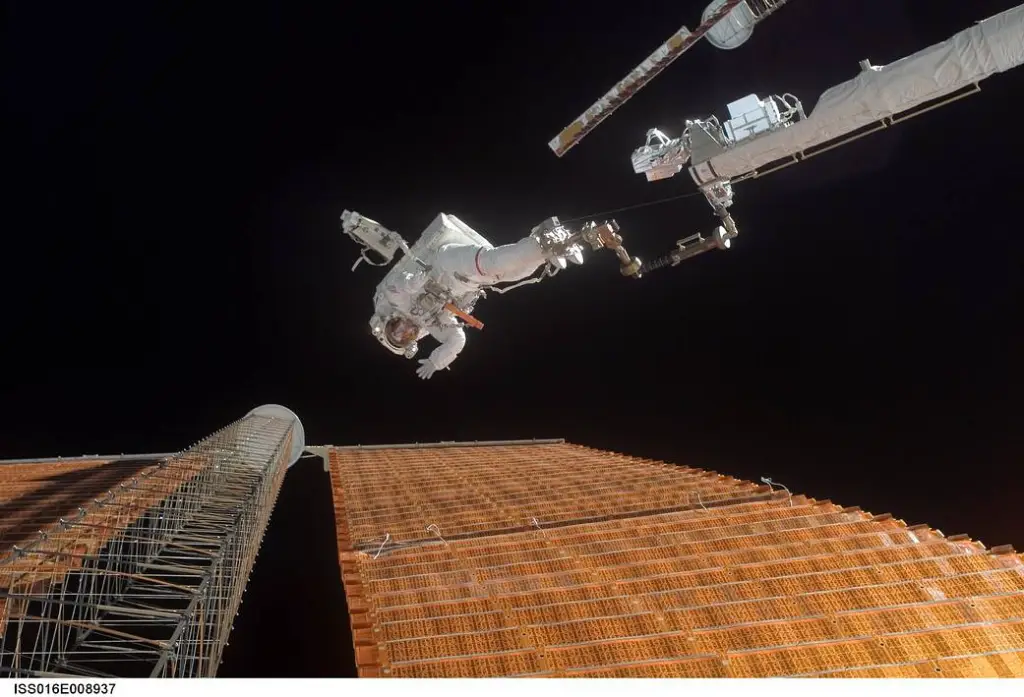
Less than three months later, on 3 June 1965, NASA astronaut Ed White became the first American to conduct a spacewalk during the Gemini 4 mission. He spent approximately 23 minutes outside his spacecraft.
Spacewalking later became essential to human space exploration, particularly during the construction of the ISS.
Astronauts helped assemble the station in orbit, connecting modules, installing equipment and carrying out repairs that could not be completed by robots alone.
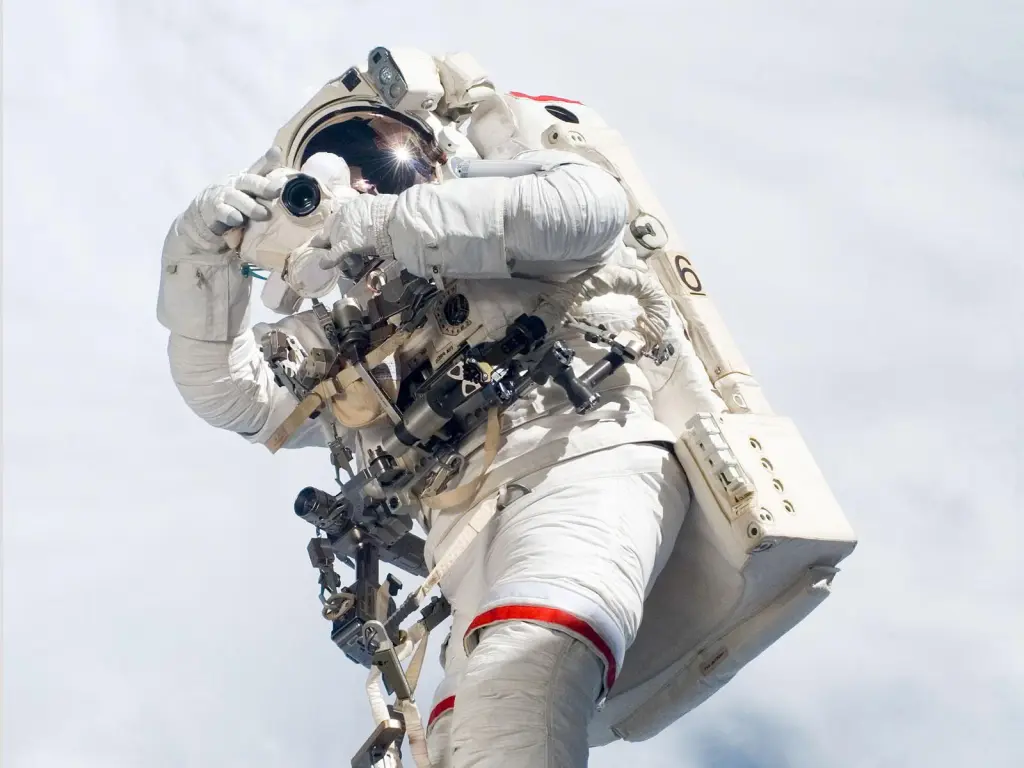
The first US spacewalk from the station’s Quest airlock took place on 20 February 2002, when NASA astronauts Carl Walz and Daniel Bursch spent five hours and 47 minutes testing its systems and carrying out maintenance.
The record for the most spacewalks by an individual astronaut belongs to Russian cosmonaut Anatoly Solovyev, who completed 16 excursions totalling more than 82 hours.