Ukraine debuts FP-7 ballistic missile as Freyja defence system nears

3 min read
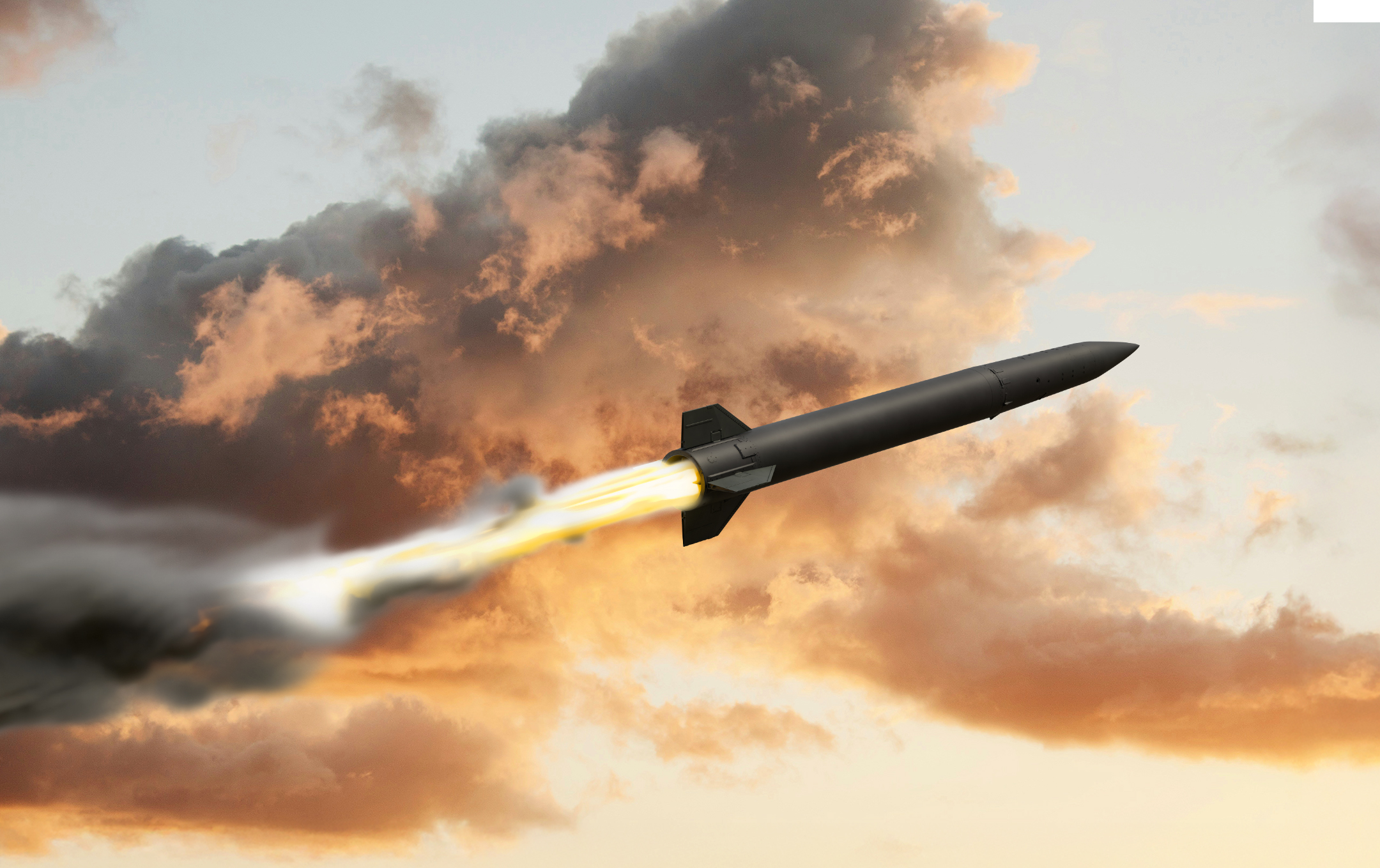
In an expected but major development, Ukraine has used its Fire Point FP-7 ballistic missile in combat for the first time. The missile is being designed for Ukraine’s upcoming Freyja ballistic air defence system, intended to complement the Patriot system and address the shortage of interceptor missiles.
Ukraine uses FP-7 ballistic missile in combat
Yesterday, Ukrainian President Volodymyr Zelensky posted: “Ukrainian tactical ballistic missile. FP-7. First combat use. Thank you for the result. Next up: production. Glory to Ukraine!”
Zelensky included a video of the missile taking off, but did not provide any details on where it was fired from, what its target was, or if the mission was successful.
In September, Zelensky announced the successful combat employment of a new munition called the “Pelican” against Moscow. However, it remains unclear if that refers to the FP-7 or a new one-way attack drone.
The ground-launched FP-7 is designed to carry a payload of up to 200 kg and to engage targets at up to 250 kilometres. It is based on the aerodynamic design of the Soviet-era 48N6 interceptor family used by the S-300PM and S-400 long-range air defence systems.
Ukrainian tactical ballistic missile. FP-7. First combat use. Thank you for the result. Next up: production. Glory to Ukraine! pic.twitter.com/IxdjVg51c1
— Volodymyr Zelenskyy / Володимир Зеленський (@ZelenskyyUa) October 1, 2026
Ukraine is also developing a longer-range ballistic missile called the FP-9, which is expected to enter service by the end of the year. It will come with a range of 850 kilometres, and Ukraine has said it wants to target Moscow.
The FP-9 is to carry a much larger warhead of up to 800 kg. The FP-7 is advertised to have an accuracy of 14 metres, while the FP-9’s advertised accuracy is 20 metres.
Closing one of Russia’s key remaining areas of advantage
The combat use of the FP-7 is a remarkable milestone in Ukraine’s growing capabilities and closing more capability gaps with Russia. At the start of the war, Russia had a huge advantage in air power, cruise and ballistic missiles, armour, ships, artillery, and other areas.
Over the course of the war, Ukraine has largely mitigated Russia’s advantage in ships, artillery, armour, and long-range attack drones. Ukraine’s formidable air defence network also limited the effectiveness of the Russian Air Force.
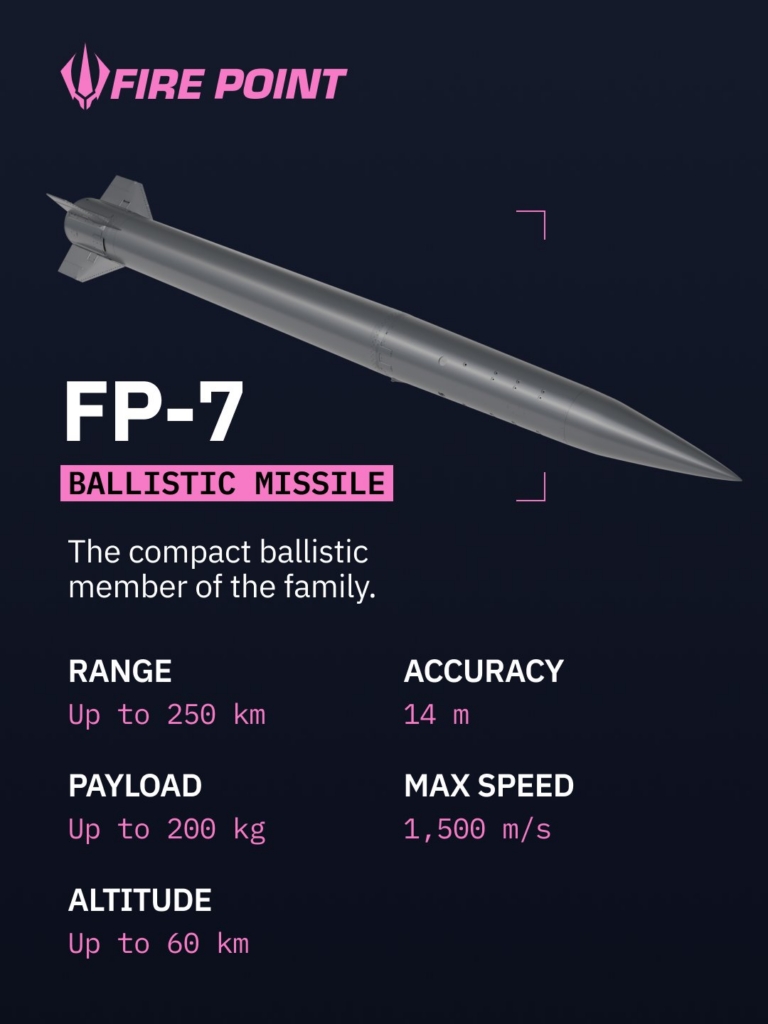
The FP-7 is being developed by the Ukrainian company Fire Point as the country’s first domestically designed ballistic missile. Fire Point’s other famous missile, the FP-5 Flamingo, is a heavy cruise missile, not a ballistic missile.
This growing suite of cruise and ballistic missiles is allowing Ukraine to start closing one of the few remaining areas where Russia was overwhelmingly dominant.
Developing the Ukrainian “Freyja” ballistic air defence system
Ukraine is developing the interceptor variant, called the FP-7.X, for the Freyja SAM system. It will come with a fragmentation warhead, with a plan to make a kinetic kill variant later on.
Fire Point says, “The FP-7 is being developed as a ballistic interceptor for the ‘Freyja’ program. Until its full integration into the system is complete, it is considered a cost-effective alternative to the American ATACMS.”
Держави програють війни на полі бою значно рідше, ніж вони програють їх у інститутах, лабораторіях та на виробництві за десять років до їх початку.
— terekh (@iraterekh) June 3, 2026
Коли країна роками недофінансовує інженерну освіту, скорочує дослідження, втрачає виробничі компетенції або звикає покладатися на… pic.twitter.com/Ti1Ayn4INf
The first FP-7.X test took place in June. Fire Point plans to achieve its first Freyja intercept in 2027, meaning this winter will be difficult for Ukraine given the shortage of interceptors.
Freyja is intended to be an affordable, ‘good enough’ ballistic air defence missile able to complement the higher-end Patriot. One of the key requirements is for it to be produced en masse.