


SpaceX is about to attempt its first Starship ‘double catch’: Here’s how it works

5 min read
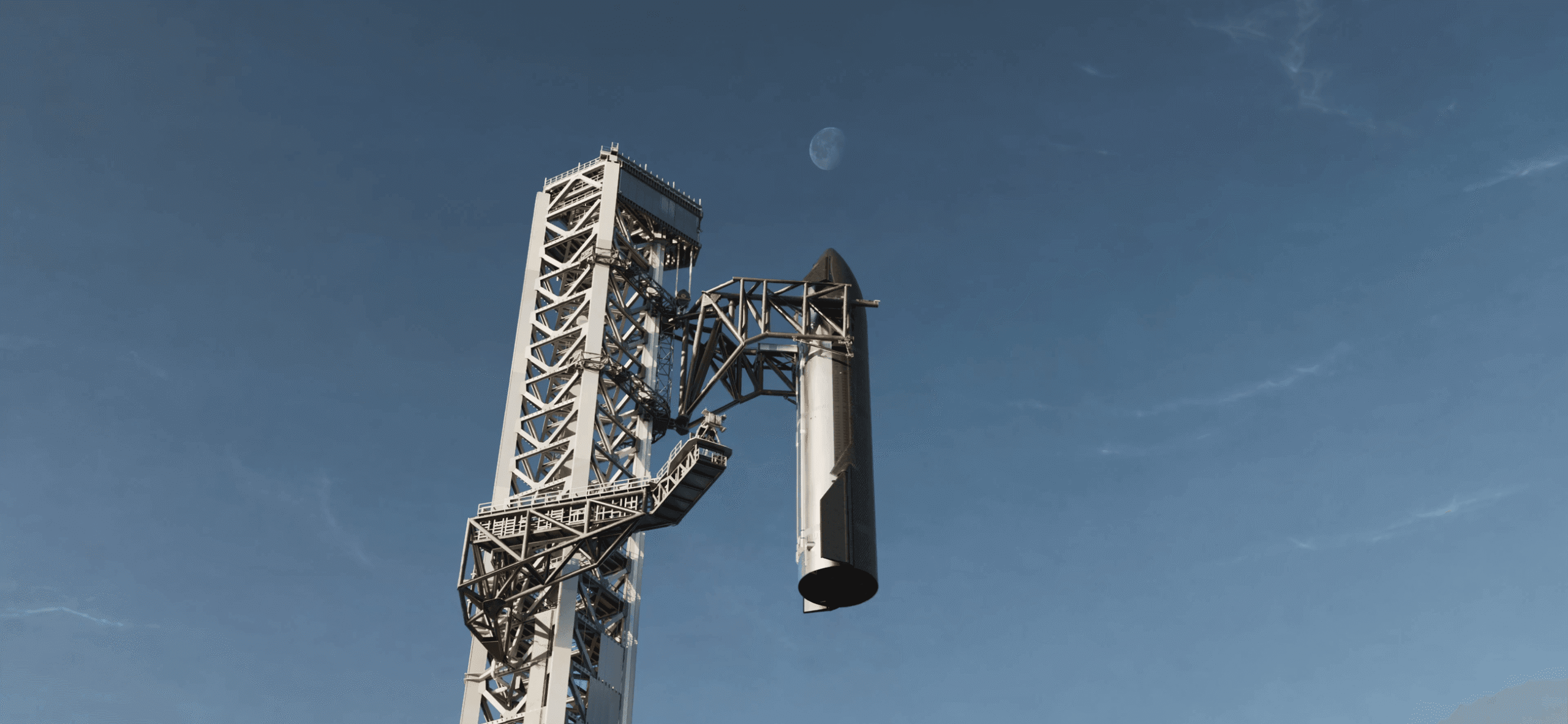
SpaceX is preparing to attempt something it has never done before: return both stages of its giant Starship rocket to the launch site and catch them using mechanical arms on launch towers.
The company has set Friday, 13 November, as the earliest date for Flight 15 from Starbase, Texas, subject to regulatory approval. The 75-minute launch window opens at 16:45 Central Time.
The mission will build on SpaceX’s earlier success in catching Super Heavy boosters, but the bigger challenge will come more than 22 hours after liftoff, when the Starship upper stage returns from orbit for its first attempted tower catch.
SpaceX has previously recovered boosters using the launch tower’s giant mechanical arms, nicknamed chopsticks. Catching Starship itself would bring the company closer to its goal of making the entire rocket reusable.
Flight 15 will also carry 26 Starlink V3 satellites into orbit, combining a commercial satellite deployment with the most ambitious recovery test yet attempted under the programme.
How SpaceX plans to catch both stages
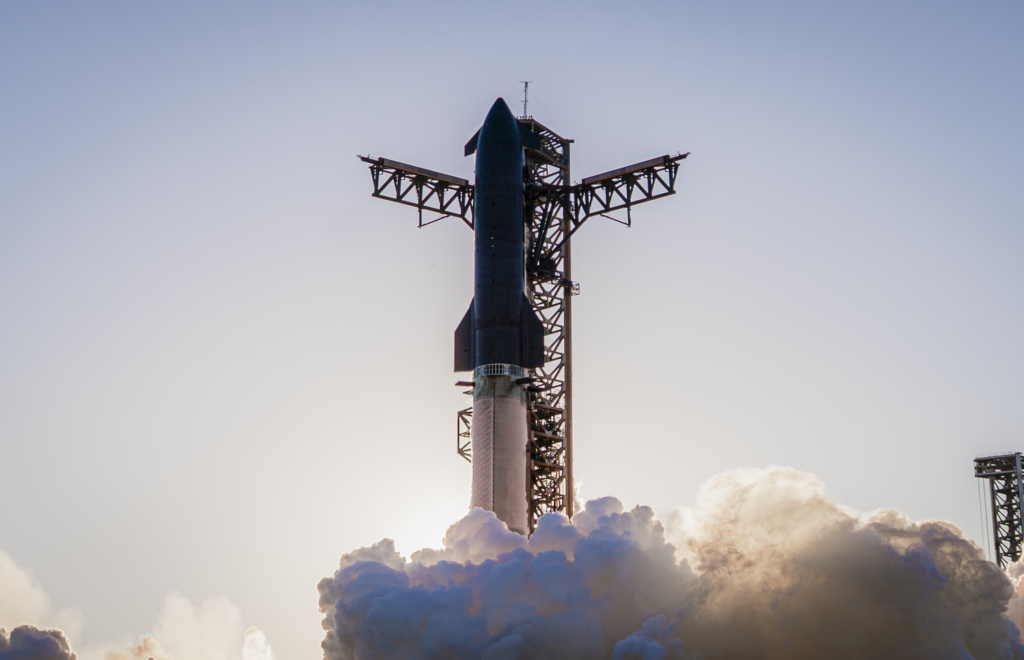
Starship consists of two stages: the Super Heavy booster, which provides the thrust needed to leave the launch pad, and the Starship spacecraft, which continues towards space after separation.
Super Heavy uses 33 Raptor engines, while Starship has six.
About two minutes and 21 seconds after launch, the upper stage will ignite its engines and separate from the booster in a manoeuvre known as hot-staging.
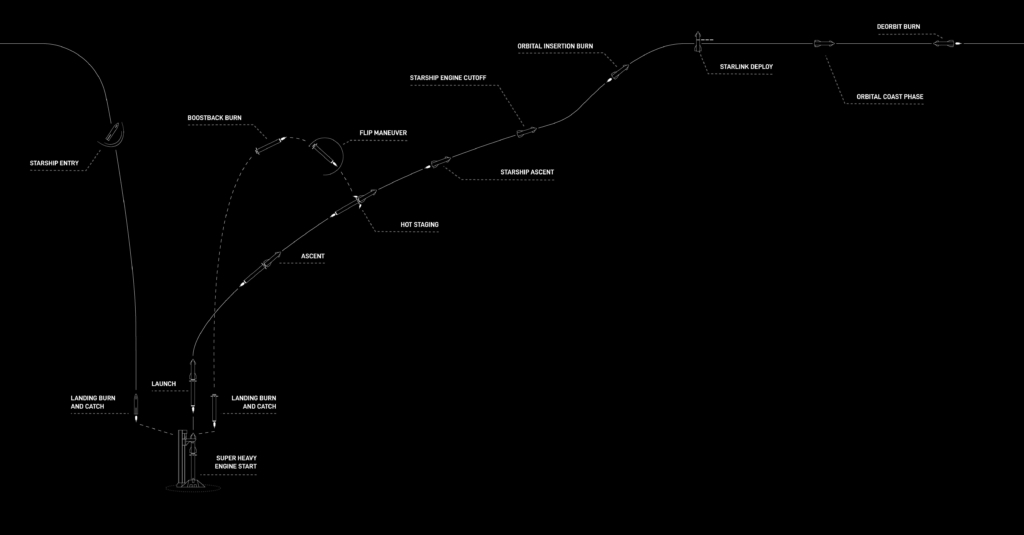
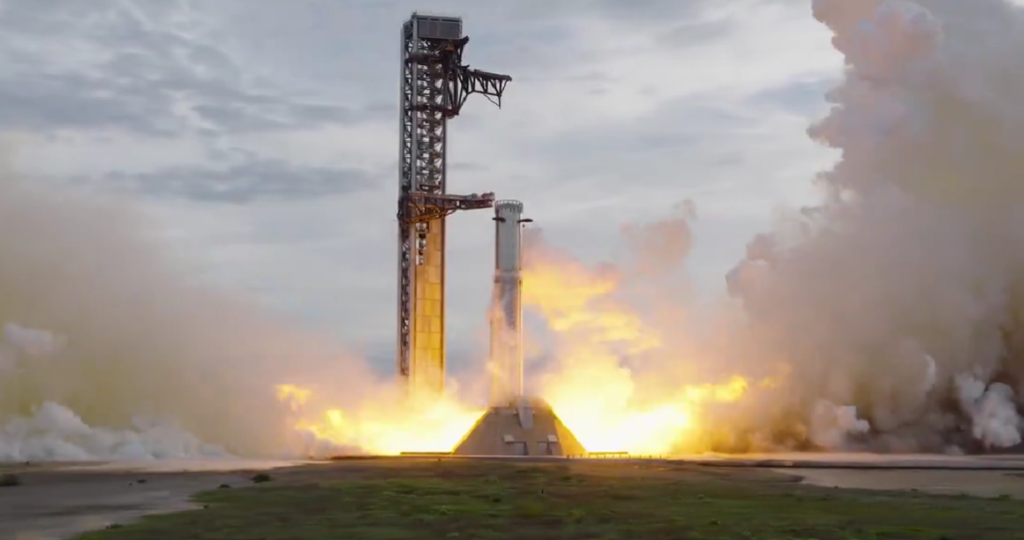
Super Heavy will then turn around and fire its engines to head back towards Starbase. As it descends, four grid fins near its top will help steer it towards the tower.
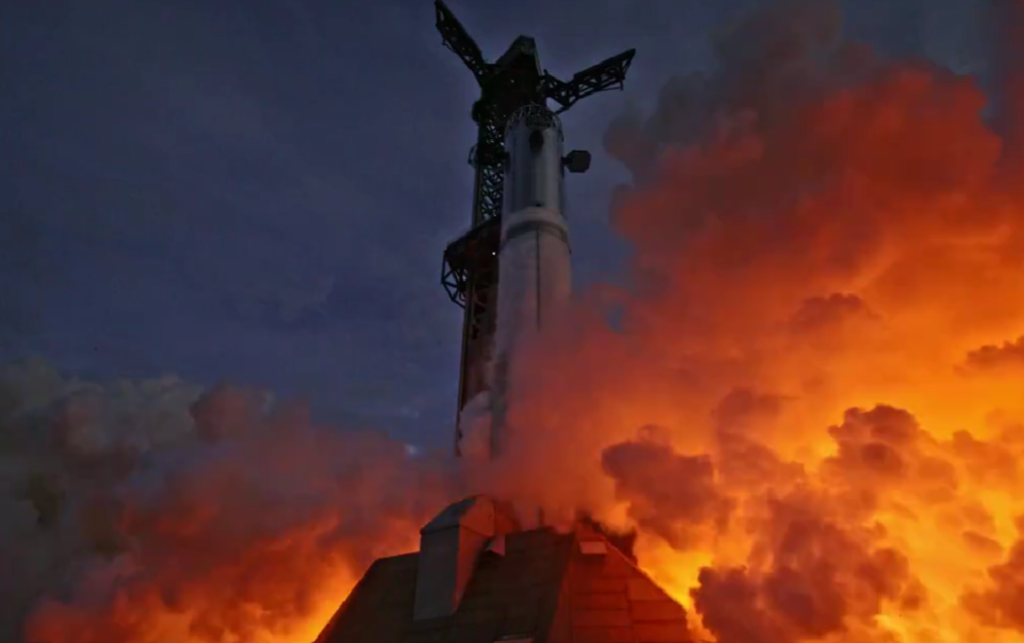
A final engine burn will slow the booster enough for the tower’s two large mechanical arms to support it at specially designed attachment points.
The manoeuvre requires the booster to approach the tower at the correct position and speed. SpaceX’s flight computers control the engines and steering surfaces, while automated checks determine whether the vehicle can safely proceed with the catch.
If the required conditions are not met, the booster can be directed away from the tower.
SpaceX’s published timeline places the Super Heavy catch approximately six minutes and 35 seconds after liftoff.
The upper stage faces a much longer journey.
Starship is expected to reach an orbit approximately 275km above Earth and complete about 14 orbits during a flight lasting more than 22 hours.
Before attempting its return, the flight control team will confirm that the spacecraft’s critical systems, including those needed for re-entry and its final landing burn, are working properly.
Starship will then fire an engine to leave orbit, descend through the atmosphere and use its four flaps to control its approach.
Near the ground, its engines will restart to slow the spacecraft and rotate it from a horizontal descent into a vertical position. The tower arms will then attempt to catch it.
SpaceX’s schedule places the planned Starship catch at about 22 hours and 32 minutes after launch.
The first catch in October 2024
The Super Heavy booster returned to Starbase approximately seven minutes after liftoff, fired its engines to slow its descent and was caught by the tower arms on the first attempt.
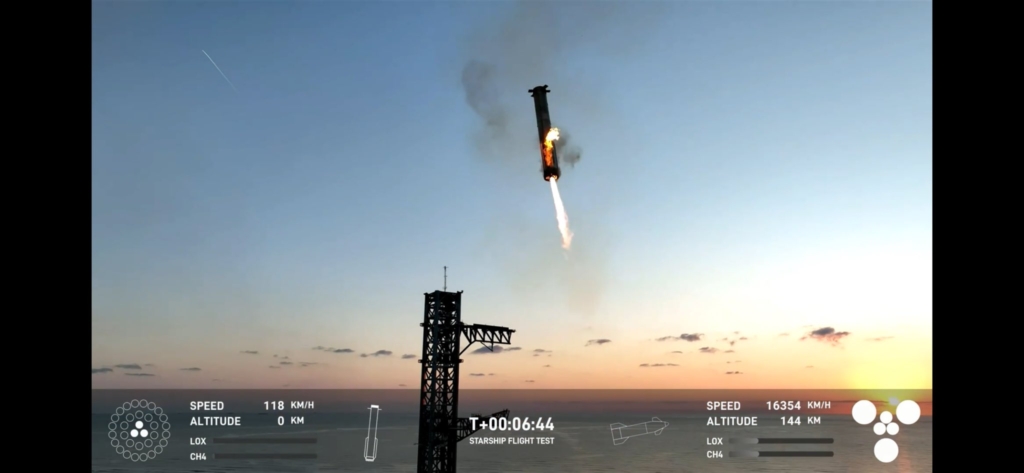
The success showed that a large rocket booster could be recovered without conventional landing legs.
SpaceX subsequently caught boosters during Flights 7 and 8 in January and March 2025. It has also reflown previously caught boosters.
Flight 15 will be the first attempt to catch a Super Heavy V3 booster, the newer version equipped with Raptor 3 engines.
Unlike SpaceX’s Falcon 9 rockets, which land vertically on legs at landing pads or offshore platforms, Super Heavy is designed to be recovered directly by the launch tower.
Removing landing legs reduces the hardware carried by the rocket. Catching it at the launch site also avoids transporting the booster back from a separate landing area.
The longer-term aim is to inspect, refuel and reuse rockets more quickly, although the ability to catch both stages does not by itself establish that they can be relaunched immediately.
Starlink satellites and heatshield tests
Flight 15 follows Starship’s first orbital mission on 28 September, when Flight 14 delivered 26 Starlink V3 satellites into orbit.
The next mission will carry another 26. SpaceX says each satellite can add one terabit per second of network capacity, with the combined payload providing capacity equivalent to approximately ten Falcon 9 launches carrying Starlink V2 Mini satellites.
After deployment, the satellites will unfold their antennas and solar arrays, establish communications and use onboard thrusters to raise their orbits. SpaceX expects them to begin serving customers within weeks, subject to successful checks.
Three satellites will also carry cameras to inspect Starship’s heatshield during flight and transmit images to engineers.
The heatshield is particularly important because Starship must survive the extreme temperatures generated during atmospheric re-entry before it can attempt a catch.
SpaceX says Flight 15 incorporates additional mechanisms to retain heatshield tiles, improvements to prevent hot plasma from entering gaps behind them and a curved tile design intended to reduce heating between tiles.
Safety checks before the return
SpaceX has designed the mission with alternative flight paths and predetermined ocean disposal areas if the spacecraft cannot safely continue towards a tower catch.
The company says Starship will return to Starbase only after engineers have confirmed that the systems needed for re-entry, descent and the final approach are healthy.
A live webcast is scheduled to begin approximately 30 minutes before liftoff, with coverage planned through the Starship catch attempt.
The launch remains dependent on regulatory approval, and SpaceX has cautioned that the schedule could change.


