Pentagon backs futuristic blended-wing aircraft that could transform military cargo flights

3 min read
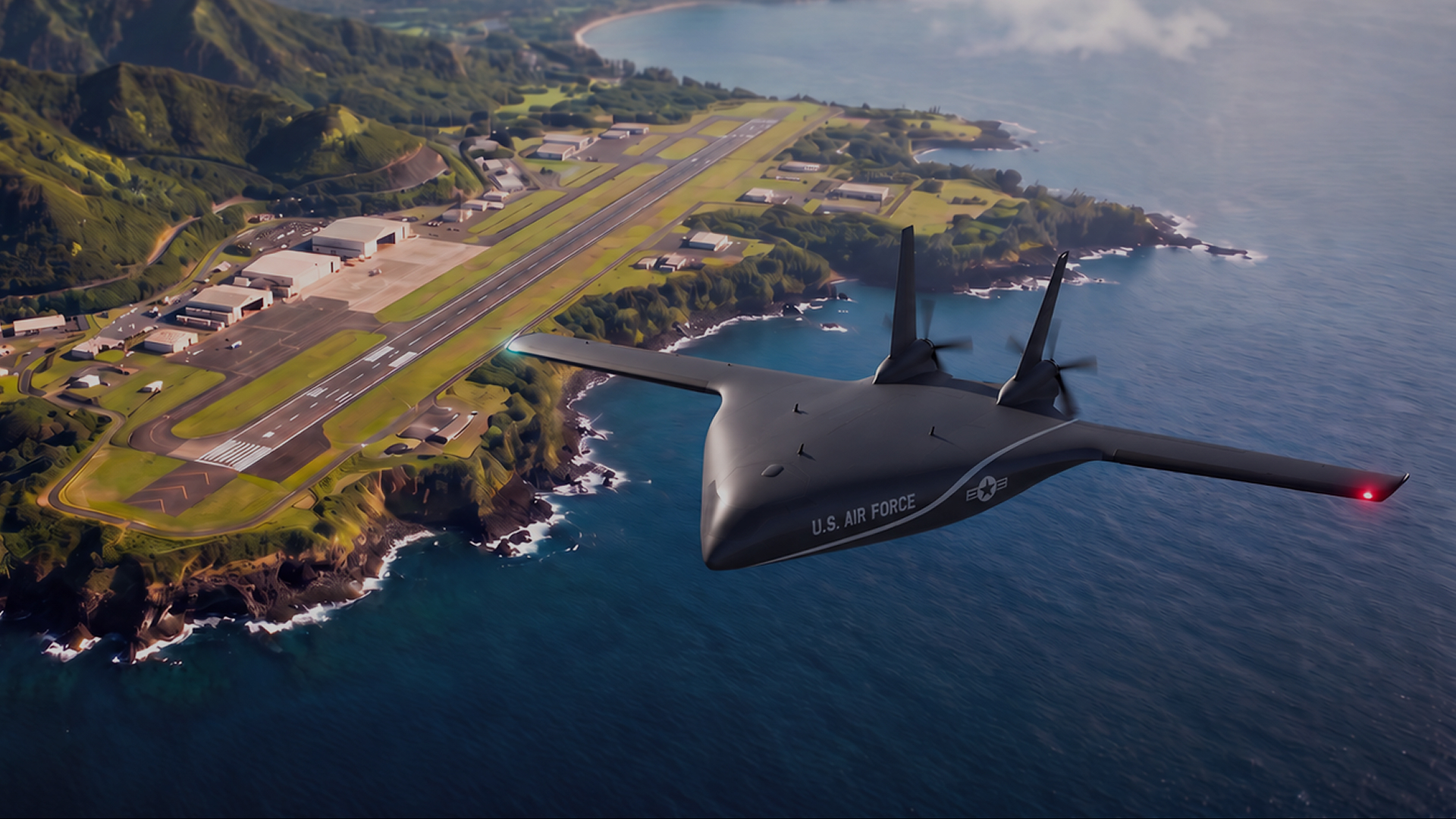
Blended-wing-body aircraft have long promised substantial efficiency gains over conventional designs.
Now, the United States Air Force is investing in two separate programmes, led by Natilus and JetZero, to assess whether the technology can help meet future cargo and tanker requirements in contested environments.
Natilus has previously told AGN that it is aiming for the first flight of a full-scale Kona prototype in 2027 or early 2028.
US Air Force invests in demonstrator for Natilus’ KONA BWB
Natilus has received $3.5 million in Research, Development, Test, and Evaluation (RDT&E) funding to develop a blended-wing body aircraft for the US Air Force.
The funding is to help accelerate the development of Natilus’s 3.8-ton payload optionally piloted KONA regional freighter toward a full-scale flight demonstrator.
The initial focus is to demonstrate KONA as a right-sized distribution platform for intra-theater lift and contested logistics.
The blended wing body (BWB) KONA sits between light utility aircraft like the C-208 and larger tactical airlifters such as the C-130. It has the potential to fill the gap with a new class of sub-tactical lift.
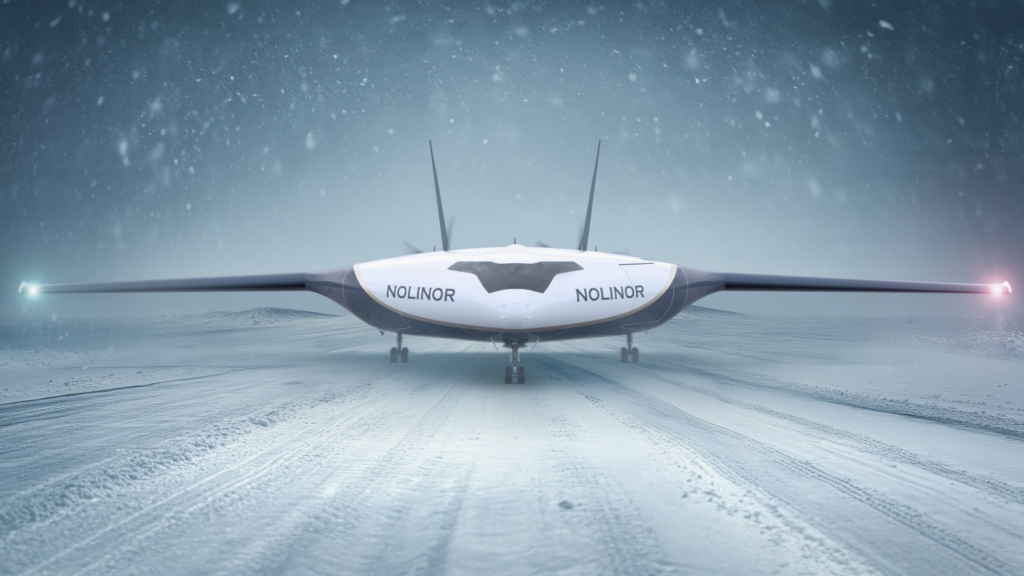
Currently, the primary military mission set for KONA is regional airlift. However, it is being designed with modular architecture and could be developed for other missions over time, including communications relay, ISR, and payload delivery.
Natilus CEO Aleksey Matyushev said, “With KONA, the Department of War is evaluating a new airlift capability that can generate real-world cost, reliability, payload and utilization data as the broader military requirement matures.”
Why the Air Force wants new forward cargo solutions in Indo-Pacific
KONA is being designed for a range of 800 nautical miles and is designed to operate on short runways intended for regional distribution and contested environments. In a future high-end war in the Indo-Pacific, forward runways are expected to be targeted and may be out of action.
The Air Force and other service branches are interested in a range of short-runway, or runway-independent solutions for the “last mile” of logistical support in the Indo-Pacific.
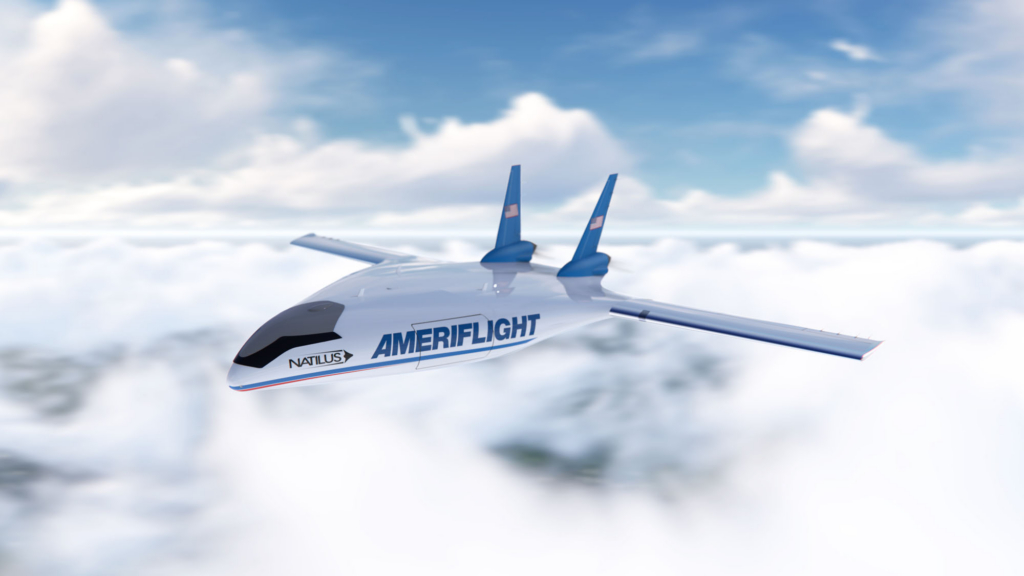
Blended wing designs offer the potential to significantly lower fuel burn, with Natilus saying its KONA will be able to achieve around a 30% improvement compared with comparable conventional aircraft.
For the Air Force, this offers reduced logistical strain in forward-deployed fuel, improved range, and frees up more of its payload capacity.
Natilus is currently advancing KONA toward FAA Part 23 certification and full-scale flight testing.
Emerging Natilus and JetZero blended wing bodies
KONA is not the only next-generation BWB aircraft the Air Force is investing in. JetZero is currently working with Northrop Grumman with Air Force funding to develop the much larger Z4 blended wing body aircraft.
In the commercial sector, the Z4 would occupy a mid-sized airplane segment, roughly that of the Boeing 757/767. In the military sector, it has the potential to be a much larger transport aircraft and an aerial refueling tanker.
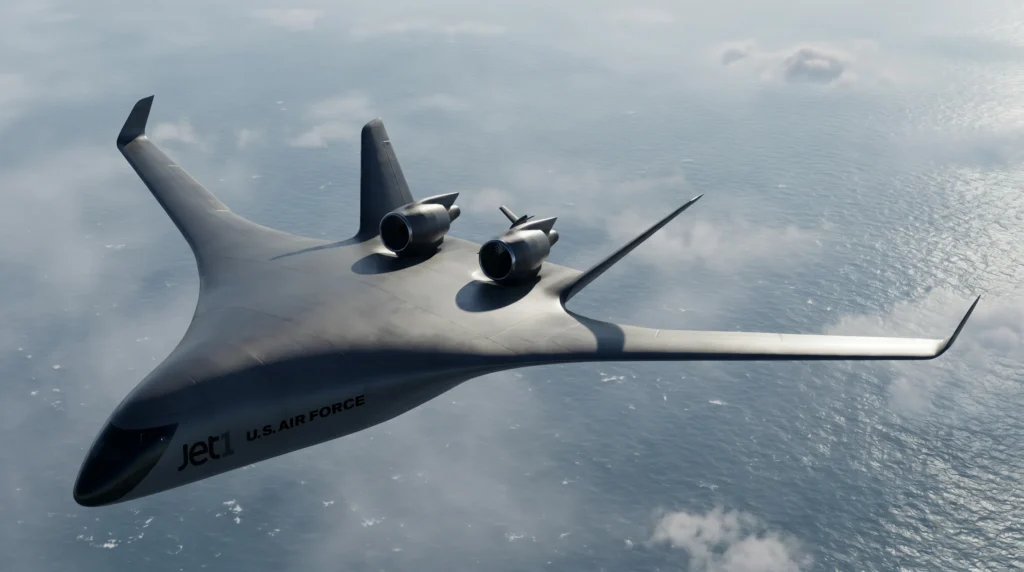
Both Natilus and JetZero see dual miltiary and commercial applications for their aircraft. JetZero’s investors include United Airlines and Alaska Airlines.
Natilus is developing a family of BWB aircraft. It claims to have accumulated 570+ aircraft pre-orders valued at $24 billion. Besides reducing fuel consumption by 30%, it aims for the aircraft to reduce operational costs by 50% and increase payload capacity by 40%.