


Russian satellite activity raises concerns for Starlink, German space commander warns

9 min read
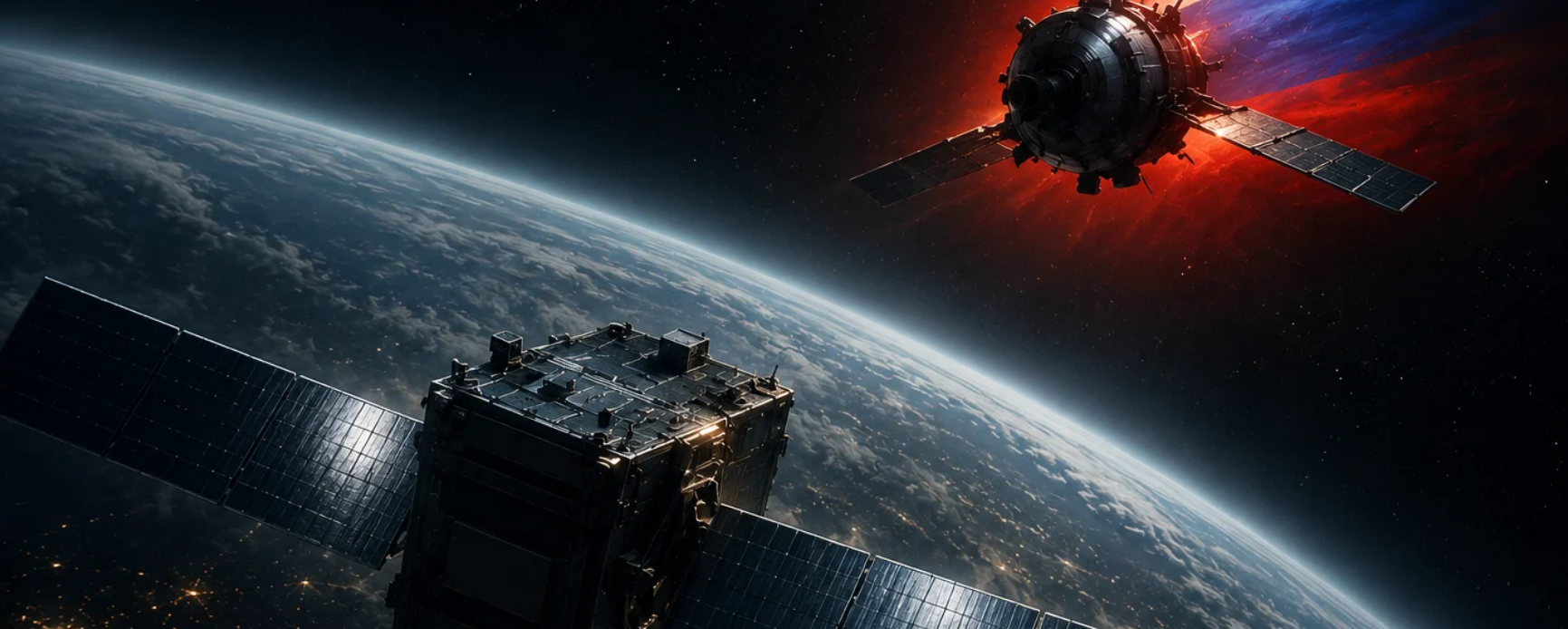
Russian military satellites that manoeuvred close to a Western surveillance spacecraft supporting Ukraine earlier this year have demonstrated capabilities that could threaten Elon Musk’s Starlink network and other commercial satellite constellations, Germany’s military space commander has warned.

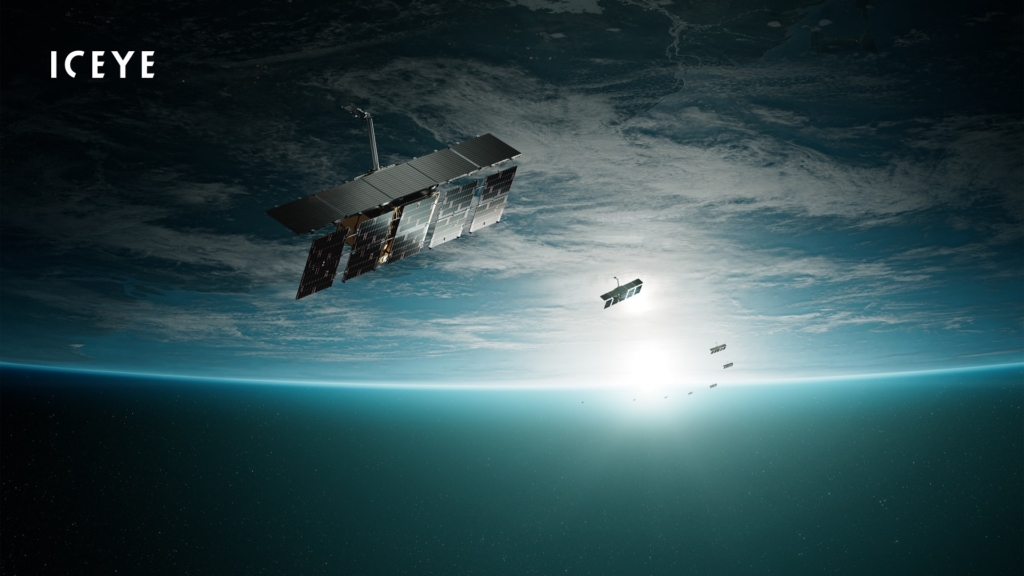
Major General Michael Traut, speaking to Reuters on 9 October, said the Russian spacecraft had been “chasing” a satellite operated by Finnish company ICEYE, which provides radar imagery used for battlefield intelligence. He warned that similar operations against a large constellation such as Starlink could shorten the operational lives of satellites and disrupt services beyond Ukraine.
“Russia is demonstrating ways, which, if employed directly towards a mega constellation like Starlink, could have an impact on their lifetime” and on the quality of service for all users, not just Ukraine, General Traut told Reuters. He said satellite capabilities could be disrupted even without a direct attack. That “concerns me quite a lot,” he said.
The warning follows unusual orbital manoeuvres by four Russian military satellites, Cosmos 2610, 2611, 2612 and 2613, in May. Their movements towards ICEYE-X36 were first publicly identified in a 22 May analysis by Greg Gillinger, a former US Air Force space intelligence officer, who examined orbital tracking data and questioned Russia’s intentions.
ICEYE subsequently confirmed the incident to Reuters, while the US Space Force also documented the Russian activity.
The incident has added urgency to Western concerns about military operations in orbit, where spacecraft capable of approaching and following other satellites could interfere with communications and intelligence services without necessarily destroying their targets.
How four Russian satellites approached ICEYE
Gillinger, writing in an analysis published by US defence and intelligence consultancy Integrity ISR, identified substantial orbital changes involving four of six Russian Cosmos satellites launched in April.
Between 14-20 May, the four spacecraft increased their orbital inclination from approximately 97 degrees to 97.8 degrees, closely matching the orbital plane of ICEYE-X36, a synthetic aperture radar satellite operating about 547 kilometres above Earth.
Changing a satellite’s orbital inclination is an energy-intensive operation. Unlike a routine adjustment to maintain altitude, it requires a spacecraft to alter the angle of its orbital path.
Gillinger estimated that the Russian manoeuvres involved a velocity change of approximately 105 to 106 metres per second, representing a significant use of the satellites’ available propulsion capability.
The Russian spacecraft had already been launched into orbital planes relatively close to ICEYE-X36. Their subsequent adjustments brought them into nearly matching planes, with cross-track separations ranging from about 500 metres to 22 kilometres.
Those figures describe the distance between orbital paths, rather than necessarily the closest physical separation between the spacecraft.
The manoeuvres left the Russian satellites in positions from which further adjustments could bring them closer to ICEYE-X36, according to Gillinger’s assessment.
He cautioned that neither the spacecraft’s precise capabilities nor Russia’s intentions were known. The orbital changes nevertheless demonstrated an ability to carry out substantial manoeuvres that would be unusual for satellites performing conventional observation or communications missions.
ICEYE chief executive Rafal Modrzewski later told Reuters that the company moved its satellite, after which the Russian spacecraft made further orbital adjustments.
Belinda Marchand, chief scientist at US space intelligence company Slingshot Aerospace, told Reuters the activity could have been intended for surveillance, preparation for interference or a demonstration of capability.
There is no publicly established evidence that the Russian satellites attempted to damage ICEYE-X36.
Why the ICEYE satellite matters to Ukraine
ICEYE operates a constellation of synthetic aperture radar satellites capable of imaging the Earth’s surface in darkness and through cloud cover.
Unlike conventional optical satellites, which depend on sunlight and clear weather, radar spacecraft transmit signals towards the ground and measure their reflections.
The technology is particularly useful for monitoring military equipment, troop movements and infrastructure when poor weather or darkness would otherwise restrict surveillance.
ICEYE has provided imagery to Ukraine since Russia’s full-scale invasion in 2022. An agreement announced that year gave the Ukrainian government access to a dedicated radar satellite and data from the company’s wider constellation.
Its role illustrates how private satellite operators have become increasingly important to military operations. Governments can obtain intelligence, surveillance and communications services from commercial constellations without having to develop and operate every spacecraft themselves.
Russia has previously warned that commercial space infrastructure used to support Ukraine could become a target.
In October 2022, Russian foreign ministry official Konstantin Vorontsov told a United Nations meeting that privately operated satellites supporting military operations could be considered legitimate targets.
Moscow has not disclosed the capabilities of the Cosmos spacecraft involved in the May manoeuvres. Russia’s defence ministry did not respond to Reuters’ questions about the incident.
Could Starlink face similar interference?
Starlink has become an important communications system for Ukrainian forces, particularly in areas where terrestrial networks have been damaged or destroyed.
Unlike a traditional satellite network built around a small number of large spacecraft, Starlink uses thousands of satellites in low Earth orbit. This makes the system more resilient to the loss of individual spacecraft, but it also creates a demanding task for operators trying to avoid collisions.
Traut told Reuters that Russia could use tactics falling short of a direct attack to interfere with such a network.
He described a hypothetical scenario in which a Russian spacecraft entered a Starlink orbital path and broke apart, creating debris that would force other satellites to manoeuvre away.
Such avoidance manoeuvres consume propellant, potentially shortening the satellites’ useful lives. A widespread disruption could also affect the quality of service provided to users.
An overt attack on Starlink would represent a major escalation, Traut said, but other forms of interference could be harder to classify or respond to.
His warning comes just days after SpaceX disclosed the scale of the collision-avoidance problem already confronting Starlink.
As AGN reported on 8 October, SpaceX said its satellites had encountered potential close-approach situations involving approximately 650 different manoeuvring spacecraft during 2026, with only about half providing trajectory information.
The company also reported approximately 164,000 potential collision events over six months, although most did not represent imminent collisions.
SpaceX highlighted an August encounter in which a Starlink satellite came within 134 metres of another spacecraft following an unexpected orbital change.
These were routine space-traffic safety concerns, not reported Russian attacks. They nevertheless show how difficult it can be to operate a large constellation when other spacecraft change their trajectories without providing advance information.
A deliberate attempt to force repeated avoidance manoeuvres would introduce another complication into an already crowded orbital environment.
SpaceX did not respond to Reuters’ request for comment on Traut’s warning.
Space warfare moves from surveillance to manoeuvring
The Russian activity comes as military powers increasingly prepare for operations in which satellites themselves could become targets.
For decades, spacecraft have provided communications, navigation, missile warning and intelligence to forces fighting on Earth. The growing concern is that an adversary could attack those capabilities directly in orbit.
The United States has been watching similar developments involving Chinese spacecraft.
As AGN reported in September, US military officials disclosed that Chinese satellites had conducted coordinated movements resembling orbital “dogfighting”. The term refers to spacecraft manoeuvring around one another to gain a favourable position, rather than the rapid turns associated with fighter aircraft.
China has also demonstrated technology capable of capturing a defunct satellite and moving it into another orbit. Such capabilities have legitimate applications in spacecraft servicing and debris removal, but they could also be used to interfere with another country’s satellites.
The US and its allies are developing their own ability to manoeuvre in orbit.
In September, US Space Command conducted Apollo Maneuvers 2026, its first live exercise involving coordinated spacecraft operations across low, medium and geosynchronous Earth orbits.
The exercise examined how satellites could move to avoid threats and continue operating in a contested environment. It also addressed the need for servicing and refuelling, since repeated orbital manoeuvres consume limited onboard propellant.
General Stephen Whiting, commander of US Space Command, explained the changing military requirement.
“Operating from a static, predictable orbit leaves our assets fighting from an easily targeted, fixed position,” he said.
The exercise followed a joint US-UK military satellite operation in September 2025, during which American forces directed a spacecraft towards a British satellite. Commercial tracking subsequently showed that a Chinese spacecraft had passed about 83 kilometres beneath the two allied satellites.
Washington has since gone further in publicly acknowledging its military capabilities in orbit.
As AGN reported on 15 September, US Air Force Secretary Troy Meink confirmed that the United States already possessed on-orbit space-control weapons.
Meink did not identify the systems, disclose how many were deployed or explain whether they could physically destroy other spacecraft. The US Space Force says space-control operations can involve both destructive and non-destructive means.
The disclosure demonstrated how far military planning has moved beyond simply protecting satellites from accidental collisions or electronic interference.
Germany invests billions in military space capabilities
Germany is preparing for the same changing threat environment.
Berlin announced plans in September 2025 to invest approximately €35 billion (around $40 billion) in military space capabilities by 2030, covering new satellite constellations, surveillance, communications and technologies intended to protect German and allied spacecraft.
The investment follows earlier concerns about Russian satellites operating close to Western space systems.
In September 2025, German Defence Minister Boris Pistorius drew attention to Russian Luch Olymp spacecraft shadowing Intelsat satellites used by German military forces and other customers.
Germany is also developing inspector satellites capable of approaching other spacecraft and examining their activities.
Traut told Reuters that Berlin was considering orbital capabilities that could disrupt hostile space operations without necessarily destroying the target.
The German armed forces have also contracted ICEYE and a German partner to develop a satellite constellation intended to support military reconnaissance, including operations along NATO’s eastern flank.
The investments reflect a broader change in defence planning. Satellites are no longer regarded simply as support systems operating safely above conventional battlefields. Military commanders are preparing for situations in which those spacecraft must be monitored, defended and potentially manoeuvred away from hostile activity.
There are legal and operational uncertainties.
The 1967 Outer Space Treaty prohibits placing nuclear weapons and other weapons of mass destruction in orbit, but it does not impose a blanket prohibition on conventional space weapons.
A satellite moving close to another spacecraft is not, by itself, evidence of an attack. The same manoeuvres can be used for inspection, servicing or intelligence gathering, making it difficult to determine hostile intent from orbital movements alone.
That uncertainty is particularly important for commercial operators such as ICEYE and SpaceX, whose services are used by civilian customers as well as armed forces.
The May encounter has not been established as an attempted attack. But Gillinger’s orbital analysis, ICEYE’s subsequent account and Traut’s warning show why military commanders are paying closer attention to spacecraft capable of following other satellites.








