Hunter satellites and orbital dogfights: How warfare in space is becoming real

9 min read
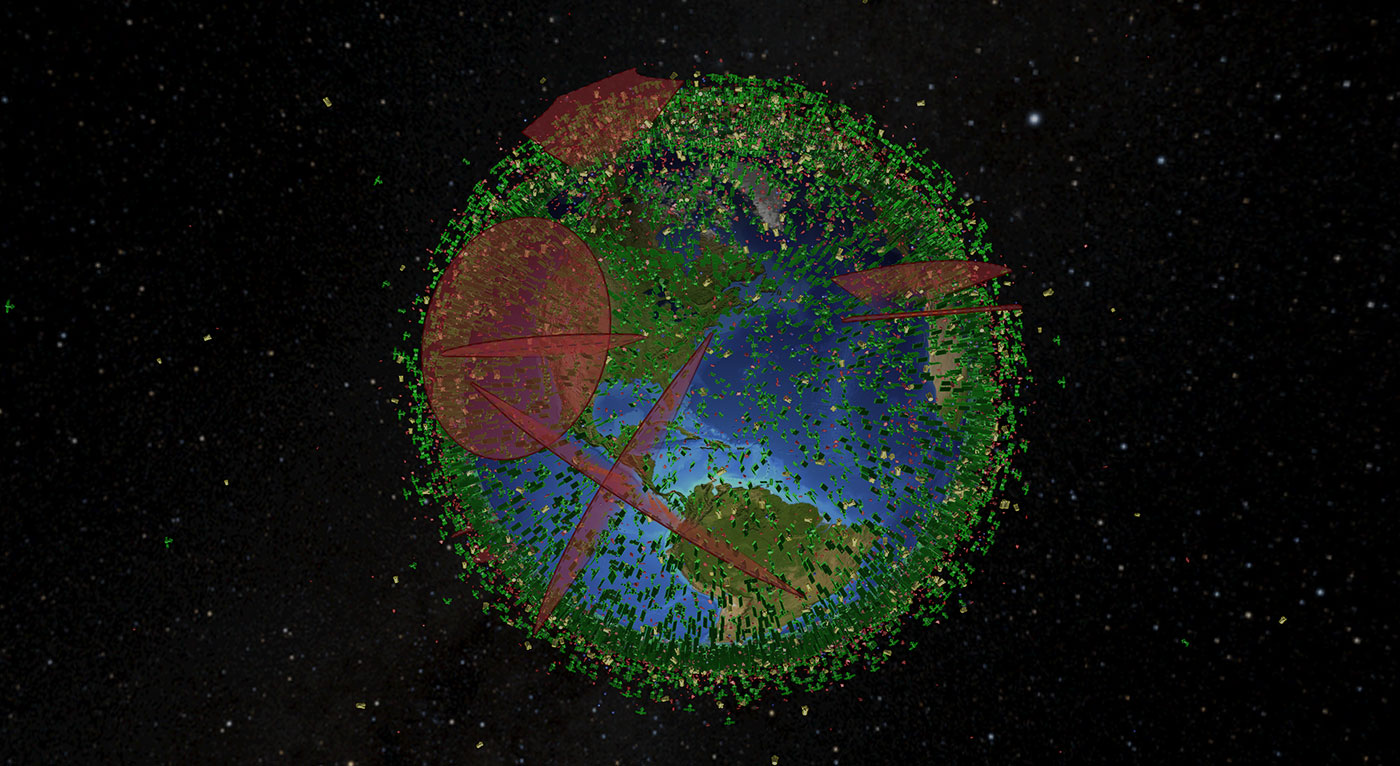
In June, China’s secretive uncrewed spaceplane released a small satellite that went on to manoeuvre around another Chinese spacecraft before returning towards the spaceplane, an unusual orbital operation that comes as Beijing develops technology for satellites to autonomously pursue and even capture other spacecraft.
The manoeuvre, tracked by US space-monitoring company LeoLabs, offers a glimpse of a much wider change taking place above Earth.
US officials say Chinese satellites have demonstrated coordinated movements they describe as orbital “dogfighting”. China has previously captured a defunct satellite and moved it to another orbit, and is also working on technologies for autonomous pursuit and refuelling spacecraft in orbit.
The US and Britain are beginning to practise military manoeuvres in orbit as well. In their first joint operation of its kind, US forces directed an American military satellite towards a British spacecraft while China’s Shiyan 12-01 passed about 83 km beneath them.
Three specialists with military backgrounds told Reuters the operation appeared intended, at least in part, to demonstrate to Beijing that the allies could coordinate their actions in orbit.
Behind these increasingly sophisticated manoeuvres is a basic military problem. If satellites can approach, pursue or evade one another, it is no longer enough to calculate where they ought to be. They have to be watched while they move.
That is where LeoLabs comes in.
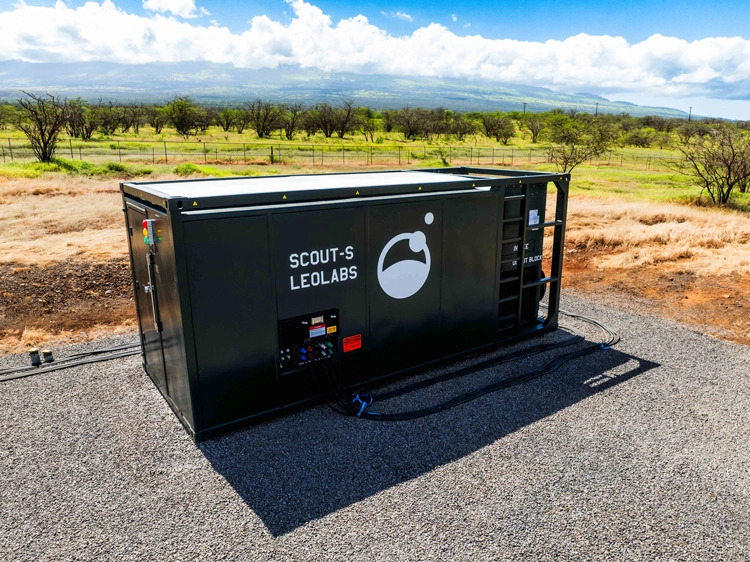
The company deployed its first operational Scout-S transportable 3D radar in the Indo-Pacific in June. It is already following Chinese Yaogan military reconnaissance satellites and maintaining what LeoLabs calls “persistent track custody” of China’s spaceplane.
On August 26, the company announced a $20.68 million US Space Force award to demonstrate a modified Scout radar for a new defence mission.
The significance goes beyond better radar coverage. For decades, satellites primarily helped militaries fight wars on Earth by providing communications, navigation, missile warning and intelligence. Now military powers are preparing for the possibility that the satellites themselves may have to manoeuvre, protect themselves or threaten another spacecraft.
And an orbital confrontation may look very different from the space battles imagined in films.
What orbital ‘dogfighting’ means in modern space warfare
A satellite cannot bank sharply, turn around and chase another spacecraft in the way a fighter aircraft pursues an opponent.
Both vehicles may be travelling at several kilometres per second. Changing the relationship between their orbits requires carefully calculated engine burns, time and fuel.
The “dogfighting” described by US officials refers instead to several satellites manoeuvring in a coordinated fashion while operating in proximity to one another.
That capability can be useful without a shot ever being fired.
A manoeuvrable spacecraft could approach another satellite to inspect it. It could potentially follow it, interfere with its operation or force its operator to expend fuel moving away. A spacecraft able to physically grapple another satellite could conceivably alter its orbit.
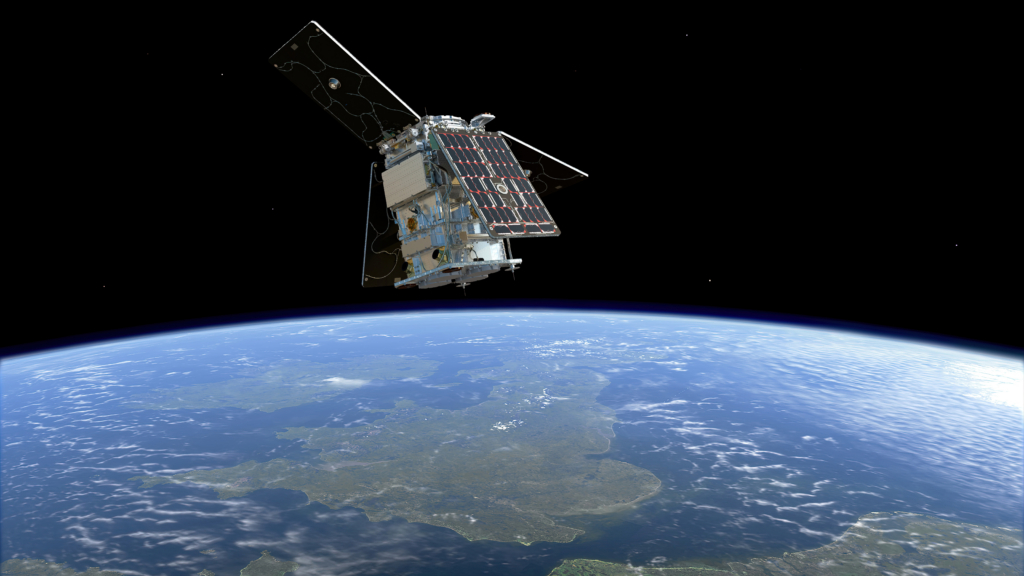
China has already demonstrated one part of that equation by capturing a defunct satellite and moving it elsewhere in orbit.
The technology is not inherently military. Rendezvous and capture could be used to service satellites or remove dangerous debris.
It is the ability to use the same technology against an adversary’s spacecraft that worries military planners.
“The Chinese are rapidly developing capabilities,” including ground and space-based weapons intended to interfere with or destroy targets, US Space Force Chief of Space Operations General Chance Saltzman said in July, according to Reuters.
He described the threat from China as “substantial”.
China develops autonomous ‘hunter satellite’ technology
The next step could be to reduce the amount of human control required to conduct those manoeuvres.
Patent-related documents reviewed by Reuters show Chinese institutions working on technologies that would allow spacecraft to pursue other objects more autonomously.
The manufacturer of some of China’s most advanced military aircraft acquired technology that allows satellites to calculate fuel-efficient manoeuvres while pursuing another spacecraft.
Another Chinese institution is looking at the problem on a much larger scale. According to Reuters, a technology-transfer notice published by the National University of Defense Technology described a system capable of managing hundreds of satellites simultaneously for defensive and operational purposes.
Researchers at another university with close military ties have studied pursuit satellites, including concepts involving several spacecraft working together and using nets to capture a target.
There are civilian uses for all of this. Autonomous rendezvous could help repair or refuel satellites, while capture systems could remove debris.
But it is easy to understand the military concern. A spacecraft intelligent enough to calculate how to approach a friendly satellite for servicing could use similar mathematics to approach somebody else’s.
That is the idea behind the increasingly common description of a “hunter satellite”.
Why orbital refuelling could change future space conflicts
There is one serious limitation to all this manoeuvring. Satellites have finite fuel.
Most are launched carrying the propellant they need for their operational lives. Every significant manoeuvre consumes some of it. A satellite that repeatedly changes orbit to pursue another spacecraft will eventually have less freedom to move.
The spacecraft being pursued faces the same dilemma. It can manoeuvre away, but every escape burns fuel too.
That makes another technology now being tested particularly important.
China carried out what was likely an attempt at on-orbit refuelling last year, according to a US Space Force official cited by Reuters.
Refuelling has considerable civilian value. A healthy satellite need not become useless simply because its propellant tanks are nearly empty.
Militarily, it could change the endurance of a spacecraft capable of manoeuvring around others. A pursuing satellite could remain mobile for longer. A threatened satellite could keep evading it.
In a prolonged orbital contest, something as mundane as the amount of propellant remaining aboard a spacecraft could decide which one is still able to manoeuvre.
How militaries are tracking manoeuvring satellites in orbit
The growing mobility of spacecraft explains why the technology watching them is changing too.
Scout-S is a transportable S-band radar built to search for and track objects in low Earth orbit and very low Earth orbit. It combines three-dimensional scanning with a direct radiating array and can conduct an uncued search, allowing it to look for objects without first being given a precise track.
It also extends the observation window during an orbital pass from seconds to several minutes. That gives operators more opportunity to identify changes in behaviour and maintain a continuous track on objects of interest.
“The threat has changed and so should the architecture,” LeoLabs chief executive Tony Frazier said when the first system was deployed.
“Tracking objects periodically to predict orbits is no longer enough. What matters now is the ability to maintain persistent custody of maneuverable payloads so our customers can respond to emerging threats.”
The first operational Scout-S was deployed in the Indo-Pacific and began observing satellites within hours of activation.
LeoLabs says it has persistently tracked Chinese Yaogan reconnaissance satellites operating between 800 and 1,000 km altitude and maintained track custody of China’s spaceplane. The radar has also detected an object at an altitude as low as 230 km.
LeoLabs Scout-S radar expands space surveillance capabilities
The complete radar is housed in a standard 20-foot ISO container. It can be transported by land, sea or air and repositioned or replaced in a contested environment. That allows additional tracking capacity to be moved to a region rather than depending entirely on fixed installations.
The Indo-Pacific system is also being used to test future capabilities and participated in an experiment during US Indo-Pacific Command’s Valiant Shield 2026 exercise. LeoLabs plans future Scout systems for missions extending into missile warning and tracking and broader battlespace awareness.
The US Space Force’s August award takes that work further.
Under the $20.68 million Prototype Other Transaction Agreement, LeoLabs will provide a modified Scout system to demonstrate its radar technology for a new defence mission. The company says emerging threats are becoming faster and more manoeuvrable, increasing the need for distributed sensors that can maintain high-quality tracks even in contested environments.
US and UK conduct first joint military satellite operation
Tracking is only part of the emerging Western response.
In September 2025, US space forces operating from Colorado directed an American military satellite towards a British spacecraft in what the two countries described as their first joint military orbital operation.
Commercial tracking subsequently revealed another detail.
China’s Shiyan 12-01 satellite passed about 83 km beneath the two allied spacecraft during the operation, according to Slingshot Aerospace data reported by Reuters.
The US and UK publicly disclosed their operation but did not mention its proximity to the Chinese satellite.
Andrew Turner, a retired senior RAF officer who now works as a space consultant, told Reuters that it was “almost certainly a strategic signal to China”, demonstrating allied unity and capability while warning against interference with the British satellite.
There are more practical reasons for learning to operate spacecraft close together.
Lieutenant General Douglas Schiess, who was involved in the operation, said afterwards that getting close to another spacecraft could allow operators to check whether an allied satellite was functioning correctly. It could also help determine whether an adversary was “doing something it shouldn’t.”
Britain subsequently disclosed that the operation was conducted alongside a maritime deployment to the Indo-Pacific.
Why satellites have become critical military targets
The reason for investing so heavily in protecting space systems lies back on Earth.
Modern militaries depend on satellites for communications, navigation, intelligence, missile warning and targeting. The wars in Ukraine and the Middle East have demonstrated how important space-based services have become to forces conducting operations below.
An opponent able to remove those services could have an enormous advantage without destroying a single aircraft, tank or warship.
And sending another satellite after the target is not necessarily the easiest way to do it.
Military spacecraft already face threats from electronic jamming, cyber attacks, ground-based lasers capable of dazzling sensors and anti-satellite missiles. The US, China and Russia also operate manoeuvrable satellites able to approach other spacecraft, systems that Western officials believe could potentially be adapted to carry weapons including lasers or projectiles.
The US Space Force has itself introduced a ground-based electromagnetic system from L3Harris Technologies designed to disrupt or disable adversary satellites, according to the material reviewed by Reuters.
China maintains that it opposes the weaponisation of space. Its foreign ministry has accused Washington of encouraging an arms race through initiatives including the Golden Dome missile defence programme and possible deployment of weapons in space.
US military leaders, however, are increasingly explicit about preparing for conflict there.
“We must be well-prepared for conflict in space. And if deterrence fails, we will fight and win,” US Space Command chief General Stephen Whiting said at a conference in April, according to Reuters.
For now, there are no fighter battles taking place above Earth, and the technologies being developed for rendezvous, refuelling and satellite servicing have important peaceful applications.
But the nature of military space operations is unmistakably changing.
Sign up for our newsletter and get our latest content in your inbox.


More from

October 17, 20265 min read

October 17, 20264 min read