


High fuel bills and low-cost wins: Inside Europe’s Q3 airline results

7 min read
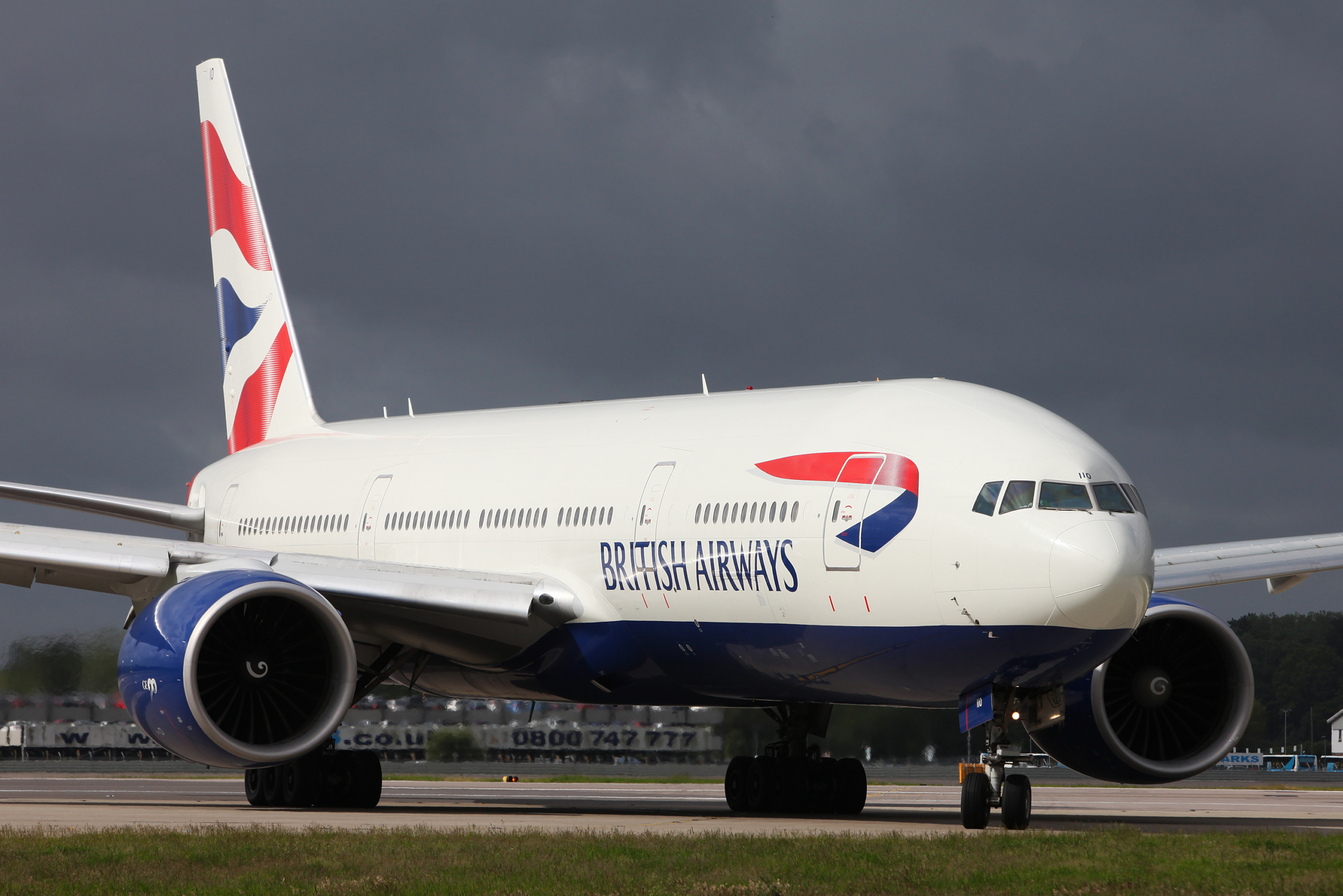
The three big European legacy airline groups released their third quarter (Q3) results over the last two weeks, demonstrating how they performed during the all-important summer period where they generate most of the year’s revenue.
The International Airlines Group (IAG), Lufthansa Group and Air France-KLM all suffered from higher fuel prices. For all three, the fuel bill increased by about 30% in Q3 2026 compared to last year.
While hedging helped cushion the blow, it did not fully mitigate the surge. By contrast, U.S. carriers -which largely eschew fuel hedging – saw their fuel bills skyrocket by as much as 69%.
Revenue increases helped mitigate part of the increase in fuel costs
Lufthansa Group continued to lag behind Air France-KLM and International Airlines Group.
Fuel took on a larger share of Lufthansa’s overall expenses, reaching roughly 22%. This remains lower than its peers, with fuel accounting for approximately 30% of expenses at IAG and 25% at Air France-KLM.
| 2026 EBIT €1,726m | 2026 EBIT €1,407m | 2026 EBIT €1,346m | |||||||||||||||
9,328 | 9,744 | 7,275 26% | 8,018 30% | 11,199 | 12,240 | 10,504 19% | 11,627 22% | 9,213 | 9,916 | 7,993 21% | 8,570 25% | ||||||
| 2025 | 2026 | 2025 | 2026 | 2025 | 2026 | 2025 | 2026 | 2025 | 2026 | 2025 | 2026 | ||||||
| Revenue | Expenses | Revenue | Expenses | Revenue | Expenses | ||||||||||||
IAG EBIT margin, 2026 17.7% Change on 2025 ▼ −4.3 pts | Lufthansa Group EBIT margin, 2026 11.5% Change on 2025 ▼ −0.4 pts | Air France-KLM EBIT margin, 2026 13.6% Change on 2025 ▲ +0.4 pts | |||||||||||||||
Note: EBIT figures are Adjusted EBIT numbers. This may mean some variation in the types of adjustments made by each airline group.
Dillon Shah, Aerospace Global News / ADS Advance
That said, Lufthansa’s costs are significantly higher than the other two in absolute terms, driven by substantial non-fuel costs from its Lufthansa Technik subsidiary. However, the subsidiary generates considerable revenue, up 20% year-on-year.
Lufthansa led the trio in total revenue growth, rising 9% to just over €12.2 billion. Air France-KLM followed with €9.9 billion (up 8%), while IAG recorded €9.7 billion, a modest 5% increase.
Low-cost subsidiaries performed best across all three airline groups
Looking at individual airlines, low-cost units outperformed their premium peers across all three airline groups.
For IAG, Vueling led the way with a healthy 23.8% operating margin this quarter. Lufthansa’s point-to-point business segment generated an 18.7% margin. This mainly comprises Eurowings, but also considers Eurowings Holidays and the equity investment in joint-venture SunExpress. Finally, for Air France-KLM, the low-cost Transavia branch held a 16.3% operating margin, considerably higher than the Paris-based unit at 13.5% and KLM at 11.4%.
| Airline, 2026 revenue (change) | Group | Margin, % | Change | Load factor, % | |||||
Vueling €1,079m (0%) |
|
| ▼ −1.5 pts | 91.9% ▲ +1.4 pts | |||||
Iberia €2,299m (+7%) |
|
| ▼ −4.1 pts | 88.3% ▼ −0.3 pts | |||||
LHG P2P €1,140m (+9%) |
|
| ▼ −0.2 pts | 87.9% 0.0 pts | |||||
Aer Lingus €815m (+3%) |
|
| ▼ −4.2 pts | 79.7% ▼ −1.1 pts | |||||
Austrian €851m (+13%) |
|
| ▲ +0.8 pts | 86.8% ▼ −1.4 pts | |||||
Transavia €1,371m (+10%) |
|
| ▼ −1.2 pts | 88.9% ▲ +0.2 pts | |||||
SWISS €1,916m (+5%) |
|
| ▲ +0.3 pts | 85.4% ▼ −2.7 pts | |||||
Brussels Airlines €577m (+12%) |
|
| ▲ +1.4 pts | 85.3% ▼ −0.4 pts | |||||
British Airways €5,015m (+4%) |
|
| ▼ −5.8 pts | 84.5% ▲ +0.7 pts | |||||
Air France €6,002m (+5%) |
|
| ▼ −0.7 pts | 87.3% ▼ −0.9 pts | |||||
KLM €4,011m (+12%) |
|
| ▲ +1.6 pts | 89.9% ▲ +0.1 pts | |||||
Lufthansa €5,004m (+3%) |
|
| ▼ −3.3 pts | 86.4% ▼ −1.0 pts | |||||
Dillon Shah, Aerospace Global News / ADS Advance
Iberia’s performance was particularly noteworthy considering its high margins, as well as Aer Lingus and Austrian. Lufthansa Airlines remained at the bottom of the list with a 6% margin. The airline’s primary value stems from its intercontinental business, CEO Carsten Spohr reiterated in the group’s third-quarter earnings call.
Vueling and KLM had the highest load factors during the quarter, with 91.9% and 89.9% respectively.
International Airlines Group focuses on protecting profitability and growing premium capacity
IAG boasted the highest margins amongst Europe’s major airline groups at 17.7%. Despite a reduction of over 4 percentage points, its performance was robust. Healthy demand and solid revenue performance helped mitigate some of the impact of higher fuel prices. It saw strong yields across all markets.
The group’s executives pointed to ongoing disruption in the Middle East, air traffic control-induced flight disruption and higher fuel costs as concerns this quarter. British Airways was particularly affected by flight disruption and also Heathrow baggage system failures, group CFO José Antonio Barrionuevo said in the earnings call.
Capacity at Vueling and Iberia was reduced to “protect profitability” in what is a competitive short-haul environment, which helped drive unit revenue in the European market.

Meanwhile, overall corporate travel performance is “strong” driven by technology and the banking sectors that are “doing better,” IAG CEO Luis Gallego said. British Airways CEO Sean Doyle also said that this performance was also driven by “really strong demand from smaller businesses” trading in and out of the UK. Transit corporate demand from the US and India also helped results this quarter.
The group continues to focus on its premiumisation strategy. Recently, it announced that it would reconfigure its Airbus A380 fleet with the world’s largest business class cabin featuring 106 Club Suites.
Air France-KLM to restructure its Amsterdam portfolio
Though KLM’s operating margin improved, the group announced that the Amsterdam-based subsidiary would be undergoing a restructure to ensure its future cost efficiency. In light of the recent decree limiting the number of flights at Amsterdam Schiphol Airport, CEO Benjamin Smith noted that changes now needed to be made to “further establish a stronger financial foundation for a sustainable KLM.”
While its operating margin reached 11.4% for the quarter, year-to-date performance has not been as strong. It achieved a 4.8% margin for the first nine months of 2026, showing that its ‘Back on Track’ program has not been sufficient to achieve the Group target of an operating margin above 8%. It will decrease the number of positions at KLM by about 5,000 in total. It will also use Embraer E195-E2s to replace planned A320 fleet growth in the future, ensuring a smaller European feeder operation for its core long-haul network.
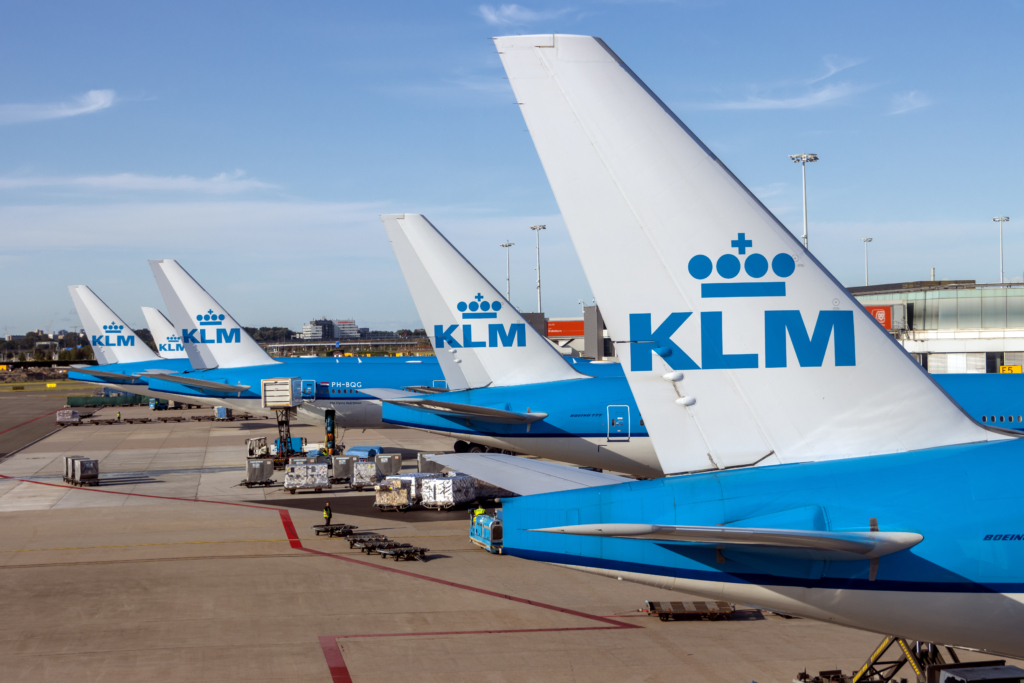
Smith clarified that previously KLM was a “real volume market” focusing on low-cost connections. However, with rising costs imposed by the Dutch government, it now has to focus on feeding more profitable long-haul connections and streamline capacity accordingly. It will also work to focus on capturing a “greater share of the local market” in Amsterdam which may provide yield uplift.
This forms part of its premium strategy as it sees revenue growth in non-economy cabins. Smith noted an “upmarket shift” across the group, with the share of revenues generated by business and Air France’s La Première increasing from 26% to 29%. Premium Economy’s share rose one percentage point to 8%. Overall, premium revenues now account for 37% of its total, up four points compared to 2024.
Luthansa Group studying future of its Vienna and Brussels portfolios
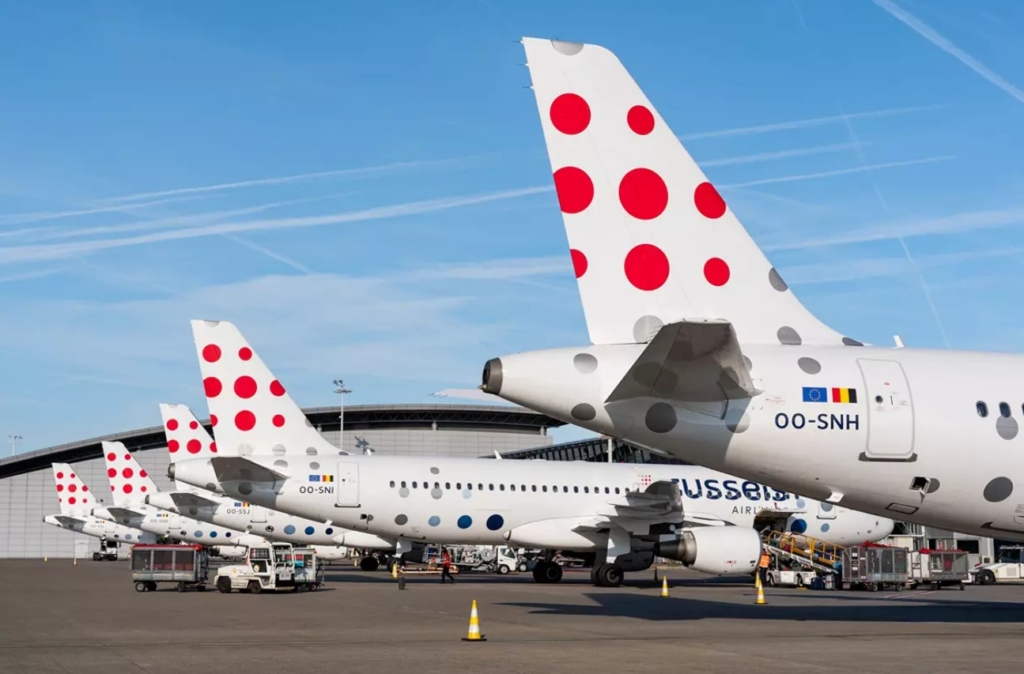
In its earnings call, the German-headquartered group recognised that its network airlines segment remains in a fragile position and pointed to the underperformance of the flagship Lufthansa Airlines unit. Its other airlines, namely Austrian, SWISS and Brussels Airlines saw result improvements during the period.
CFO Till Streichert admitted that at Lufthansa Airlines “limited capacity growth and additional strike-related customer compensation payments weighed on the result.”
He described the turnaround program as “a key lever for further earnings improvement” moving forward. He pointed to strict cost discipline but also improvements to widebody utilisation and productivity as it reduces the “share of widebody reserve aircraft by about a fourth.”
Another highlight included healthy improvements in ancillary revenues for its network airlines, helping drive a growth in revenue.
“The good performance was primarily driven by strong yields, but also by very strong ancillary revenues, which increased by 21% versus last year,” Spohr shared. “This growth was supported on the one hand by an enhanced fare structure, but also by upgrades at an unseen level, and by the more differentiated offerings of our new onboard products, Allegris and SWISS Senses.
Moving forward, Spohr also suggested that the group was looking at optimising its Austrian Airlines and Brussels Airlines units. While admitting that they are “profitable operations” that “do create value,” he revealed that the group is studying whether an AOC is needed at every hub or whether they can be merged.
“We believe there could be less local value creation in terms of admin, in terms of things which can be done jointly,” he added.


