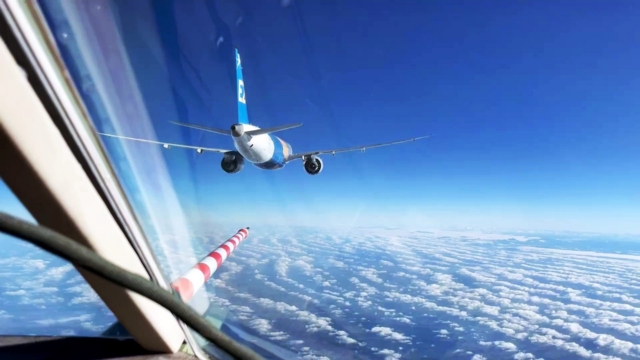


NAV Canada marks 30 years of innovation, investment and aviation safety

7 min read


When it was established in 1996, NAV Canada marked a radical departure from the traditional government-run mode of air navigation services. Today, the organisation is celebrating three decades of operations defined by technological innovation, significant infrastructure investment and an ongoing commitment to aviation safety.
President and CEO Mark Cooper told Aerospace Global News that the ANSP’s anniversary provides an opportunity to reflect on how far the business has come, while recognising the challenges and opportunities that lie ahead.

“Each decade brought a different achievement, and each time our people turned an operational need into a practical solution,” Cooper said.
How NAV Canada transformed air traffic management in Canadian skies
One of the earliest milestones came just two years after the organisation’s creation, when NAV Canada developed its EXCDS electronic flight-strip system. At the time, flight data was still managed using paper strips annotated by hand by air traffic controllers. The introduction of EXCDS moved that information into the digital domain, laying the groundwork for further advances in air traffic management.
The organisation subsequently extended surveillance coverage across the North of the country and over Hudson Bay, before another breakthrough in 2019 with the introduction of space-based automatic dependent surveillance-broadcast (ADS-B), transforming surveillance capabilities over oceanic and remote airspace.
These developments form part of more than a US$3.5 billion investment in Canada’s air navigation system since 1996.
However, Cooper said the achievement he takes greatest pride in is that the organisation has delivered this transformation while maintaining Canada’s position among the safest aviation systems in the world.
Disrupting the traditional air navigation model
A central feature of NAV Canada’s 30-year story has been its non-profit, cost-recovery operating model, which Cooper believes has provided the organisation with the flexibility to pursue long-term modernisation.
Unlike traditional government-funded air navigation providers, NAV Canada is funded by the system’s users. This allows it to plan investments over decades, while giving customers a voice in how services develop.
Cooper points to the organisation’s investment in Aireon in 2012 as an example of the model’s potential, helping demonstrate the value of space-based ADS-B before the technology was commercially established.
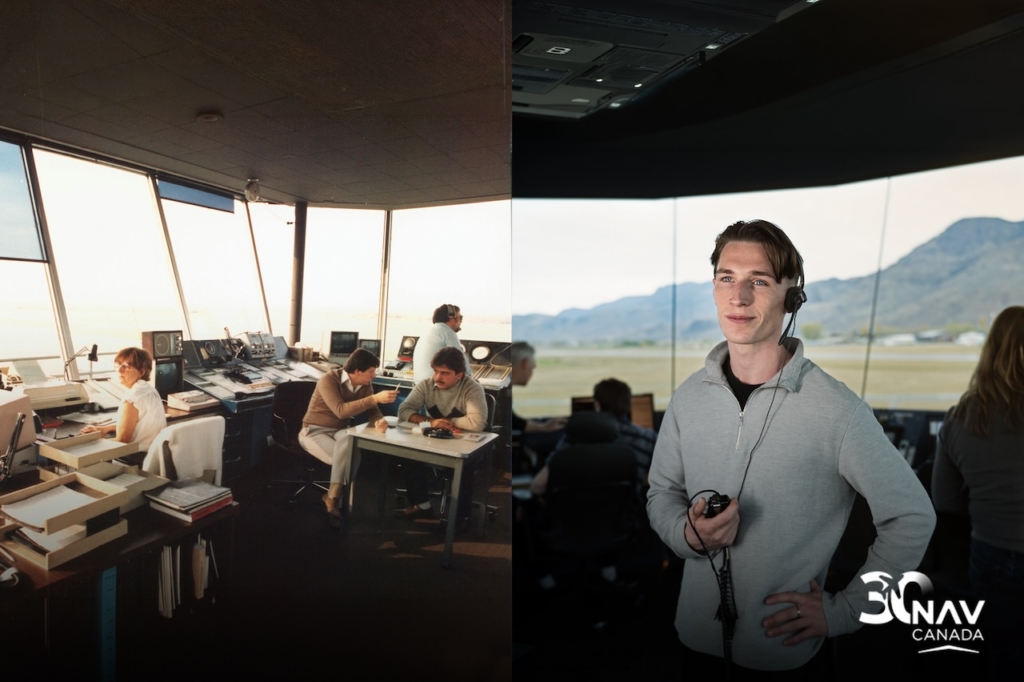
The model has also enabled NAV Canada to invest heavily in modernisation while managing costs for airspace users. The organisation operates on a cost-recovery basis, with no shareholders to pay. Service charges are established through a published framework that includes mandatory customer engagement and an appeal process through the Canadian Transportation Agency.
Notably, Cooper added that charges remain below the former Air Transport Tax paid by travellers before NAV Canada was established.
While other countries have examined the Canadian model over the past three decades, he emphasised that there is no single approach suitable for every jurisdiction.
“Every country chooses what works for them; this is what worked for Canada.”
Building resilience in the face of headwinds
The organisation’s 30th anniversary also comes after a period of considerable operational and financial challenges.
The COVID-19 pandemic brought a sharp decline in air traffic and revenue, requiring NAV Canada to focus on strengthening its core business as traffic recovered, rebuilding capacity and revitalising critical infrastructure.
Workforce development remains a particular priority. Cooper said the organisation is currently approximately 170 air traffic controllers below its staffing targets, although progress is being made to close the gap.
Nearly 400 controllers have been licensed since 2023, with close to 500 students currently in training.
For Cooper, the experience has reinforced an important lesson about the nature of organisational resilience.
“Resilience does not maintain itself. It must be actively built, in our people and in our systems.”
Preparing for a more complex aviation environment
Looking ahead, NAV Canada’s next three decades are likely to be shaped by a much broader mix of airspace users and increasingly sophisticated technology.
Remotely piloted aircraft systems (RPAS), advanced air mobility (AAM) and space operations will increasingly share airspace with conventional aviation, creating new demands for coordination, information-sharing and safety management.
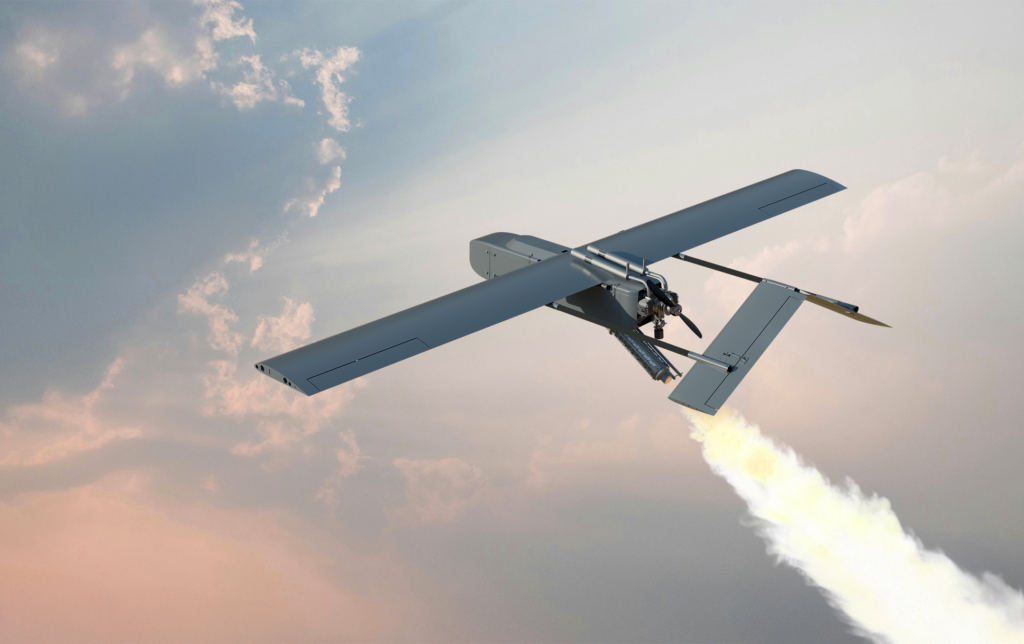
NAV Canada is already developing services to accommodate these emerging users. Its NAV Drone platform provides services to drone operators, while the organisation is working with Indra on the RPAS Flight Information Management System (rFIMS) designed to share flight information between uncrewed operators, air traffic services and conventional aviation.
Cooper said the principle is to integrate new users progressively, ensuring they operate within the same fundamental safety framework as traditional aviation.
“New users are brought in on the same safety foundation as everyone else, step by step, and only when the tools and procedures are ready.”
At the same time, managing growing traffic volumes will require more efficient use of existing airspace capacity.
In addition, NAV Canada’s Digital Twin-Sector Performance Optimizer is now operating at all seven area control centres. By forecasting demand and controller workload up to approximately 30 hours ahead the technology helps the organisation configure sectors to better match anticipated traffic levels.
Further developments in trajectory-based operations will allow aircraft to be managed according to their complete four-dimensional flight paths, rather than through individual sectors, supporting earlier conflict detection and more predictable traffic flows.
A rapidly evolving digital sector
Digitalisation is another key factor in the organisation’s future strategy.
Cooper explained that NAV Canada’s Digital Aerodrome Air Traffic Services (DAATS) programme is helping deliver certain services remotely using high-resolution cameras, microphones and secure networks.
Subject to certification by Transport Canada, the Kingston Digital Facility is set to become Canada’s first digital air traffic facility, after transitioning operations from Kingston Flight Services Station in autumn 2027.

However, Cooper is keen to stress that the wider rollout of digital facilities and artificial intelligence (AI) will not remove the central role of aviation professionals. It is intended to support planning, forecasting and information analysis.
“In every decision that affects safety,” human expertise must remain central, he said, emphasising that controllers continue to issue clearances and separate traffic, while digital tools support their planning.
“Aviation remains a people-driven industry. In a safety-critical sector, technology cannot run ahead of trust, governance, or accountability.”
Joining SESAR and the next generation of ATM
NAV CANADA’s influence has also extended beyond Canada’s borders. In June 2026, it became the first air navigation service provider outside Europe to join the Single European Sky ATM Research (SESAR) 3 Joint Undertaking as an associate member. The organisation is now participating in four joint projects, connecting its modernisation programme with European research partners and helping align Canadian systems with emerging international standards.
Its membership of the iTEC Alliance is another important step. Working with Indra and European partners, NAV Canada is developing iTEC SkyNex, a next-generation air traffic management system based on a shared, open architecture.
The system’s new flight data processor will calculate trajectories, identify potential conflicts and update flight information in real time. The anticipated benefits include more efficient routings, earlier conflict detection and more predictable, fuel-efficient traffic flows.
For an organisation responsible for managing nearly 18 million square kilometres of airspace, including a substantial portion of the North Atlantic, international interoperability will be increasingly important.
Cooper said collaboration is essential because aviation’s future cannot be developed by individual service providers working in isolation.
Looking ahead to the next 30 years
While predicting precisely what aviation will look like in 2056 is difficult, Cooper expects a more integrated and digital environment in which crewed and uncrewed aircraft and space operations share airspace, aircraft are managed through trajectory-based operations, and more services are delivered from digital facilities.
The challenge will be keeping pace with technological and operational change without compromising safety, security or resilience.
Ultimately, Cooper believes the organisation’s future success will depend less on any single technology than on its ability to bring people, processes, data and partners together.
And while the aviation environment may look very different in another 30 years, he hopes the principles that have defined NAV Canada since 1996 will remain unchanged.
“I hope that at 60, NAV CANADA will still be recognised for the same strengths as today: safety first, the expertise of our people, a willingness to think differently and the ability to work with partners to make the whole system better.”