Icelandair eyes fleet-wide premium seating expansion after record Q3 profit

3 min read
In Icelandair’s third-quarter earnings call, the company revealed it is weighing the possibility of expanding the number of premium seats on all its aircraft. This comes amid increased demand and revenue from its premium products that helped drive healthier results despite higher costs industry-wide.
The carrier rationalised capacity over the quarter but achieved higher average yields that drove up revenue. Overall passenger numbers declined, particularly connecting travellers via Iceland. Its load factors marginally benefitted from the drop in capacity, reaching 86.5% (up 0.6 percentage points).
Icelandair eyes more premium seating on its planes as demand soars
Icelandair seems bullish about its premium offering per its third-quarter earnings call. Chief Executive Officer Bogi Nils Bogason said premium demand “has never been stronger” as the company registered an 18% increase in passengers onboard its Saga class product.
Premium capacity rose 9% during the period, partly due to a reconfiguration of its 737 MAX 9 fleet with additional such seats. Revenue generated through the Saga product grew 35%.
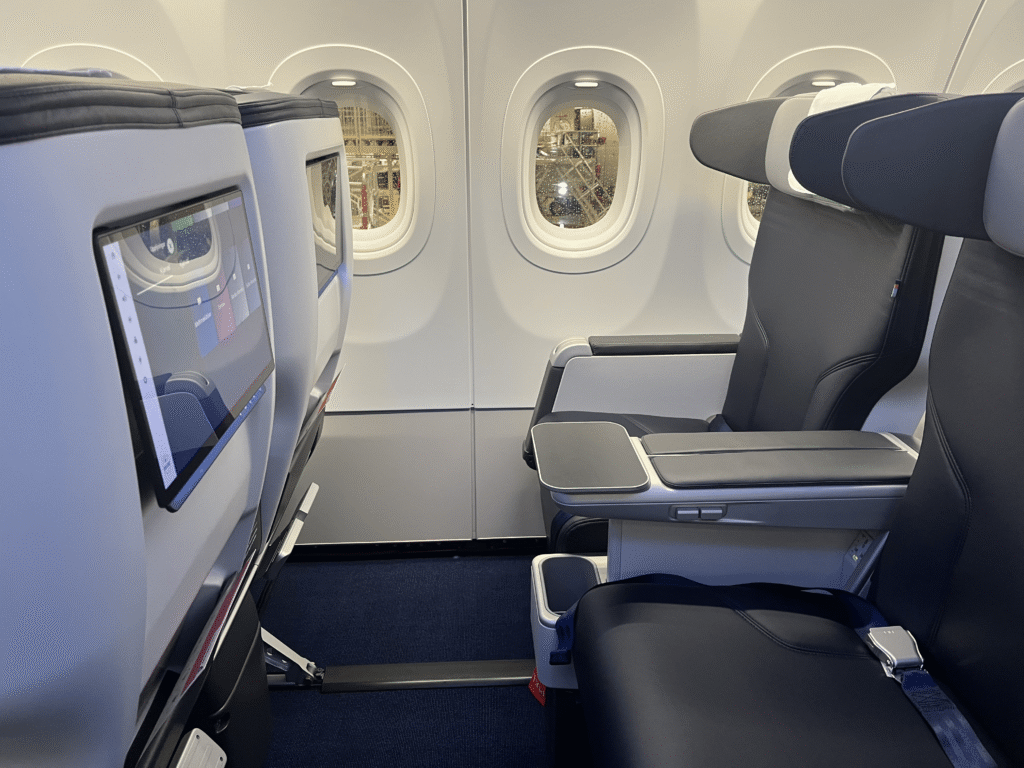
“That change [on the 737 MAX 9s] has worked well and increased our revenue, and we are now looking into the possibility of adding more premium seats to the whole fleet.”
The company also adjusted its fare offering for the segment. Its lowest Saga tier does not include lounge access outside its Keflavik hub, only allows seat selection for a fee and a single checked bag.
“Recently, we de-bundled part of our Saga Premium product, and we are looking into further Saga fare options to increase customer choice even more,” the CEO continued.
Revenue grew much faster than its costs, improving Icelandair’s EBIT
Icelandair’s operating profit for the period reached USD 120 million, an increase of 62% compared to the same quarter last year. Growth in its operating revenue (+12%) outpaced its cost development (+5%).
It saw particular increases in its leasing revenue through subsidiary Loftleiðir-Icelandic ehf, which rose by 30%. It also benefitted from an 11% increase in both passenger and cargo revenue, as well as a 19% uptick in other revenue driven by gains in the sale of operating assets.
Stable depreciation and amortisation figures amid higher EBITDA numbers helped drive up its operating profit year-on-year.
Fuel expenses rose 11% for the quarter, much less than for its American peers
The airline saw a 55% increase in its fuel price but was able to mitigate the impact thanks to its hedging efforts, as well as fleet changes and efficiency gains to a smaller extent.
“Fleet changes increased fuel efficiency, reduced cost even further, showing how our fleet renewal program is helping us manage the cost pressure,” Chief Financial Officer Ívar Sigurður Kristinsson explained in the earnings call.
“Looking ahead, we have approximately 45% of the fourth quarter fuel consumption hedged at $722 per ton, which gives us improved cost visibility into that quarter.”
Carriers in the United States have largely stopped hedging fuel. When Southwest ended the practice in 2025, its reasoning was that it was too expensive and no longer made sense.
It had “not been beneficial to the company for the past 10 to 15 years,” Southwest CEO Bob Jordan said. He also said that hedging premiums had “gotten more expensive” meaning it made little sense to continue the practice.
Delta Air Lines, meanwhile, also does not hedge but does own an oil refinery. This was meant to partially shield the carrier from the impact of jet fuel price increases. In Q3, the refinery generated a $33 million operating loss, attributed to crude pricing volatility and a costly outage in June 2026, mitigating substantial increases in revenue through growth in third-party sales.
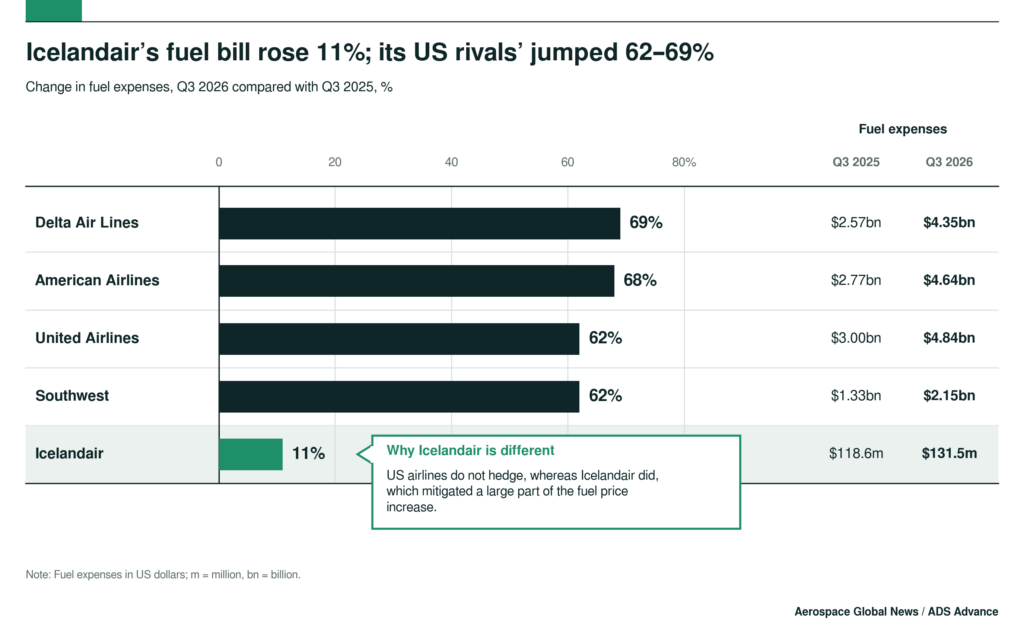
For airlines in Europe, including Icelandair, hedging is much more commonplace. While risky, it can protect airlines in the event of sudden fuel price hikes – as is the case today amid the war in Iran. Most European airlines, alongside Air Canada, present their third-quarter results at the beginning of next month.
Sign up for our newsletter and get our latest content in your inbox.


More from

October 25, 20266 min read

October 25, 20265 min read