American Airlines widebody order expected by year-end as weaker Q3 results fail to slow fleet renewal plans

3 min read
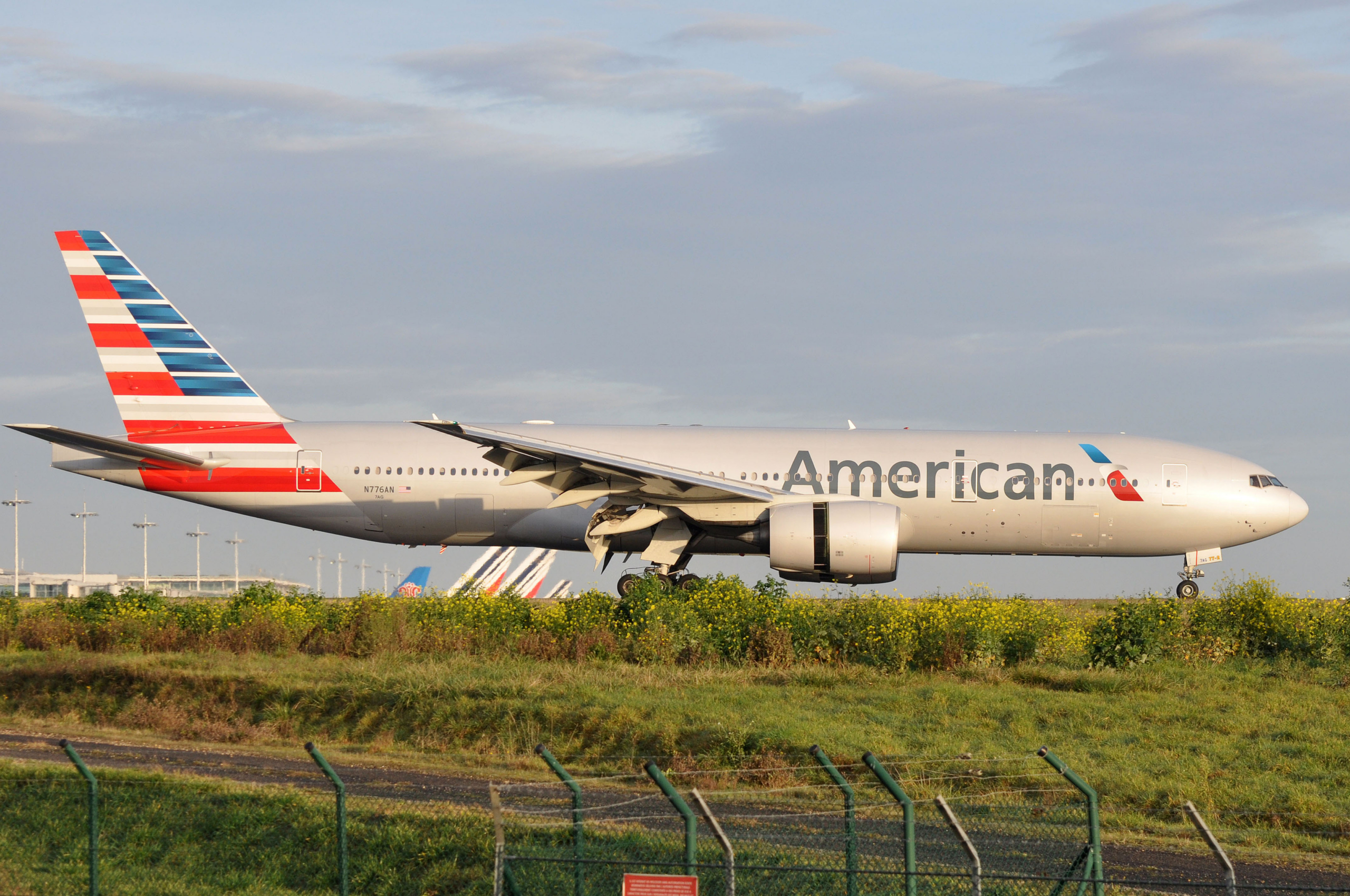
American Airlines released its third quarter results on Thursday, showing improved revenue performance but weakening margins as operating expenses increased significantly.
During the carrier’s conference call, Chief Commercial Officer (CCO) Nat Pieper revealed that it was in the process of planning its new widebody order which it hopes to finalise by the end of the year. While few details were disclosed, the carrier did specify that the campaign is aimed at replacing its ageing fleet of Boeing 777-200ERs.
Replacing an ageing Boeing 777-200ER fleet
American Airlines currently has 47 Boeing 777-200ERs in its fleet, and are among the oldest aircraft types it owns. With an average age of just under 26 years, they far exceed its other widebody types including the 777-300ERs (13 years) or its even younger 787s.
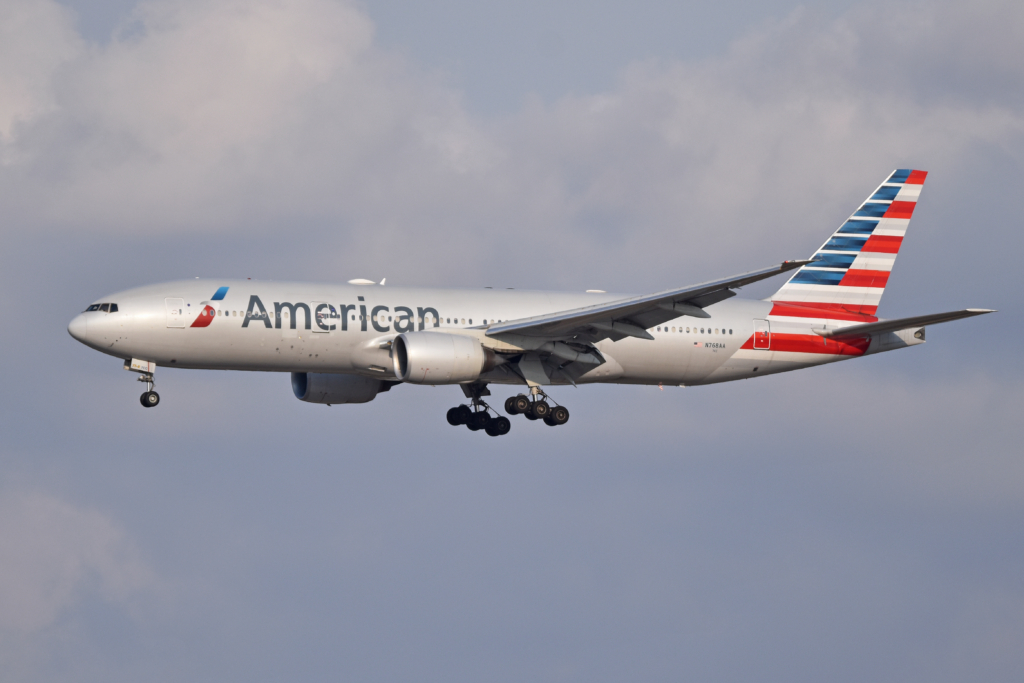
In the conference call, Pieper was asked about the plan for the widebody fleet and potential orders. He shared that the carrier had been “working on a campaign there for the past six or seven months” and added that they are “getting close” to a decision.
“This allows us to replace the 777-200 fleet in the next decade and have some additional growth in addition to the 19 or so 787s we have coming on and the options there,” he continued.
The overall size of the fleet is not expected to grow beyond current numbers “although there may be some growth over the years on the large [widebody] side.”
Costs leaning into margins despite record revenue growth
American Airlines reported weaker financial performance during its third quarter results as it saw operating expenses increase nearly 20% driven largely by a 68% increase in fuel costs. Its net loss doubled year-on-year to -$269 million.
For the first nine months of this year, the carrier reported a loss of -$580 million compared to a $12 million profit in 2025. The carrier also expects to post a full-year loss.
The fourth quarter is typically among the most challenging for airlines due to much lower demand for travel. CEO Robert Isom said that it already sees higher demand than usual for the period, though.
American Airlines did achieve record revenues during the period though, increasing 19% during the third quarter. This was thanks to considerable improvements in its yield performance up 18%, contributing to passenger revenue increasing 20%. Overall revenue is up 16% across the nine months.
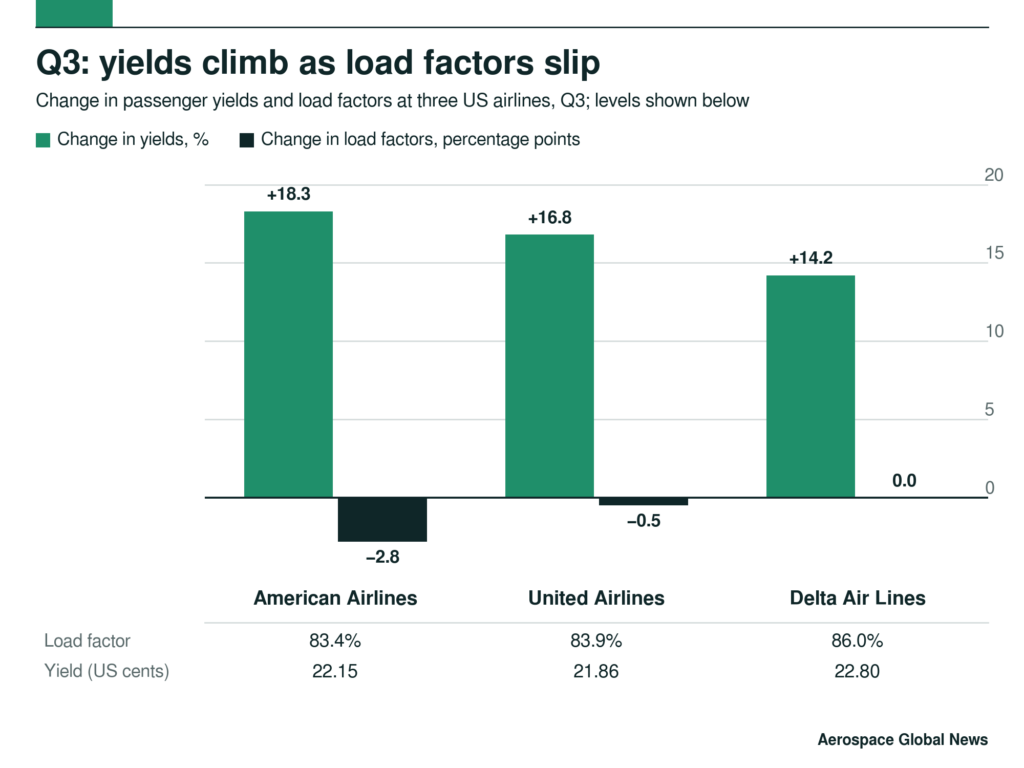
American Airlines had some of the best yield performance among the big three United States network carriers, only slightly behind Delta. This hit its load factors particularly hard though, reducing nearly 3% during the quarter to 83%. Pieper said that with yield improvement as a “top priority” it is “willing to accept margin load factor minutiae from doing that”.
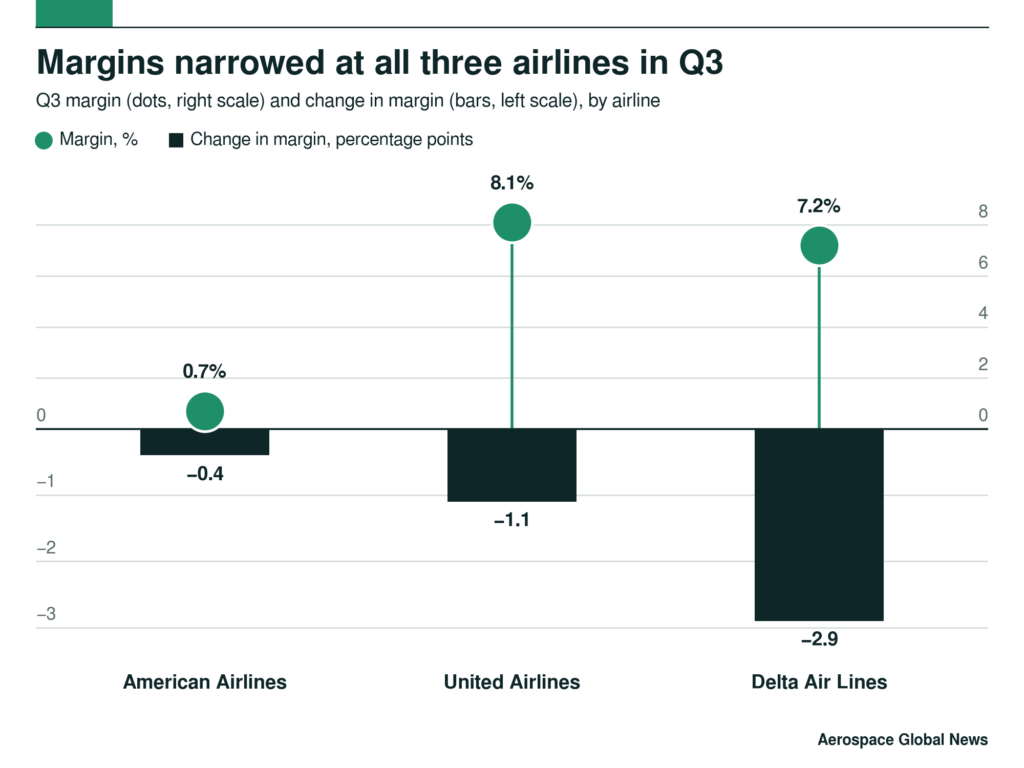
Margins across the large three carriers were also impacted by higher costs. American managed to maintain its margin position better than Delta and United, but the overall position is weaker. Its margin stands at just 0.7% compared with Delta’s 8.1% and 7.2% at United.
Revenue up across all markets, though transatlantic lags behind
American Airlines saw improved yield and revenue performance across all markets, particularly the US & Canada and Latin America.
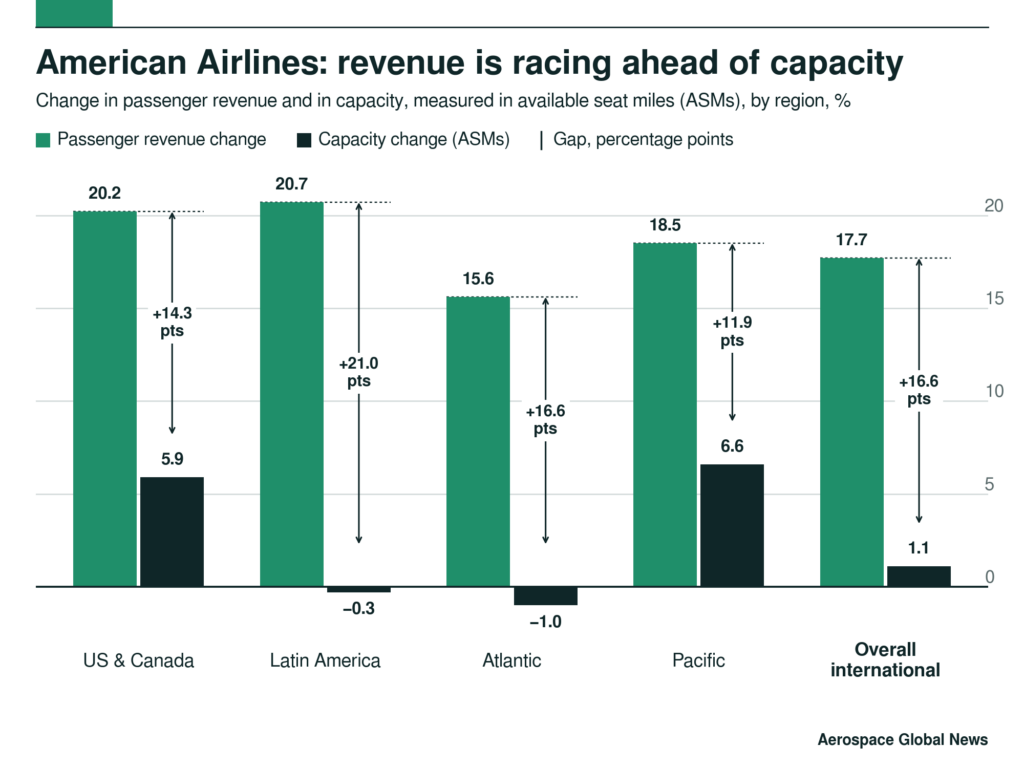
Despite a decrease in capacity of -0.3%, American Airlines still managed a nearly 21% increase in revenue in its Latin America market.
Its largest capacity increases were in the Pacific, a market the company seems bullish about. It hopes to revitalise its Los Angeles hub with a somewhat newfound purpose as its Pacific gateway.