


Updated: eVTOLs and next-generation aircraft to watch at Farnborough International Airshow 2026

Farnborough International Airshow has always been a showcase for the future of aviation. This year’s event will put a spotlight on advanced air mobility (AAM), sustainable flight and next-generation aircraft.
Alongside the latest commercial airliners and military platforms, visitors will be able to see several aircraft in the flying and static displays that offer different approaches
Though some are still in development, Farnborough is an ideal venue for manufacturers to demonstrate progress towards certification and commercial service.
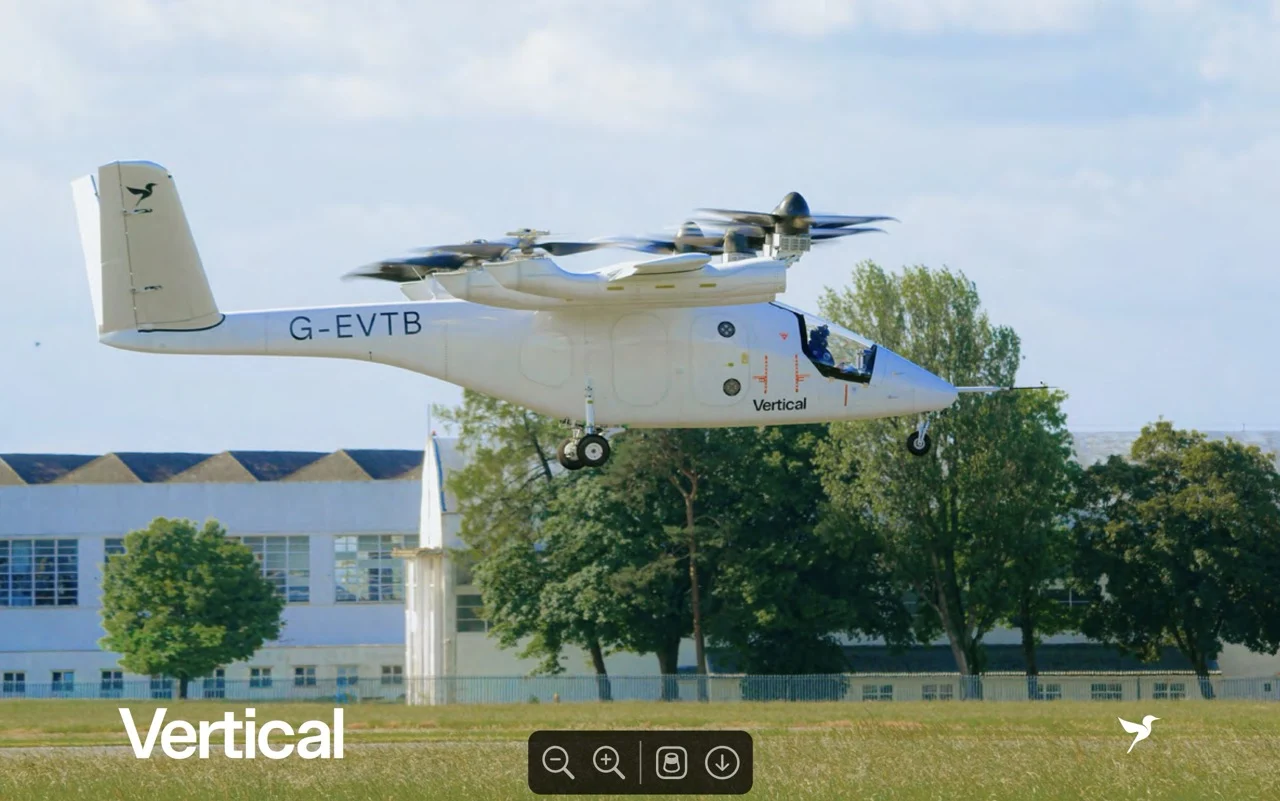
Vertical Aerospace VA-1Xa
Vertical Aerospace will bring its full-scale piloted VX4 prototype to the Farnborough flying display, marking the first time an electric vertical take-off and landing aircraft has performed public demonstration flights at the international airshow.
The company plans to fly the aircraft throughout the event, although appearances will remain subject to approved flight conditions and final display timings.
- Display: Flying display
- Aircraft type: Full-scale piloted eVTOL prototype
- Maximum demonstrated speed: 115 mph
- First piloted flight: 2024
The announcement follows an expansion of Vertical’s Permit to Fly by the UK Civil Aviation Authority, authorising public demonstration flights away from the company’s Flight Test Centre at Cotswold Airport.
The aircraft has also completed piloted transition flights, moving between vertical lift and wingborne forward flight. Its appearance at Farnborough will therefore provide visitors with a live demonstration of technology that has progressed considerably beyond the ground-test and hover phases.
The VX4 previously completed a 17-mile piloted flight from Cotswold Airport to RAF Fairford in July 2025, reaching 115 mph and an altitude of 1,800 feet
Vertical Aerospace Valo
Alongside its flying prototype, Vertical Aerospace will display a full-scale commercial model of Valo inside Hall 4.
Valo is the commercial aircraft being developed from the technology and flight-test experience gained through the VX4 programme. Vertical is targeting a range of up to 100 miles and a cruise speed of approximately 150 mph for the all-electric aircraft.
- Display: Static display, Hall 4
- Range: Up to 100 miles (160 kilometres)
- Cruise speed: 150 mph (240 kph)
- Propulsion: All-electric
Valo represents Vertical’s intended commercial configuration rather than an aircraft currently undergoing flight testing. Its presence alongside the flying VX4 will allow visitors to see both the technology demonstrator and the aircraft Vertical ultimately plans to take through certification and into passenger service.
The company expects to complete Valo’s Critical Design Review by the end of 2026, establishing the design baseline for the construction and testing of certification-conforming aircraft.
BETA Technologies CX300
BETA Technologies will showcase its CX300, an all-electric conventional take-off and landing (CTOL) aircraft. The aircraft will be flying for the first time at Farnborough with a daily flight display scheduled during the show and will also be on static display.
Unlike many AAM developers focused exclusively on eVTOL aircraft, BETA is pursuing two complementary aircraft that share the same electric propulsion system:
- ALIA eVTOL
- CX300 conventional electric aircraft
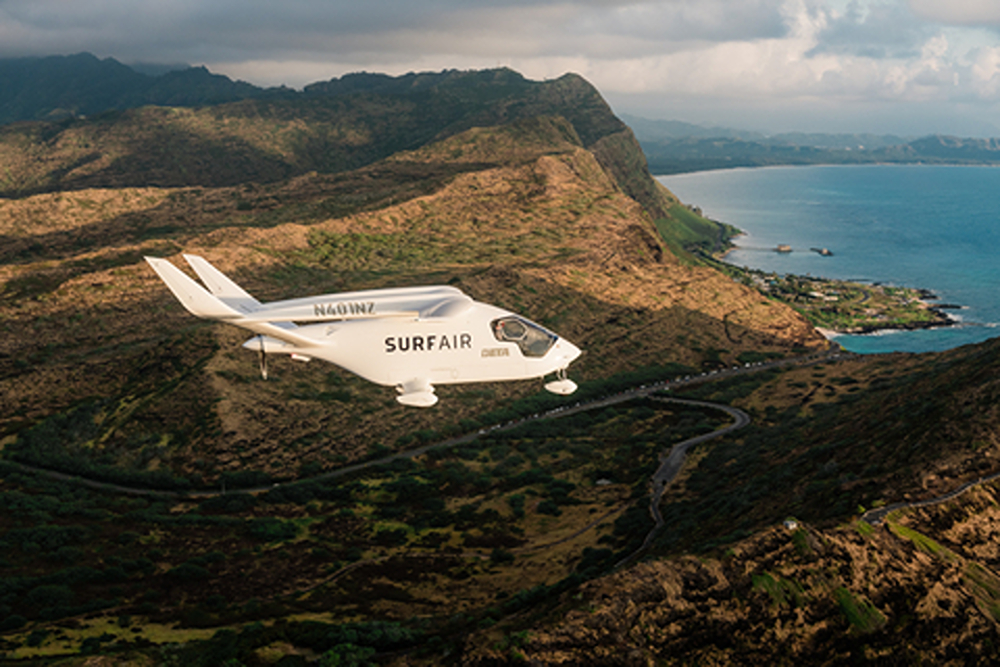
The CX300 facilitates regional passenger transportation, cargo operations, and logistics within existing airport infrastructure.
- Wingspan: 15.2m
- Length: 11.1m
- First Flight: 2024
- Range: 622 kilometres
- Max Speed: 280 kph
BETA has become one of the industry’s fastest-moving developers, with its aircraft conducting demonstration flights in the United States, Europe and New Zealand.
BETA Technologies MV250
Another BETA aircraft, the ALIA MV250, will also feature in the static display. Still under development, the aircraft addresses demand for zero-emission aircraft capable of supporting short-haul logistics and last-mile air cargo.
The autonomous MV250 would carry up to 2,000 lbs of cargo over 250 nautical miles, with a ferry range over 1,300 nautical miles.
- Wingspan: 15.2m
- Length: 11.1m
- First Flight: N/A
- Range: 2400 kilometres
- Max Speed: 280 kph
The aircraft also has defence applications. As AGN reported last year, the MV250 is being adapted to meet US military requirements for long-range, low-heat and low-noise signature operations.
GE Aerospace Saab 340B hybrid-electric testbed
GE Aerospace’s Saab 340B is also scheduled for daily flight displays and on static display at Farnborough. The regional airliner serves as a flying testbed for hybrid-electric propulsion research as part of NASA’s Electrified Powertrain Flight Demonstration (EPFD) programme.
- Wingspan: 21.33m
- Length: 20m
- First Flight: 1989
- Range: 1852 kilometres
- Max Speed: 351 kph
GE Aerospace partnered with Boeing and its subsidiary, Aurora Flight Sciences, on the program to modify the Saab 340B aircraft for ongoing testing. Aurora Flight Sciences installed a hybrid electric system that operates in parallel with GE’s CT7 gas turbines to test electric motor/generator, power conversion, energy management and other technologies.
In June of this year, GE announced it had completed ground testing of the megawatt-class hybrid-electric engine system developed with NASA.
Engineers tested the system by simulating various flight phases, including taxi, take-off, climb and cruise. The electric system successfully powered the propeller and returned power to the battery system, demonstrating bidirectional energy flow, which is essential for hybrid-electric propulsion.
The test campaign, conducted at GE Aerospace’s Peebles Test Operation facility in Ohio, cleared the way for flight testing on the Saab 340B testbed.
General Atomics AeroTec Do228 NXT
Appearing at Farnborough as a static display, the Do228 NXT is targeted at special mission operations and defence, as well as regional passenger and cargo operations.
- Wingspan: 17m
- Length: 17m
- First Flight: 2026
- Range: 3,028 kilometres
- Max Speed: 444 kph
Based on the Dornier 228 twin turboprop, the Do228 NXT features five-blade propellers, replacing the previous four-blade propellers, which reduce fuel burn and have a lower noise footprint. The aircraft’s short-takeoff-and-landing capabilities make it well-suited for air services to remote locations with limited infrastructure.
A glimpse of aviation’s next chapter
Just as the Airbus A350-1000 and Embraer E195-E2 will showcase the latest generation in commercial aviation, the advanced air mobility aircraft on display at Farnborough provide a different glimpse of the future.
Whether transporting passengers across cities, serving regional communities or delivering cargo with zero-emission propulsion, these aircraft hint at how aviation will evolve over the coming decade as the industry works towards cleaner, quieter and more flexible forms of flight.
Featured Image: Vertical Aerospace


