USAF rethinks E-7 Wedgetail cancellation after Iran war exposed surveillance gap

4 min read

The Pentagon appears to be reversing course on the Boeing E-7 Wedgetail after the Iran conflict exposed the risks of retiring the US Air Force’s ageing E-3 Sentry fleet before space-based alternatives are ready.
According to reporting by The War Zone, the Department of Defense is now seeking to restore funding for the E-7 in its Fiscal Year 2027 budget request after previously attempting to kill the programme.
The shift follows months of growing concern over the shrinking E-3 fleet, alongside operational lessons emerging from the recent air campaign against Iran, where airborne battle management and surveillance aircraft played a critical role in tracking drones, coordinating coalition aircraft and monitoring crowded Gulf airspace.
Pentagon signals renewed interest in Boeing’s E-7 Wedgetail
Rep. Tom Cole raised the issue directly during a House Appropriations Committee hearing, asking Defense Secretary Pete Hegseth whether the Pentagon intended to restore E-7 funding after it was omitted from the Air Force’s FY2027 budget proposal.

Hegseth acknowledged that while the Air Force still intends to move many intelligence, surveillance and reconnaissance (ISR) functions into space over the longer term, the Pentagon is increasingly wary of creating a near-term capability gap.
The Air Force announced plans in 2025 to cancel the E-7 Wedgetail programme, arguing future satellite-based ISR systems would eventually replace large airborne radar aircraft. Officials also cited concerns over cost and survivability, while proposing the Navy’s E-2D Hawkeye as a partial interim solution.

Congress later restored funding in the FY2026 budget to keep the programme alive, including continued prototyping work on a USAF-specific Wedgetail variant. The Air Force has since awarded contracts to Boeing covering five E-7s out of the seven aircraft currently planned.
Iran conflict exposed continuing need for AWACS aircraft
The apparent policy shift comes as recent operations in the Middle East demonstrated the continued value of airborne early warning and battle management aircraft.
The Wedgetail, based on the Boeing 737 platform, is widely regarded as one of the most capable airborne early warning aircraft currently in service.
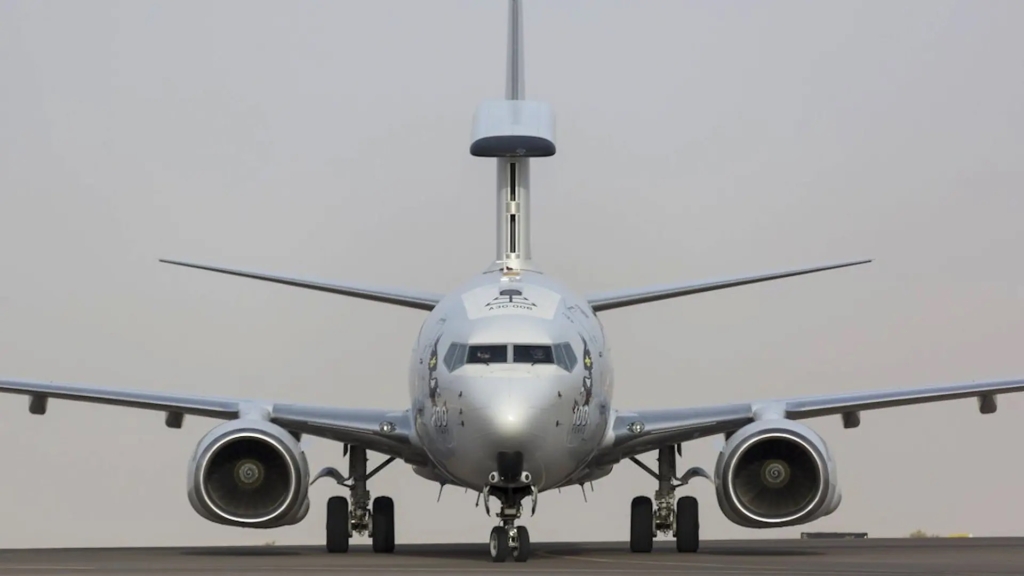
As The War Zone noted, the aircraft provides particularly valuable long-range detection capabilities against low-flying drones and cruise missiles, threats that have become increasingly central to modern warfare.
Unlike satellites, airborne radar aircraft can rapidly reposition, provide persistent theatre-level command and control, and directly coordinate fighter, tanker and surveillance assets in real time.
Analysts have repeatedly warned that space-based systems remain years away from fully replacing those capabilities.
USAF faces mounting pressure as E-3 fleet declines
The renewed interest in the E-7 also reflects the worsening state of the Air Force’s E-3 Sentry fleet.
Many aircraft have already been retired or placed into storage, while operational availability has continued to decline. In February 2026, OSINT analyst Steffan Watkins estimated that only 15 USAF E-3s remained following the destruction of one aircraft during Iran’s strike on Prince Sultan Air Base in Saudi Arabia.
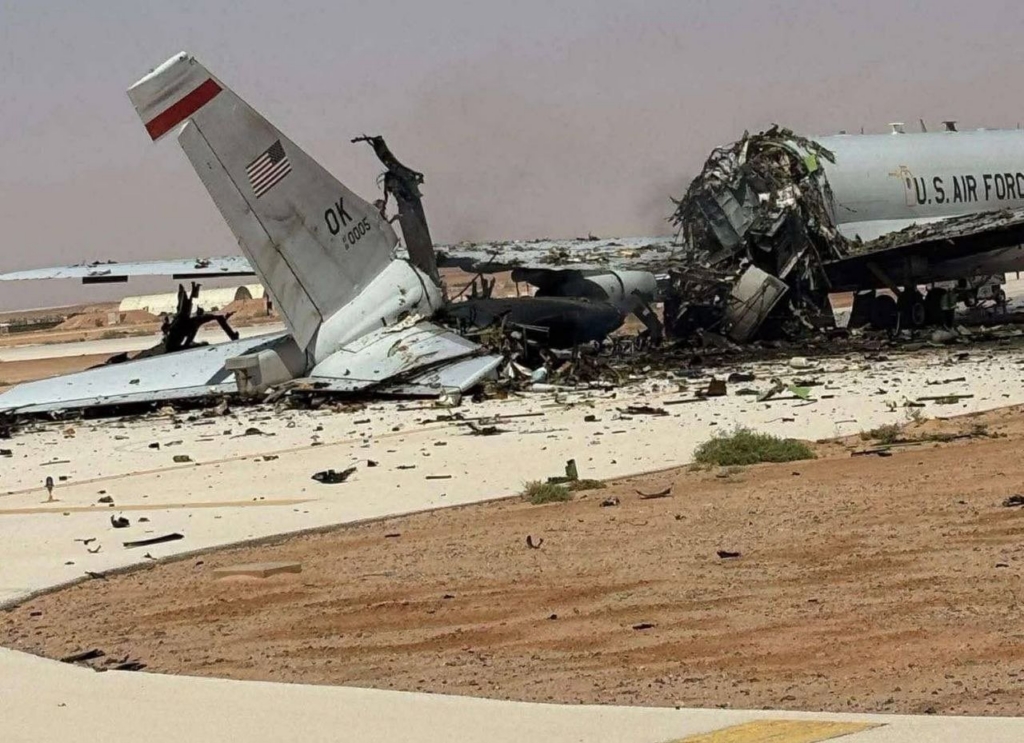
The Air Force reportedly deployed six E-3s to the Middle East ahead of the Iran air campaign, underlining how heavily the service still relies on airborne radar aircraft despite long-term plans to transition toward space-based ISR.

At the same time, recent conflicts have also highlighted the vulnerability of large airborne surveillance aircraft operating near contested airspace. Russia has lost multiple A-50 airborne early warning aircraft during the war in Ukraine, reinforcing concerns about survivability in future high-end conflicts.
NATO also continues to grapple with the future of its own airborne warning fleet. Thirteen E-3s remain in NATO service, although only eight have reportedly been active within the last year. The alliance has stepped back from plans to acquire E-7 Wedgetails and is now considering alternatives, including Saab’s GlobalEye.
However, critics of the Air Force’s original E-7 cancellation plan argue that vulnerability alone does not remove the operational requirement for airborne battle management aircraft, particularly while fully capable alternatives remain years away.
Its usefulness in these roles is demonstrated by Australia dispatching one of its E-7 Wedgetails to assist in countering Iran’s drones. The Wedgetail was originally developed for the Royal Australian Air Force.
Space-based surveillance is still years away
The Air Force’s longer-term vision is to gradually replace vulnerable airborne surveillance aircraft with distributed space-based ISR networks capable of tracking aircraft, missiles and drones from orbit.
Advocates argue satellite constellations would be harder to destroy than a handful of large radar aircraft and could provide persistent global coverage without placing crews near contested airspace.
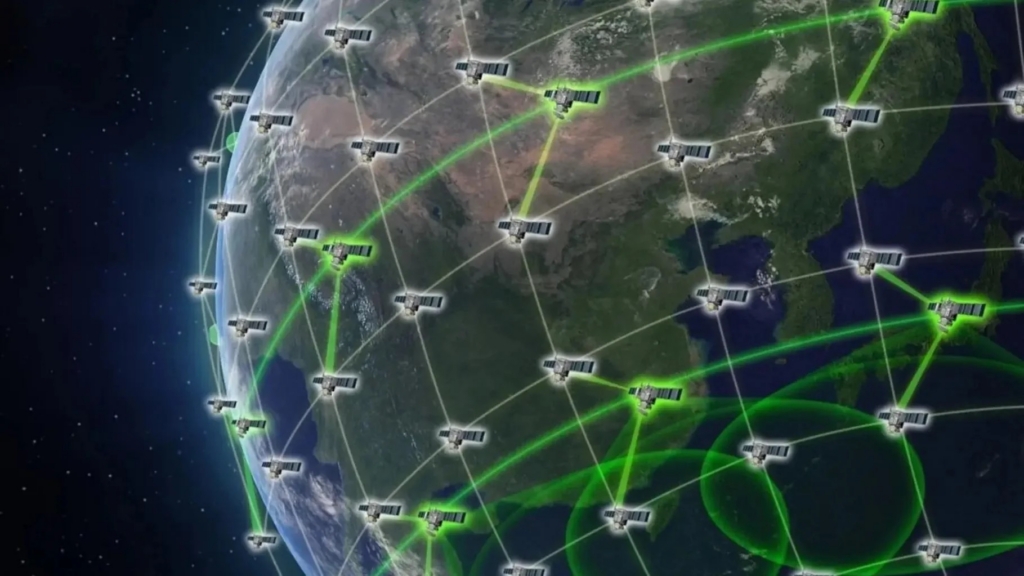
However, many of those systems remain under development, and analysts have repeatedly warned that no existing space-based architecture can yet fully replicate the battle-management role performed by aircraft such as the E-3 and E-7.
While satellites can provide broad-area surveillance and targeting data, airborne warning aircraft still offer real-time command-and-control, flexible repositioning and direct coordination of fighters, tankers and surveillance assets during fast-moving operations.
The Pentagon’s apparent rethink on the E-7 suggests the Air Force may no longer be willing to risk a capability gap while those future space-based systems mature.
Featured Image: Boeing
Sign up for our newsletter and get our latest content in your inbox.


More from


October 17, 20265 min read


October 17, 20264 min read