


South Korea accelerates F-5 retirement as KF-21 costs and delays grow

7 min read
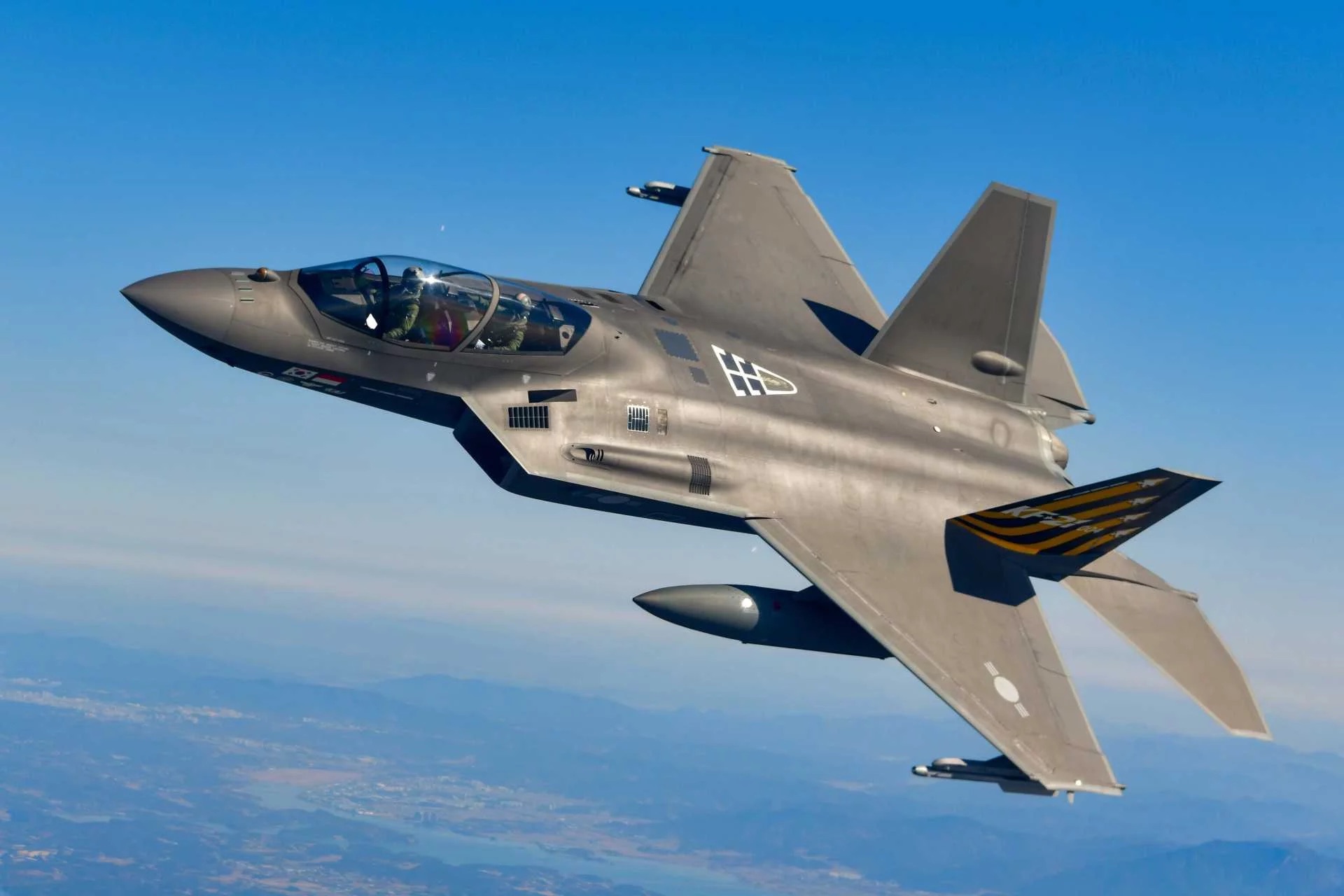
South Korea is accelerating the retirement of its ageing F-5 fighter fleet as the domestically developed KF-21 Boramae moves closer to operational service.
However, growing concerns over programme costs and production delays are beginning to cast a shadow over Seoul’s most ambitious combat aircraft project in decades.
The Republic of Korea Air Force now plans to retire its remaining F-5 fighters by the end of 2027, three years earlier than originally planned, according to Air Force Chief of Staff Gen. Son Sug-rag.
The move comes as the first production KF-21 aircraft prepares for delivery later this year, following combat suitability approval from South Korea’s defence ministry.
Yet behind the milestone, South Korean defence planners are increasingly grappling with a difficult reality: the aircraft meant to replace the F-5 may itself be facing a slower and far more expensive rollout than originally expected.
South Korea prepares to retire its Cold War-era F-5 fighter fleet
The aircraft now approaching retirement have formed part of South Korea’s air defence network for generations.
The F-5 Tiger II traces its origins to the early 1960s, when Northrop developed the lightweight supersonic fighter as a low-cost, highly manoeuvrable combat aircraft for allied air forces.
South Korea first acquired F-5A/B variants in 1965 before later introducing the improved F-5E models during the 1970s. More than 2,600 F-5 aircraft were eventually built worldwide, with the type serving in dozens of countries over several decades.
Despite its age, the aircraft remained attractive because of its relatively low operating costs, agility and ease of maintenance.
台湾のF-5が居なくなりROKAFのF-5も引退近いし前撮った時天気がカスだったのでリベンジしたいけど韓国スポッティングが安心して出来なくなってきたので悩み pic.twitter.com/UKIIoliztp
— かとそ (@katoso_plus) July 4, 2025
For South Korea, however, the F-5 increasingly became a symbol of an ageing Cold War-era fleet struggling to keep pace with modern air combat requirements.
The Republic of Korea Air Force had already retired its older F-4 Phantom fleet, leaving the F-5 as one of the last remaining legacy fighter types awaiting replacement.
“The F-5, an ageing fighter developed in the 1960s, had drawn speculation that its retirement might be delayed due to growing defence budget pressures,” one South Korean news report noted.
Instead, the Air Force has chosen to push ahead with the transition.
“We will advance the retirement schedule for the F-5 from the original 2030 to 2027,” Gen. Son said during a press briefing.
KF-21 Boramae is central to South Korea’s future fighter strategy
The aircraft intended to replace the F-5 represents one of the most important aerospace projects ever undertaken by South Korea.
Developed by Korea Aerospace Industries (KAI), the KF-21 Boramae is a 4.5-generation multirole fighter designed to reduce South Korea’s dependence on imported combat aircraft and to build an indigenous aerospace and weapons ecosystem.
The fighter made its maiden flight in July 2022 and has since undergone more than 13,000 test conditions and around 1,600 sorties without an accident, according to KAI. The first mass-produced aircraft rolled out earlier this year and completed its maiden production flight in April ahead of planned delivery to the Air Force in September.
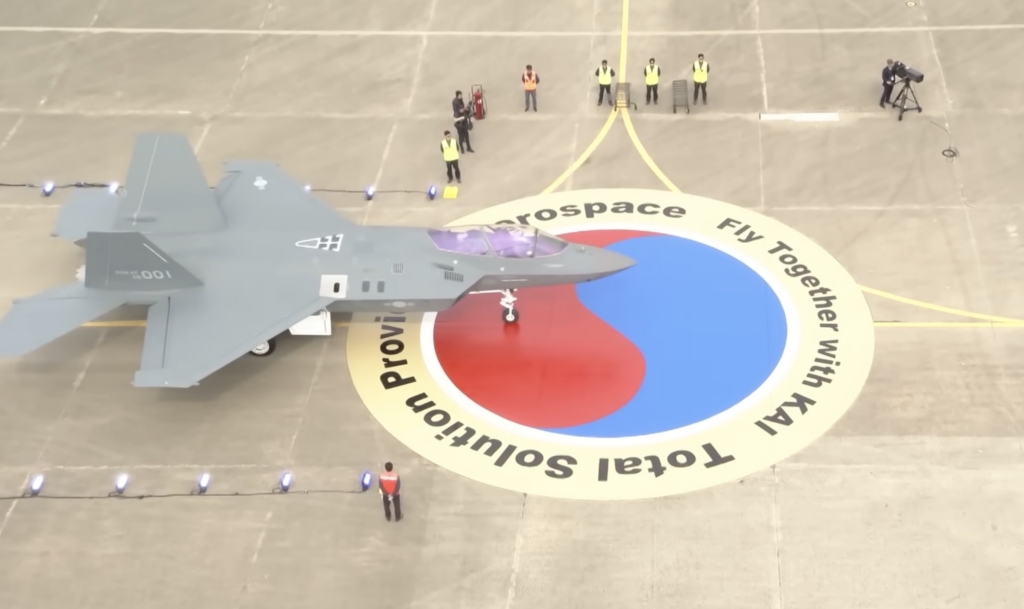
At production facilities in Sacheon recently opened to journalists, KAI showcased assembly lines where 20 KF-21 airframes were under construction.
“Aside from the engine, it’s almost entirely Korean technology,” a KAI spokesperson said during the media demonstration.
KAI chief executive Kim Jong-chul described the programme as a major step towards operational independence.
“The fact that we now have our own aircraft means we can attach and test weapons on our own platform,” Kim said. “It has created the conditions for us to integrate domestically developed weapons.”
The KF-21’s propulsion system is being supported through a long-term licence production arrangement between Hanwha Aerospace and GE Aerospace. The fighter is powered by two F414-GE-400K engines, which are being manufactured at Hanwha Aerospace’s Changwon Plant 1 under licence from GE.
In June 2024, Hanwha signed a 556 billion won (about $401 million) contract with South Korea’s Defense Acquisition Program Administration (DAPA) covering the supply of more than 40 engines and spare modules for the first production batch of KF-21 aircraft between 2024 and 2027.
The agreement also includes technical manuals and on-site support for the Air Force during the aircraft’s initial operational phase.

Hanwha Aerospace, South Korea’s sole aircraft engine manufacturer, has decades of experience producing engines under overseas licence agreements for aircraft, including the F-4, KF-5, KF-16, F-15K and T-50.
Even so, the programme remains exposed to exchange-rate fluctuations and global supply-chain disruptions tied to imported aerospace components, one of the factors now contributing to rising production costs and concerns over delays to the wider KF-21 rollout.
Rising costs and delays threaten South Korea’s KF-21 transition
Even as the aircraft nears operational deployment, the programme is facing growing financial strain.
According to data submitted to South Korea’s National Assembly, projected production costs for the second batch of 80 KF-21 aircraft have risen from 14.24trillion won to 18.44 trillion won, an increase of almost 30 per cent.
DAPA attributed the increase to inflation, exchange-rate fluctuations, supply chain instability and the addition of expanded air-to-ground strike capabilities planned for later variants.
The original roadmap envisioned 120 aircraft entering service by 2032. That timeline is now under review.
Officials are reportedly considering delaying completion of the first 40 aircraft until 2029 while pushing deployment of the remaining 80 Block II aircraft back to between 2034 and 2036.

The early Block I aircraft are primarily configured for air-to-air combat missions. The more capable Block II version is expected to introduce expanded strike capability, including long-range air-to-ground weapons and broader multirole functionality.
Without those upgrades, the KF-21 remains less capable in penetration strike missions than fully mature fifth-generation platforms.
Military Watch Magazine described the current Block I aircraft as possessing stealth characteristics “sufficient to provide an advantage in engagements against most other fighter types, but insufficient to launch penetration strikes into well-defended airspace”.
The aircraft is also expected to rely heavily on locally adapted versions of the Taurus cruise missile to engage hardened North Korean targets from stand-off range.
KF-21 is central to South Korea’s defence export ambitions
The significance of the programme extends beyond the aircraft itself.
For Seoul, the KF-21 has become a symbol of South Korea’s growing defence-industrial ambitions and its attempt to position itself among the world’s major aerospace exporters.
South Korea is already one of the world’s leading defence exporters in sectors ranging from tanks and artillery to missile systems and naval platforms. The KF-21 is intended to expand that into advanced combat aviation.
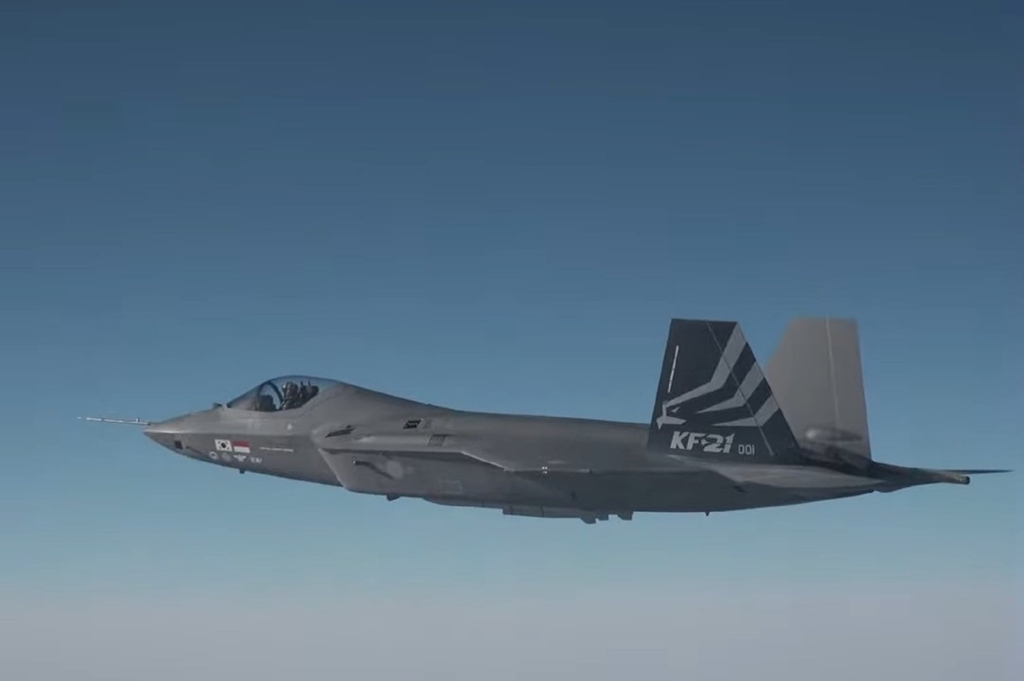
KAI estimates potential export demand could exceed 200 aircraft, including planned Indonesian participation in the programme.
The company is also discussing future partnerships with countries, including the United Arab Emirates and Saudi Arabia. Internationally, the aircraft is increasingly being marketed as a lower-cost complement to the F-35 rather than a direct competitor.
Military Watch described the fighter as an “F-35 little brother” because of its lower sustainment costs and easier maintenance profile compared with the US stealth aircraft.
At the same time, the programme still depends heavily on imported components, particularly the General Electric F414 engines powering the aircraft.
That reliance has left the programme exposed to currency volatility and global supply-chain disruption.
South Korea’s shift from F-5 to KF-21 marks a new airpower era
For South Korea’s Air Force, the arrival of the KF-21 marks the beginning of one of the biggest combat fleet transitions in its modern history.
The retirement of the F-5 will close a chapter stretching back more than six decades.
The challenge now is ensuring the replacement programme can maintain momentum despite rising costs and schedule pressure. For the moment, South Korea is still pressing ahead.
The first eight production aircraft are due for delivery this year. But the wider question facing Seoul is no longer whether the KF-21 will enter service but whether the aircraft can be rolled out quickly enough to replace South Korea’s ageing Cold War-era fleet.
Featured image: KAI


