Airbus A350F takes its maiden flight to reshape the large cargo aircraft market

6 min read
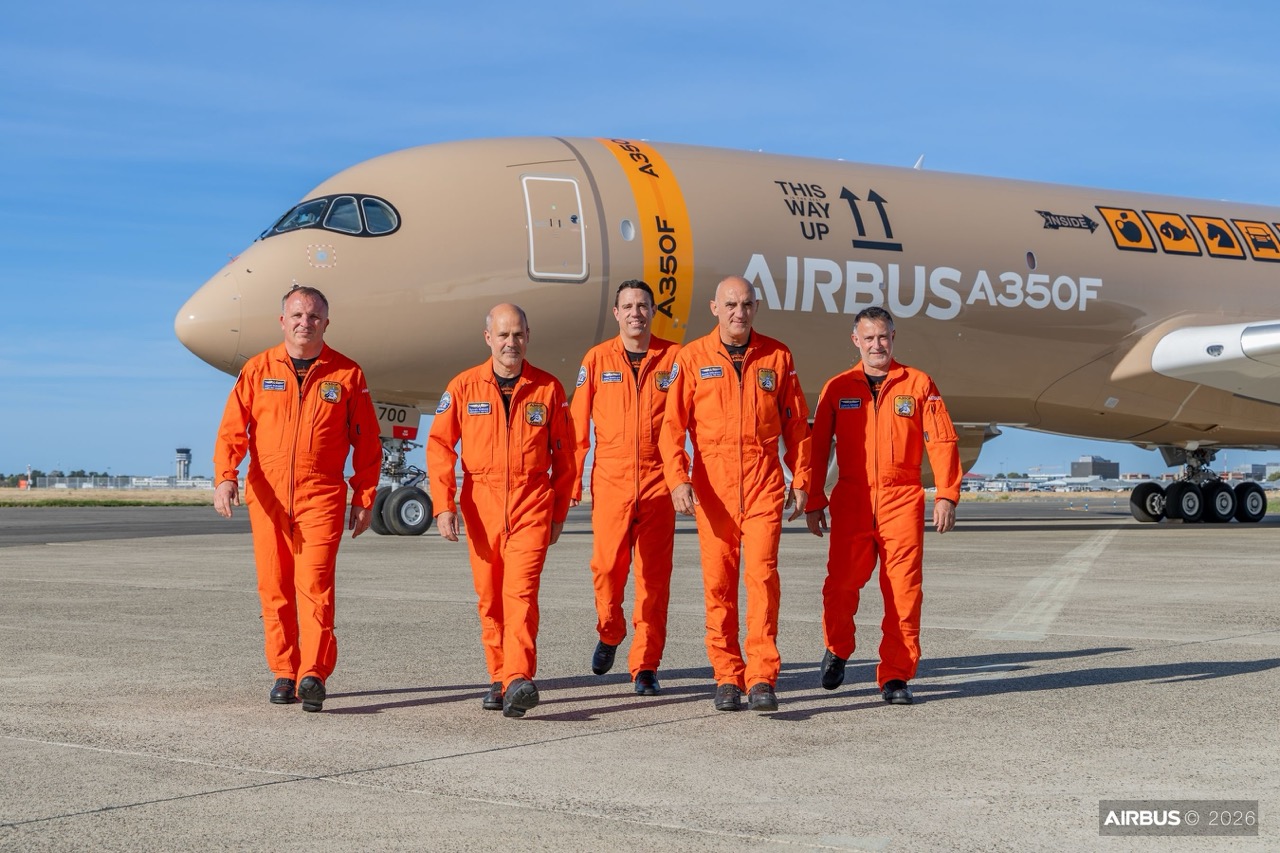
Airbus‘ new A350F freighter has taken to the skies for the first time, beginning a flight-test campaign that could reshape competition in the large cargo aircraft market.
The first flight-test aircraft, MSN700, registration F-WXLD, donning its distinctive parcel livery, departed Airbus’ Toulouse headquarters precisely as scheduled at 10:30 am CET on 29 September.
The aircraft will be airborne for approximately four hours before returning to Toulouse.
Here it is: @Airbus’ first A350F taxiing out for its maiden flight! ✈️ Did you know the livery is the result of a design competition won by Dublin-based graphic designer John Feehan and teenage brothers Quinnten and Ellisten Iversen? Track it on FR24: https://t.co/QQsOsVv6js pic.twitter.com/cnKT9xi1t4
— Flightradar24 (@flightradar24) September 29, 2026
The A350F’s maiden flight marks one of the most significant milestones for the programme Airbus launched in 2021.
The first flight launches an intensive certification campaign as Airbus works to deliver the first aircraft to customers in the second half of 2027.
A350F begins 400-hour flight-test programme
Airbus has conducted months of ground and simulator testing. Last week, the manufacturer conducted high-speed rejected-takeoff runs in Toulouse in preparation for the maiden sortie.
Airbus has said the A350F will undergo around 400 flight hours of testing using two aircraft, MSN700 and MSN701. The certification campaign is expected to last approximately nine months.
MSN700 will primarily test aerodynamic performance, handling qualities and autopilot systems. The second aircraft, MSN701, will concentrate on systems testing, including air conditioning, fire and smoke testing and hot- and cold-weather operations.
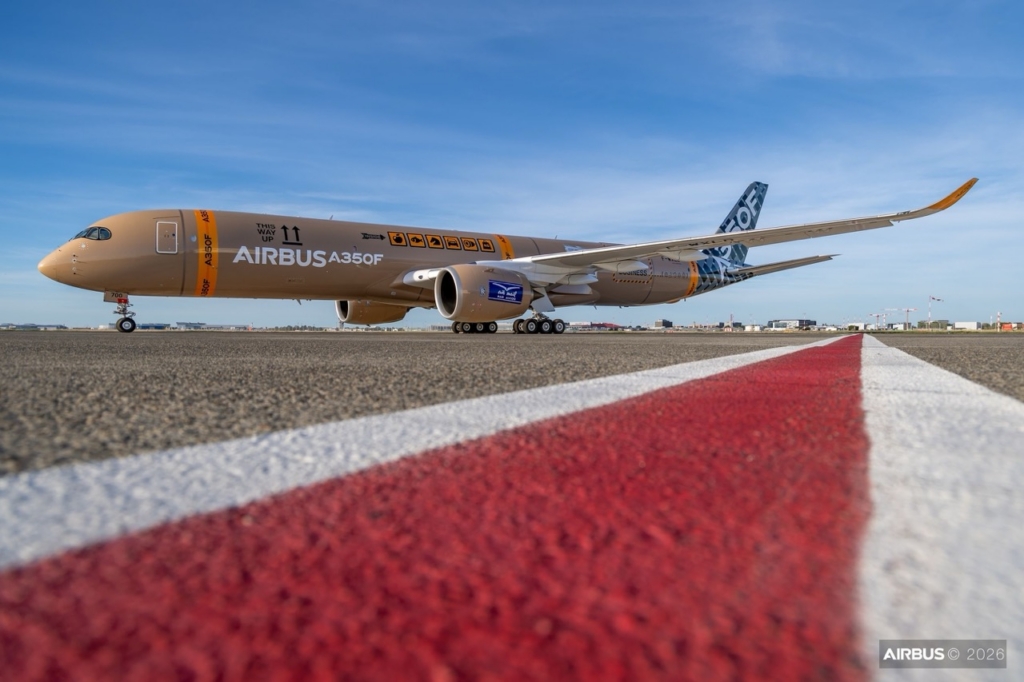
Although derived from the A350 passenger family, the freighter has its own aerodynamic characteristics which require separate flight testing. The fuselage configuration combines the forward length of the A350-900 with the rear fuselage length and wings of the larger A350-1000.
“It’s not an A350-1000, and it’s not an A350-900, but rather it’s between both,” Airbus A350F Lead Flight Test Engineer Laurent Bussiere explained ahead of the flight.
Airbus has said around 10% of the freighter’s aerodynamic model remains to be verified in real-world flight conditions.
Why the A350F’s first flight matters
With this new cargo plane, Airbus aims to establish a much larger presence in a purpose-built large freighter market that Boeing has dominated for decades.
The A350F offers a payload capability of up to 111 tonnes and a range of up to 8,700km, putting it firmly into the long-haul heavy-freighter category.
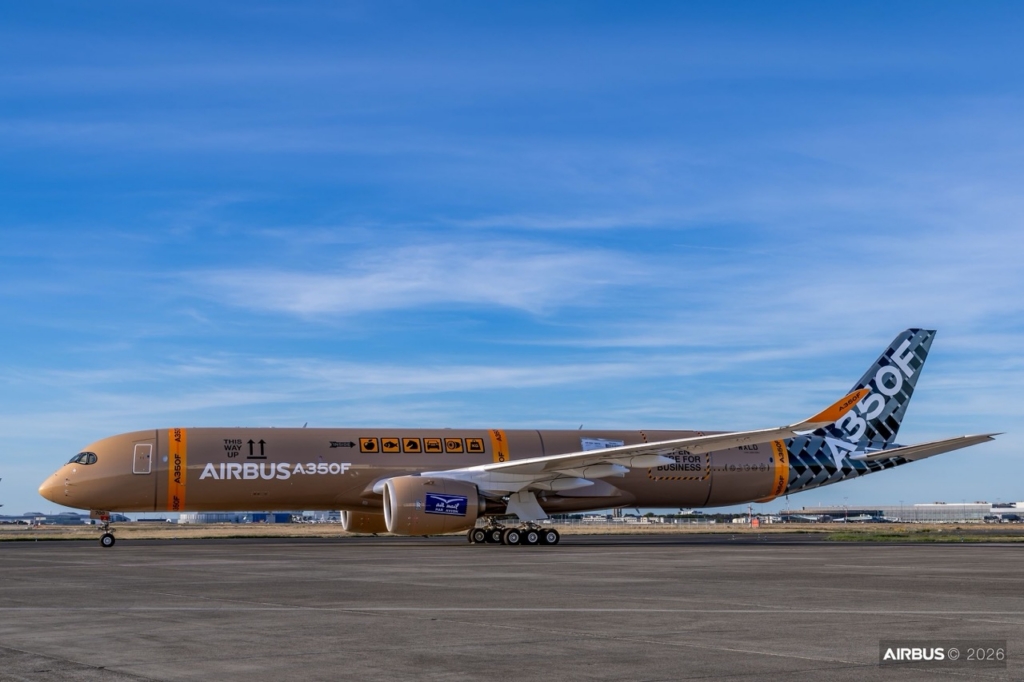
More than 70% of its airframe uses advanced materials. The aircraft is powered by Rolls-Royce Trent XWB-97 engines. Airbus says the combination reduces fuel consumption and carbon emissions by up to 20% compared with previous-generation aircraft offering similar payload and range.
The aircraft is also designed to meet the ICAO CO2 emissions standard applying to newly produced freighters from 2028.
The A350’s most distinctive feature is its electrically operated main-deck cargo door. At 4.3 metres wide, Airbus describes it as the industry’s largest main-deck cargo door. The aircraft can accommodate standard containers and pallets as well as outsized loads including large aircraft engines.
A freighter Airbus says was “designed by the market”
Airbus says the A350F’s configuration reflects years of consultation with cargo operators.
Sarah McLaren, Airbus head of widebody and freighter marketing said, in a presentation ahead of take-off, that operators began approaching the manufacturer around 2015 and 2016 seeking an alternative new-build large freighter for the middle of the following decade.
“The A350 freighter has been built by Airbus, but really it’s been designed by the market,” McLaren said.
Operator input influenced some of the aircraft’s most distinctive features. Airbus shortened the forward fuselage to optimise balance and positioned the 175-inch-wide main-deck cargo door behind the wing. That allows operators to load the main deck and both lower cargo holds simultaneously.
McLaren also said the A350F burns 40% less fuel than previous-generation freighters, noting that fuel reduction matters in the freighter competition because fuel represents one of airlines’ largest and least controllable operating costs.
Airbus Widebody Programmes head Julien Pu described designing the door as one of the programme’s biggest engineering challenges. Airbus had never previously developed a cargo door of that size and chose to design it internally and manufacture it at Illescas in Spain.
Another challenge was ensuring the freighter could pass through the same production system as passenger A350s rather than requiring a separate industrial process.
“Another big challenge was we wanted to ensure that the freighter could go through the exact same industrial system as the other aircraft, in the same shops, in the same lines,” Pu said. “It gave a lot of headaches to our engineers, but in the end, I’m glad that they made it because it’s the recipe for our efficiency.”
Airbus takes on Boeing in the freighter market
Airbus now has a new factory-built large freighter that can compete directly for major airline and express cargo fleets.
Boeing has historically held a commanding position in this market through the 747 and 777 freighter families. Its own next-gen freighter programme, based on the 777X platform, is advancing separately.
Airbus’ previous purpose-built A330-200F achieved relatively limited sales. Much of the planemaker’s presence in the cargo market has come through passenger-to-freighter conversions.
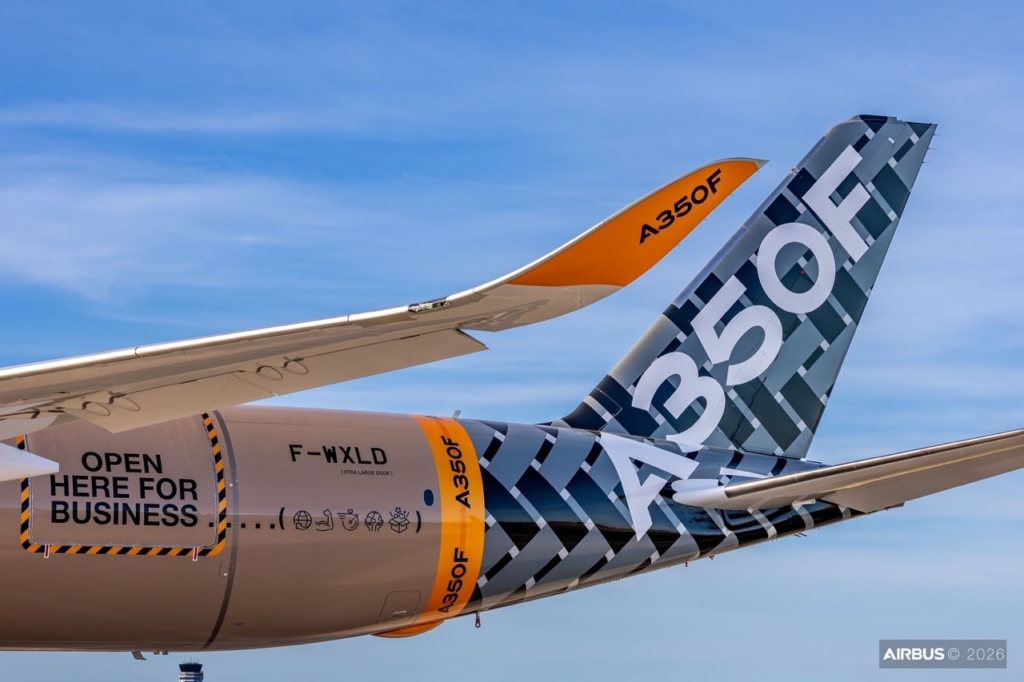
The A350F represents a much bigger challenge to Boeing’s position.
Demand has strengthened as the aircraft advanced to flight testing. Airbus reported 101 firm orders from 14 customers at the end of April, before Air China Cargo increased its commitment from six to ten aircraft in May.
By August, Airbus had sold 107 A350Fs. It subsequently recorded an order for another eight aircraft from an undisclosed customer.
Customers already include major cargo operators, including its largest customer Atlas Air, and airlines such as Air China Cargo, Air France, Cathay Pacific, Etihad Airways, Korean Air, Singapore Airlines and Turkish Airlines.
The first flight is only the beginning
Getting MSN700 airborne does not mean the development challenge is over.
Airbus must now progressively expand the aircraft’s flight envelope, validate its new aerodynamic model and demonstrate the performance of its flight controls and cargo-specific systems to regulators.
The European Union Aviation Safety Agency is already involved in reviewing the flight-test programme. Airbus says EASA pilots and flight-test engineers will participate as onboard witnesses during some performance flights as certification work intensifies in 2027.
The A350F programme has already slipped from its original timetable. Airbus is targeting first customer deliveries during the second half of 2027, leaving the manufacturer with a substantial certification programme to complete following the maiden flight.
For Airbus, the first flight marks the moment the A350F moves from a development programme on the ground to a real contender in the global freighter market in the skies.
The next 400 hours in the air will determine how quickly it can make that transition.