Uzbekistan turns to China’s J-10CE as Russian fighter dominance fades

3 min read

The former Soviet Central Asian state of Uzbekistan may be in the process of receiving Chengdu J-10CE fighter jets as traditional Russian fighter jet customers look elsewhere. This may leave Belarus and possibly Kazakhstan as the only remaining post-Soviet customers of new Russian fighter jets.
Uzbekistan reportedly receives the second batch of J-10CEs
Defense Security Asia says that the Uzbek Ministry of Defence acknowledged that it has a contract for 24 J-10CEs. The first batch of J-10CEs has already been delivered, with only two J-10CEs officially reported as delivered in July 2025.
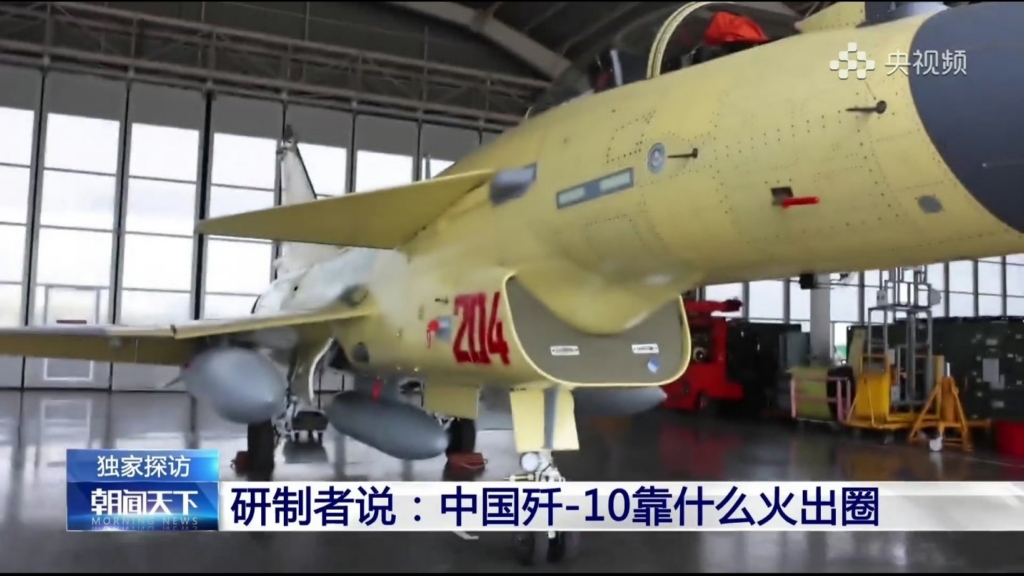
Defense Security Asia quoted unspecified Chinese social media accounts and open-source defense trackers and reported that four more Chengdu J-10CE fighter jets have been delivered to the Uzbekistan Air Force, while adding the deliveries remain unconfirmed by the Uzbekistan government.
It added, “If confirmed, the delivery would accelerate Tashkent’s efforts to free its air capabilities from dependence on the maintenance and logistical support chain of Soviet-era aircraft.”
If true, this suggests that six of the 24 Chengdu J-10CEs have now been delivered to Uzbekistan.
Open-source tracking of the fighter jet deliveries
Whereas scheduled deliveries of Western fighter jets are often publicly stated, along with elaborate rollout ceremonies, it is common for OSINT accounts to follow subtle cues with Chinese deliveries.
That’s interesting, especially since it’s the second report of this kind in just a few weeks… What I’m missing, though, is the usual pattern of how these revelations unfold: first, vague rumours; then verbal confirmation from a reputable source – but without proof – … https://t.co/7kDcIsjAwd
— @Rupprecht_A (@RupprechtDeino) August 12, 2026
Open-source China watcher Hurin noted in June 2025 that images of a new J-10CE fighter had been released by Chengdu. At the time, the account said the aircraft wasn’t for the Chinese PLA and that potential customers included Uzbekistan, Egypt, Indonesia, and Pakistan.
Later that month, Hurin posted, “We have now 3 confirmed J-10CE units 204/205/206 from 2nd export batch and that 9001 from Zhuhai.”
On Tuesday, Hurin wrote, “Apparently the J-10C have been delivered to Uzbekistan; alleged serial numbers are 101X/102X (maybe a dozen?) Either this 201-206/12 batch received new serials or someone else got them.”
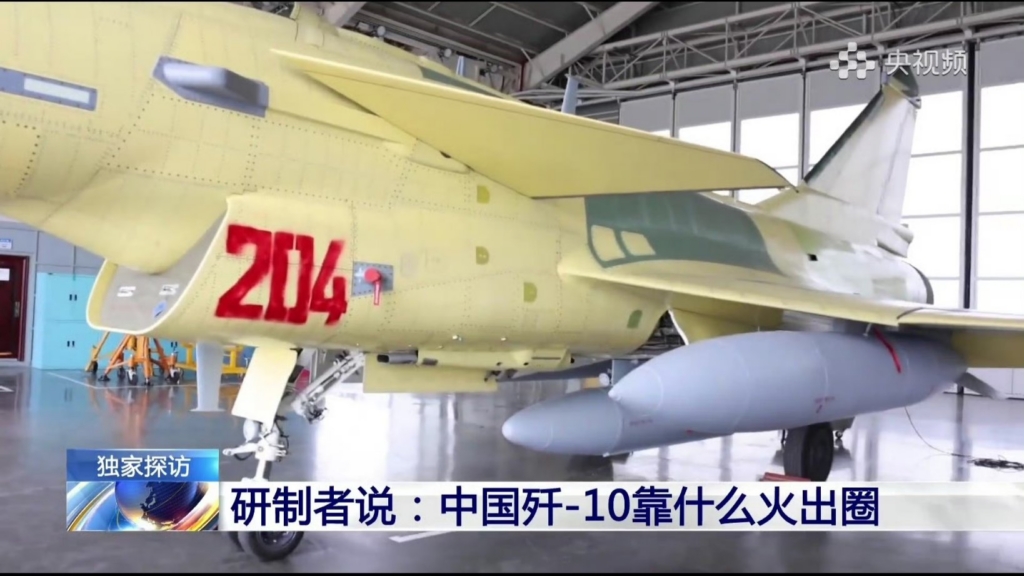
Fellow open-source China OSINT account @Rupprecht_A replied: “That’s interesting, especially since it’s the second report of this kind in just a few weeks.” He then spoke about how the ongoing revelation of the delivery of these jets is unusual.
Another sign of a shifting geopolitical balance
Russia has long seen Central Asia as its geopolitical backyard, but as its position has weakened relative to China, it has been forced to accept a larger Chinese economic footprint in the region.
But Russia retained its position as the military hegemon in the region. Now it appears that is also weakening, and Central Asian states are increasingly able to play between the powers in the region.

For three decades after the Soviet collapse, Russia held a near-monopoly on major combat aircraft and heavy weapons sales to Central Asia. That monopoly is eroding.
Uzbekistan has always been unusually resistant to subordination to Moscow, having left the Russian-led Collective Security Treaty Organisation (CSTO) in 2012 after suspending its membership earlier.
The move allows Uzbekistan to replace its aging MiG-29s and Su-27s and diversify away from Moscow for its fighter jet capability. It should be stressed that Uzbekistan is not seeking a break with Russia and it remains economically dependent on remittances, but rather it is seeking to diversify.
The process has likely been accelerated by the war in Ukraine. It is plausible that Uzbekistan no longer has confidence that Russia is in a position to guarantee delivery, spare parts, upgrades, and long-term support while also meeting the needs of its own forces. Sanctions and CAATSA may complicate matters further.
Sign up for our newsletter and get our latest content in your inbox.


More from

October 17, 20265 min read


October 17, 20264 min read