


Turkey tests Bayraktar TB2 as mothership for FPV attack drones

4 min read
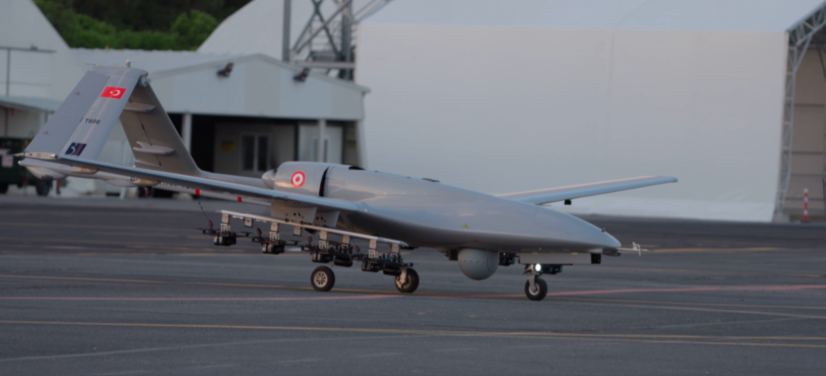
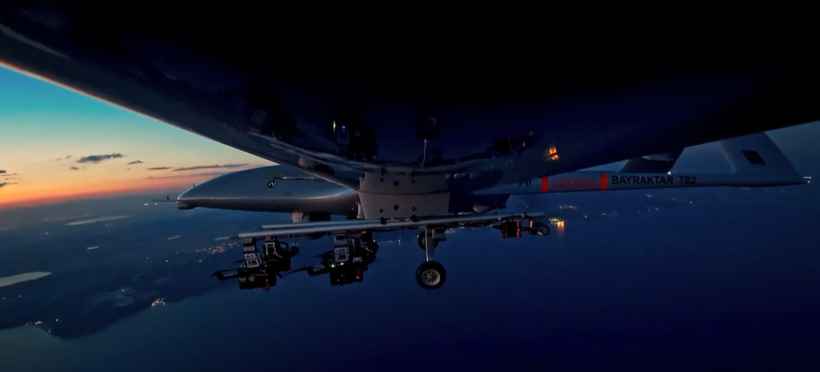
Turkish drone manufacturer Baykar has demonstrated a new strike capability for its Bayraktar TB2 unmanned aircraft, launching two smaller attack drones from the aircraft during a flight test in northwestern Turkiye.
The TB2 took off from Baykar’s Keşan Flight Training and Test Centre in Edirne province carrying 16 first-person-view (FPV) kamikaze drones developed by Turkish company Skydagger.
Two of the drones were released during the test and struck designated targets, according to a statement issued by Baykar on 4 November.
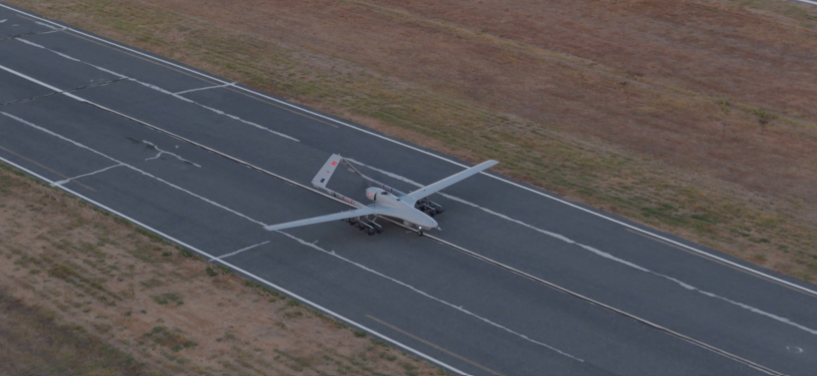
The demonstration marks a new role for the TB2, which has traditionally been used for surveillance, reconnaissance and precision attacks with guided munitions. It can now carry smaller attack drones to a target area and provide the communications link needed to operate them.
Baykar said the FPV drones were controlled by operators through a connection established via the TB2 rather than through a direct link to a ground station.
The arrangement allows the larger aircraft to act as both a launch platform or mothership, and an airborne communications relay, potentially extending the distance at which the smaller drones can be operated.
How the new system works
FPV drones are typically flown by operators who receive live video from cameras mounted on the aircraft. This allows them to steer towards a selected target and make adjustments during the final approach.
Unlike conventional guided munitions, which follow a programmed or guided trajectory after release, FPV drones can be manoeuvred by an operator throughout their flight, subject to the available communications link.
This could allow the TB2 to remain at a distance while the FPV drones conduct the final attack.
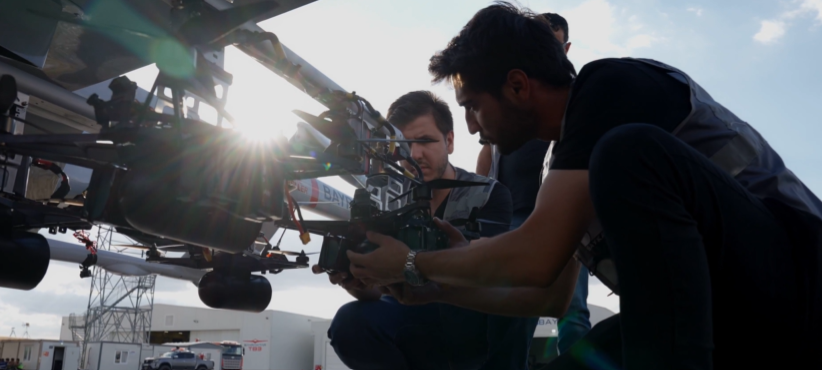
The drones are carried in a system called DAGGER POD, developed by Skydagger for the Bayraktar TB2. According to the company’s Instagram statement, the system can accommodate up to 16 SKYDAGGER FPV drones and has a modular design that allows it to be adapted for other aircraft platforms.
During the November test, the TB2 carried 16 drones and released two, which were guided by operators through a communications link provided by the larger aircraft. Baykar said both drones struck their designated targets.
Baykar has not disclosed the range, speed or warhead specifications of the Skydagger drones used in the demonstration.
The company has also not announced whether the configuration has entered operational service or when it might become available to existing TB2 operators.
A new role for an established combat drone
The Bayraktar TB2 entered service with the Turkish Armed Forces in 2014 and acquired an armed capability in 2015.
It subsequently became one of Turkiye’s best-known military exports, with combat operations in Syria, Libya, Nagorno-Karabakh and Ukraine.
The aircraft gained particular attention during the early stages of Russia’s full-scale invasion of Ukraine in 2022, when Ukrainian forces used TB2 drones against Russian military equipment.
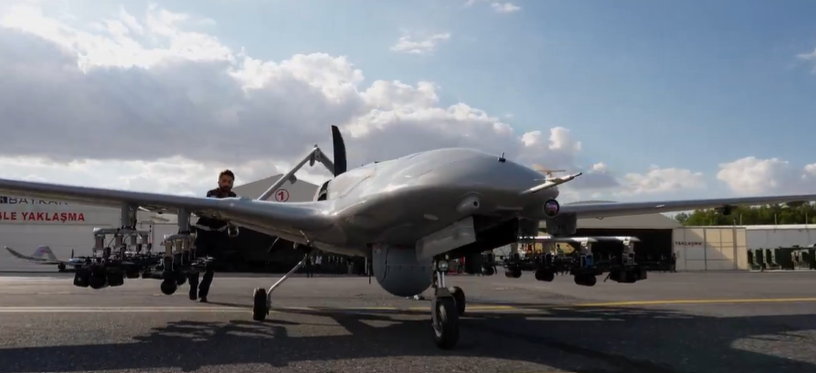
However, the increasing density of air defence systems and electronic warfare equipment has made operations more difficult for relatively slow, non-stealthy unmanned aircraft.
Launching smaller attack drones from a TB2 offers another way of employing the platform, although it does not eliminate the larger aircraft’s vulnerability to enemy air defences.
The new configuration could also allow an operator to attack several targets during a single mission, rather than relying entirely on the TB2’s conventional guided weapons.
Whether this approach proves effective in combat will depend on the range of the FPV drones, the resilience of their communications links and the ability of the carrier aircraft to operate safely.
TB2 endurance and payload
Baykar classifies the TB2 as a medium-altitude, long-endurance unmanned aircraft.
According to the company’s published specifications, the aircraft has a maximum take-off weight of 700kg and a payload capacity of 150kg.
It has a 12-metre wingspan, measures 6.4 metres in length and is powered by a 100hp internal combustion engine.
Baykar lists an endurance of more than 18 hours, an operational altitude of 16,000ft and a service ceiling of 20,000ft. The aircraft has also established a flight endurance record of 27 hours and three minutes.
Its flight control system incorporates three redundant autopilots, while its navigation system can operate without relying entirely on GPS.
The TB2 can conduct autonomous taxiing, take-off, cruising and landing. Its existing weapons integrations include laser-guided and other precision munitions.
The aircraft’s endurance could be useful when carrying FPV drones, allowing it to remain airborne while operators select targets. However, Baykar has not disclosed how carrying 16 drones affects endurance or flight performance.
Baykar’s expanding export market
The latest demonstration comes as Baykar continues to develop additional capabilities for its unmanned aircraft fleet.
The company says it has signed export agreements with 39 countries across its two principal combat drone programmes.
These include agreements with 36 countries for the TB2 and 16 for the larger Bayraktar Akıncı. Some customers have ordered both aircraft.
Baykar reported exports worth $2.2 billion in 2025 and said overseas sales have accounted for approximately 90% of its revenue in recent years.
The company has not identified potential customers for the new FPV drone configuration.
Sign up for our newsletter and get our latest content in your inbox.


More from

November 6, 20264 min read


