


Portuguese Army receives aviation capability after 74 years with first Black Hawk delivery

5 min read
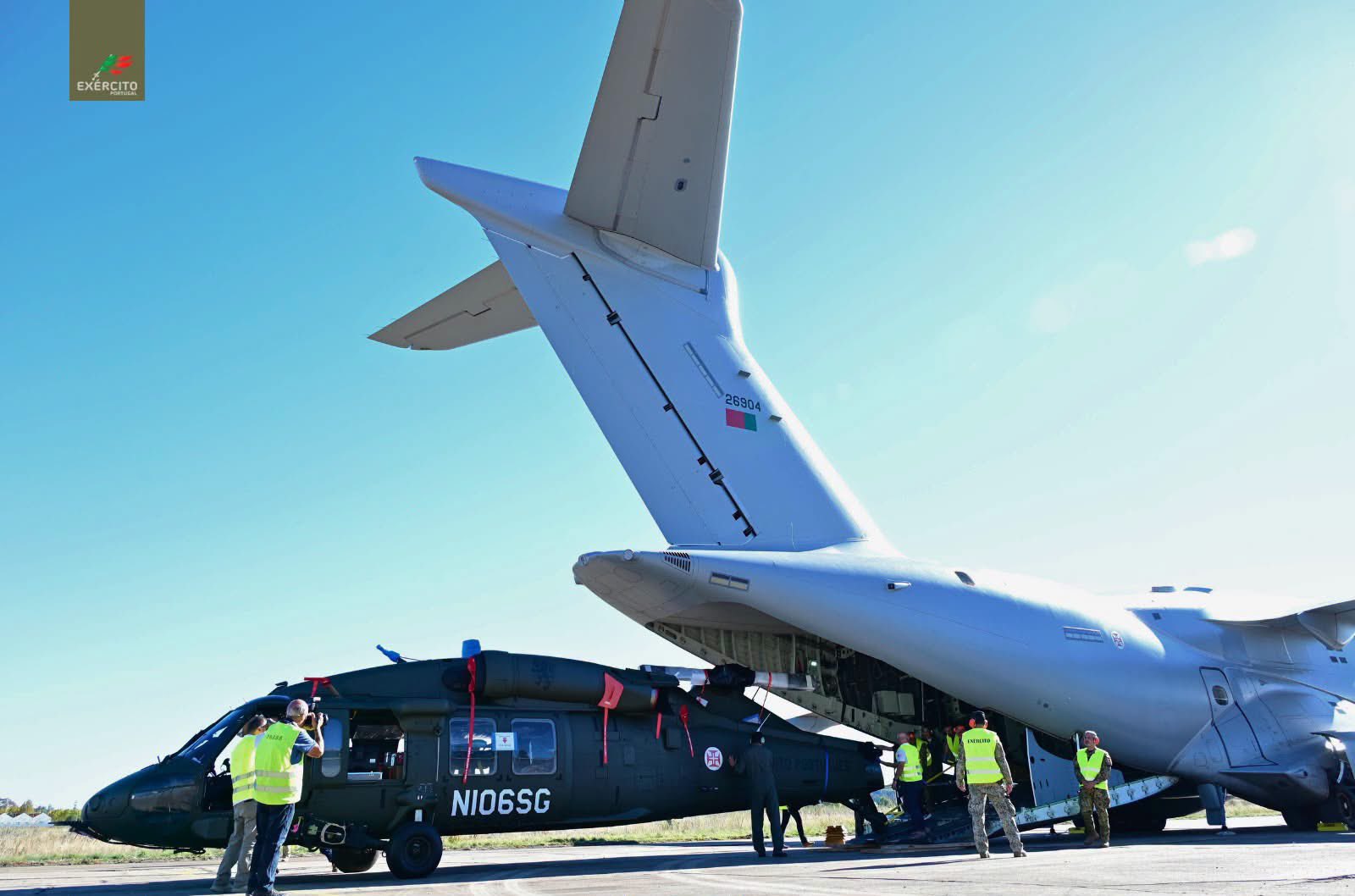

The Portuguese Army has received its first Sikorsky UH-60L Black Hawk helicopter, restoring a crewed aviation capability it lost 74 years ago when its aircraft were transferred to the newly established Portuguese Air Force.
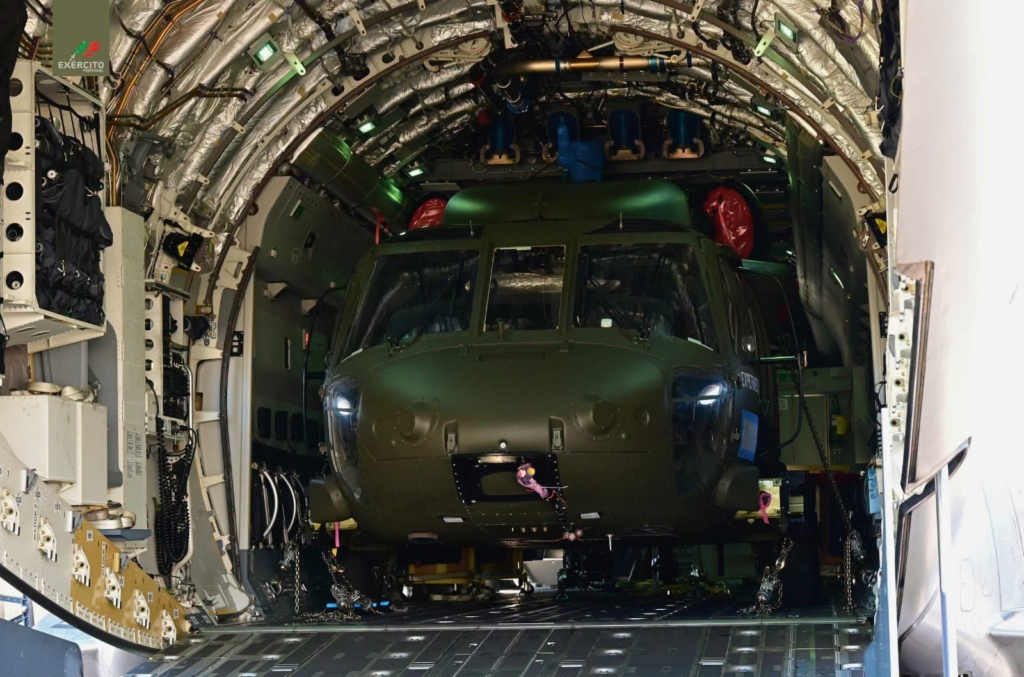
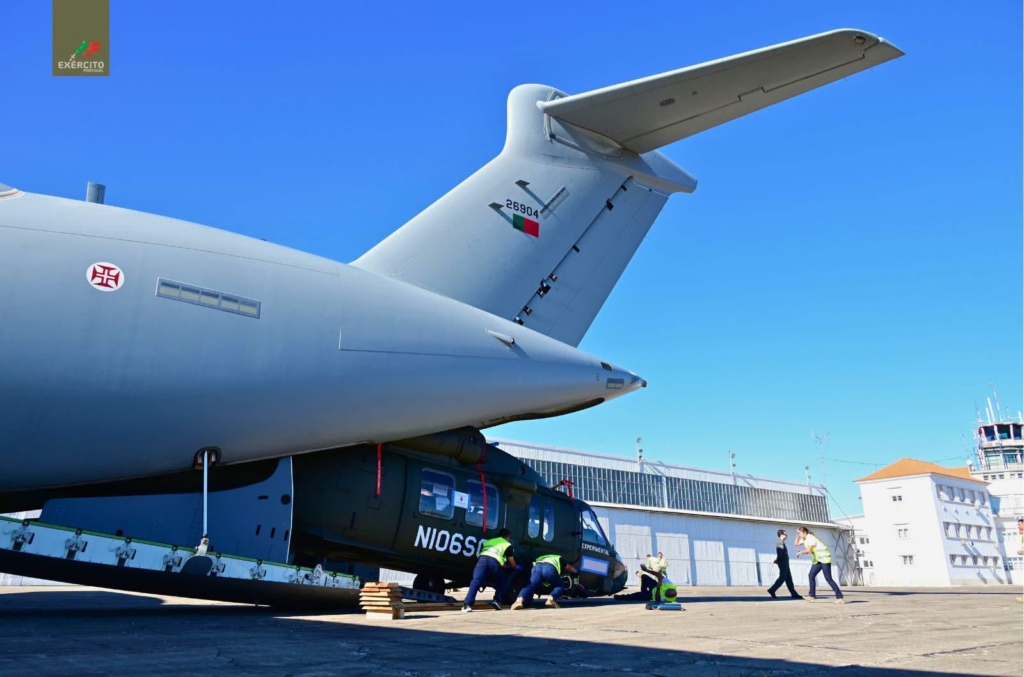
The helicopter, the first of a planned fleet of four, was transported from Florida in the United States to Tancos Military Airfield aboard an Embraer KC-390 military transport aircraft operated by the Portuguese Air Force.
The acquisition ends decades of unsuccessful attempts by the Portuguese Army to establish its own helicopter fleet. It will give the service greater control over the movement of troops, battlefield medical evacuation, reconnaissance and logistical support without having to rely entirely on the air force for helicopter operations.
Portugal’s Ministry of National Defence described the arrival as a “historic milestone” in the modernisation of the land forces, strengthening the army’s mobility and operational autonomy.
The helicopter was formally presented at Tancos on 19 November in the presence of Portuguese Defence Minister Nuno Melo and Army Chief of Staff General Eduardo Mendes Ferrao.
The ceremony also marked the unveiling of new ground-based air defence equipment, including the RapidRanger missile system and Ground Master 200 surveillance radar.
Melo described the occasion as “a historic day for the armed forces”, according to Austrian defence publication Militar Aktuell.
A 74-year wait for an army aviation capability
The Portuguese Army has been without its own crewed aircraft since 1952, when the country consolidated its military aviation assets under the newly formed air force.
Efforts to reintroduce aviation within the army began in the 1990s, but successive helicopter procurement programmes fell through.
Portugal cancelled an order for nine EC635 light helicopters in 2002. A separate acquisition of 10 NH90 military transport helicopters, ordered in 2001, also failed to materialise after the government withdrew from the programme in 2012.
The repeated setbacks eventually led to the dissolution of the Army Light Aviation Unit at Tancos in 2015. The unit had never received the helicopters intended for it.
The latest attempt gathered momentum in 2023 when responsibility for the Support, Protection and Evacuation Helicopters programme, known by its Portuguese acronym HAPE, was transferred from the air force to the army under a revision of Portugal’s Military Programming Law.
The NATO Support and Procurement Agency (NSPA) took responsibility for the acquisition in 2024.
“Today, we are delivering. We are providing capabilities that have been a long-held aspiration for decades,” Mendes Ferrao said at the unveiling ceremony, as reported by Militar Aktuell.
Former US Army Black Hawks get a new lease of life
Rather than purchasing newly manufactured helicopters, Portugal opted to acquire and modernise former US Army UH-60L airframes.
The aircraft are being refurbished in Florida by the Sahar Group, a US company specialising in the maintenance, modernisation and support of Black Hawk helicopters.
The Portuguese Army announced the contract in July 2026. The agreement includes helicopter refurbishment, the integration of mission-specific equipment, training for pilots and maintenance personnel, and technical support.
The original procurement covers three helicopters with an option for a fourth. However, the army now expects to receive four aircraft by 2028.
The programme represents an investment of approximately €50 million ($55 million), including VAT, infrastructure improvements and personnel training.
According to media reports, the second helicopter is scheduled for delivery in the second quarter of 2027, followed by the third in the corresponding period of 2028.
Digital cockpit and new mission equipment
The UH-60L is an improved version of the original UH-60A Black Hawk, featuring more powerful General Electric T700-GE-701C turboshaft engines and an upgraded transmission.
The twin-engine helicopter can accommodate 11 equipped soldiers in addition to its crew. It has a maximum gross weight of approximately 10,000kg and can carry external loads of up to 4,080kg.
Portugal’s helicopters are undergoing substantial upgrades to their avionics and mission systems.
The original analogue cockpit instruments are being replaced with Moog’s Genesys digital avionics suite and a four-axis autopilot.
The upgraded cockpit incorporates synthetic vision, terrain awareness and warning systems, traffic monitoring and automated hover assistance. These features can reduce pilot workload, particularly during operations in poor visibility or close to the ground.
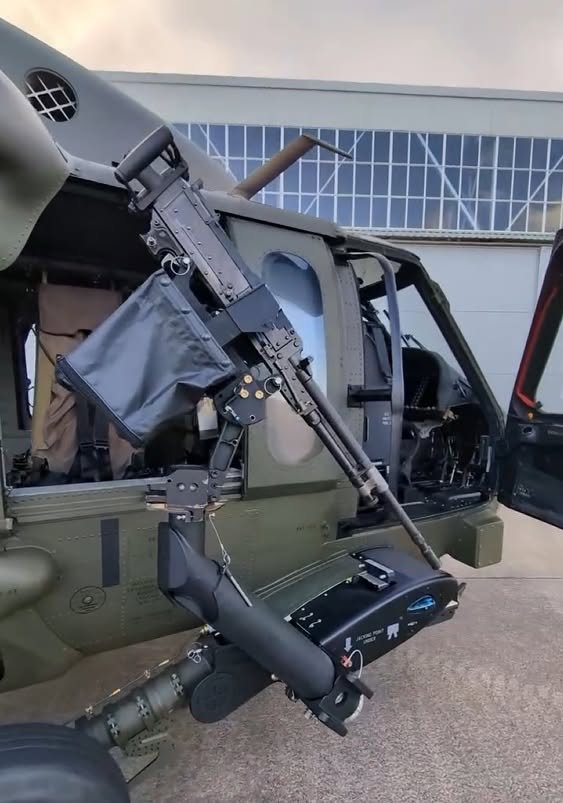
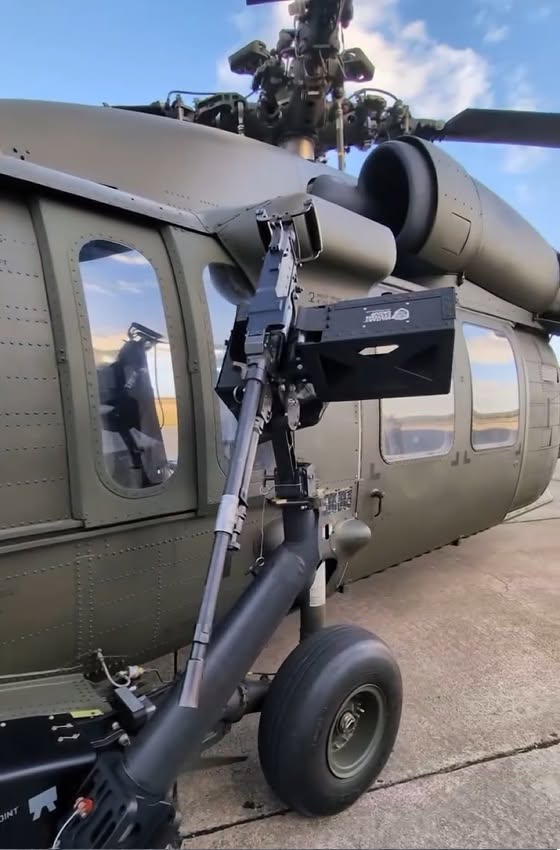
A Portuguese Army spokesman confirmed that the first helicopter was equipped with two side-mounted machine guns and a forward-looking infrared (FLIR) electro-optical and infrared sensor.
The sensor, housed in a turret beneath the helicopter’s nose, allows crews to observe terrain and objects using thermal imaging as well as conventional imagery.
Black Hawks to support military and civilian operations
The helicopters will be operated by the newly established Helicopter Unit for Support, Protection and Evacuation at Tancos.
Although the primary requirement is to support military operations, Portugal also intends to use the aircraft during natural disasters and other civilian emergencies.
The helicopters will be able to transport emergency response personnel, deliver essential supplies, evacuate casualties and support aerial firefighting.
The equipment being acquired includes rescue hoists, stretchers, external cargo hooks and firefighting buckets with capacities of 2,000 and 2,950 litres.
Wildfire suppression is already among the roles undertaken by the Portuguese Air Force’s Black Hawks, which operate from Ovar.
Currently, the Air Force is equipped with two versions of the helicopter: the UH-60A and the UH-60L.
Building an aviation unit from scratch
Despite the arrival of the first Black Hawk, the Portuguese Army is still some way from establishing a fully operational helicopter unit.
The aircraft has already undertaken test flights, including a demonstration at the unveiling ceremony with Melo and Mendes Ferrao on board. That flight was conducted by a Sahar Group crew.
The first Portuguese Army pilots have undergone training in Spain, while work is continuing at Tancos to modernise hangars, the control tower and other facilities required to support helicopter operations.
Portugal also wants to develop Tancos into a centre for aviation training, maintenance and operational support, working with its air force and allied militaries.
Sign up for our newsletter and get our latest content in your inbox.