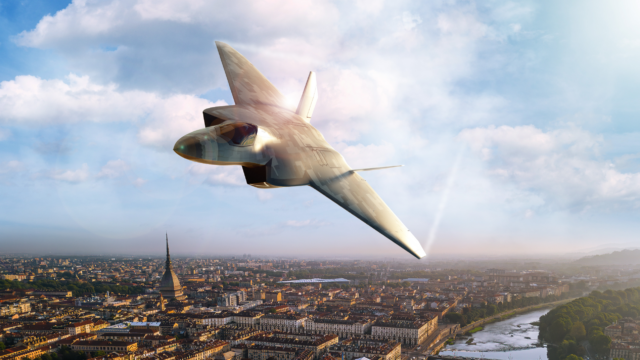
Swarm Aero targets MQ-9 Reaper successor with mass-produced Group 5 drone

5 min read
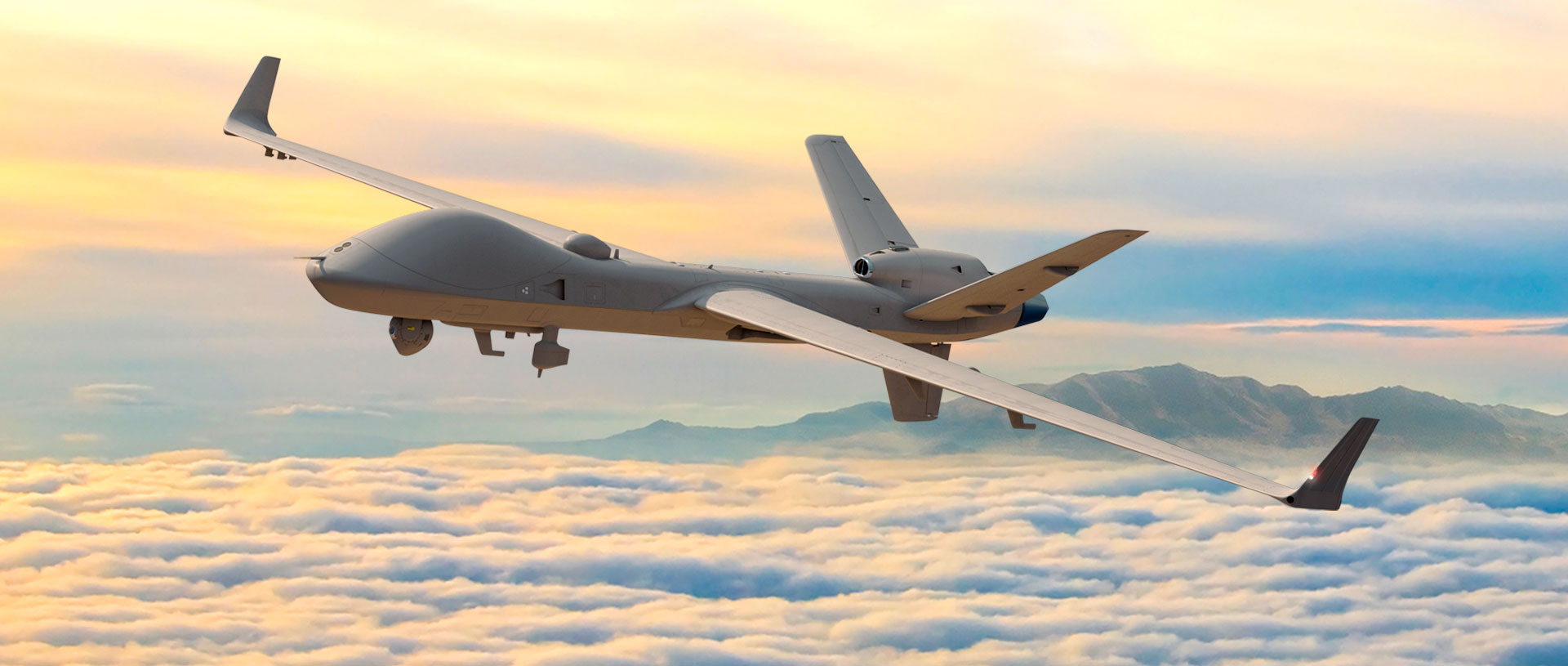
Swarm Aero has secured more than $10 million in US Air Force funding to advance a new high-rate composite manufacturing process that could help make large military drones dramatically cheaper and faster to produce.
The work is closely tied to Swarm’s ambitions to build a Reaper-sized Group 5 UAV designed from the outset for mass production and autonomous swarming, potentially positioning the company for the US Air Force’s Massed Modular Aircraft program as it searches for a more affordable successor to the MQ-9 Reaper.
AFRL awards Swarm Aero $10m for composite manufacturing
Swarm Aero announced on 10 August that it had secured more than $10 million in contracts from the Air Force Research Laboratory (AFRL) to advance its high-rate composite manufacturing technology.
The funding will support further research and development of the company’s manufacturing approach, as well as the production of aircraft components for the US Air Force.
We're proud to announce over $10 million in contracts with the @AFResearchLab to advance low-cost, large aircraft at scale.
— Swarm Aero (@SwarmAero) August 10, 2026
Since 2022, Swarm has been quietly refining a new approach to manufacturing composite aircraft at scale, making it possible to produce aircraft at high… pic.twitter.com/f4J3QT5oBj
Swarm says it has been developing the process since 2022 with the aim of dramatically reducing the cost and time required to manufacture large composite aircraft. The broader objective is to make aircraft that would traditionally be produced in relatively small numbers suitable for much higher-rate production.
Peter Kalogiannis, CEO and co-founder of Swarm Aero, said the company had experience both in rapidly developing novel large aircraft and delivering aircraft at volume.
“Our team has a strong track record both in building large, novel aircraft extremely quickly and in delivering aircraft at volume,” he said.
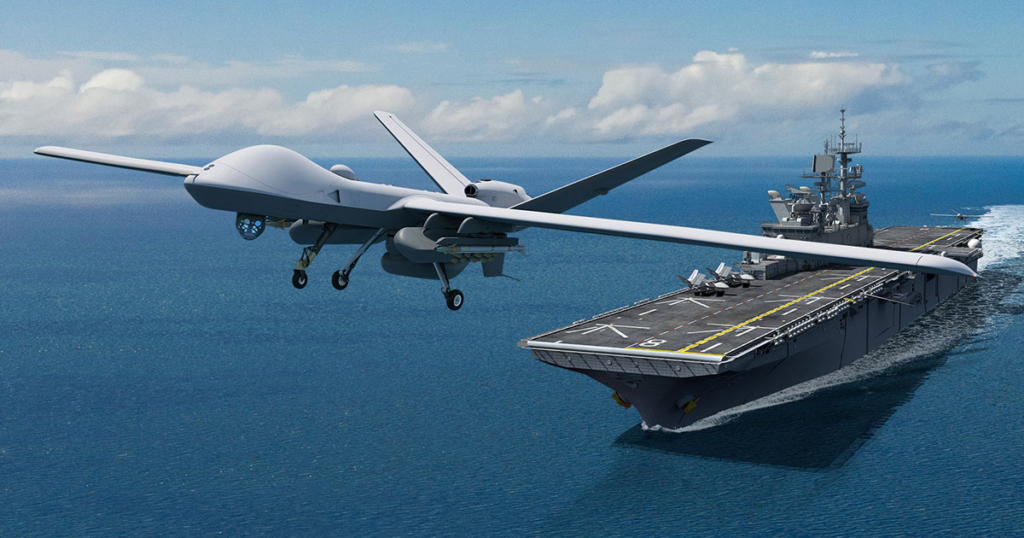
Swarm believes the manufacturing process could ultimately support a wider family of aircraft for defence, civil and commercial customers, but its immediate military ambitions extend well beyond simply supplying components.
Swarm eyes Reaper-sized Group 5 drone
The manufacturing work could ultimately underpin a much larger ambition for Swarm Aero: developing a Reaper-sized Group 5 UAV that can be produced in large numbers and operate cooperatively as part of an autonomous swarm.
According to Tectonic, Swarm is already developing the aircraft alongside its own autonomy and command-and-control software, with a first flight targeted for 2027.
The concept would take military drone swarming into a very different class of aircraft. While swarms are often associated with relatively small and expendable UAVs, Swarm intends to apply the principle to large aircraft capable of performing missions such as strike and intelligence, surveillance and reconnaissance.
Swarm Aero builds the Group 5 UAS aircraft and C2 & autonomy software that provides the 10X improvement in cost per effect that Defense Secretary Hegseth tasked DOW to pursue. We’re excited to see the new DIU director Owen West’s strong push on finding new approaches.
— Swarm Aero (@SwarmAero) August 5, 2026
Read more…
CEO Peter Kalogiannis told Tectonic that the aim is not simply to operate multiple drones simultaneously, but to have aircraft actively cooperate with one another.
He described groups of autonomous UAVs “cooperating together, sharing data, and really coordinating to achieve the same goals”.
That combination of large-aircraft capability, autonomy and high-rate manufacturing could make Swarm particularly relevant to the US Air Force as it considers how to replace the MQ-9 Reaper with aircraft that are cheaper, more survivable through numbers and easier to adapt to different missions.
Why the US Air Force wants to replace the MQ-9 Reaper drone
The MQ-9 Reaper remains one of the US Air Force’s most useful unmanned aircraft, but recent conflicts have also exposed the limitations of operating a relatively expensive, non-stealthy drone in heavily contested airspace.
US Air Force Chief of Staff General Kenneth Wilsbach recently named the MQ-9 Reaper drone as the “most valuable player” (MVP) in Operation Epic Fury against Iran, highlighting the continuing importance of the aircraft for intelligence, surveillance, reconnaissance and strike missions.
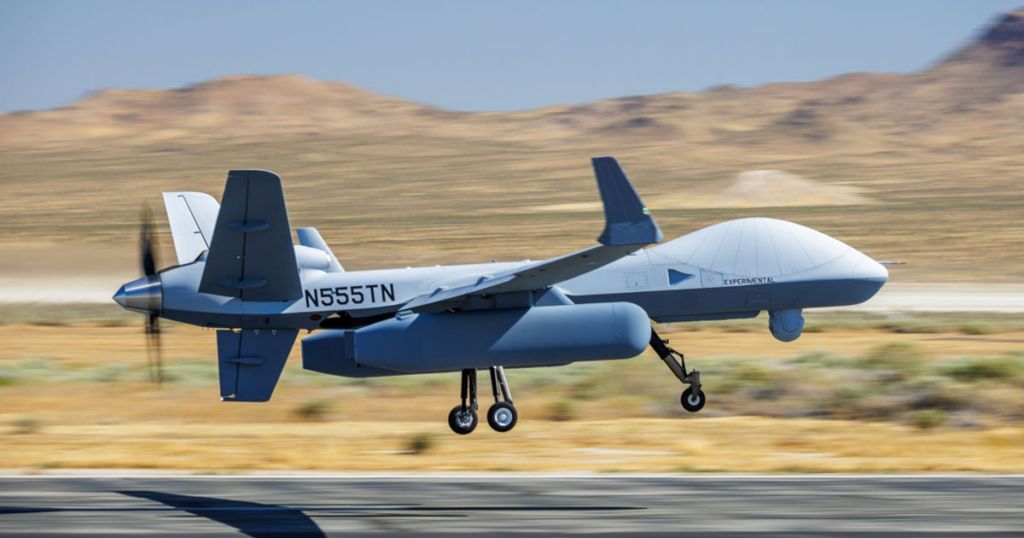
However, Reapers have also proved vulnerable to modern air defenses. Multiple MQ-9s have been lost to hostile fire in recent years, including aircraft shot down by Houthi forces in Yemen and Iran.
Cost is another concern. Depending on configuration and how costs are calculated, an MQ-9 can cost tens of millions of dollars, making it difficult to treat the aircraft as genuinely attritable in a high-intensity conflict.
The Air Force is therefore exploring a different model under its Massed Modular Aircraft (MMA) programme: large unmanned aircraft that retain much of the range and payload associated with systems such as the Reaper, but can be manufactured more cheaply, adapted rapidly and fielded in much greater numbers.
Current MMA requirements call for at least 2,800 lb of payload, a payload-carrying combat radius of at least 2,300 nm and a ferry range of 8,000 nm, alongside an emphasis on modular payloads and software. The Air Force wants the new aircraft to enter service by 2031.
A U.S. Air Force (USAF) MQ-9A Reaper unmanned combat aerial vehicle (UCAV) that departed from Chabelley Airfield crashed near Chabelley Cemetery in Djibouti. https://t.co/tSvKWeVx9E pic.twitter.com/euwiztaV3m
— OSINTWarfare (@OSINTWarfare) August 9, 2026
That requirement helps explain Swarm Aero’s focus on manufacturing from the outset. Rather than developing an expensive aircraft and attempting to reduce its cost later, the company is designing its Group 5 UAV around high-rate production and a lower unit price.
General Atomics has already said it intends to compete for MMA, while Anduril is also considered a likely contender.
Sign up for our newsletter and get our latest content in your inbox.


More from


October 17, 20265 min read


October 17, 20264 min read