


Drones or birds? The detection challenge behind NATO’s false alarm

5 min read
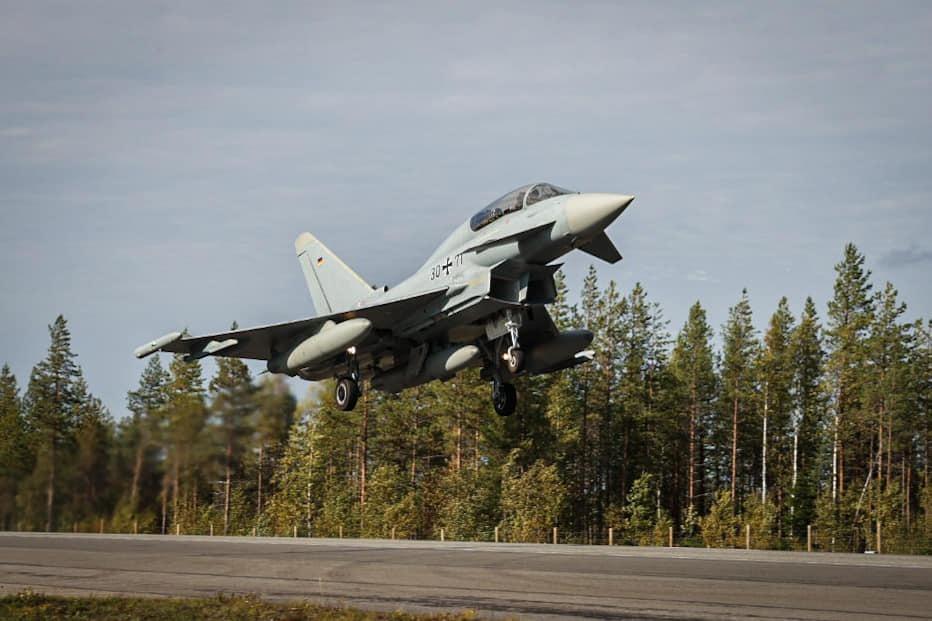
Small, low, and slow-flying FPV drones have blown open one of radar’s biggest challenges: distinguishing real threats from clutter and noise. Faced with drones, traditional radars have struggled to identify them for various reasons, including radar settings designed to filter out birds.
One of the enduring issues is not only to see the drone or other threat, but to accurately classify it and avoid overloading the system with false positives from bats and birds.
Fighter jet scrambled to intercept birds
In September, Reuters reported that Lithuania had mistaken a flock of birds for a perceived drone sighting in its airspace. The false alarm prompted it to close Vilnius Airport and for NATO to scramble at least one fighter jet.
The aircraft took off from Siauliai in northern Lithuania and may have been an Italian Air Force jet. The air alert was lifted, and the airport reopened in 38 minutes after the NATO aircraft made visual contact with the birds.
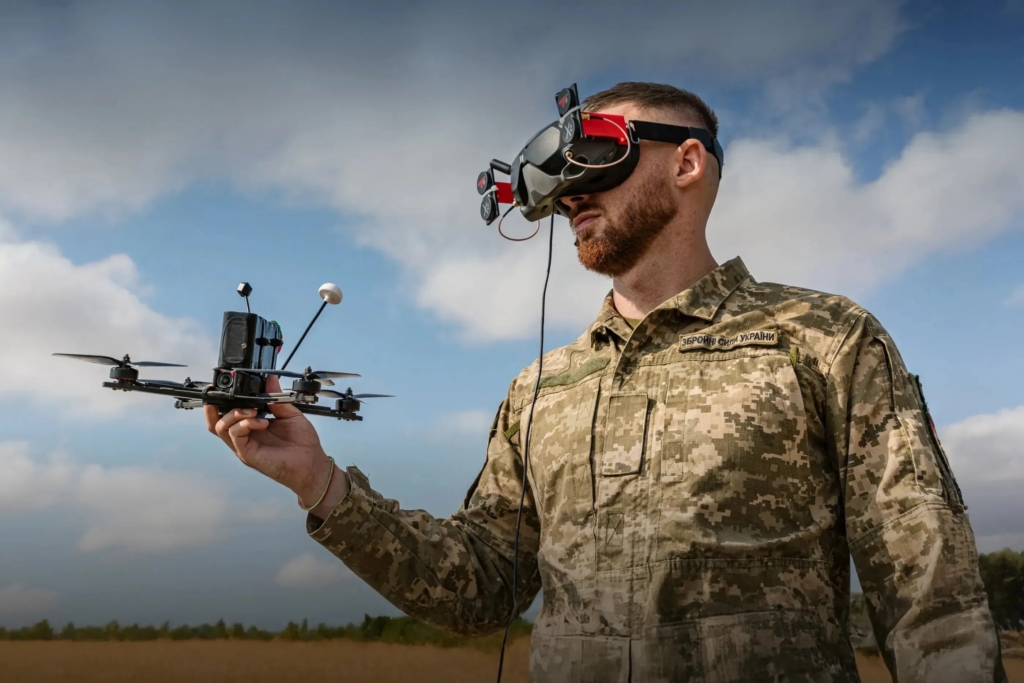
In a statement, Lithuania said, “On initial radar readings, marks left by birds and drones can be similar.” This is a major problem, and has been a problem since the early introduction of radar.
In the 2001 movie Pearl Harbor, Major Jackson says, “We’ve recently established a radar station here that can detect planes 125 miles out,” to which an officer adds, “Which is a month old, Admiral, and untested.”
Admiral Kimmel (played by Colm Feore) responds, “I’ve seen these new radar screens, Major. There’s no way of telling whether they’re ours, theirs, or a flock of damn birds.”
Since 1945, radar detection has changed dramatically, but the underlying issue of distinguishing objects of interest from clutter remains.
The problem of distinguishing drones from birds
One of the major limitations of modern radars is that they detect so much. They then need to filter the detections to remove the clutter and cut down on false alarms. For example, fighter jets and missiles typically fly fast, so a speed filter can remove noise like birds.
But small drones have a profile similar to birds; they fly low and slow. Sometimes they are not moving at all in relation to the radar when they are hovering.
A small quadcopter can have a very small radar cross-section, low speed, low altitude, an irregular flight path, and the reflections from its propellers can resemble the wing motion of birds.
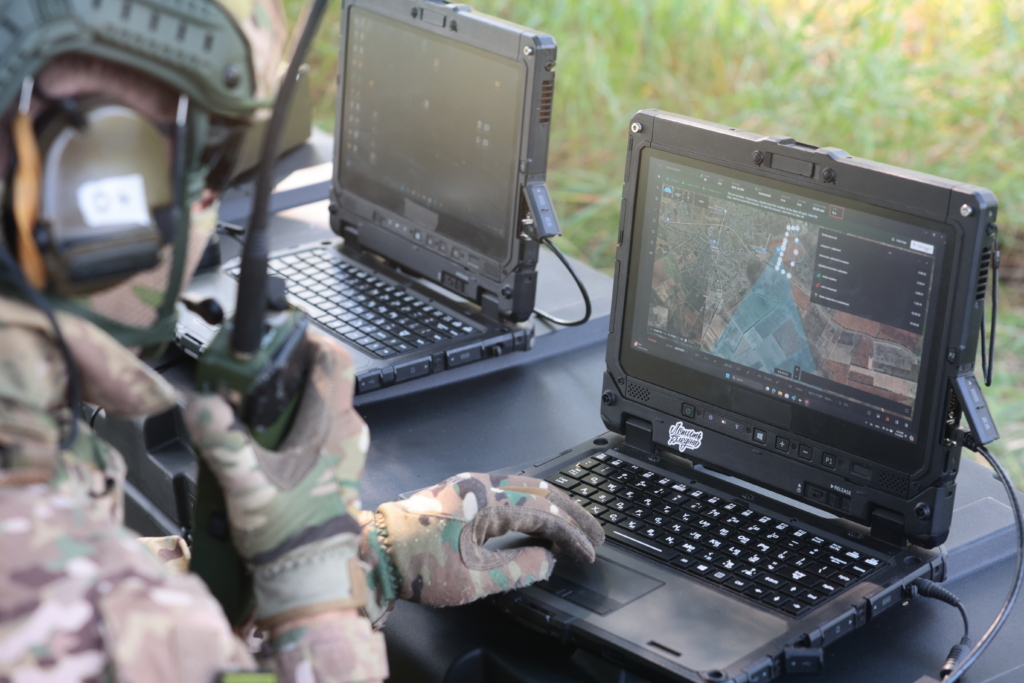
If a conventional radar lowers its filters that remove clutter, then it may be able to better warn of incoming drones, but the system may also be overwhelmed with false alarms.
This creates a problem, but not an unsolvable one. Also, it is unclear what drones the Lithuanian radar thought it was detecting. Larger Russian Shahed-type drones have been a major issue; these are very different compared to small FPV drones.
The four jobs of drone detection
It is impossible to list out and explain all the going Counter-UAS systems being developed. Industry and militaries around the world are racing to solve the drone problem.
There are four different jobs that are often lumped together as “detection.” Sensors like radar, RF, acoustic, and EO/IR help to detect a drone and answer the question, “Is something there?”
| Detection method | Detects | Bird/clutter discrimination | Typical role |
| Radar | Radio-wave reflections, range, velocity | Moderate–high | Primary wide-area detection and tracking |
| Micro-Doppler radar | Rotor/propeller and wing-motion signatures | High | Distinguishing drones from birds and other small targets |
| Electro-optical (EO) | Visible-light imagery | Very high | Visual classification and identification |
| Infrared (IR) | Thermal signatures | High | Night-time detection and identification |
| RF detection | Drone/controller radio emissions | High | Passive detection, identification and geolocation |
| Acoustic | Motor and propeller sounds | Moderate | Short-range supplementary detection |
| Lidar / passive radar | Laser reflections / reflected radio signals | Variable–high | Specialist supplementary detection and identification |
| Sensor fusion / AI | Combined sensor data and track behaviour | High | Classification, track confirmation and reducing false alarms |
Next, radar, EO/IR, and RF can track and answer, “Where is it going?” The next stage is classification, answering “is it a drone, bird, or something else?” For this, radar/micro-Doppler, EO/IR, RF, and AI are useful.
Finally, there’s identification: “what is it exactly?” EO/IR, RF, and radar signature databases help with this stage.
A layered approach to detecting and classifying drones
There are many approaches to the problem, with Lockheed Martin noting, “No single sensor. No single interceptor. No single platform can keep pace [with C-UAS].”
The British Army is trialing Dedrone and Quell systems working together and enabled by AI technology to detect drones at its Warminster base.
Dedrone’s C2 software solution fuses multiple sensors, including its own radio frequency (RF) sensors, to generate a single integrated operational picture. It is able to detect the signal between the operator and the drone and then display that information in real time.
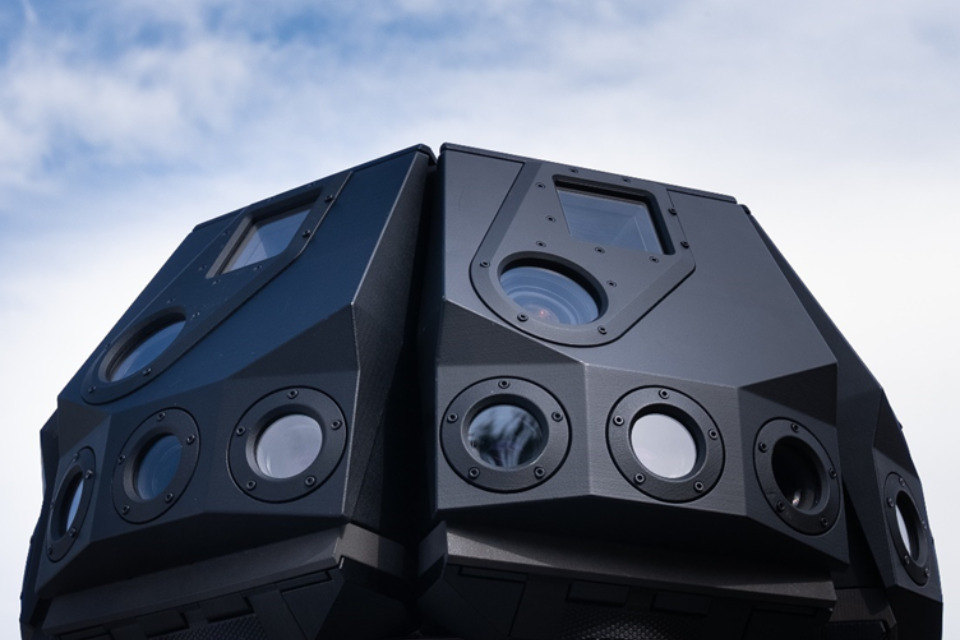
Quell’s SkySpyke provides a second layer of C-UAS using an electro-optical counter-unmanned aerial and surface close-in threat detection system that moves away from traditional RF-emitting capabilities.
Lockheed Martin says, “Counter-Unmanned Aircraft Systems (C-UAS) detect multiple drones by fusing radar, electro-optical/infrared, and radio frequency sensors, correlating tracks to filter clutter and prevent decoys from overwhelming the picture.”
In 2019 (an eternity ago in the C-UAS world), Saab announced its Enhanced Low, Slow and Small (ELSS) capability for its Giraffe surveillance radar as a solution. It claimed the false detection rates were as low as 1-3%.
Torbjörn Wolffram, Saab’s business unit Radar Solutions, said, “We have now developed advanced algorithms that can identify drones even in a flock of birds.” He added, “The false classification probability can be kept on very low levels while still being able to classify drones with a high probability.”





