


Pakistan tests indigenous Fa’az air-to-air missile from JF-17 fighter

4 min read
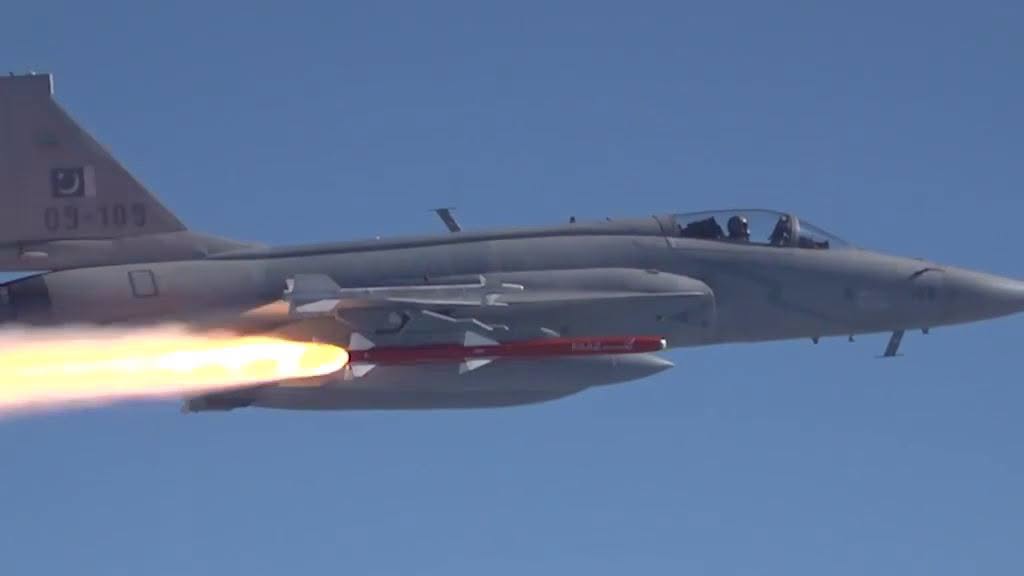
Pakistan has successfully flight-tested its indigenously developed Fa’az air-to-air missile from a JF-17 Thunder fighter, marking a step towards equipping the country’s combat aircraft with locally developed weapons.
The Pakistan Air Force’s Directorate General of Public Relations (PAF DGPR) announced the test on 3 November, releasing footage of a JF-17 launching the missile from an underwing pylon.
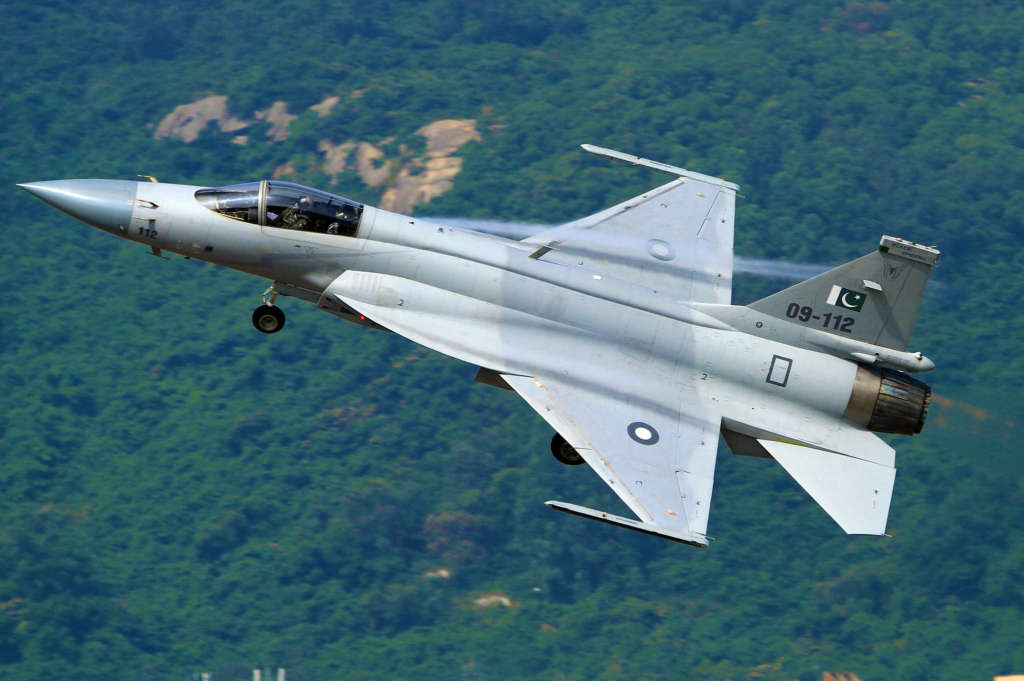
“Pakistan has conducted successful flight test of first indigenously developed Fa’az air-to-air missile,” the PAF DGPR said in a statement on X.
“Fa’az will significantly enhance operational flexibility of Pakistan Air Force, further strengthening the country’s overall defense posture.”
The air force said the missile would improve its operational flexibility and strengthen Pakistan’s defence capabilities.
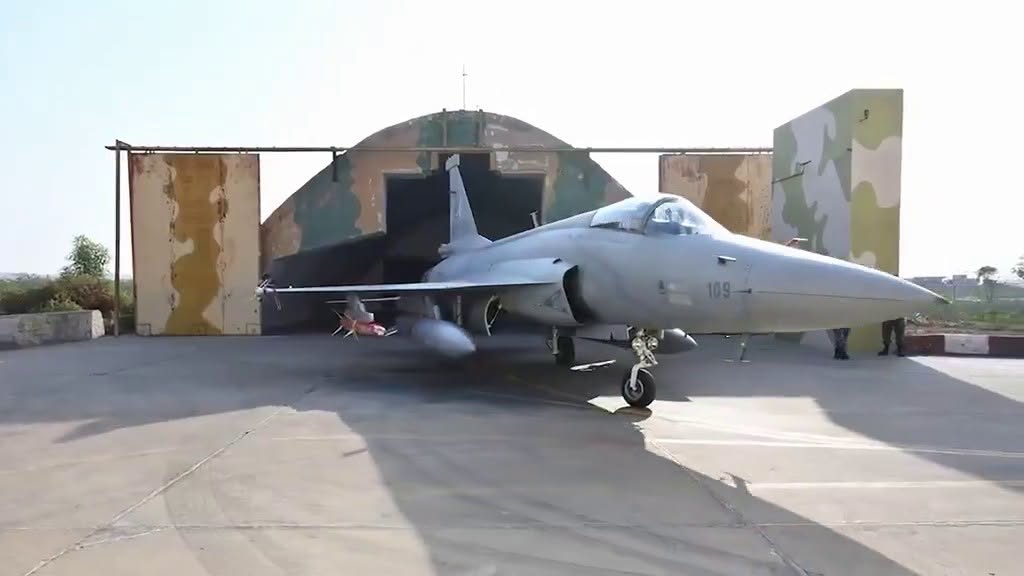
The footage shows a JF-17 Block I fighter, serial number 09-109, firing the Fa’az-IIR, the imaging infrared-guided version of the missile.
Pakistan has not disclosed the test location, launch range, target details or whether the missile successfully intercepted an aerial target.
What is the JF-17 Thunder?
The JF-17 is a single-engine, multirole combat aircraft jointly developed by Pakistan Aeronautical Complex (PAC) and China’s Chengdu Aircraft Corporation.
Designed as a relatively affordable fighter, it can undertake air defence, ground attack and reconnaissance missions. The aircraft is central to Pakistan’s efforts to maintain a combat fleet while developing its domestic aerospace industry.
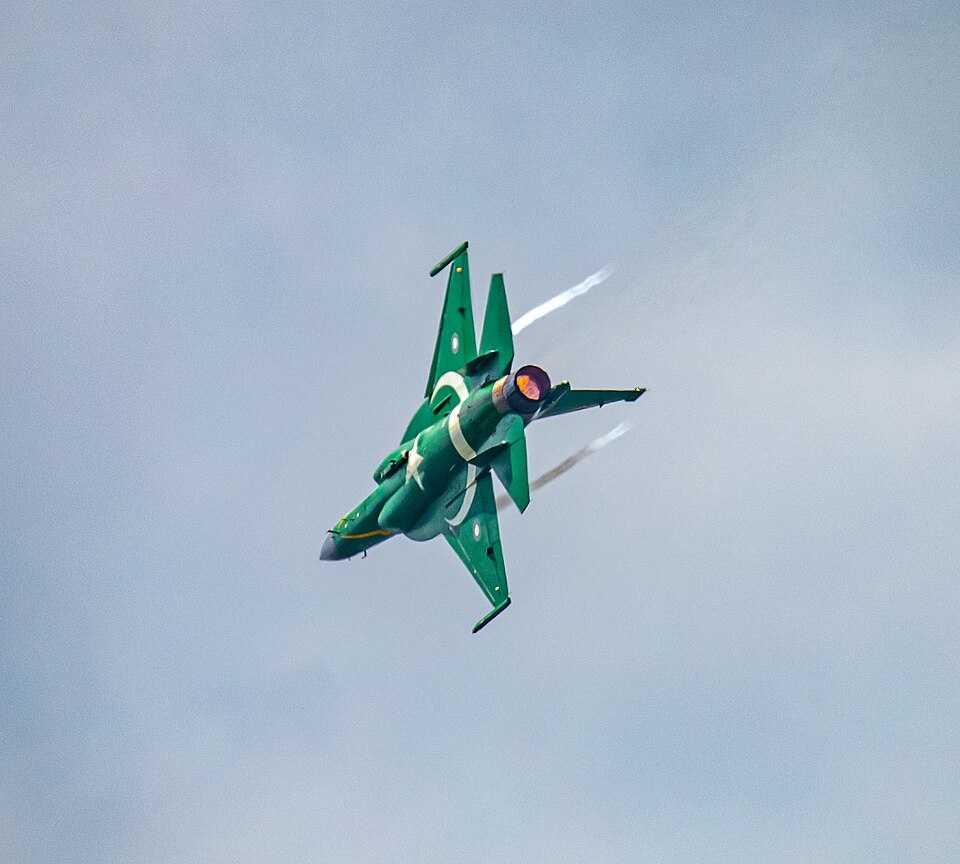
The JF-17 has entered service in several versions, with the newer Block III incorporating more advanced avionics, including an active electronically scanned array radar.
The aircraft used in the Fa’az test was an earlier Block I model.
According to Pakistani defence publication Quwa, the aircraft was among the first JF-17s to undergo a major overhaul at PAC, beginning in 2019.
Pakistan already operates Chinese air-to-air missiles on its JF-17 fleet. These include the SD-10, an export version of China’s PL-12 radar-guided missile, while the newer Block III can carry the longer-range PL-15E.
The Fa’az programme is intended to give Pakistan a domestic alternative and greater control over the development and supply of weapons for its fighters.
What is the Fa’az missile?
Fa’az is a beyond-visual-range air-to-air missile developed by Pakistan’s Air Weapons Complex, part of the National Engineering and Scientific Commission (NESCOM).
It is marketed by the state-owned Global Industrial and Defence Solutions (GIDS), which publicly displayed the missile at the IDEF defence exhibition in Turkiye in July 2023.
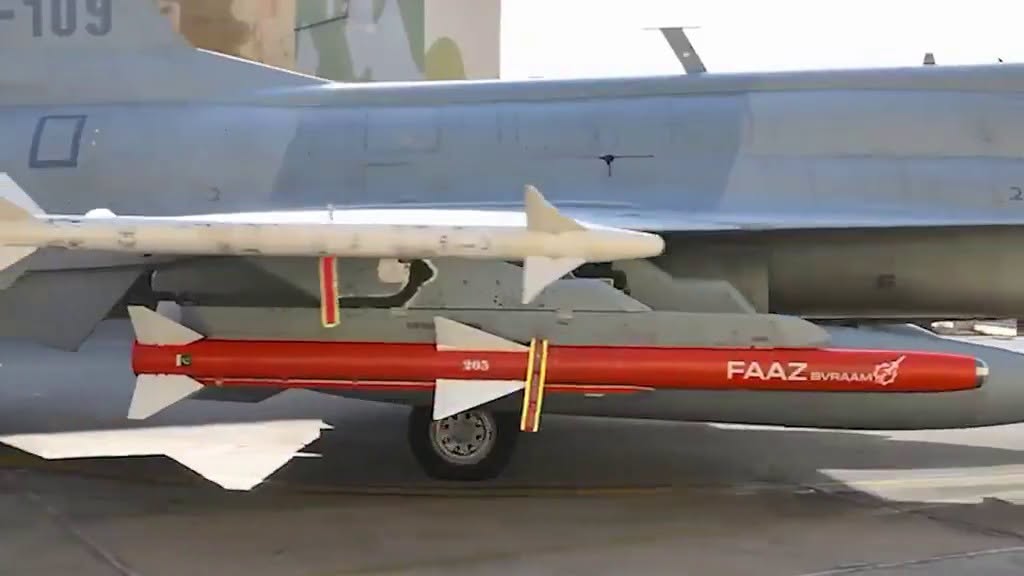
The Fa’az-1 family has two guidance options.
The Fa’az-IIR, used in the latest test, relies on an imaging infrared seeker to identify and track the heat signature of an aircraft.
Unlike a conventional heat-seeking missile that tracks a strong infrared source, an imaging seeker produces a thermal image of the target. This can help distinguish an aircraft from background heat and countermeasures.
The second version, Fa’az-RF, uses an active radar seeker, allowing the missile to detect and track a target using its own radar during the final stage of flight.
Both versions are intended for engagements beyond the pilot’s visual range.
According to specifications published by Air Weapons Complex and detailed by Quwa, the Fa’az-IIR has an advertised range exceeding 75 kilometres and a maximum speed above Mach 3.2.
The radar-guided Fa’az-RF is advertised by the company with a range exceeding 100 kilometres and a speed above Mach 3.5.
The missile is approximately 3.95 metres long, weighs about 205 kilograms and uses a dual-thrust rocket motor.
Its guidance system is designed to receive targeting updates during flight before the seeker takes over for the final approach.
Why the test matters
Pakistan’s missile development comes as the PAF continues to rely heavily on imported weapons, particularly from China and the United States.
Its J-10C and JF-17 Block III fighters can carry the Chinese PL-15E beyond-visual-range missile, while its F-16 fleet uses the American AIM-120 AMRAAM.
Defence publication The War Zone (TWZ) reported that the Fa’az design has similarities to China’s SD-10/PL-12 missile family. However, GIDS maintains that the missile was developed locally and that it owns the associated intellectual property.
TWZ also quoted Douglas Barrie, senior fellow for military aerospace at the International Institute for Strategic Studies, who raised the possibility that the missile’s seeker technology could have Chinese origins. That remains unconfirmed.
The November test demonstrates that the Fa’az-IIR has progressed beyond the mockups displayed in 2023 to an airborne launch from a frontline fighter.
It does not yet establish when the missile will enter operational service.
Pakistan has also disclosed plans for an improved Fa’az-2 missile, advertised with a range of 180 kilometres, although no flight-test schedule has been announced.


