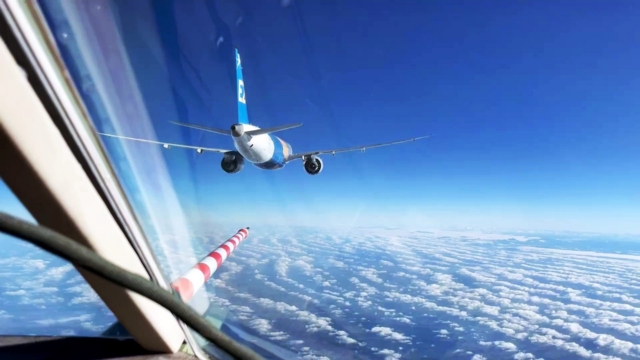


Boeing wins order for 15 more KC-46 tankers amid debate over USAF refuelling strategy

5 min read
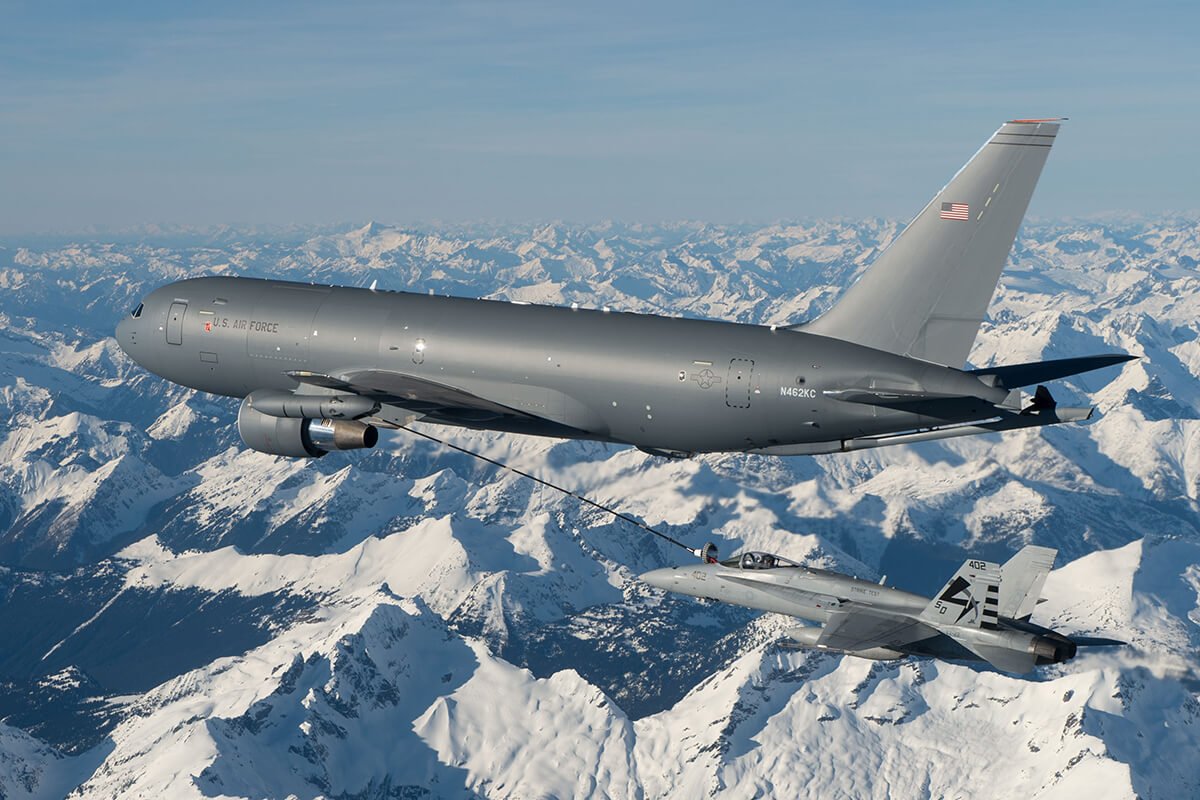

Boeing has secured a contract from the US Air Force (USAF) to build 15 additional KC-46A Pegasus tankers, just weeks after an independent study urged the service to reconsider further purchases of the aircraft in favour of a new generation of longer-range tankers.
The latest order brings the total number of KC-46As contracted by the US Air Force and international customers to 203.
The contract also comes at an important time for Boeing’s 767 programme. Commercial production of the widebody is scheduled to end in 2027, but military orders for the KC-46A, which is derived from the 767, will keep the production line running for years to come.
“We’re grateful for the trust the U.S. Air Force continues to place in our team,” said Jake Kwasnik, Boeing’s KC-46 programme vice president.
“The KC-46 plays an important role in enabling military operations around the world, and we look forward to building on that partnership while staying focused on delivering on our commitments to support the warfighter.”
Boeing has so far delivered 116 KC-46As to the US Air Force, six to the Japan Air Self-Defense Force and two to the Israeli Air Force.
The airframer said the US Air Force’s KC-46A fleet had accumulated more than 180,000 flight hours since the first aircraft was delivered in 2019.
US Air Force urged to reconsider KC-46 purchases
As reported previously by Aerospace Global News, a study by the Washington-based Hudson Institute questioned whether continued investment in the KC-46A would adequately meet the US military’s future aerial refuelling requirements.
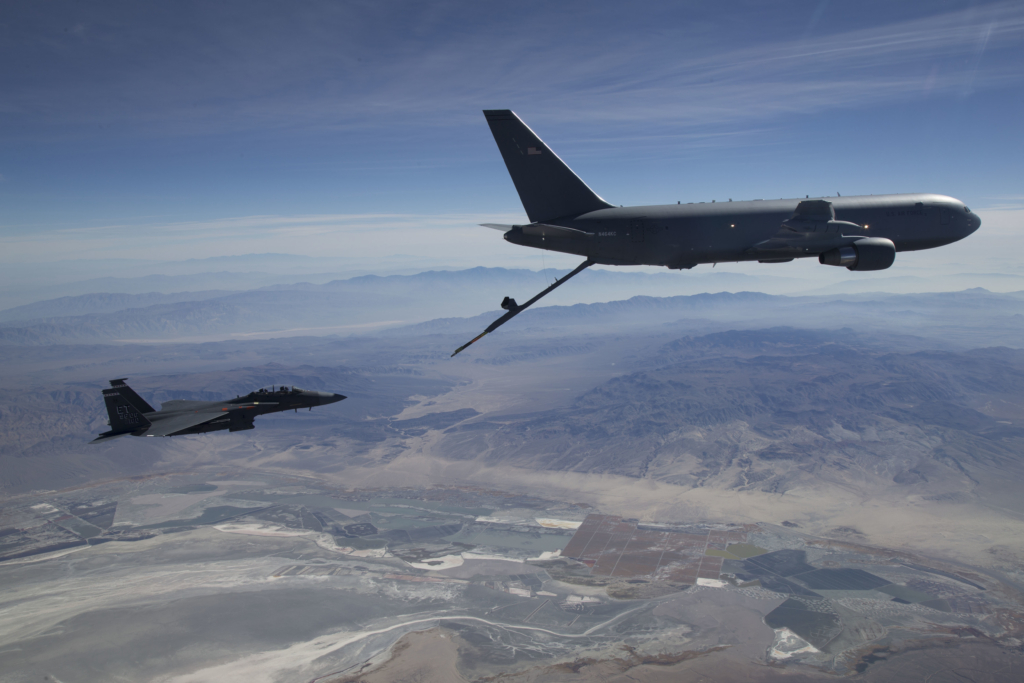
The report, Resilient Reach: Redesigning Aerial Refueling for Contested Global Operations, was written by researchers Timothy A. Walton and Shane Dennin.
While acknowledging the Pegasus’s performance in current operations, the researchers argued that its range, fuel delivery capacity and survivability could limit its effectiveness in future conflicts, particularly across the Indo-Pacific.
“The medium-range KC-46A has performed well in contemporary operations and would play an important role in any conflict,” the researchers said.
However, their modelling suggested that a medium-sized blended-wing-body (BWB) tanker could refuel more than twice as many groups of combat aircraft as the KC-46A or support them at more than twice the distance.
Unlike conventional aircraft, a blended-wing design merges the fuselage and wings into a continuous lifting surface, reducing aerodynamic drag and potentially improving fuel efficiency. The further a tanker travels to reach other aircraft, the more fuel it consumes itself, leaving less available to transfer.
The study estimated that acquiring and operating 250 blended-wing-body tankers could save $15.5 billion over 30 years compared with an equivalent fleet of KC-46As. Those figures are based on computer modelling rather than the demonstrated performance of an operational tanker.
The US Air Force is already exploring the technology. In 2023, it awarded California-based JetZero a contract to develop a full-scale blended-wing-body demonstrator in partnership with Northrop Grumman.
The demonstrator is scheduled to fly by the end of 2027, although an operational tanker based on such a configuration remains some way off.
KC-46 Pegasus: A programme beset by challenges
The latest order adds to a tanker programme that has experienced procurement controversies, development delays, technical difficulties and substantial financial losses for Boeing.
The US Air Force selected Boeing’s 767-based tanker in 2011 following a lengthy competition involving a rival proposal based on the Airbus A330 Multi Role Tanker Transport (MRTT).
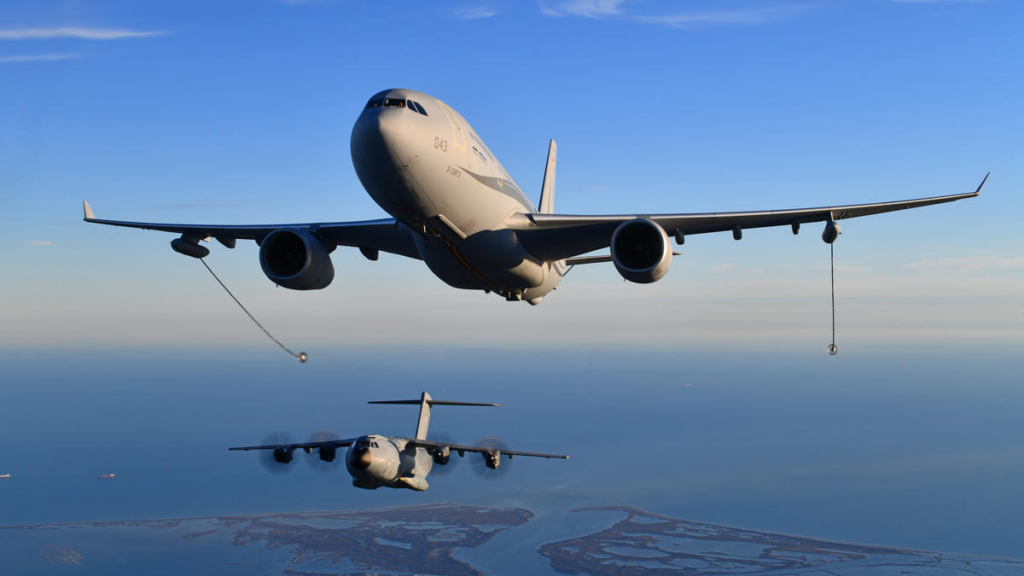
The original programme envisaged the acquisition of 179 aircraft to begin replacing the ageing KC-135 Stratotanker fleet, which entered service in 1957.
Adapting an established commercial aircraft was expected to reduce development risks. However, integrating the military systems proved more complicated than anticipated.
Among the most persistent problems has been the KC-46A’s Remote Vision System (RVS), which allows boom operators to conduct aerial refuelling using cameras and digital displays rather than looking directly through a window at the receiving aircraft.
Problems with image quality under certain lighting conditions prompted Boeing to undertake a redesign of the system. The aircraft has also experienced difficulties involving its refuelling boom.
The programme’s fixed-price development contract has left Boeing absorbing billions of dollars in additional costs.
Despite these setbacks, the US Air Force has progressively expanded its use of the Pegasus in training, overseas deployments and operational missions.
Military orders extend the life of the Boeing 767
The additional tanker order is also significant for the future of Boeing’s 767 manufacturing operations at Everett, Washington.
As previously reported by AGN, Boeing is expected to conclude production of the commercial 767-300F freighter in 2027 ahead of the introduction of tighter international aircraft emissions requirements.
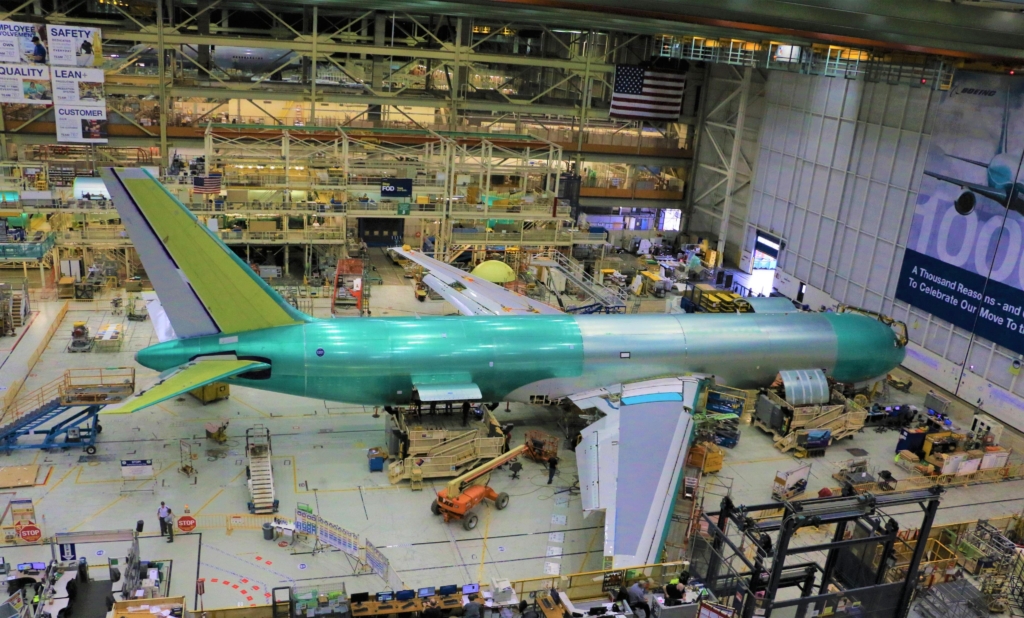
The 767 first flew in 1981 and became a widely used twin-engine widebody on domestic and international passenger routes.
Boeing delivered its final passenger 767-300ER in 2014 as airlines increasingly turned to newer aircraft, including the 787 Dreamliner.
Demand from cargo operators subsequently helped sustain production, with FedEx and UPS among the principal customers for the factory-built 767 freighter.
However, Boeing has not developed a freighter version of the 787, leaving it without a direct replacement for the 767-300F in the same market segment.
Military production will continue beyond the commercial manufacturing deadline.
The KC-46A is derived from the 767-200ER, incorporating elements of the 767 freighter’s design, reinforced structures, military communications equipment and cockpit technology developed for the 787 Dreamliner.
The tanker can carry approximately 212,000lb (96,160kg) of fuel and is powered by two Pratt & Whitney PW4062 engines.
It can refuel aircraft using both flying-boom and probe-and-drogue systems, allowing it to support a wide range of US and allied military aircraft.
The Pegasus can also be configured to carry passengers, cargo and patients requiring aeromedical evacuation.
Growing operational role for the KC-46A
Boeing highlighted recent KC-46A missions supporting humanitarian assistance, including the transportation of relief supplies under the US government’s Denton Humanitarian Assistance Program.

The aircraft has also participated in bilateral training involving the US and Japanese air forces, while long-distance deployments from Travis Air Force Base in California to Japan have supported operations across the Pacific.
The US Air Force, meanwhile, faces the challenge of replacing hundreds of ageing KC-135s while determining what kind of tanker it will require in the coming decades.
Sign up for our newsletter and get our latest content in your inbox.