


Why NATO still relies on a Cold War-era Boeing 707 to monitor Russia

4 min read
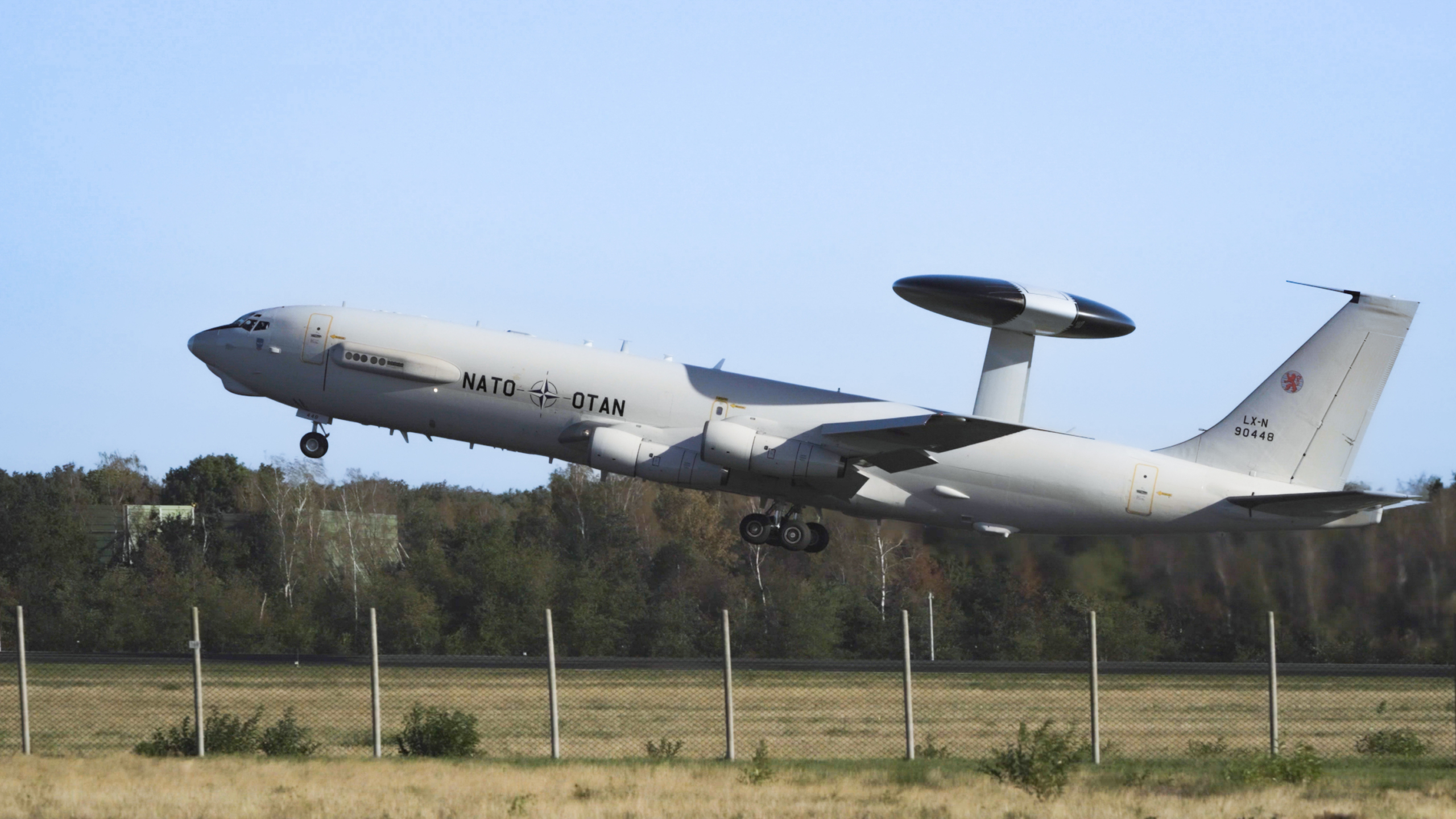

Following November’s violation of Polish airspace by three Russian Kh-101 cruise missiles, NATO authorized the forward deployment of a Boeing E-3A AWACS aircraft to reinforce surveillance over Poland.
These are 1980s-era radar aircraft based on the old quad-engined Boeing 707 airliner. The last scheduled passenger Boeing 707 flight took place in the US in 1983, although they continued flying until 2013 in Iran. Today, NATO is struggling to keep these ageing aircraft flying until replacements arrive.
NATO’s E-3A Sentry Component
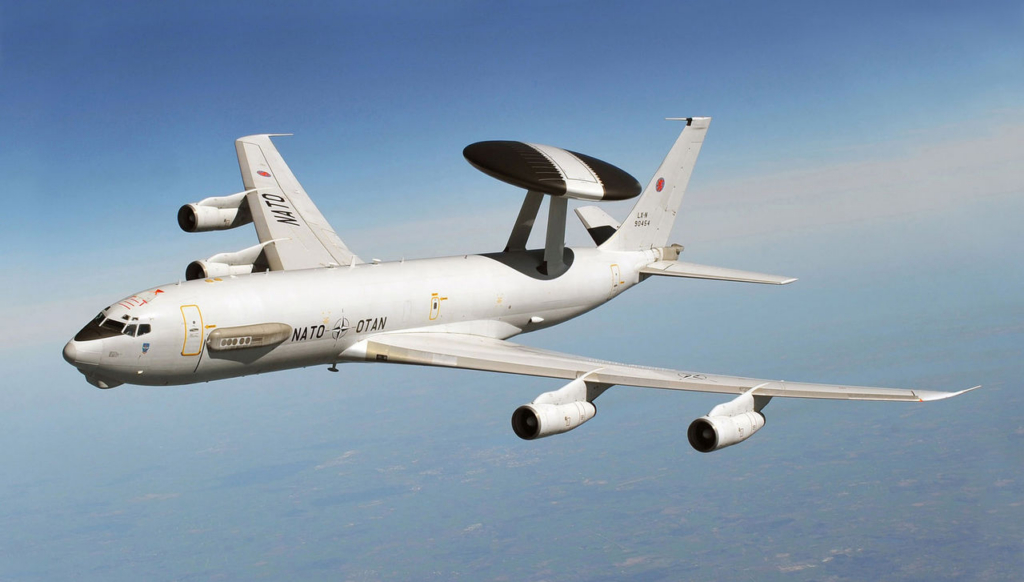
NATO states that its “E-3A Component has fourteen E-3A aircraft.” The operational fleet is considerably lower. NATO owns and operates these assets, with personnel drawn from multiple member countries.
Originally, NATO ordered a fleet of 18 aircraft in 1978. One crashed in 1996, another was cannibalized for spares in 2015, and two were retired in 2017 and 2018.
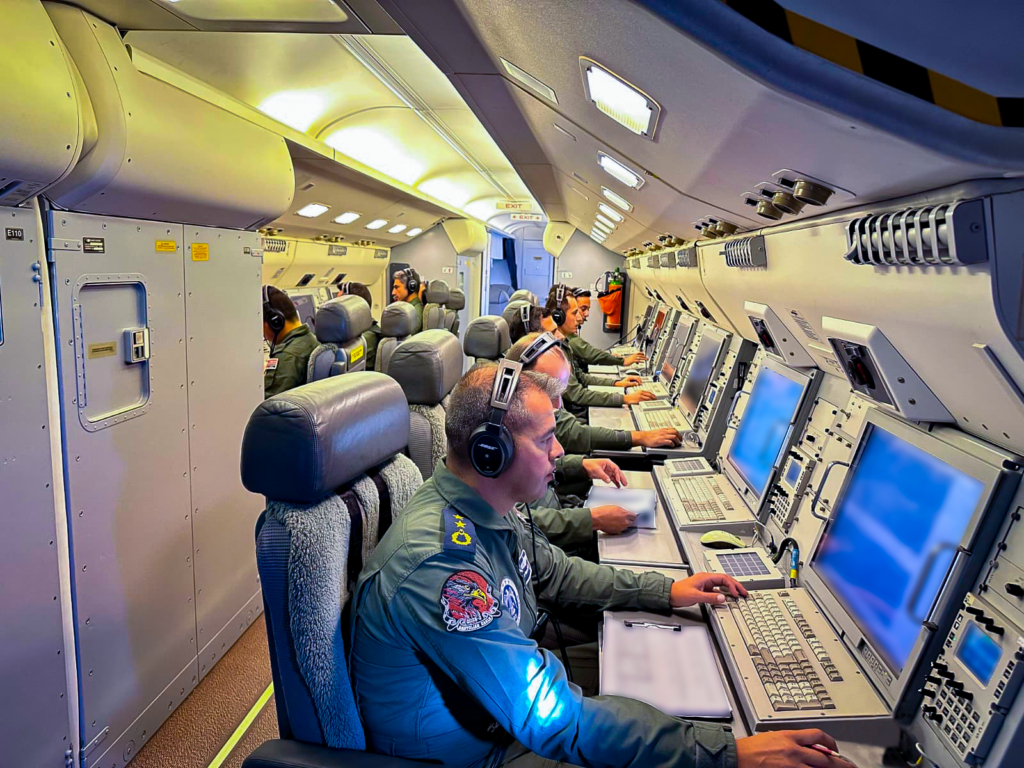
NATO describes its operational E-3 squadrons as having integrated international personnel from 19 different countries. There are approximately 22 multinational operational aircrews assigned to the two operational squadrons, in addition to the training organisation.
A single mission may have mixed crews drawn from different NATO countries.
The importance of E-3 Sentry aircraft to NATO
These aircraft are able to give the alliance eyes and ears over the airspace. The massive rotating dome uses a pulse Doppler radar that gives early warning of low- or high-flying aircraft operating over the territory of a potential aggressor.
They are able to detect, track, identify, and report potentially hostile aircraft operating at low altitudes, as well as to provide fighter control of Allied aircraft.
They can monitor airspace out to around 400 km, and three aircraft operating in overlapping, coordinated orbits can provide unbroken radar coverage of the whole of Central Europe.
NATO notes, “Information collected by AWACS can be transmitted directly – via digital links – from the aircraft to other users on land, at sea or in the air in near real time.”
Poland’s airborne early warning and control capabilities are currently based on two Saab 340s equipped with the Erieye system.
NATO’s ageing fleet of E-3 Sentries not at full strength
According to OSINT analyst Steffan Watkins, in an updated post, of NATO’s fleet of 14 E-3A Sentry aircraft, six, or 44%, have flown in the past 28 days and aren’t in a maintenance facility.
Three were located at NATO Air Base Geilenkirchen in Germany, and one at Germany’s Wunstorf Air Base. The other two were in Spain and Lithuania.
Much of the remainder of the fleet appears to exist more on paper than in reality. One of these aircraft (registered LX-N90452) hasn’t flown since the end of 2021, or around five years.
🟇 #NATO Airborne Early Warning & Control Force (14); 2026-11-23 UTC ✦ 6 (43%) of the NATO E-3A Sentry fleet have flown in the past 28 days, and aren’t at a maintenance facility. ✦ NATO Air Base Geilenkirchen (ETNG) 🇩🇪 (3) ➢ LX-N90445 #4D03C3 (6d) ➢ LX-N90444 #4D03C2 (5d) ➢ LX-N90446 #4D03C4 (4d) ✦ Wunstorf Air Base (ETNW) 🇩🇪 (1) ➢ LX-N90442 #4D03C0 ✦ Base Aérea de los Llanos (LEAB) 🇪🇸 (1) ➢ LX-N90448 #4D03C6 ✦ Šiauliai Air Base (EYSA) 🇱🇹 (1) ➢ LX-N90453 #4D03CB [Mode-S]
— Steffan Watkins (@steffanwatkins) November 23, 2026
Another aircraft hasn’t flown since mid-2023, and two more apparently last flew in 2024; two more last flew in 2025. Of the last two, one has not flown for 139 days, while one flew less than a week ago, but seems to have entered maintenance.
It is difficult to say how many of these are in maintenance and will return to service and how many are effectively stored. Multinational crews from across the alliance operate them.
From E-3 Sentries to Saab GlobalEyes
NATO received its first E-3 in 1982, with the last being received in 1985. The fleet is planned to remain in service until 2035. The aircraft’s airframe is old, but its systems have undergone several generations of upgrades. These aren’t just 1980s radar aircraft.
Replacing the aircraft is also extremely expensive, with countries incentivized to keep the existing fleet operating for as long as possible. The E-3s were to be replaced with a fleet of more capable Boeing E-7 Wedgetails based on the Boeing 737 airliner.
However, the USAF announced it would cancel its own Wedgetail order in 2025 and pulled out of the NATO effort to purchase the Wedgetail for the alliance.
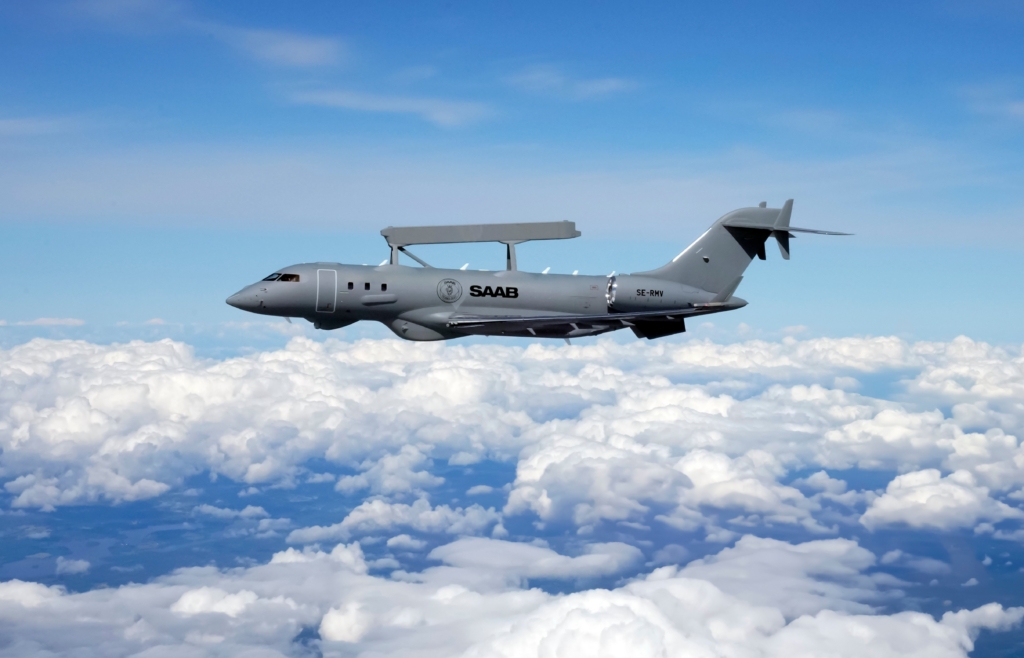
This collapsed NATO’s planned acquisition, leading the remaining European NATO members to seek a European alternative.
At the July 2026 summit in Ankara, NATO said it will begin formal negotiations to acquire up to ten Saab GlobalEye airborne early warning and control aircraft.
While the last rotating dome is visually impressive, it is no longer needed. The E-3 was developed during the 1970s and 1980s, and electronic technology has advanced massively since then. Modern systems are far more compact.
Sign up for our newsletter and get our latest content in your inbox.