First Boeing E-7 Wedgetail arrives for RAF service in Scotland

4 min read
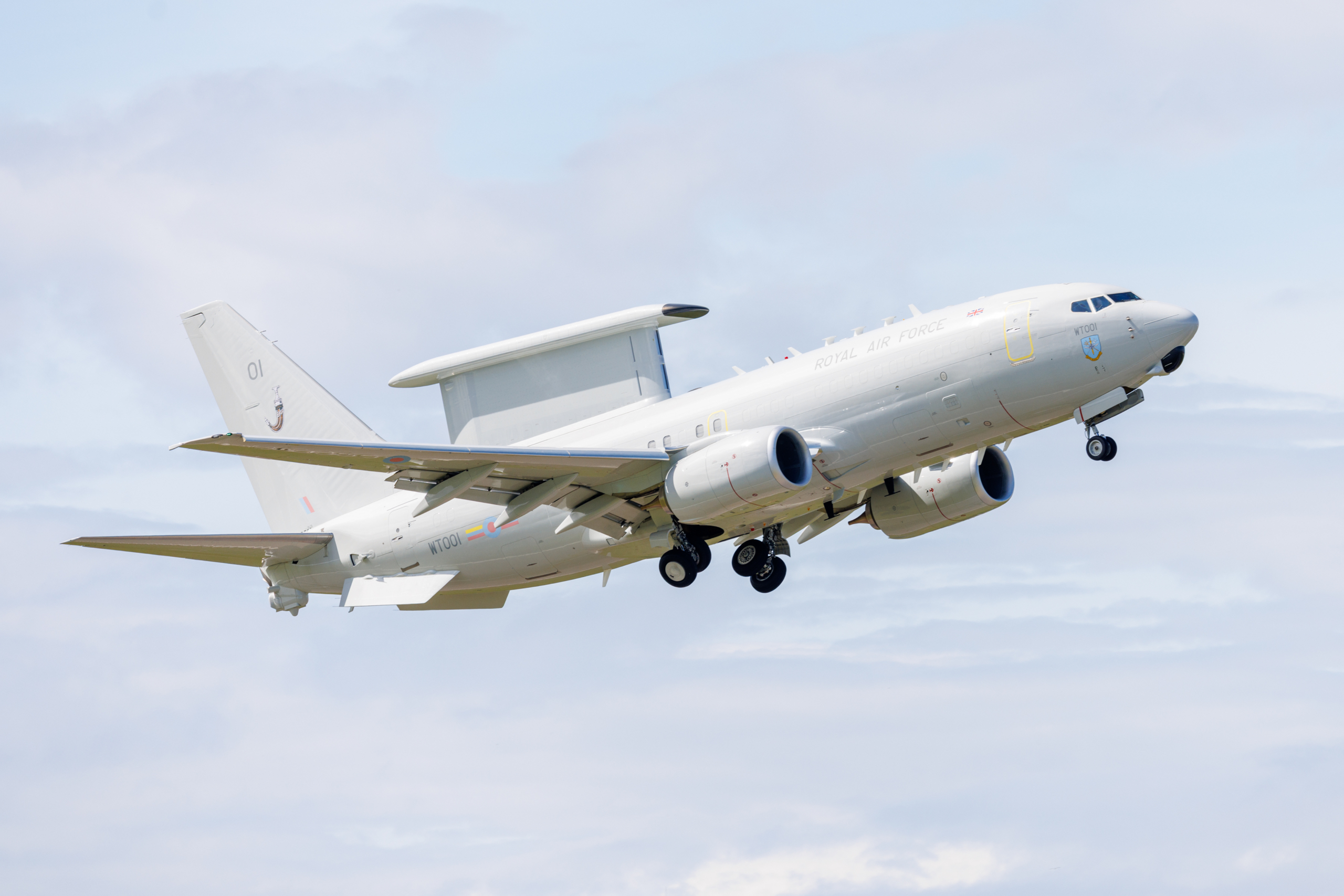
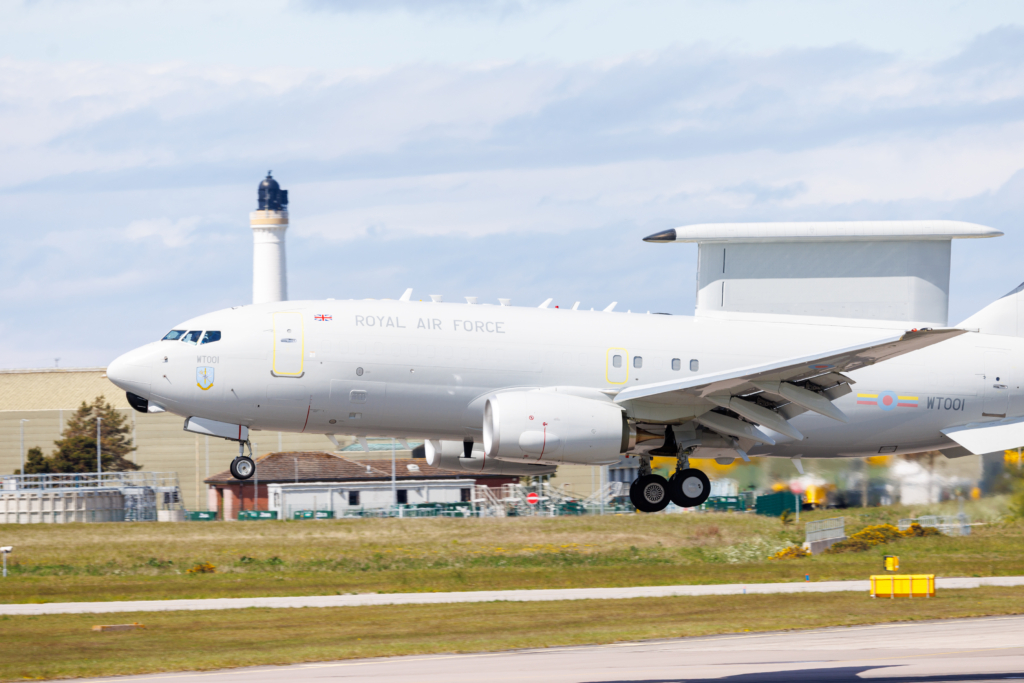
The RAF’s first Boeing E-7 Wedgetail has arrived at its future operational home at RAF Lossiemouth, marking a major milestone for one of the UK’s most important airborne surveillance and battle management programmes.
Although the aircraft is not yet operational, its arrival in Scotland brings the RAF a step closer to restoring a long-range airborne early warning capability following the retirement of the E-3D Sentry fleet.
First RAF E-7 Wedgetail flown to RAF Lossiemouth
RAF Lossiemouth in Scotland has welcomed the first RAF E-7 Wedgetail airborne early warning and control aircraft as the programme moves closer toward operational service.
The aircraft, designated E-7 Wedgetail AEW Mk1 and registered WT001, flew to its future operating base from STS Aviation Services at Birmingham Airport on 21 May. The flight was operated by a joint Boeing UK and RAF crew and was tracked by several aviation and OSINT accounts online.
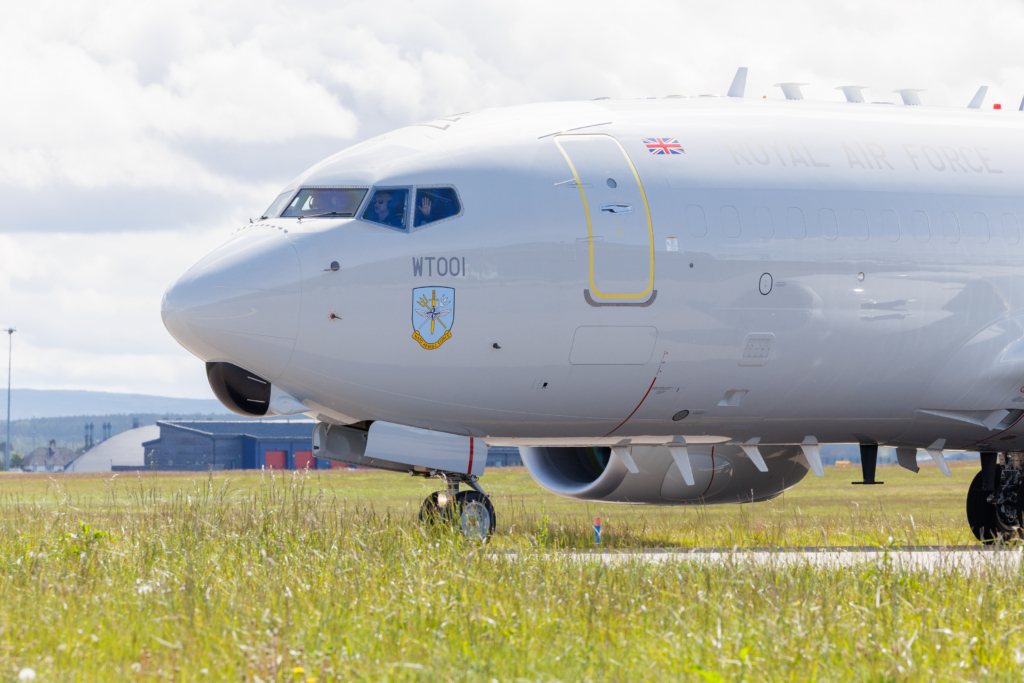
The Armchair Admiral posted a screenshot of the aircraft tracking soon after take off with the caption, “Boeing E-7A Wedgetail AEW.1 1x #43C97A WT001 – BOEING 32 The first RAF E-7 is on its delivery flight to RAF Lossiemouth.”
WT001 was formally delivered to the RAF in October 2024 and has since been undergoing testing and evaluation.
#RAF Royal Air Force
— Armchair Admiral 🇬🇧 (@ArmchairAdml) May 21, 2026
Boeing E-7A Wedgetail AEW.1 1x#43C97A WT001 – BOEING 32
The first RAF E-7 is on its delivery flight to RAF Lossiemouth. @MATA_osint pic.twitter.com/wu7B8RHJjc
According to Planespotters.net, WT001 is a converted Boeing Business Jet first delivered in 2010 and previously operated by Chinese company Deer Jet.
The second aircraft, WT002, is also a converted business jet originally delivered in 2011, while WT003 is a new-build aircraft delivered by Boeing in 2022 ahead of conversion work.
E-7 Wedgetail not yet operational
Although the aircraft has now arrived at RAF Lossiemouth, it has not yet entered operational service.
The RAF said the aircraft will continue “its Test and Evaluation phase at its future Main Operating Base, marking another significant milestone in the programme’s progression.”
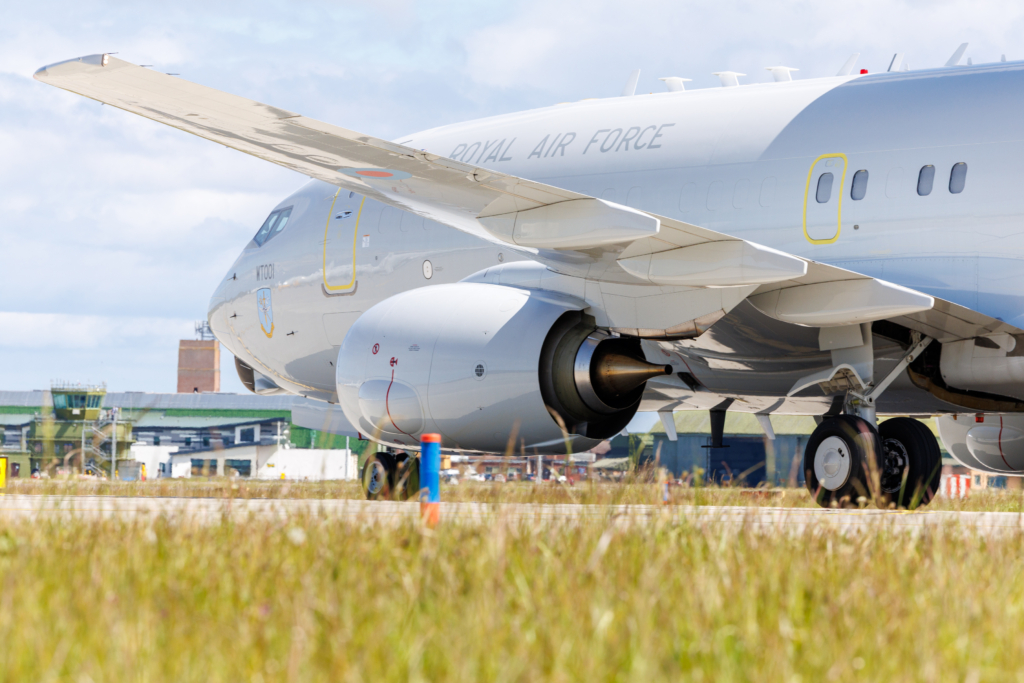
It added: “The Test and Evaluation phase, which is split between MOD Boscombe Down and RAF Lossiemouth, is to ensure safe, efficient, and fully assured progression toward service entry.”
The aircraft is expected to achieve Initial Operational Capability later in 2026.
Once testing is complete, the E-7 will enter operational service with No. 8 Squadron alongside the RAF’s fleet of nine P-8 Poseidon maritime patrol aircraft, which are also based at RAF Lossiemouth. Both aircraft types are derived from the Boeing 737 airliner.
The UK signed a contract in 2019 to procure five E-7 Wedgetails, although this was reduced to three aircraft in the 2021 Integrated Review as part of wider defence cost-saving measures.
However, the UK still procured five Northrop Grumman MESA radars, with the two additional systems intended as spares or for potential future aircraft should the fleet later expand.
Get the latest aerospace defence news here on AGN.
E-7 Wedgetail to replace RAF Sentry fleet
The Wedgetail is the RAF’s next-generation airborne early warning and control aircraft, replacing the retired fleet of E-3D Sentry aircraft. The RAF’s remaining E-3Ds were sold to Chile in 2022.

Originally developed for the Royal Australian Air Force, the E-7 Wedgetail is already in operational service with Australia, South Korea and Turkey.
The RAF says the aircraft’s Multi-Role Electronically Scanned Array (MESA) radar provides long-range airborne and maritime surveillance while enabling real-time coordination of fighter, tanker and ISR assets.
The aircraft is intended to support RAF Typhoon and F-35 operations, acting as an airborne command-and-control platform for complex air and maritime missions.
The USAF selected the E-7 Wedgetail in 2022 as its future airborne early warning platform, although the programme later faced uncertainty amid proposals to prioritise space-based ISR systems and additional E-2D Hawkeyes instead.
The first USAF airframes are now under contract and undergoing modification work in the UK.
Congress pushed back and restored funding, keeping the programme alive. Initially, the USAF zeroed out the funding in the Fiscal 2027 budget request. After Operation Epic Fury, United States Secretary of War Pete Hegseth said the Air Force had a change of heart and now wants the Wedgetail and funding.
Featured Image: RAF
Sign up for our newsletter and get our latest content in your inbox.


More from


October 17, 20264 min read