Boeing under renewed scrutiny in NTSB probe into fatal UPS MD-11 crash

7 min read
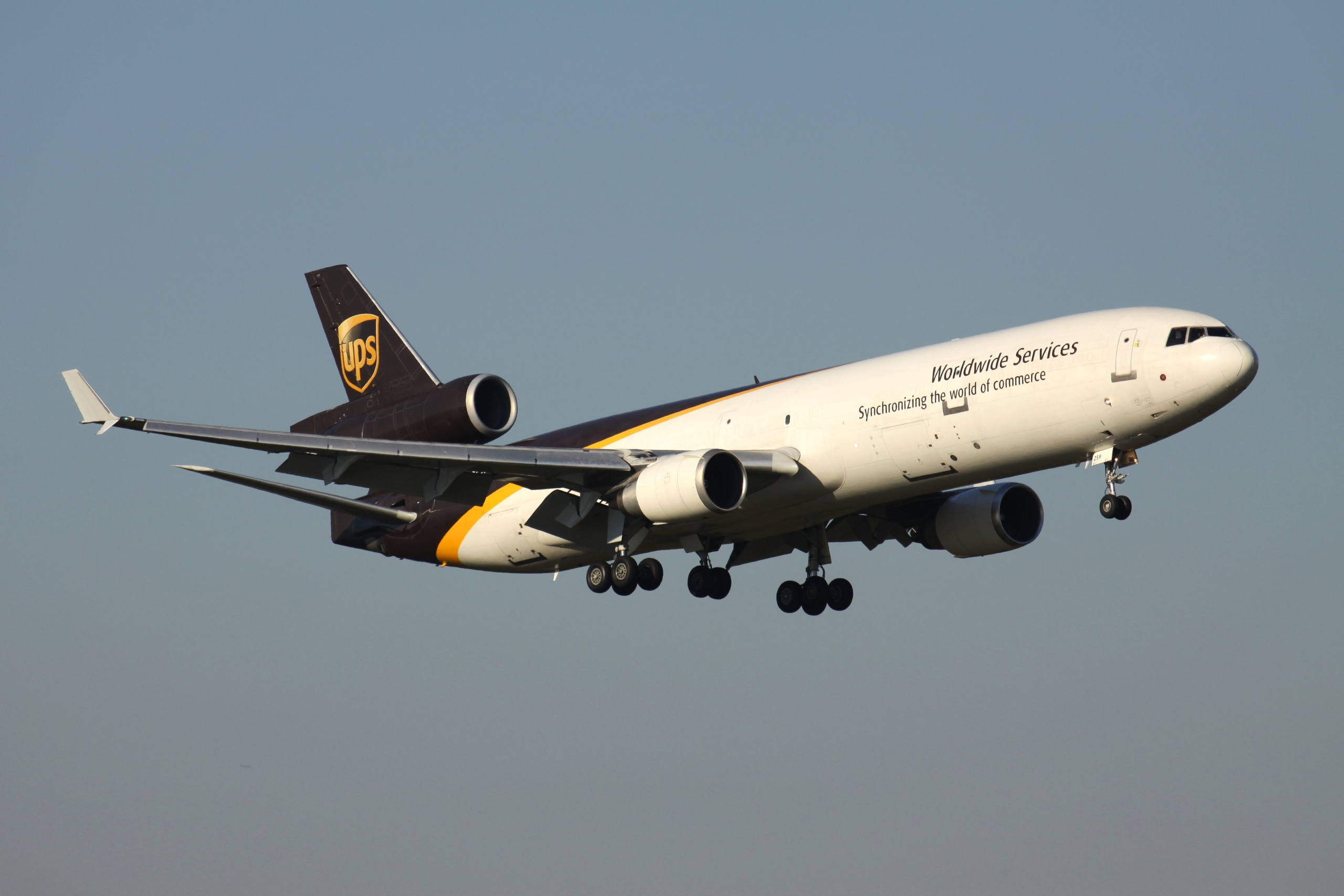
Boeing and the Federal Aviation Administration (FAA) are facing renewed scrutiny after US investigators revealed a critical engine attachment component linked to last year’s fatal UPS MD-11 crash had shown signs of cracking and fatigue failures for more than two decades before the accident.
During the first day of a two-day National Transportation Safety Board (NTSB) hearing this week, investigators focused on whether those earlier warning signs should have triggered stronger action.
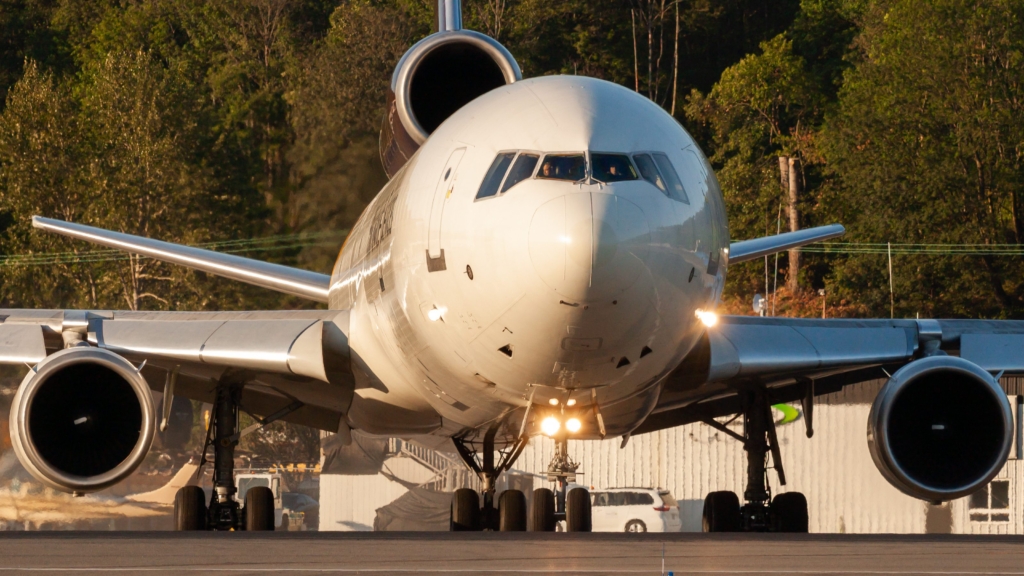
The hearing examined whether fragmented reporting, limited FAA visibility and Boeing’s classification of earlier failures as non-critical prevented the industry from recognising the seriousness of the issue before the Louisville crash.
“This hearing is a critical part of our ongoing investigation of the accident involving United Parcel Service (UPS) flight 2976…,” NTSB Chair Jennifer Homendy said in her opening remarks.
“We’ll discuss the reporting processes for anomalies found during maintenance and inspections. Then, we’ll explore the FAA and Boeing’s Continued Operational Safety programme and processes and end with communications to operators after Continued Operational Safety determinations. Tomorrow we’ll discuss Pylon Design Requirements.”
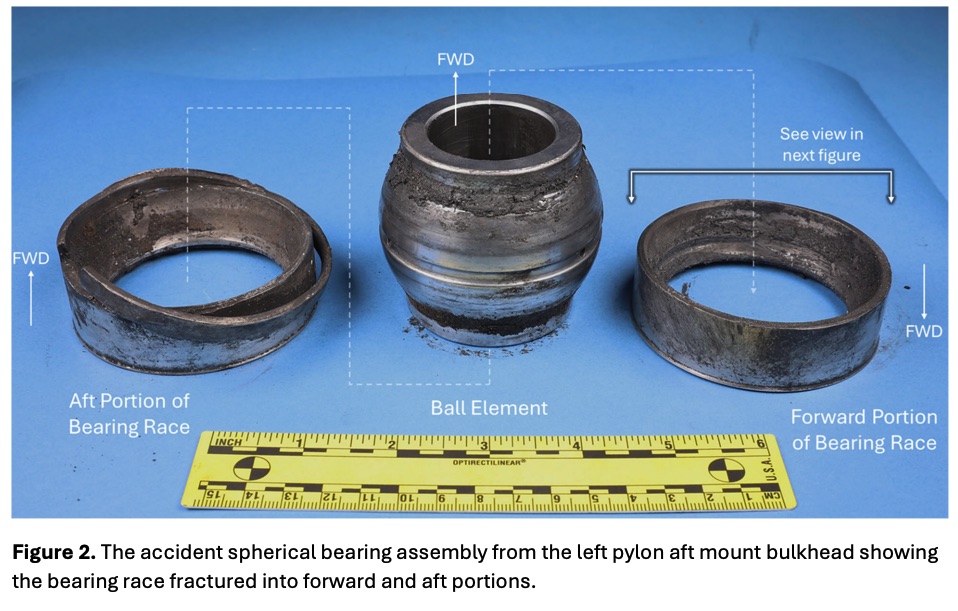
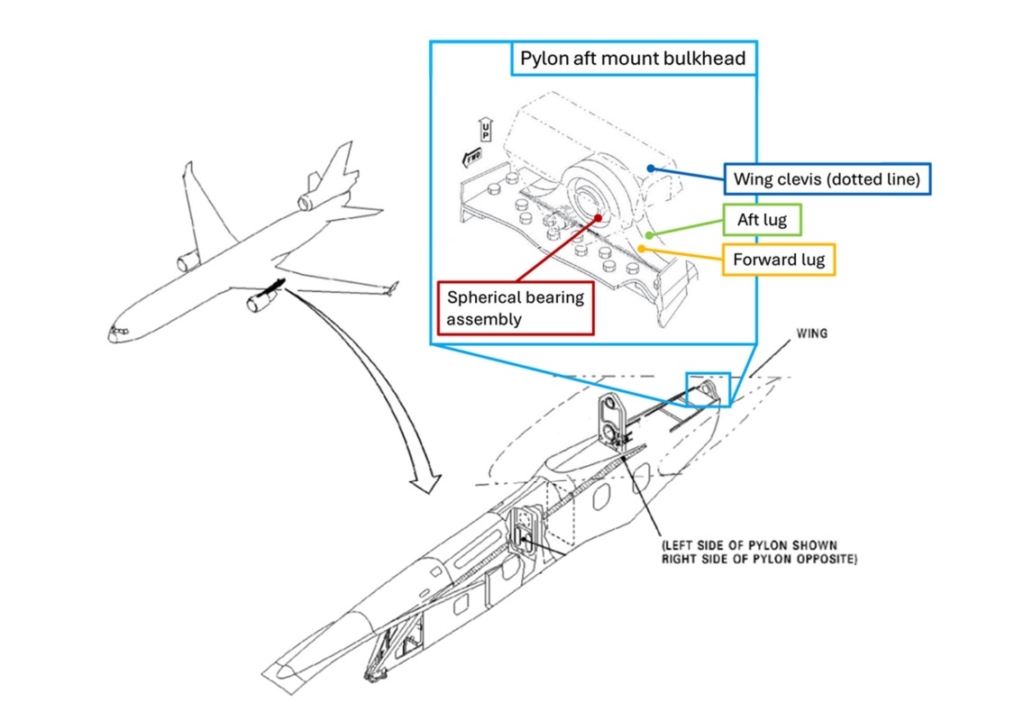
The first day’s hearing focused heavily on a small spherical bearing assembly inside the MD-11’s left engine pylon structure, a component investigators now believe had been showing signs of fatigue cracking for years before the crash.
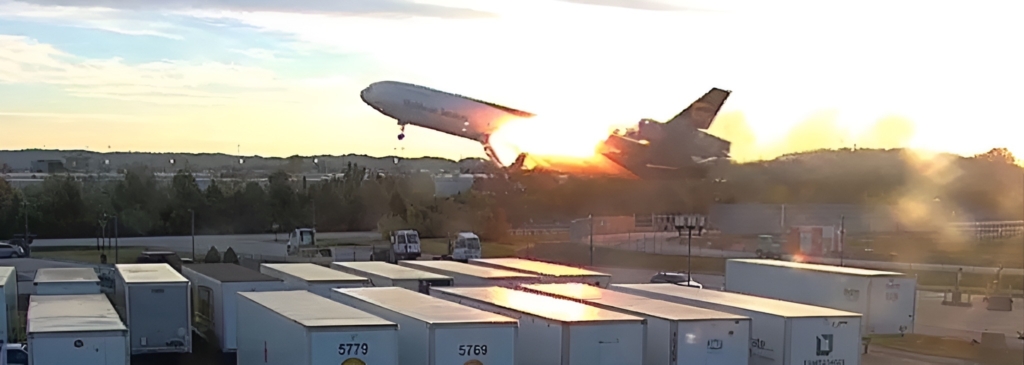
UPS Flight 2976 crashed on November 4, 2025, moments after taking off from Louisville Muhammad Ali International Airport en route to Honolulu. The left engine separated during rotation, sending the aircraft crashing into a nearby industrial area. All three crew members and 11 people on the ground were killed, while 23 others were injured.
Boeing had identified similar MD-11 bearing failures years before the UPS crash
On the first day of hearings, investigators played an animation showing the engine-to-wing attachment design and how it failed.
Investigators questioned whether the structural problems could have been identified much earlier.
Boeing had issued a service letter in 2011 after several operators reported failures involving the spherical bearing race inside the MD-11 engine mount assembly.
In each case, investigators said, the bearing race developed fatigue cracks and split along its circumference.
Investigators disclosed that Boeing had first learned about similar failures as early as 2002 after an operator discovered a fractured outer bearing race and lug damage on an MD-11.
Additional failures later surfaced involving FedEx, UPS and other operators.
| Date | Incident description | Reported to FAA? |
|---|---|---|
| 2002 | First reported MD-11 pylon failure included a full fracture of the bulkhead, along with lug separation and internal bore damage. This instance was only reported to Boeing. | No |
| 2007 | Two separate fracture instances were reported in September and August 2007, one from UPS and another from FedEx. | Partial — only one reported |
| 2007 | Boeing initiated Continued Operational Safety procedures, taking its first look at the MD-11 pylon safety issue. | N/A |
| May 2008 | Boeing issued an initial service letter advising increased inspections of the MD-11 bearing, but noted there was no concern for flight safety. | N/A |
| July 2008 | UPS reported a separated staking ring on a pylon to Boeing. Boeing treated this as a “one-off” rather than an indication of a wider issue and initiated another COS review. | No |
| October 2008 | FedEx reported another fractured pylon to Boeing and the FAA. | Yes |
| February 2009 | Another operator reported fractured bearings on both wings to Boeing. | No |
| February 2011 | Boeing issued a revision to its 2008 service letter, emphasising increased inspections on MD-11 bearings and recommending replacement. | N/A |
| 2017–2022 | FedEx reported four separate bearing fractures on its MD-11s. One was reported to both Boeing and the FAA, one only to Boeing, one only to the FAA and the last instance was not reported at all. | Partial |
Most MD-11 bearing failures were never reported to the FAA
The board heard that Boeing ultimately redesigned the bearing to remove the lubrication groove where fatigue cracks were originating, but continued to treat the issue through service letters rather than more urgent mandatory directives.
The NTSB investigation has now identified at least 10 in-service incidents involving aft-mount spherical bearing failures before the Louisville crash.
Only four of those incidents were formally reported to the FAA, raising fresh questions over how safety-critical information was shared between Boeing, operators and regulators before the fatal accident.
That reporting gap emerged as one of the hearing’s most significant revelations, with investigators examining whether incomplete FAA visibility prevented the industry from recognising the seriousness of the issue sooner.
UPS says Boeing classified MD-11 bearing failures as a non-safety issue
Testimony from UPS engineering officials suggested operators may not have fully understood the seriousness of the defect because of Boeing’s assessment language.
UPS Senior Director of Engineering David Springer told investigators the company relied heavily on Boeing’s determination that the failures were not considered flight safety issues.
“We’re relying on the data that’s out there, and what kind of determination is made on whether it was safety or it’s not safety,” Springer testified. “In this case, it came through the service letter with an explicit notation that it would not be a safety of flight condition.”
He added that if UPS had understood the extent of the cracking and structural damage being discovered over the years, the company would likely have approached the issue differently.
“That started this on the wrong trajectory to begin with,” Springer said.
FAA says earlier MD-11 cracking reports may have changed safety assessment
The hearing also placed fresh scrutiny on the FAA’s oversight process.
Investigators revealed the agency was unaware of some earlier lug cracking events tied to the MD-11 pylon structure.
FAA official Dr Melanie Violette testified that knowledge of actual lug cracking, rather than just bearing failures, may have altered the agency’s earlier safety assessment of the aircraft.
“I believe that would have changed the safety determination,” Violette told investigators during the hearing.
That testimony intensified questions over how safety data moved between Boeing, operators and regulators over the years.
Investigators are now examining whether fragmented reporting, inconsistent classifications and limited FAA visibility prevented the industry from recognising the seriousness of the issue before the fatal accident.
Investigators reconstruct how the MD-11 engine separated during takeoff
During the proceedings, the NTSB released animations and surveillance footage reconstructing the failure sequence.
Investigators explained how fatigue cracks formed around a quarter-inch lubrication groove inside the spherical bearing race. Over time, the outer race fractured into pieces, creating abnormal loads on the engine pylon lugs.
NTSB releases Airport Surveillance Video from the UPS crash in Louisville on November 4th, 2025. (🎥 Source: NTSB)
by u/Brilliant_Night7643 in aviation
The lug structure eventually fractured during takeoff rotation. That allowed the left engine to rotate upward around the forward mount before separating completely from the aircraft.
Airport surveillance footage shown during the hearing captured the engine detaching as the aircraft lifted off. The aircraft quickly lost control before crashing into warehouses near the airport perimeter.
Controllers responded within seconds after the crash
Separate factual reports released during the hearing detailed the immediate response inside Louisville’s control tower.
According to the NTSB timeline, the aircraft was cleared for takeoff at 1711 local time for an RNAV departure to Honolulu.
The final ADS-B target was recorded at 1713:31.
About 30 seconds later, the airport crash phone was activated.
Controllers immediately closed the airport and directed emergency vehicles towards the crash site.
The NTSB’s air traffic control report concluded that controllers acted in accordance with established procedures and responded promptly after the accident.
MD-11 fleet gradually returns to service after Louisville crash
The crash renewed scrutiny of the ageing MD-11 cargo fleet, which remains in service with a small number of freight operators worldwide.
While UPS has since retired its MD-11 fleet following the accident, other operators remain heavily reliant on the tri-jet freighter. Following the FAA’s lifting of the grounding, FedEx and a handful of other operators are beginning to bring the fleet back into service.
Boeing inherited responsibility for continued MD-11 airworthiness after acquiring McDonnell Douglas in 1997.
The second day of hearings is expected to focus further on the aircraft’s pylon structure, Boeing’s engineering analysis and the FAA’s certification oversight process.
The NTSB has not yet determined a probable cause for the accident. The broader investigation is expected to continue for several more months.
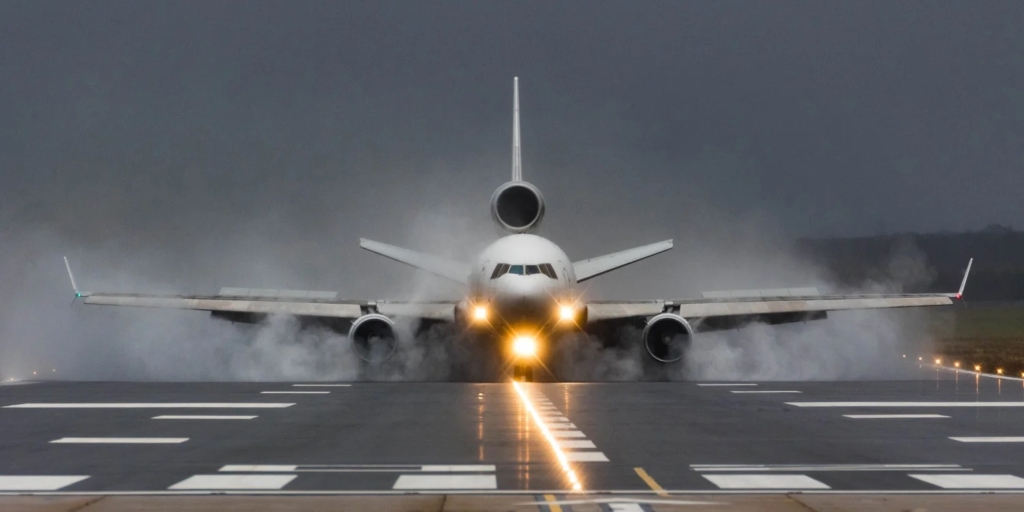
Featured image: Björn Wylezich / stock.adobe.com
Sign up for our newsletter and get our latest content in your inbox.


More from


October 17, 20264 min read