


Ukraine’s FP-2 drones now carry rockets in major strike upgrade

5 min read
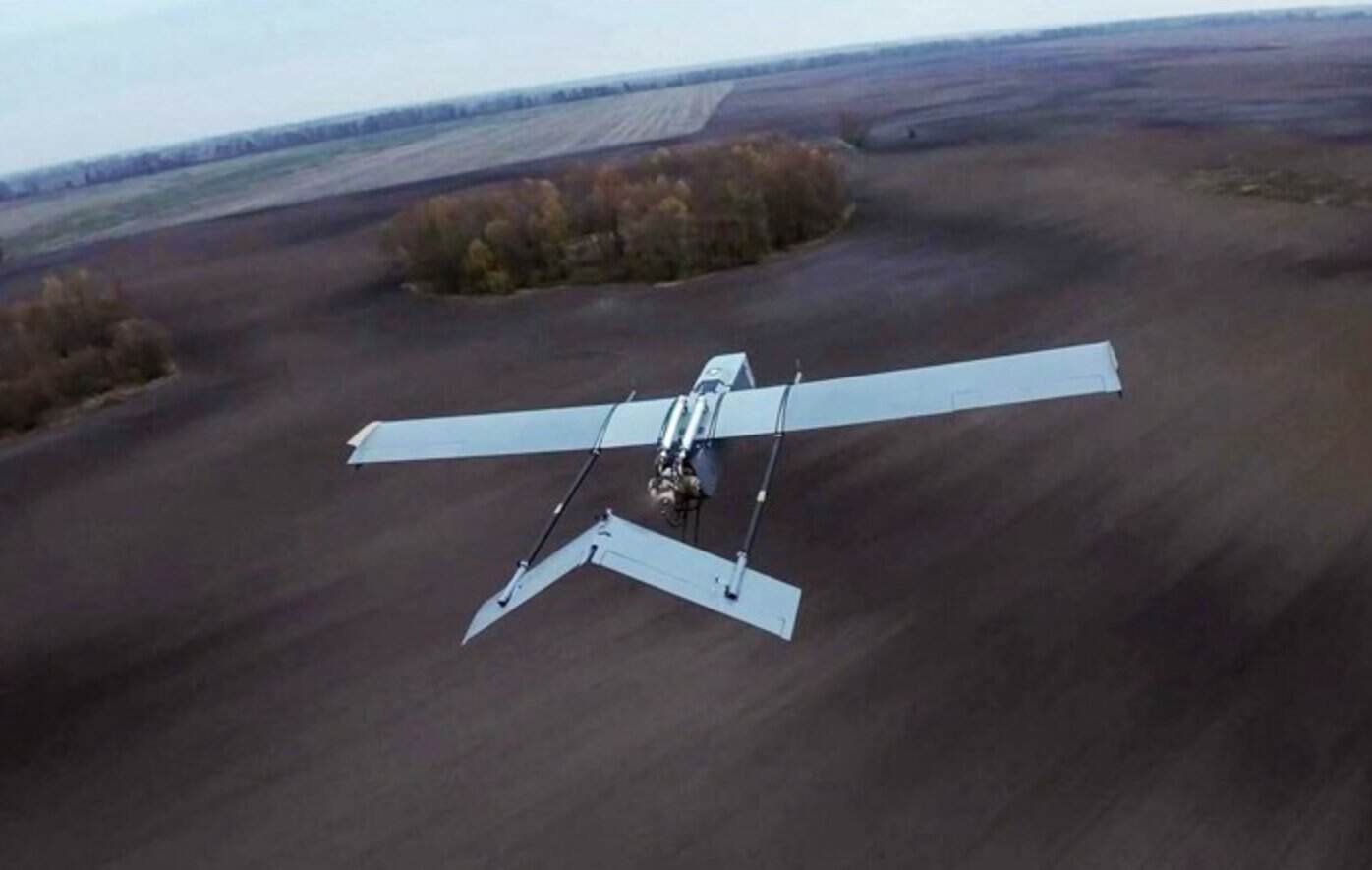
While yesterday saw the largest Ukrainian drone attack on Moscow so far, Ukraine’s mid-range drones appear to have received another significant improvement. They are now able to carry rockets and attack multiple targets.
Ukrainian FP-1/-2 drones now carrying 4 rockets
Last week, Ukraine released the first known footage showing its FP-1/FP-2 mid-range strike drones launching unguided air-to-surface rockets at a Russian mobile air defence group over Crimea. The footage was posted in the 13 TACTICAL Telegram group.
Ukrainian FP-1/FP-2 guided strike drone launching a salvo of unguided air-to-ground rockets against a strategic Black Sea Fleet communications node in Crimea.
— Special Kherson Cat 🐈🇺🇦 (@bayraktar_1love) May 17, 2026
This is the first footage showing the use of unguided rockets from the FP-1/FP-2 onboard camera. https://t.co/Xp4UiTnvy6 pic.twitter.com/AmyCkTpOV7
On the 12th, more footage was released showing an FP-1/FP-2 drone launching a salvo of rockets against a Russian Black Sea Fleet communications node, also in Crimea.
It seems the drones are able to carry four rockets. This has the potential to be a very significant development. It increases the number of targets these one-way attack drones are able to hit.
Militaryni wrote, “Such a modification of the drones significantly expands their strike capabilities and allows them to attack ground targets without the drone itself making direct contact.”
The FP-2 is based on the longer-range FP-1 aircraft. It is reported to be able to carry a warhead of up to 105 kgs and has a range of up to 200 kilometres.
Ukraine's General Staff confirmed strikes on a microchip plant producing components for precision weapons, command posts and enemy personnel.
— WarTranslated (@wartranslated) May 17, 2026
Ukrainian forces hit Angstrem plant in Zelenograd specializing in high-tech products and microchips for precision weapons using… pic.twitter.com/cpGQs4MUEr
Critically, FirePoint stated in late 2025 that it was able to produce 200 mid-range drones daily. This provides substantial mass, enabling Ukraine to systematically overwhelm and eliminate Russian air defence assets and other targets. Add rockets, and Russia’s challenge becomes even more formidable.
Get the latest aerospace defence news here on AGN.
Ukraine’s increasingly successful mid-range strikes
AGN has previously reported on how Ukraine’s mid-range strikes have dramatically improved in 2026. These strikes are being carried out by drones/cruise missiles like the FirePoint FP-1/-2 drones.
🚀Ukrainian FP-1/FP-2 strike drone launching an unguided air-to-surface rocket at a Russian mobile air defense group during the overnight raid on Crimea.
— Special Kherson Cat 🐈🇺🇦 (@bayraktar_1love) May 12, 2026
The first known use of unguided air-to-surface rockets from Ukrainian aerial drones. pic.twitter.com/kpiiRbaLno
For the last few months, these strikes have resulted in near-daily strikes on Russia’s Tor, Pantsir, Buk, and S-300/S-400 air defence systems. This is attriting Russia’s air defence at an unsustainable rate, leading to increasing gaps opening up for Ukraine to exploit.
Adding to Russia’s dilemma, Ukraine has been expanding the range and target set within Russia. This is forcing Russia to stretch a decreasing number of air defence systems to protect an increasing number of assets.
Another long video of strikes by Ukraine’s @usf_army with FP-1, FP-2, and other kamikaze UAS on a Russian Project 10410 patrol ship, Tor-M2, train, command posts, cranes, communications tower, and other targets. https://t.co/OoZSpyOR3l pic.twitter.com/BA9bRypahs
— Rob Lee (@RALee85) May 17, 2026
Yesterday, OSINT account Special Kherson Cat posted, “Massive wave of deep-strike drone attacks by @usf_army drone units overnight on May 16–17, with 186 strikes against 46 Russian military targets across occupied territories, Crimea, and Russia itself.”
Hunting down Russia’s aircraft on the ground
Ukraine’s drones are now targeting a large range of Russian assets, from oil refineries to naval ships on the Caspian Sea to aircraft on the ground. On a couple of occasions, Ukrainian FPV drones have shot down Russian helicopters in flight, and its Sea Baby drones have shot down both helicopters and fighter jets.
The Be-200 was completely destroyed. https://t.co/o21SzApQx2 pic.twitter.com/6kFRa1ItY8
— The Military Watch (@MarcinRogowsk14) May 15, 2026
However, fighter jets are typically difficult to hit in the air as Russia generally keeps its air assets outside of Ukraine’s air defence umbrella.
As the war has progressed, Ukraine has increasingly turned to hunting down Russian aircraft and destroying them on the ground. The most successful operation was Operation Spider Web in 2025, which saw up to 20% of Russia’s operational strategic bombers destroyed.
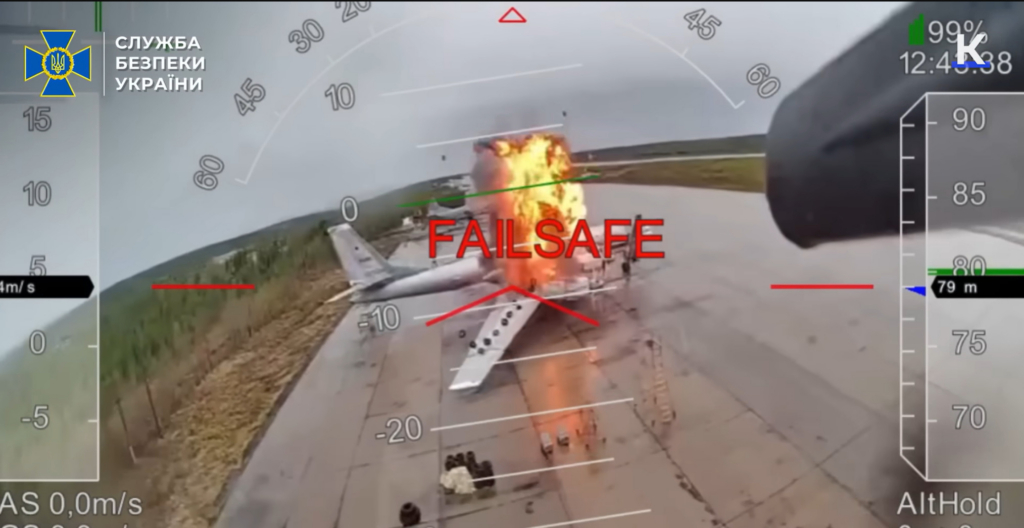
But these strikes are generally more drip-drap, destroying a Russian warplane here and there rather than dramatic Operation Spider Web-sized events.
At the end of 2025, Ukraine released a montage of attacking 15 Russian aircraft on the ground. This has continued into 2026. In April, a Mi-28 and Mi-8 were damaged by Ukrainian OWA UAVs in a forward operating base within Russia.
In the last week, Ukraine destroyed a rare Russian Beriev Be-200 flying boat and attacked a naval Ka-27 protected under drone netting (the outcome is unclear).
Also in May, Ukraine claimed to have hit two Russian Sukhoi Su-57 Felons, one Su-34, and one unidentified fighter jet on the ground deep in Russia. Satellite imagery appeared to show some damage, but the imagery was insufficient to substantiate the claims.
Both of these airframes stand a good chance of having been peppered.
— Evergreen Intel (@vcdgf555) May 1, 2026
Separation between impact point (what the vehicles and ground crew are surrounding) and the noses of each Su-57 airframe are about 10 and 18 meters, respectively. https://t.co/5GtNXChkRc
These drone attacks on parked Russian aircraft are being carried out with a range of Ukrainian drones. Some of which may include FP-1/-2 drones. Soon, footage may surface of Ukrainian drones firing missiles at parked warplanes.
Featured Image: Ukraine social media


