What’s the difference between the MD-11 and the DC-10?

4 min read
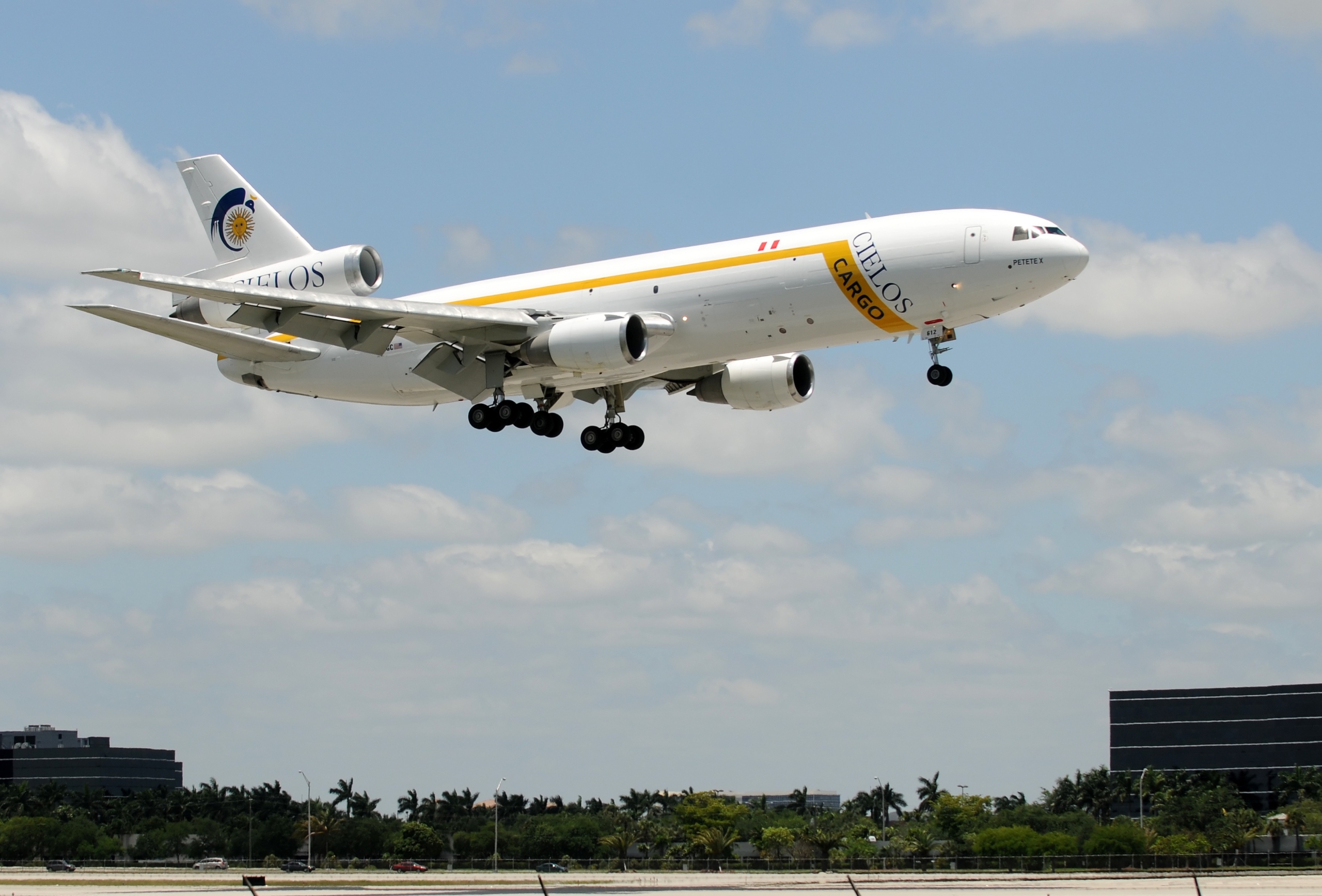
When McDonnell Douglas launched the MD-11 in 1990, it was billed as the logical successor to the DC-10, a modernised, more efficient evolution of the classic tri-jet that had become a fixture of long-haul skies since the 1970s.
On the surface, the two aircraft looked nearly identical: both featured three engines, a high T-tail, and a widebody fuselage. But beneath that familiar profile, the MD-11 represented a thorough redesign that pushed the limits of what could be achieved with a three-engine configuration in the twin-jet era.
Related: How many operational MD-11s are in service today?
How McDonnell Douglas transformed the DC-10 into the MD-11
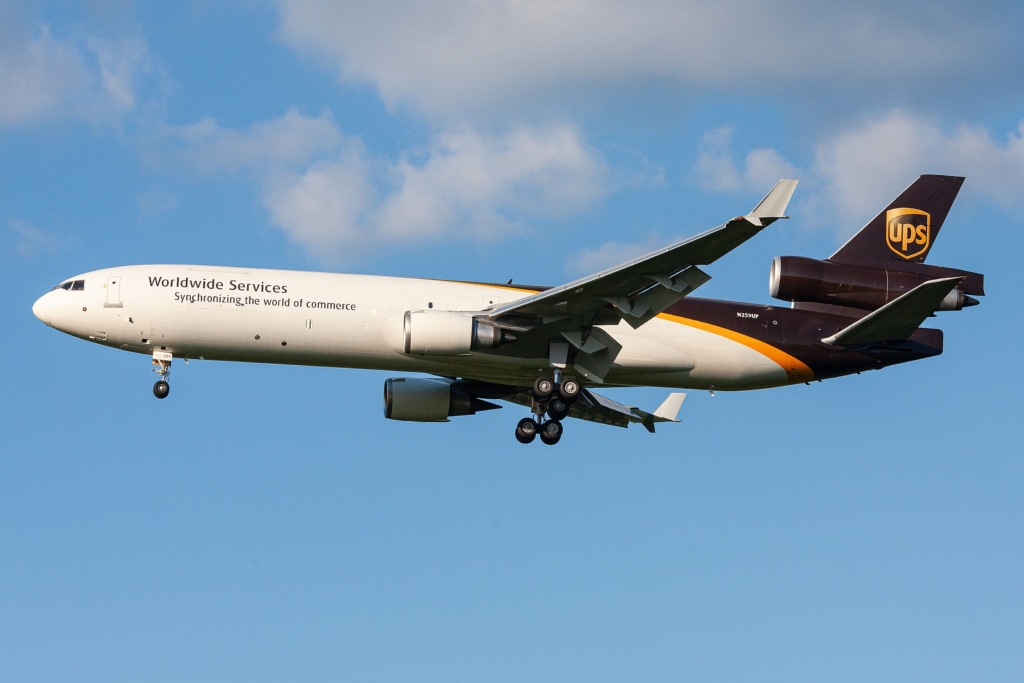
The DC-10 first flew in 1970 as McDonnell Douglas’s answer to the Boeing 747 and Lockheed L-1011 TriStar. It became a versatile long-haul aircraft used by carriers such as American Airlines, United, KLM, and Finnair. By the late 1980s, however, twin-engine designs were rapidly improving in efficiency and range, prompting McDonnell Douglas to update its tri-jet rather than design an all-new twin.
The result was the MD-11, a stretched, re-engineered derivative designed to carry more passengers farther, while cutting fuel burn and crew costs. The fuselage was extended by about 18 feet (5.5 metres), allowing seating for up to 410 passengers in a high-density configuration or around 285 in a typical three-class layout.
MD-11 vs DC-10: key differences
| Category | McDonnell Douglas DC-10 | McDonnell Douglas MD-11 |
|---|---|---|
| First flight | 1970 | 1990 |
| Production years | 1970–1989 | 1990–2000 |
| Total built | 446 | 200 |
| Primary role | Long-haul passenger and cargo | Long-range passenger (later mainly cargo) |
| Fuselage length | 55.5 m (182 ft 1 in) – DC-10-30 | 61.6 m (202 ft 8 in) |
| Wingspan | 50.4 m (165 ft 5 in) | 51.7 m (169 ft 6 in) with raked wingtips |
| Engines | 3 × GE CF6-50 or Pratt & Whitney JT9D | 3 × GE CF6-80C2 or Pratt & Whitney PW4460/62 |
| Thrust (each) | ~51,000 lbf | ~61,500 lbf |
| Crew | 3 (captain, first officer, flight engineer) | 2 (captain, first officer) |
| Cockpit type | Analogue instruments | Digital “glass” cockpit with FMS and EFIS |
| Range | Up to 5,200 nmi (9,630 km) | Up to 7,000 nmi (12,960 km) |
| Cruise speed | Mach 0.82 | Mach 0.83 |
| MTOW | 263,000 kg (580,000 lb) | 286,000 kg (630,500 lb) |
| Passengers (typical 3-class) | ~270 | ~285 |
| Notable design features | Conventional wing and tailplane | Raked wingtips, smaller tailplane, advanced flight controls |
| Flight control systems | Hydraulically controlled | Computer-assisted (partial fly-by-wire) |
| Operators (passenger era) | American, United, KLM, Finnair | Delta, Swissair, Finnair, Korean Air |
| Primary cargo operators (today) | FedEx (converted DC-10-30Fs) | FedEx, UPS, Lufthansa Cargo, Western Global |
| Reputation | Reliable but early safety controversies | Advanced but challenging to handle |
| Legacy | Helped pioneer wide-body travel | Last and most advanced tri-jet ever built |
The table above highlights the main differences between the McDonnell Douglas MD-11 and its predecessor, the DC-10.
Design and performance differences between the MD-11 and DC-10
While retaining the DC-10’s basic architecture, the MD-11’s aerodynamics were extensively refined. Engineers added redesigned wing trailing edges and raked wingtips to improve lift-to-drag ratio. The horizontal stabiliser was reduced in size by roughly 30%, a change made possible by the addition of an automatic pitch-trim system that used fly-by-wire logic to maintain stability.
The MD-11 also introduced a new generation of high-bypass turbofan engines, either General Electric CF6-80C2 or Pratt & Whitney PW4460/62 units, producing up to 61,500 pounds of thrust each. These were markedly more efficient than the DC-10’s earlier CF6-50 and JT9D engines.
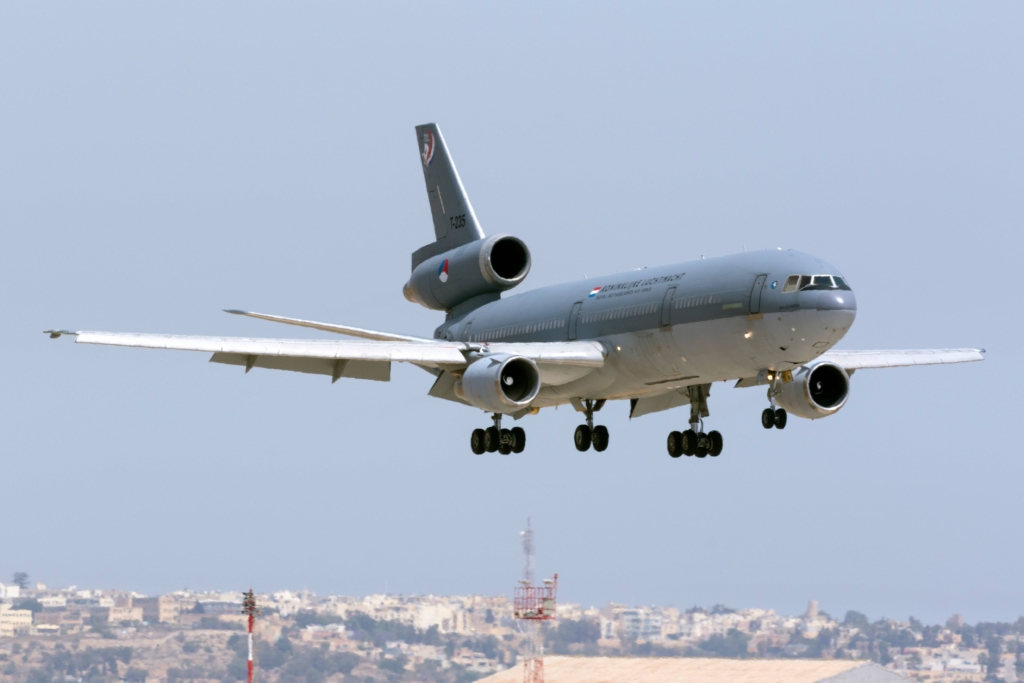
Together, the aerodynamic and propulsion improvements gave the MD-11 a range of around 7,000 nautical miles (12,960 km), compared to roughly 5,200 nautical miles (9,630 km) for the DC-10-30. Cruising speed was also slightly higher, at Mach 0.83.
Cockpit technology: from analogue DC-10 to digital MD-11
Perhaps the most visible difference came in the cockpit. The DC-10 required a three-person crew – captain, first officer, and flight engineer – to manage its analogue instruments and systems.
The MD-11 replaced this with a two-crew digital glass cockpit, incorporating advanced Flight Management Systems (FMS), Electronic Flight Instrument Systems (EFIS), and autoland capability.
The elimination of the flight engineer reduced operating costs and modernised the workflow to match contemporary Airbus and Boeing standards. The MD-11 also integrated computer-controlled stabiliser trim and spoiler systems, representing McDonnell Douglas’s most advanced automation package at the time.
Why the MD-11 fell short of expectations in passenger service
In passenger service, however, the MD-11 struggled to meet its promised performance targets. Airlines, including Singapore Airlines and Delta, found the aircraft fell short of its expected range and fuel efficiency, particularly when fully loaded.
As twin-engine types such as the Boeing 767-300ER and Airbus A330-300 gained extended-range certification, the appeal of a complex tri-jet quickly faded.
Still, the MD-11 found lasting success in the cargo market. Its long fuselage and robust payload capacity made it ideal for freight operators like FedEx, UPS, and Lufthansa Cargo, who valued its range and reliability long after passenger operators moved on.
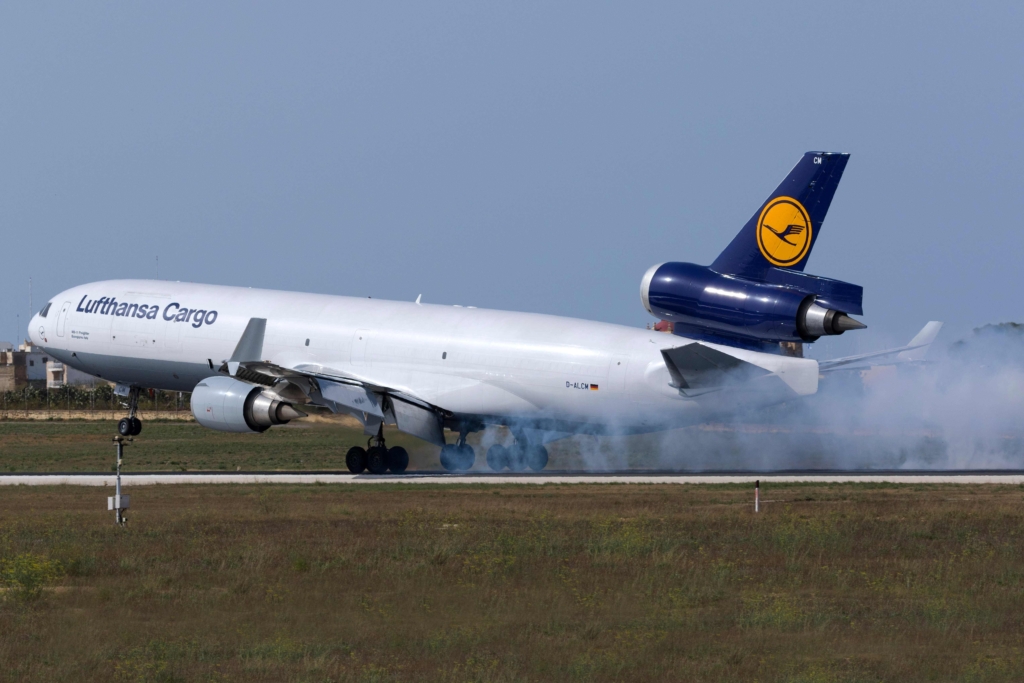
The DC-10 closed production in 1989 with 446 aircraft produced, while the MD-11 followed in 2000 after 200 units. Although the MD-11 never achieved the commercial triumph McDonnell Douglas hoped for, it marked the end of an era: an ambitious attempt to evolve a 1970s design into the digital age.
Today, the DC-10 is remembered as the workhorse that helped democratise wide-body travel, while the MD-11 remains one of aviation’s most distinctive silhouettes, its tall tail and third engine symbolising the final chapter of the tri-jet generation.
Sign up for our newsletter and get our latest content in your inbox.


More from


October 17, 20264 min read