Two brand new British F-35s have been stranded in the Azores for over two months

3 min read
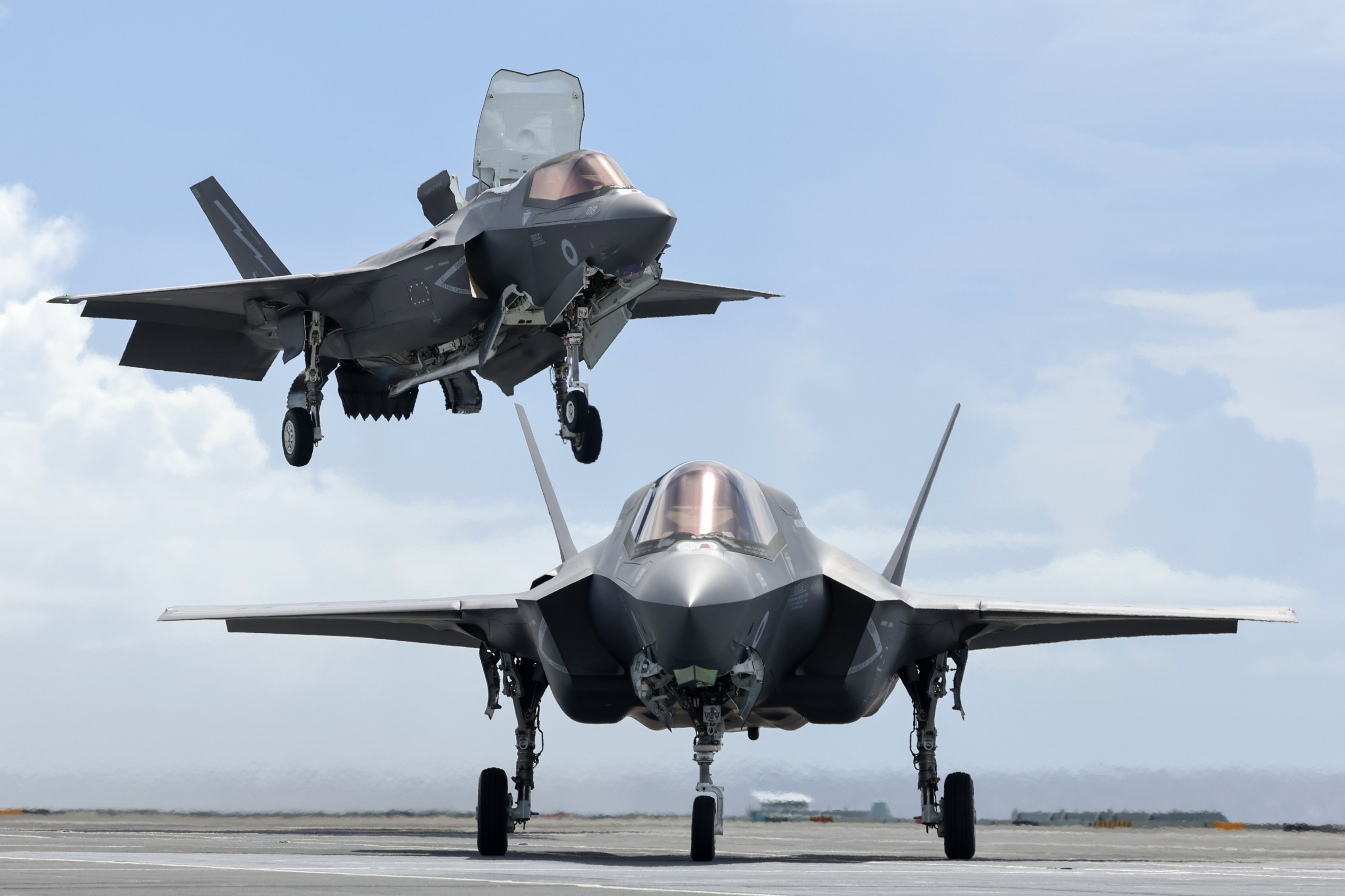
In April 2026, the RAF and Royal Navy received the final examples from the UK’s initial tranche of 48 F-35Bs.
Well, sort of.
Two aircraft flew partway across the Atlantic before getting stuck on the Azores waypoint, where they remain.
Brand new British F-35Bs stuck in the Azores
According to Navy Lookout, reviewing the state of the United Kingdom’s 47 F-35Bs, two of the fighter jets have been stuck at Lajes International Airport in the Portuguese Azores since 9 March.
The two aircraft were part of the final batch of Lot 17 fighters destined for the UK. Five aircraft transited the North Atlantic en route to RAF Marham, but while three completed the crossing, two became stuck in the Azores after reportedly suffering technical problems.

Navy Lookout says that the two stranded jets likely require assistance from Lockheed Martin Engineers before they complete their transit to the United Kingdom.
The Azores, located in the mid-Atlantic, serve as a major refuelling and staging base for US and NATO aircraft moving between Europe and North America.
In 2025, former Danish F-16 Fighting Falcons transited the Azores for a few days as they made their way to Argentina in South America.
#RAF Royal Air Force – Lightning Delivery
— Armchair Admiral 🇬🇧 (@ArmchairAdml) March 20, 2026
Airbus KC.2 Voyager 1x#43C6F8 ZZ335 – ASCOT 9303
+ ASCOT 9741 1x F-35B
An RAF Voyager as ASCOT 9303 is inbound RAF Brize Norton as it returns from Lajes with potentially just a single F-35Bs for RAF Marham, leaving another two at… pic.twitter.com/tU9PO75Y3W
This is not the first time British F-35s have found themselves stranded far from home. In 2025, an F-35B operating from HMS Prince of Wales spent 37 days grounded in Kerala, India, after making an emergency diversion during Operation Highmast.
RAF struggling with F-35 readiness
The incident comes as questions continue to grow around the availability and sustainment of the UK’s F-35 fleet.
According to the National Audit Office, only around one-third of British F-35s are currently considered fully mission capable, while only around half are mission capable for at least one role.
Navy Lookout reported that on a typical day, perhaps only 10 or 11 of the UK’s 47 remaining F-35Bs are flyable, with perhaps five or six fully combat capable.

More recent operations have also exposed wider sustainment concerns around the UK’s F-35 fleet. In 2026, Parliament’s Public Accounts Committee criticised the Ministry of Defence after HMS Prince of Wales deployed to the Middle East with spare parts packs reportedly sized for only 12 F-35Bs despite carrying 24 aircraft.
Meanwhile, British F-35Bs have also begun intensive corrosion inspections in the United States, highlighting the growing maintenance burden associated with operating stealth fighters at sea.
When will the RAF order more F-35s?
Having completed Tranche 1 for 48 F-35Bs, the UK is preparing to place the second order for 27 F-35s to bring the fleet up to 74 examples. The order could also replace one F-35 (ZM152) that was lost when it fell off the HMS Queen Elizabeth aircraft carrier.
However, the long-delayed Defence Investment Plan has effectively frozen any final decision on the next tranche.
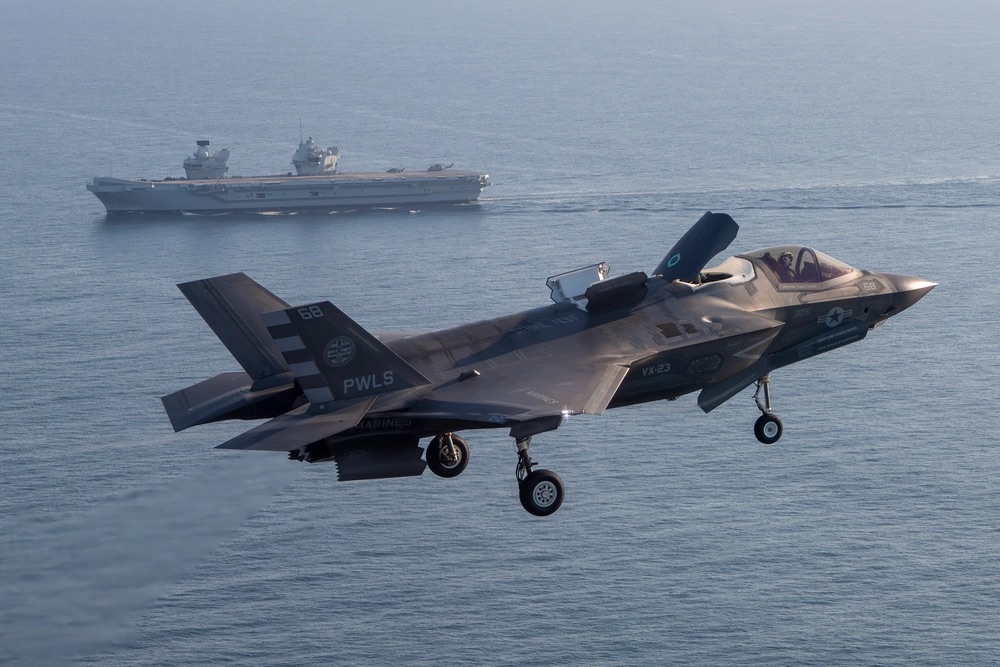
Current plans are expected to include 12 conventional F-35As and 15 STOVL F-35Bs. The F-35As would restore the UK’s ability to deliver US-owned B61-12 nuclear gravity bombs under NATO arrangements, although critics argue the RAF is also attracted by the aircraft’s lower operating costs and greater range.
The F-35B remains the only carrier-capable variant in British service and forms the core of the UK’s Queen Elizabeth-class carrier strike capability. However, splitting the fleet between F-35A and F-35B would leave Britain with only 62 carrier-capable aircraft unless additional F-35Bs are ordered later.
In the longer term, the UK still maintains a programme of record for 138 F-35s while also pursuing the next-generation Tempest/GCAP fighter programme alongside Japan and Italy.
Featured Image: Royal Navy