US military build up in the Middle East: What aircraft and ships have arrived so far?

February 13, 2026
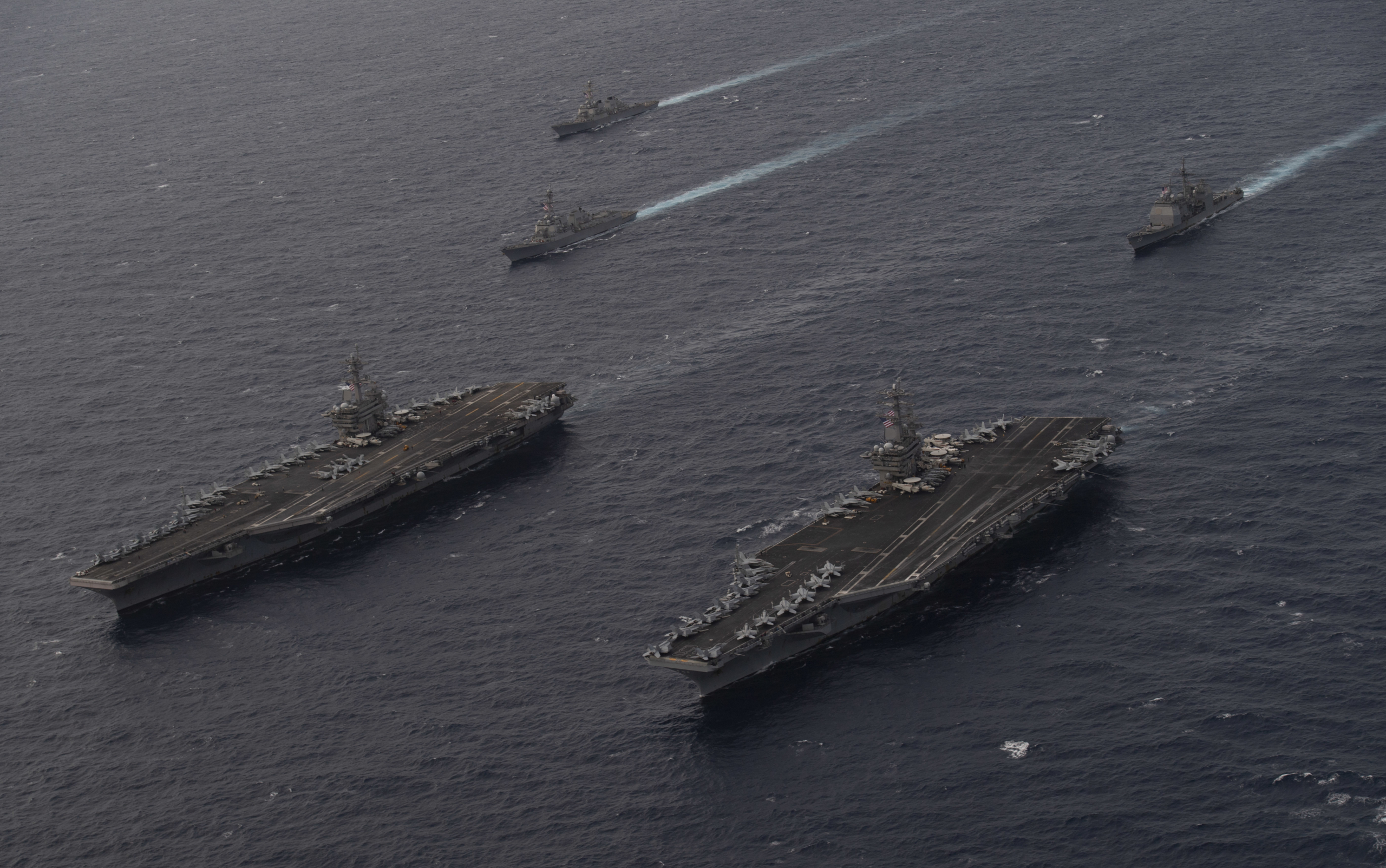
President Donald J Trump has indicated he’s actively considering sending a second aircraft carrier to the Middle East in a move that would further bolster the large-scale build-up of US military forces across the region and support strike operations on Iran if ongoing bilateral talks between Tehran and Washington fail to reach a peaceful diplomatic conclusion.
Speaking with the US-based news website, Axios, on 10 February, Trump confirmed that plans to deploy a second US Navy ‘flattop’ to the Middle East were under consideration.
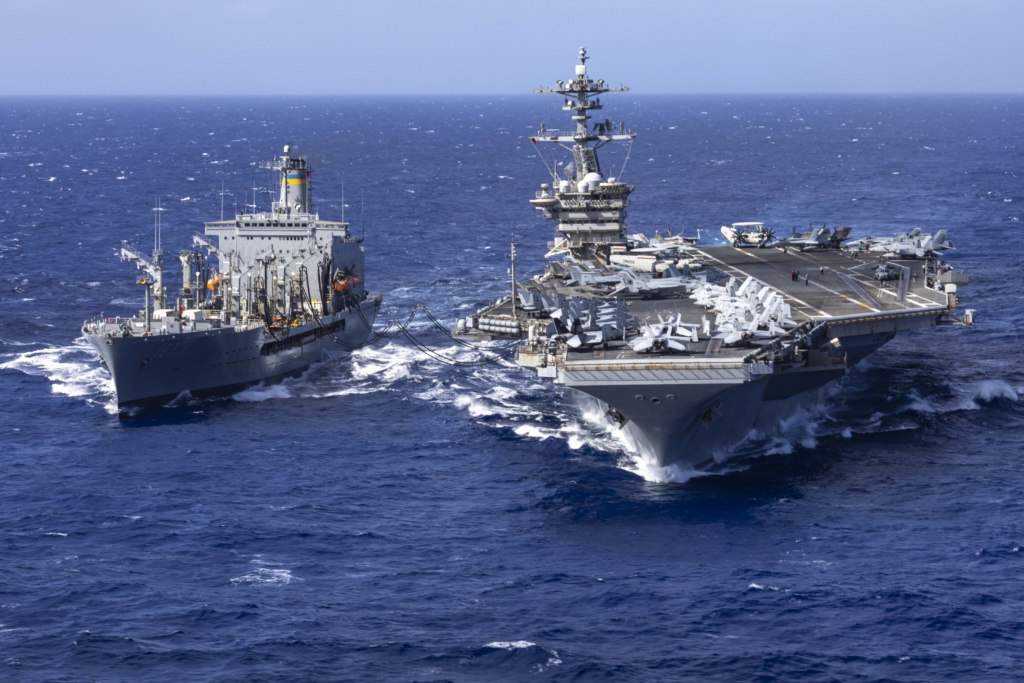
“Either we will make a deal, or we will have to do something very tough like last time,” he added – referring to the US Air Force’s (USAF’s) strikes on three Iranian nuclear facilities, which were facilitated by B-2A Spirit stealth bombers (supported by F-22A Raptor and F-35A/I Lightning II escorts), as part of Operation Midnight Hammer in June 2025.
Since the start of the year, the Pentagon has dispatched dozens of aircraft and thousands of personnel to the Middle East, assembling a force that could be used to strike Iran if this latest round of talks fails.
#🚨 BREAKING: Pentagon preparing a second U.S. aircraft carrier strike group for the Middle East as tensions with Iran rise.
— The War Journal (@Thewarjurnal_) February 12, 2026
USS Abraham Lincoln is already in the region USS George H.W. Bush reportedly next. Logistics in motion, formal order pending. pic.twitter.com/iMBofe3H2z
In mid-January, the US Department of War (DOW) redirected the US Navy’s Carrier Strike Group 3 (CSG-3) – led by the Nimitz-class ‘flattop’, USS Abraham Lincoln (CVN-72) – from its operations in the Indo-Pacific to the Arabian Sea.
“We have an armada that is there, and another one might be going,” Trump told Axios.
While this plan is under consideration, orders to dispatch a second CSG to the Middle East have yet to be formally approved, though this may quickly change as the Trump administration continues to pile diplomatic and military pressure on Tehran during these ongoing negotiations.
Here’s what we know the US has sent to the Middle East so far
Per Aerospace Global News research, based on open-source flight tracking data, unit movements, official imagery and Pentagon statements, this is what we believe to be in the Middle East so far.
While Washington has not released a consolidated force posture summary, a clear picture is emerging of a substantial US Navy and US Air Force build-up across the region.
Below is an at-a-glance breakdown of the aircraft carriers, warships, fighter jets, ISR platforms and support assets that appear to have deployed since mid-January.
| Category | Asset, unit | Quantity (approx.) | Location, area | Notes |
|---|---|---|---|---|
| Aircraft carrier | USS Abraham Lincoln (CVN-72) | 1 | Arabian Sea | Flagship of CSG-3, retasked from Indo-Pacific operations, arrived Arabian Sea 26 January 2026. |
| Carrier escorts | Arleigh Burke-class destroyers (USS Spruance, USS Michael Murphy, USS Frank E Petersen Jr) | 3 | Arabian Sea | Tomahawk-capable guided-missile destroyers escorting CSG-3. |
| Carrier air wing | Carrier Air Wing 9 (CVW-9) | 9 air units | Aboard CVN-72 | Includes F-35C, F/A-18E/F, EA-18G, E-2D, MH-60S/R, CMV-22B. |
| USAF fighters | F-15E Strike Eagles, 4th Fighter Wing (335th or 336th FS) | 12 | Likely Jordan | Transited via RAF Lakenheath en route to CENTCOM AOR. |
| USAF fighters | F-15E Strike Eagles, 366th Fighter Wing (389th or 391st FS) | 12 | CENTCOM AOR | Forward deployed for more than ten months, unusually long deployment. |
| USAF fighters | F-15E Strike Eagles, 48th Fighter Wing (494th FS) | 12 | Muwaffaq Salti Air Base (Azraq), Jordan | Arrived 18 January 2026 from RAF Lakenheath. |
| USAF fighters | F-35A Lightning II, 158th Fighter Wing (Vermont ANG, 134th FS) | 12 | In transit via Europe staging | Six airframes routed via RAF Lakenheath, six via Morón AB, Spain, onward movement impacted by tanker mishap at Morón. |
| USAF attack | A-10C Thunderbolt II, 75th FS | Not confirmed | Middle East (undisclosed) | Operating for several months, supporting strikes in Syria under Operation Hawkeye Strike. |
| USAF fighters | F-16CM/DM Fighting Falcons | Not confirmed | Middle East (undisclosed) | Reported deployment, squadron and basing not specified in-source. |
| USN land-based EW | EA-18G Growler (reported) | 6 (reported) | Muwaffaq Salti Air Base (Azraq), Jordan | Navy has not formally confirmed, open-source reporting suggests a reinforcement of EW capacity. |
| USN ISR | MQ-4C Triton HALE UAV | At least 2 | Al Dhafra AB, UAE | One aircraft (BuNo 169804) tracked operating over the Strait of Hormuz on 29 January 2026. |
| USN ISR, MPA | P-8A Poseidon maritime patrol aircraft | Multiple | Gulf region,[ii] NAS Sigonella staging | Open-source tracking indicates recurring patrol patterns, two additional aircraft reportedly sent to Sigonella. |
| USAF ISR | RC-135V Rivet Joint (serial 64-14848) | 1 confirmed | Al Udeid AB, Qatar | Arrived 28 January 2026, signals intelligence collection and dissemination. |
| USAF C2, comms | E-11A BACN | 1 confirmed | Prince Sultan AB, Saudi Arabia | Tracked arriving 31 January 2026, airborne comms relay, gateway for networked operations. |
| USAF CSAR | HH-60W Jolly Green II | Not confirmed | Undisclosed CENTCOM base | Delivered by C-17 on 31 January 2026, may be replacement or reinforcement. |
| USAF CSAR support | HC-130J Combat King II (reported) | Reported | Al Udeid AB, Qatar | Reported alongside ISR movements, supports rescue and aerial refuelling in CSAR tasking. |
| Strategic airlift | C-17A, C-5M movements into CENTCOM AOR | 122 flights (14 Jan to 9 Feb) | Bahrain, Jordan, Kuwait, Qatar, Saudi Arabia | Open-source flight tracking count cited in research, reflects surge logistics tempo. |
| Aerial refuelling | KC-46A, KC-135R tanker deployments | Increased | Various regional bases | Bolstered tanker presence suggested by recent movements, supports fighter transits and patrols. |
| Additional USN warships | USS Delbert D Black (DDG-119) | 1 | Red Sea | Independent destroyer operating in theatre. |
| Additional USN warships | Independence-class LCS (USS Tulsa, USS Canberra, USS Santa Barbara) | 3 | Arabian Gulf | Mine countermeasure mission in the region. |
| Additional USN warships | USS Mitscher (DDG-57), USS McFaul (DDG-74) | 2 | Near Strait of Hormuz, Persian Gulf | Forward surface presence near key maritime chokepoint. |
| Potential naval reinforcements | USS Roosevelt (DDG-80), USS Bulkeley (DDG-84) | 2 | Mediterranean Sea | Could be ordered east if tensions escalate. |
This list reflects movements that can be verified through official releases or consistent open-source tracking. It does not include assets that may be operating covertly, nor does it account for classified deployments.
In the sections below, we break down what each of these deployments means, how they fit together operationally, and crucially, what has not yet arrived, including bombers and airborne early warning aircraft.
Stay with us as we unpack the scale of the build-up and assess whether this is a show of force, a negotiating tactic, or preparation for something far more serious.
Why is Trump boosting US military forces in the Middle East?
Trump’s latest comments come after high-value negotiations between officials from Tehran and Washington resumed in Oman on 6 February. The start of these negotiations marked the first time that talks between the two nations had been held since the end of the 12-day Israel-Iran War in June 2025.
These talks began against the backdrop of a growing US military build-up across the Middle East, which came in response to Tehran’s brutal repression of nationwide anti-government demonstrations. Such protests began in December 2025 and were spawned by the country’s deepening economic crisis.
Day 44 of Iran’s protests: 6,964 confirmed deaths, 51,790 arrests, student protests at Ferdowsi University of Mashhad, warnings from the head of the judiciary, and continued mass and individual arrests nationwide.
— HRANA English (@HRANA_English) February 9, 2026
More in HRANA’s report here:https://t.co/TPTnvqKeJ5 pic.twitter.com/NDUJY5s5E3
The Washington-based Human Rights Activists News Agency recently said it had confirmed at least 6,941 people had been killed since the protests started, warning that this figure could be far higher, with over 50,000 protestors being arrested.
The current stand-off has also brought the issue surrounding Iran’s nuclear ambitions back to the table – a topic that has been core to long-running disputes between the two nations for decades. While Tehran has argued that its nuclear programme is for peaceful purposes, this view is not shared by Israel or the US, which continue to accuse Iran of actively trying to develop nuclear weapons.
Trump reminds us that a massive armada is headed to Iran.
— Clandestine (@WarClandestine) January 28, 2026
Trump seems to be suggesting that if they don’t make a deal, he is about to capture/eliminate the leadership of Iran, similar to what he did in Venezuela with Maduro. pic.twitter.com/QA6bxxb6NZ
In this latest round of talks, the Trump administration has demanded Iran relinquish its stockpile of uranium that has been enriched up to 60%, which is close to the 90% enriched threshold that is considered to be weapons-grade.
Washington has also demanded that Iran limit its ballistic missile programme and end its support for proxy militia groups – namely Hamas in Gaza, Hezbollah in Lebanon and the Houthis in Yemen. The next round of talks is expected to take place in Oman next week.
Which US aircraft carrier could deploy to the Middle East next?
As Trump considers the prospect of sending a second CSG to the Middle East, the Navy has yet to comment on the move and has instead referred questions regarding the President’s latest comments back to the White House.
While the Navy’s 11-strong Nimitz- and Ford-class carrier fleet is currently spread thin from an operational perspective – with several ‘flattops’ currently in various stages of maintenance – options do remain available to fulfil this prospective order.
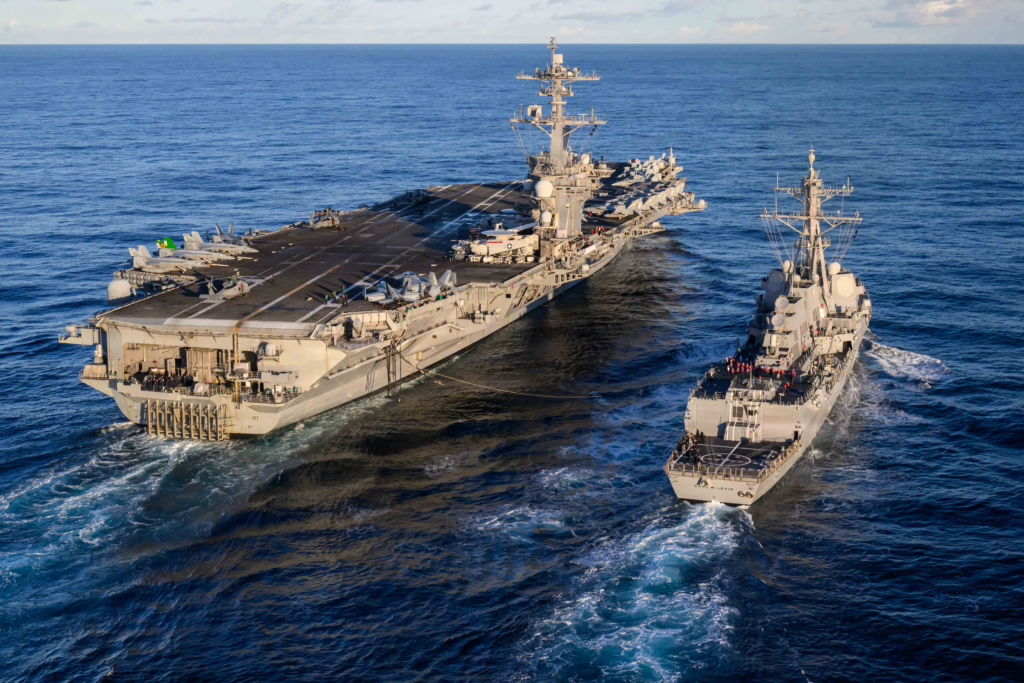
The first (and quickest) option would be for the Navy’s sole Forward-Deployed Naval Forces-Japan (FDNF-J) ‘flattop’, USS George Washington (CVN-73) – the flagship of CSG-5 – to be ordered to the Middle East.
George Washington returned to her homeport in Yokosuka, Japan, in mid-December and has since been undergoing scheduled maintenance. However, deploying the ‘flattop’ to the Middle East would leave the US Navy in the rare position of not having a carrier presence in the Indo-Pacific region.
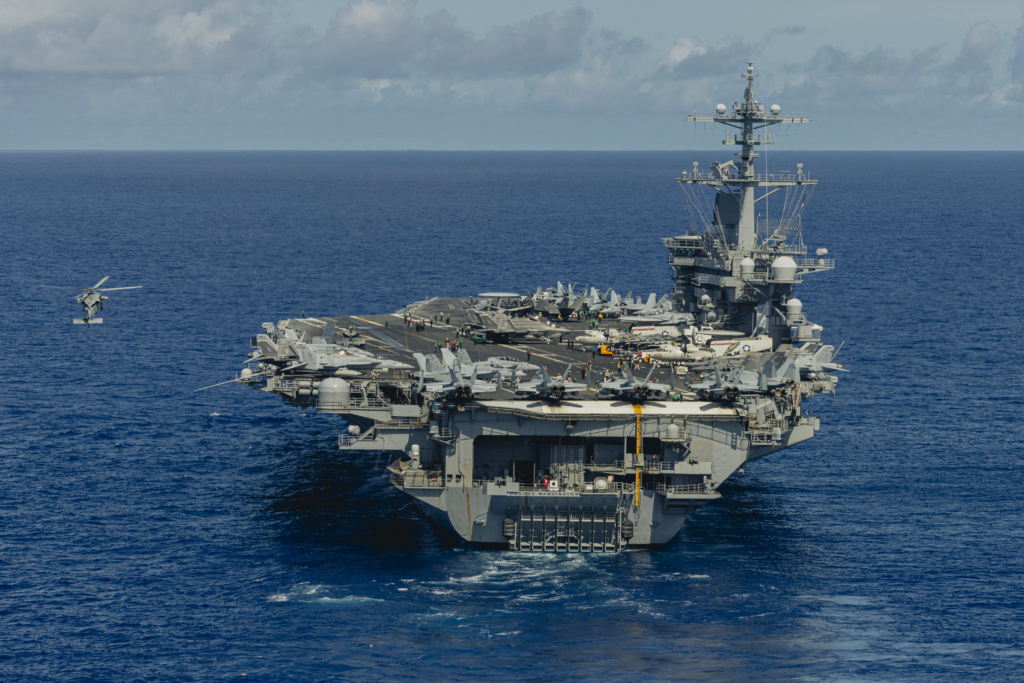
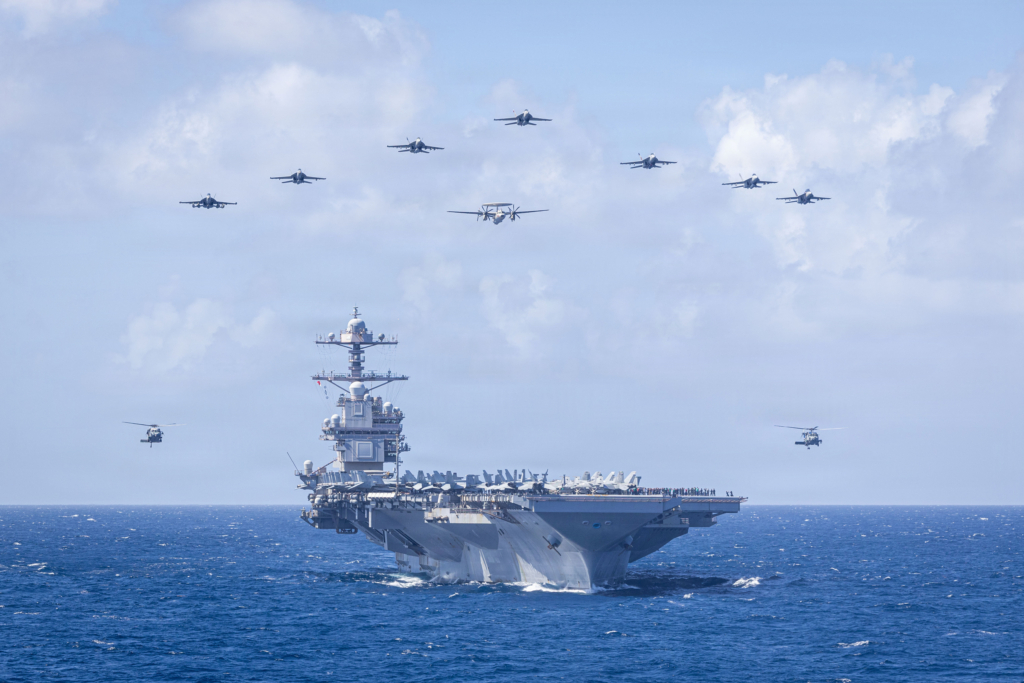
Aside from George Washington, the Navy has three more available options at its disposal. The first would be to redirect the first-in-class USS Gerald R Ford (CVN-78) – the flagship of CSG-12 – from her current operations in the Caribbean Sea to the Middle East.
Having departed Norfolk, Virginia, in June 2025, the new-generation Ford-class warship was redirected to the Caribbean in November 2025 to support counter-narcotics efforts in the region as part of Operation Southern Spear – Washington’s ongoing counter-narcotics campaign in the region. Ford played a key role in the US military’s capture of Venezuelan President Nicolás Maduro on 3 January.
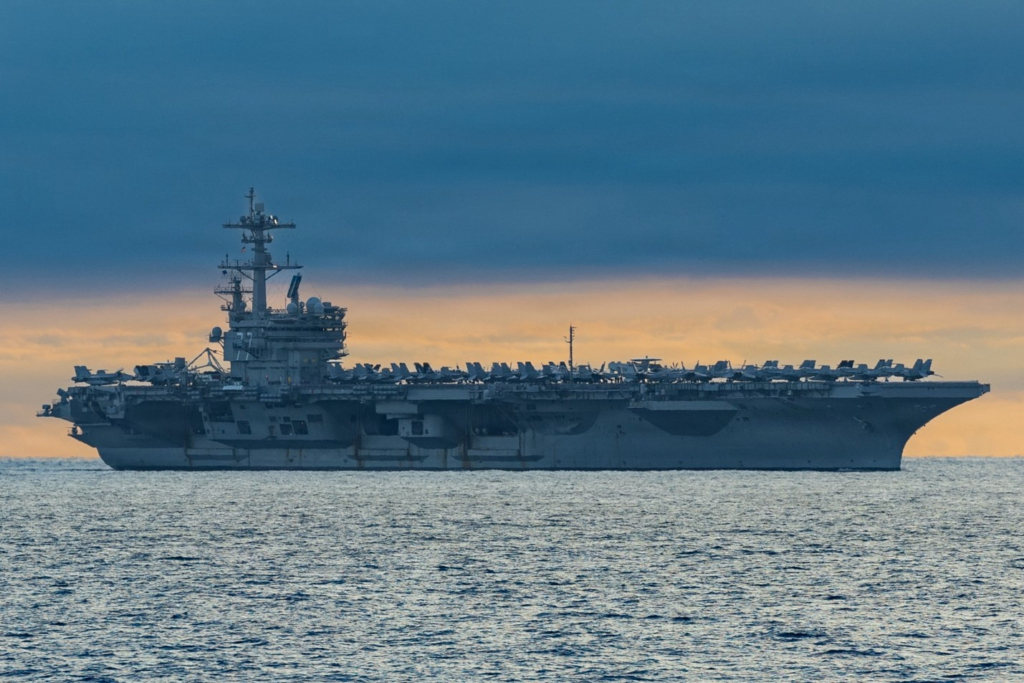
The Navy could also call upon the East Coast-based USS George H W Bush (CVN-77) – flagship of CSG-10 – which is currently conducting training activities in the Western Atlantic Ocean, or the West Coast-based USS Theodore Roosevelt (CVN-71).
The latter – which is the flagship of CSG-9 – returned to Naval Air Station (NAS) North Island in San Diego, California, on 21 January after completing a series of carrier qualification (CQ) training activities in the Eastern Pacific.
It has been reported that Theodore Roosevelt arrived at the Navy’s Naval Magazine Indian Island facility in Washington on 2 February and departed some three days later.
This suggests that the ‘flattop’ could be embarking stores and munitions ahead of an upcoming deployment. Despite this, reports on social media have also suggested that George H W Bush may be the carrier that eventually deploys to the Middle East.
USS Abraham Lincoln aircraft carrier returns to the Arabian Sea
The arrival of the Abraham Lincoln-led CSG-3 in the Arabian Sea on 26 January marked a dramatic escalation of tensions between Tehran and Washington. The East Coast-based strike group was conducting routine flight operations and live-fire drills in the South China Sea when it was retasked to the Middle East.
CSG-3’s return to the region has been framed by US Central Command (CENTCOM) as an effort to “promote regional security and stability” in response to escalating tensions between Iran and the US.
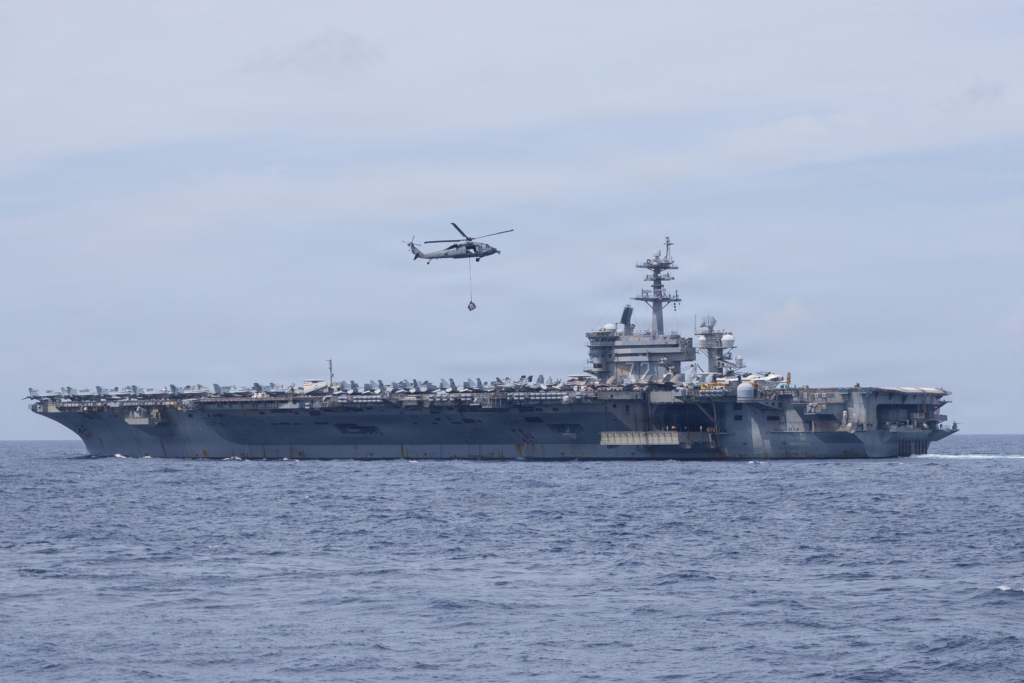
Taking to Truth Social on 28 January, Trump warned that a “massive armada” was heading to Iran, threatening that the “next attack will be far worse” than the strikes conducted during Operation Midnight Hammer and saying that “time is running out” for Tehran.
Abraham Lincoln’s arrival in the Middle East marks the third time in two years that a Navy CSG has been redirected from the Indo-Pacific to the Middle East due to growing instability across the region.
USS Abraham Lincoln (CVN 72) operates in the U.S. Central Command area of responsibility pic.twitter.com/uYdH0N09tr
— U.S. Central Command (@CENTCOM) October 29, 2024
The ‘flattop’ was previously redirected to CENTCOM’s area of responsibility (AOR) during its last Indo-Pacific cruise in 2024, and CSG-11 – led by the service’s now-outgoing USS Nimitz (CVN-68) – was rerouted to the Middle East during her final deployment to the Pacific in June 2025.
What firepower does Trump’s military ‘Armada’ have in the Middle East?
CSG-3’s presence in the Arabian Sea adds considerable firepower to the US military’s ongoing build-up across the region. Abraham Lincoln herself is being escorted by three Tomahawk cruise missile-equipped Arleigh Burke-class guided-missile destroyers – namely USS Spruance (DDG-111), USS Michael Murphy (DDG-112) and USS Frank E Petersen Jr (DDG-121).
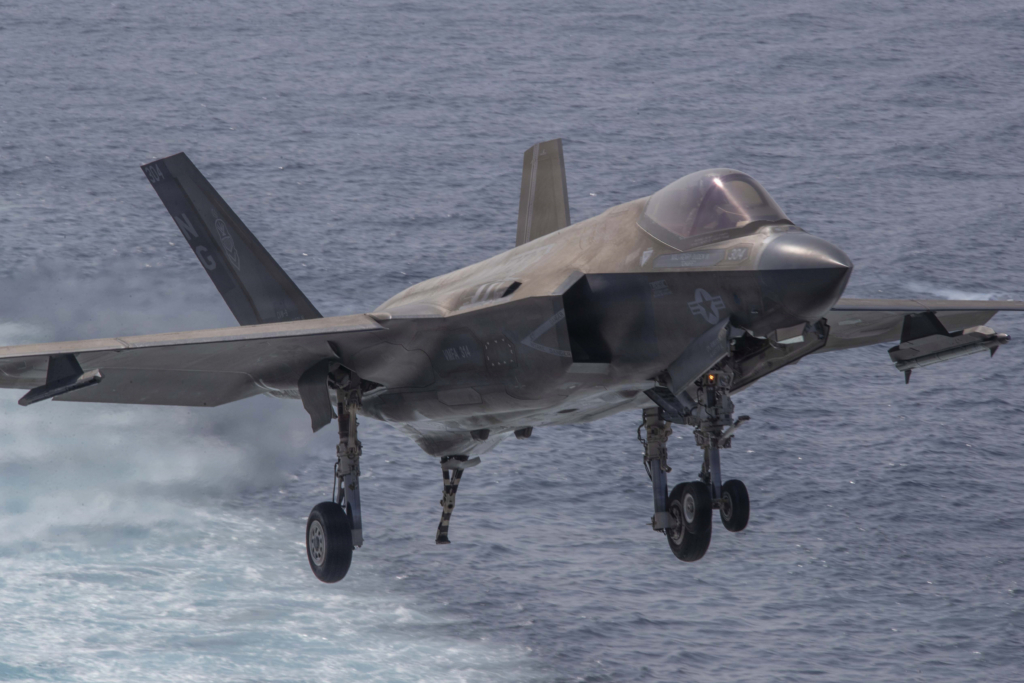
In addition, Abraham Lincoln also carries extensive firepower in the form of the nine air units that make up Carrier Air Wing 9 (CVW-9). The squadrons and aircraft currently deployed aboard the ‘flattop’ include:
- Traditional catapult-assisted take-off but arrested recovery (CATOBAR)-capable F-35C Lightning II fifth-generation multi-role stealth fighters from the US Marine Corps’ (USMC’s) Marine Fighter Attack Squadron 314 (VMFA-314) ‘Black Knights’, which is headquartered at Marine Corps Air Station (MCAS) Miramar in California;
- Dual-seat F/A-18F Super Hornet strike fighters from the Navy’s Strike Fighter Squadron 41 (VFA-41) ‘Black Aces’, which is home-based at NAS Lemoore in California;
- Single-seat F/A-18E Super Hornet multi-role fighters from the Navy’s VFA-14 ‘Tophatters’ and VFA-151 ‘Vigilantes’, both of which are also based at NAS Lemoore;
- Dual-seat EA-18G Growler electronic warfare/attack (EW/EA) jets from the Navy’s Electronic Attack Squadron 133 (VAQ-133) ‘Wizards’, which is headquartered at NAS Whidbey Island in Washington;
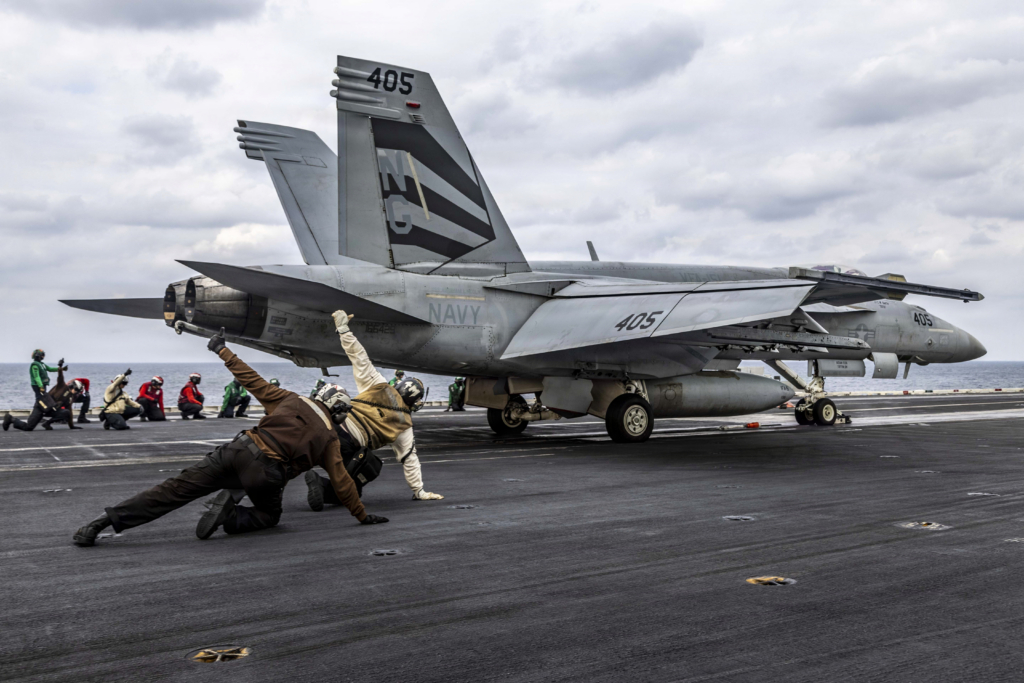
- New-generation E-2D Advanced Hawkeye airborne early warning and control (AEW&C) aircraft from the Navy’s Airborne Command & Control Squadron 117 (VAW-117) ‘Wallbangers’, which is home-based at NAS Point Mugu in California;
- MH-60S Seahawk multi-mission helicopters from the Navy’s Helicopter Sea Combat Squadron 14 (HSC-14) ‘Chargers’, which is based at North Island;
- MH-60R Seahawk anti-submarine/surface warfare (ASW/ASuW) helicopters from the Navy’s Helicopter Maritime Strike Squadron 71 (HSM-71) ‘Raptors’, which is also home-based at North Island, and;
- A detachment of CMV-22B Osprey carrier onboard delivery (COD) tiltrotors from the Navy’s Fleet Logistics Multi-Mission Squadron 30 (VRM-30) ‘Titans’, which is also headquartered at North Island.
Is another rare dual-carrier presence on the cards?
The deployment of a second CSG to the Middle East would effectively double the Navy’s firepower in the region and further cement the pressure being applied on Tehran by the Trump administration. It would also be the third time since the start of last year that the Navy has employed a typically rare dual-carrier presence in the Middle East.
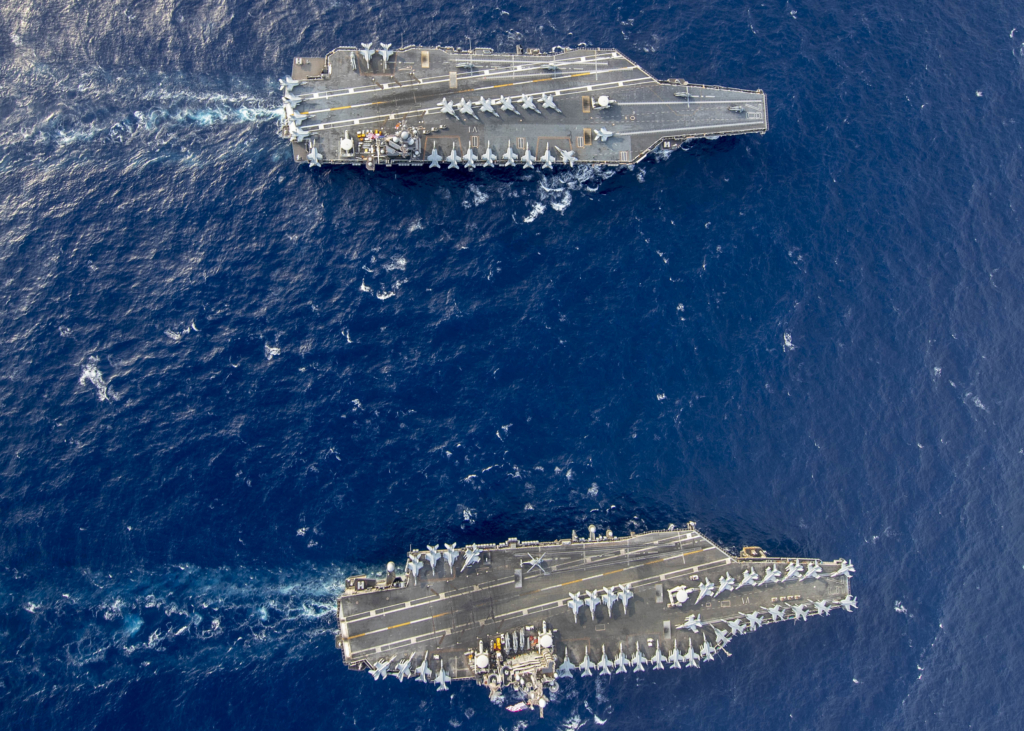
In March 2025, US Secretary of Defence Pete Hegseth ordered the flagship of CSG-1, USS Carl Vinson (CVN-70), to join her sister warship, USS Harry S Truman (CVN-75) – the flagship of CSG-8 – in the Red Sea to counter further attacks on international merchant shipping vessels by Iran-backed Houthis in Yemen.
After having her deployment extended by more than a month, Truman finally departed the Red Sea in May last year. Carl Vinson remained as the Navy’s sole carrier in the Middle East until June, when the veteran Nimitz was ordered to the Arabian Sea amid growing hostilities and conflict between Israel and Iran.
Once tensions between the two nations settled, Carl Vinson finally departed the region in July, with Nimitz following suit in October.
US Navy deploys additional warships to the Middle East
Aside from the vessels that make up CSG-3, the Navy has deployed several other independent warships to the Middle East region, which could be used to support combat operations against Iran if ongoing bilateral talks break down. As of 9 February, this maritime force comprises:
- The Arleigh Burke-class guided-missile destroyer, USS Delbert D Black (DDG-119), is currently operating in the Red Sea;
- Three Independence-class littoral combat ships – namely USS Tulsa (LCS-16), USS Canberra (LCS-30) and USS Santa Barbara (LCS-32) – are currently operating in the Arabian Gulf, conducting a mine countermeasure mission in the region, and;
- Two more Arleigh Burke-class warships – including USS Mitscher (DDG-57) and USS McFaul (DDG-74) – are now operating near the Strait of Hormuz in the Persian Gulf.
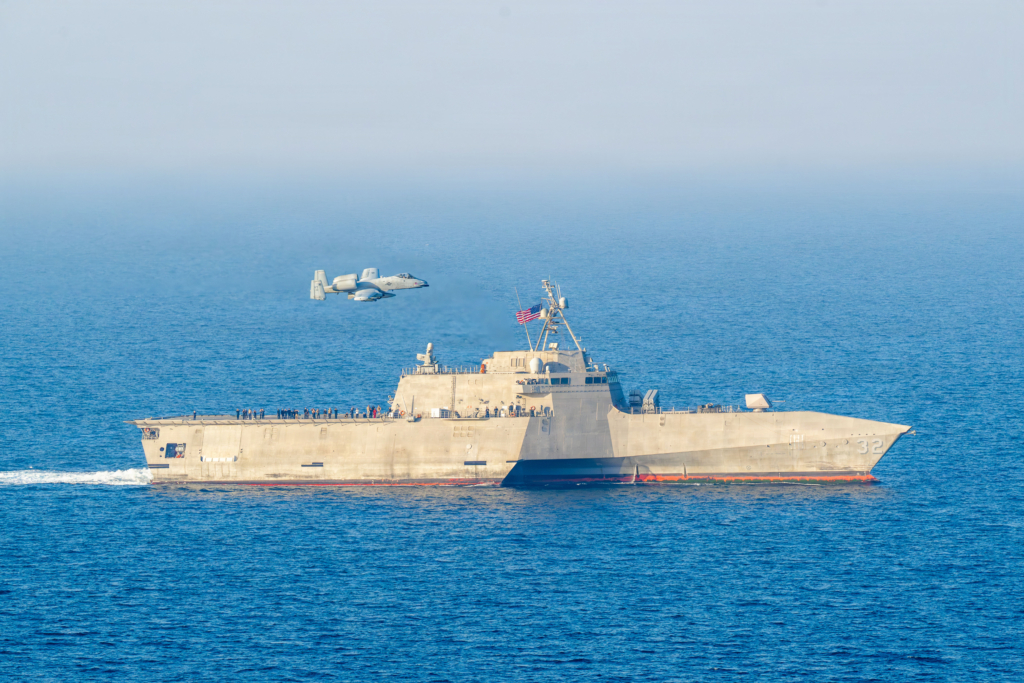
A further two Arleigh Burke-class vessels – namely USS Roosevelt (DDG-80) and USS Bulkeley (DDG-84) – are currently operating in the Mediterranean Sea and could be ordered to the Middle East, should tensions between Tehran and Washington continue to escalate.
Which land-based US Navy aircraft have deployed to the Middle East so far?
In addition to CVW-9 aboard Abraham Lincoln, the Navy has dispatched several land-based air assets to the region for surveillance purposes. This includes both Northrop Grumman-produced MQ-4C Triton high-altitude, long-endurance (MALE) drones and Boeing-made P-8A Poseidon maritime patrol aircraft (MPA).
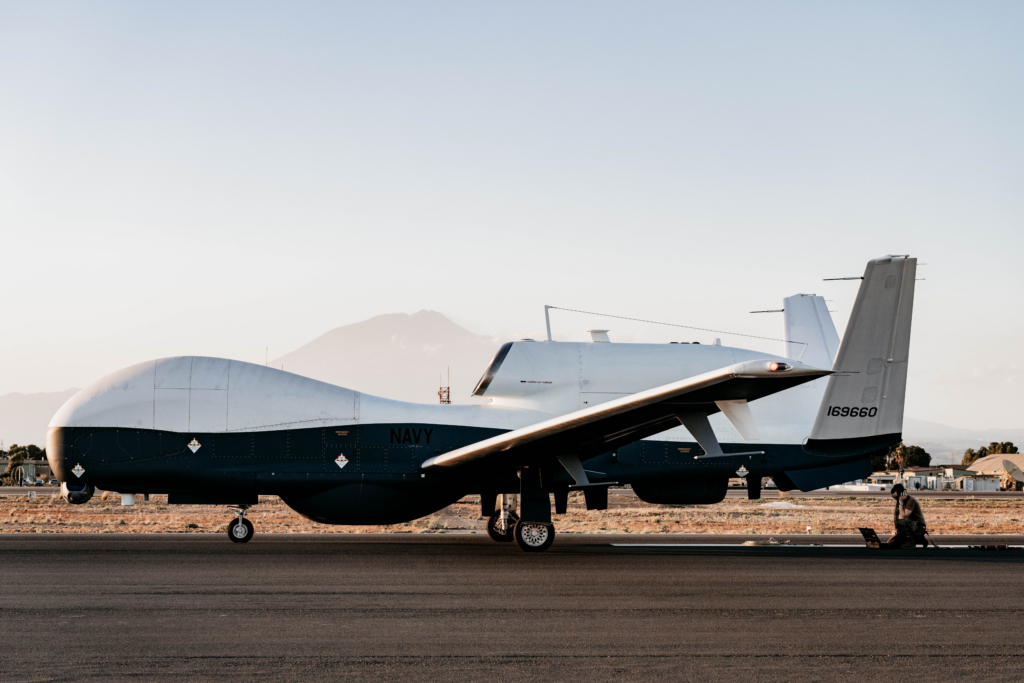
At least two MQ-4C Tritons are believed to have deployed to Al Dhafra Air Base in the United Arab Emirates in late January.
Tracking data shared by Flightradar24 showed one of these HALE UAVs (BuNo 169804) – which is operated by the Navy’s Unmanned Patrol Squadron 19 (VUP-19) ‘Big Red’ at NAS Jacksonville, Florida – was seen operating over the Strait of Hormuz for several hours on 29 January. Such flight tracking data has also shown Navy-operated P-8As operating across similar routes over recent weeks.
🚨 SECURITY ALERT – PERSIAN GULF | IRAN
— Niyak Ghorbani (نیاک) (@GhorbaniiNiyak) January 5, 2026
Live flight-tracking data shows a U.S. Navy P-8A Poseidon reconnaissance aircraft actively patrolling the southern Iranian coastline and the Strait of Hormuz.
The P-8A Poseidon is a high-level intelligence, surveillance and maritime… pic.twitter.com/X6hVn5axBD
These multi-role jets are specifically designed to conduct long-range maritime patrol and intelligence, surveillance and reconnaissance (ISR) missions and are capable of performing secondary ASW/ASuW roles. At least two additional P-8As have been dispatched to NAS Sigonella in Italy.
The Navy has also reportedly deployed a further six EA-18Gs to Muwaffaq Salti Air Base in Azraq, Jordan, adding more crucial force multipliers and EW assets to the mass build-up. According to reports, these jets were involved in Operation Absolute Resolve – the 3 January snatch-and-grab operation in Venezuela to apprehend Maduro.
More U.S. electronic warfare assets are moving toward the Middle East. EA 18G Growlers are heading to Rota, a common staging hub, accompanied by KC 46A tankers under the callsigns GOLD31, GOLD32, GOLD41, and GOLD42, pointing to possible Iran related preparations.
— Open Source Intel (@Osint613) January 29, 2026
The Growler’s… pic.twitter.com/GL5cPwZgsU
While reports and flight tracking data indicate that these high-value assets were deployed to the Middle East on 28 January, the Navy has not formally confirmed this deployment.
How the USAF is airlifting troops and aircraft to the Middle East
While Trump is currently weighing up whether or not to effectively double the Navy’s ability to project combat airpower deep into the Middle East, the USAF has been quietly sending a steady stream of its own airlift, combat and ISR assets to several key installations across the region.
This mass build-up of forces seems to closely mirror the large-scale build-up of US military forces to CENTCOM’s AOR ahead of Operation Desert Storm in 1990.
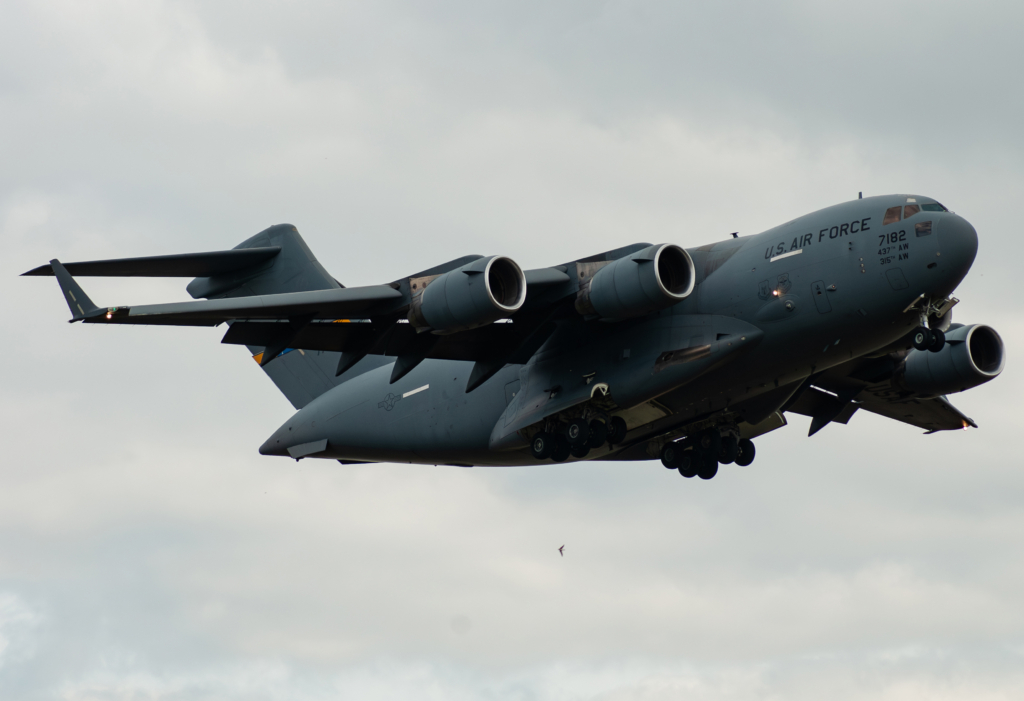
The airlift mission behind this build-up is a feat in itself, with more than 100 strategic transport aircraft moving key air-defence systems, personnel and other assets/equipment to the Middle East in support of the effort.
Such operations have largely been carried out by C-5M Super Galaxy and C-17A Globemaster III heavy-lift strategic transports, which are now envisaged to remain operational until 2045 and 2075, respectively.
#USAF United States Air Force – Middle East Activity
— Armchair Admiral 🇬🇧 (@ArmchairAdml) February 9, 2026
9 February 2026 – 1100z
A total of 122 flights from various bases in the United States to the CENTCOM AOR have taken place since 14 January. The current flights are almost exclusively from U.S. Army Airfields housing Air… https://t.co/rszO257Ha8 pic.twitter.com/3k1R2YOFme
According to open-source flight tracking data, at least 122 C-17As and C-5Ms flew to various bases across the Middle East from a period between 14 January and 9 February.
These flights largely originated from the Continental US (CONUS) and several allied bases in Germany and the UK, with all of them ending at key US-affiliated installations in Bahrain, Jordan, Kuwait, Qatar and Saudi Arabia. A number of C-130H/Js are also thought to be involved with the mass airlift operation.
In addition, several KC-46A Pegasus and KC-135R Stratotanker air-to-air refuelling (AAR) aircraft have been deployed to the region. While a detachment of tankers is typically rotated in-and-out of the Middle East to support deployed combat air forces in the region, recent movements suggest that these numbers are being heavily bolstered.
What USAF combat aircraft are currently in the Middle East?
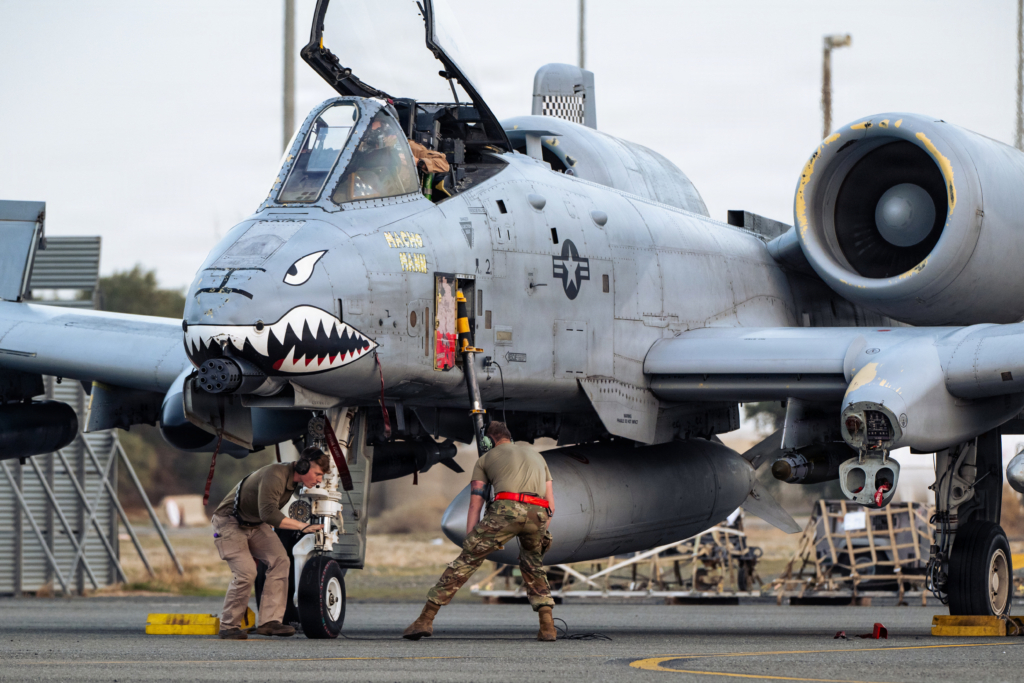
Meanwhile, the USAF has (and continues to) dispatch more combat aircraft to the Middle East. At present, there are at least three F-15E Strike Eagle multi-role fighter units deployed across the region, along with a detachment of A-10C Thunderbolt II ground attack or close air support (CAS) jets.
Below is a breakdown of the squadrons and approximate numbers that have deployed to the Middle East:
- 12 F-15Es from the 4th Fighter Wing (FW) at Seymour Johnson Air Force Base (AFB) in North Carolina recently transited through RAF Lakenheath in Suffolk, UK, while en route to the Middle East. It is believed that these jets – which are operated by either the 335th Fighter Squadron (FS) ‘Chiefs’ or 336th FS ‘Rocketeers’ – deployed to Jordan.
- 12 F-15Es from the 366th FW at Mountain Home AFB in Idaho have been forward-deployed to CENTCOM’s AOR for more than ten months, which is an unusually long deployment for the USAF. It was initially thought that these fighters were being replaced by the Seymour Johnson-based jets, but this has yet to take place. The 336th FW F-15Es are either operated by the 389th FS ‘Thunderbolts’ or 391st FS ‘Bold Tigers’.
- 12 F-15Es from the 48th FW’s 494th FS ‘Panthers’ arrived at Muwaffaq Salti Air Base in Azraq, Jordan, from their home base at RAF Lakenheath on 18 January.
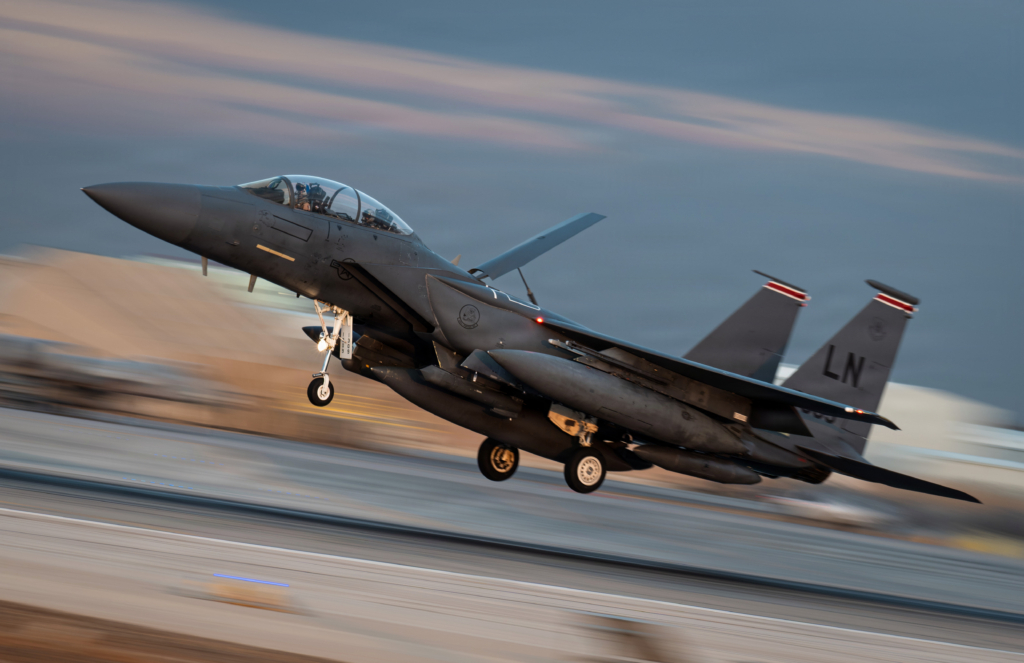
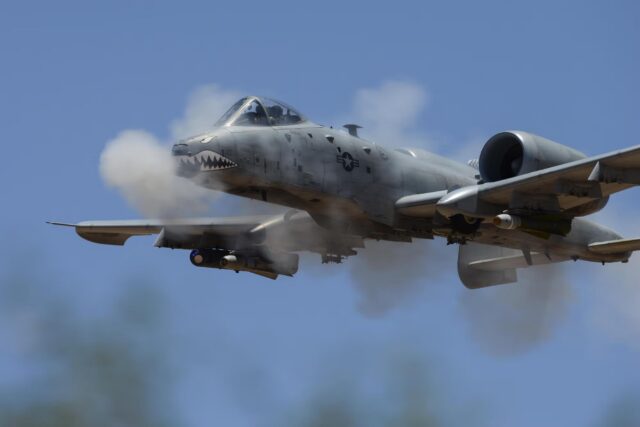
- The USAF has now had an A-10C squadron – namely the 23rd Fighter Group’s 75th FS ‘Tiger Sharks’ – operating in the Middle East for several months. While the number of ‘Warthogs’ in the region has not been confirmed, the unit is known to have supported a new wave of major airstrikes against ISIS fighters in Syria as part of Operation Hawkeye Strike, which began in December 2025.
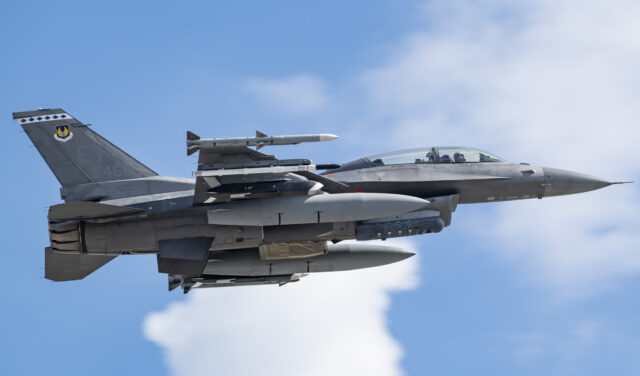
- Air & Space Forces Magazine has also reported that a squadron of USAF-operated F-16CM/DM Fighting Falcons has been deployed to the Middle East, though details surrounding numbers, the squadron involved, and their current operating location remain unknown.
In addition to these combat assets, the USAF has also dispatched 12 F-35A Lightning II stealth fighters to the region. These jets hail from the 134th FS ‘Green Mountain Boys’ – a part of the Vermont Air National Guard’s (ANG’s) 158th FW at Burlington Air National Guard Base (ANGB).
Much like the land-based Growlers that have recently arrived in the Middle East, this deployment comes straight off the back of the squadron’s involvement in Operation Absolute Resolve.
Vermont National Guard F-35s ‘Green Mountain Boys’ 158th Fighter Wing departing a wet Lakenheath today pic.twitter.com/n9K2oMi2AG
— Glenn (@TallGlenn85) February 11, 2026
At the time of writing, these jets were transiting to the Middle East, with six airframes passing through RAF Lakenheath and six others at Moron Air Base in Spain. The continued deployment of the initial six F-35As that landed in Spain on 3 February was delayed after a KC-46A tanker suffered a mishap on take-off, causing the key logistics installation to shut down for several days.
Along with these fighter aircraft, the USAF is believed to still have a complement of AC-130J Ghostrider fixed-wing gunships and MQ-9A Reaper unmanned combat air vehicles (UCAVs) operating in the Middle East. These platforms have been noted as operating in the region already to support the ongoing Operation Hawkeye Strike.
HH-60Ws, E-11As and RC-135Vs arrive in the Middle East
Adding to the USAF’s already substantial presence in the region, the air arm has further bolstered its combat search-and-rescue (CSAR) and ISR-gathering assets across the region.
On 31 January, a USAF C-17A delivered an unspecified number of new HH-60W Jolly Green II CSAR helicopters to an undisclosed base in CENTCOM’s AOR.
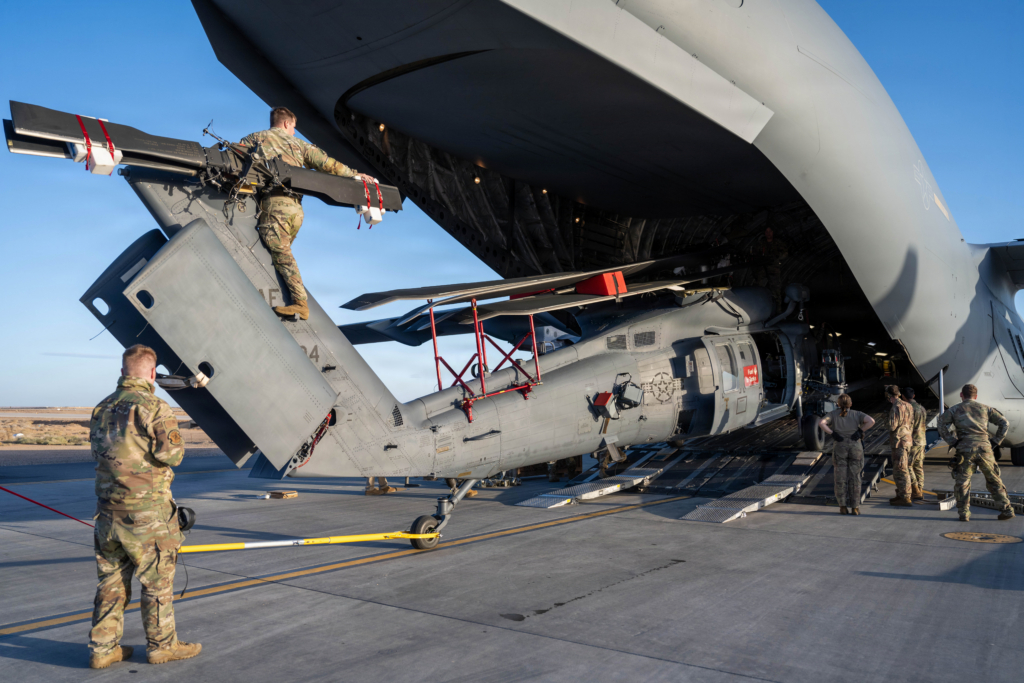
Despite releasing images of the helicopter’s arrival in the region, it remains unclear whether the platform has been delivered to replace other CSAR helicopters deployed in the region or to bolster the number of rescue aircraft that are now in the Middle East ahead of a potential conflict.
Available flight tracking data also indicates that the USAF has deployed an E-11A Battlefield Airborne Communications Node (BACN) to Prince Sultan Air Base in Saudi Arabia on 31 January.
A U.S. Air Force Bombardier E-11A BACN, callsign BLKWF01, is operating over the Middle East moving between Crete, the Gulf, and the Levant.
— Open Source Intel (@Osint613) February 4, 2026
The E-11A is rare, with fewer than 12 aircraft in service, and its presence usually signals high level military coordination.
It carries… pic.twitter.com/af9TD7awJt
Based on Bombardier’s Global 6000 business jet, the E-11A is an airborne communications relay and gateway that enables the flow of real-time information and greatly enhances situational awareness across a battlespace.
On 28 January, a USAF-operated RC-135V Rivet Joint (serial 64-14848) was noted as arriving at Al Udeid Air Base in Qatar. The Rivet Joint is highly optimised for the ISR role, providing local warfighters in the battlespace with near real-time on-scene collection, analysis and dissemination capabilities.
The U.S. Air Force RC-135V Rivet Joint is now landing at Al Udeid Air Base in Qatar.
— Oliver Alexander (@OAlexanderDK) January 28, 2026
I expect both the E-11A BACN and HC-130J Combat King II to leave Chania for Al Udeid later today.
We may also see 6xEA-18G Growlers leave the U.S. for Europe very soon. pic.twitter.com/8oNrEomeXV
That same day, commentators on X (formerly Twitter) noted that an HC-130J Combat King – used for fixed-wing CSAR operations – was also due to arrive at Al Udeid.
No US bombers or E-3 Sentry… Yet?
While the USAF has yet to forward-deploy any bombers or AEW&C assets to strategic locations around the Middle East – such as the island of Diego Garcia, which has been the focus of controversy between Washington and London over recent weeks – no such movements have taken place, at least at the time of writing.
Diego Garcia plays a key role in the USAF’s ability to launch sustained bombing operations in the Middle East, if needed, with capacity for B-1B Lancer, B-2A Spirit and B-52H Stratofortress bombers.

A notable observation is that the USAF has yet to visibly deploy an E-3 Sentry AEW&C aircraft to the Middle East as part of its latest build-up of forces in the region. The platform would be a vital asset for any sustained combat operation, given that it provides long-range radar surveillance and coordinates air combat missions during major conflicts.
Interestingly, the USAF deployed one of its E-3Gs to the Middle East on the same day it conducted Operation Midnight Hammer (on 22 June 2025).
The arrival of an E-3 Sentry or long-range bombers at Diego Garcia would represent the clearest signal yet that diplomacy has failed.
Featured image: US Navy/Mass Communication Specialist 3rd Class Elliot Schaudt