


China tests new 1.2-tonne payload HH-200 commercial cargo drone

3 min read
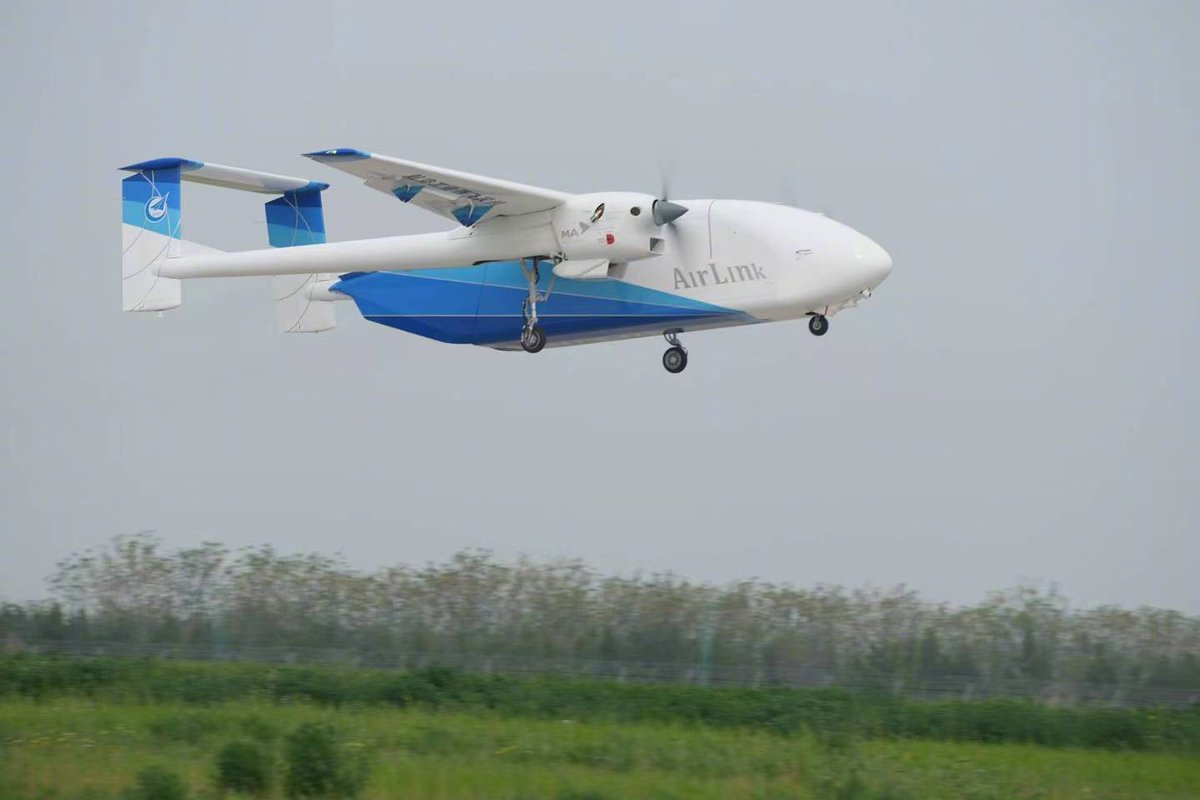
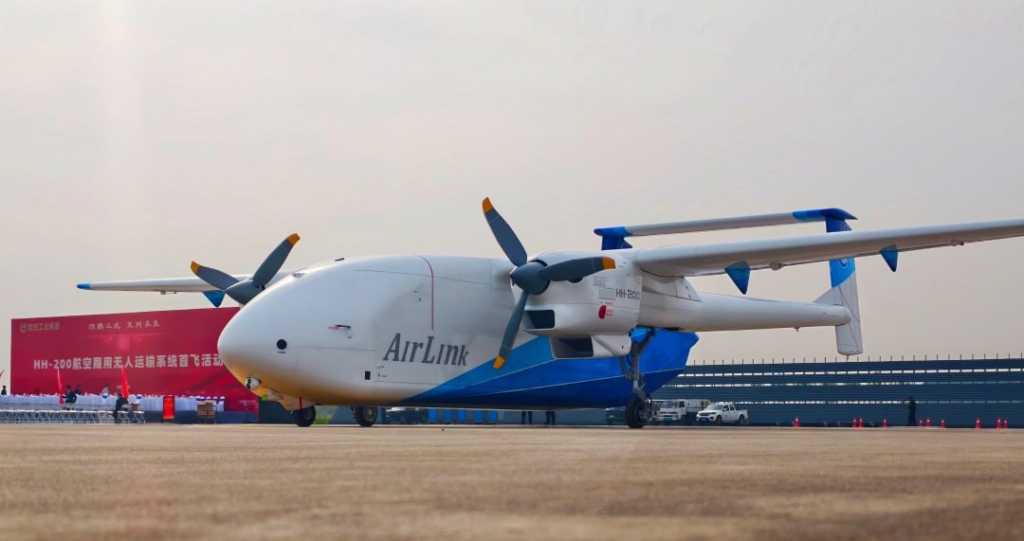
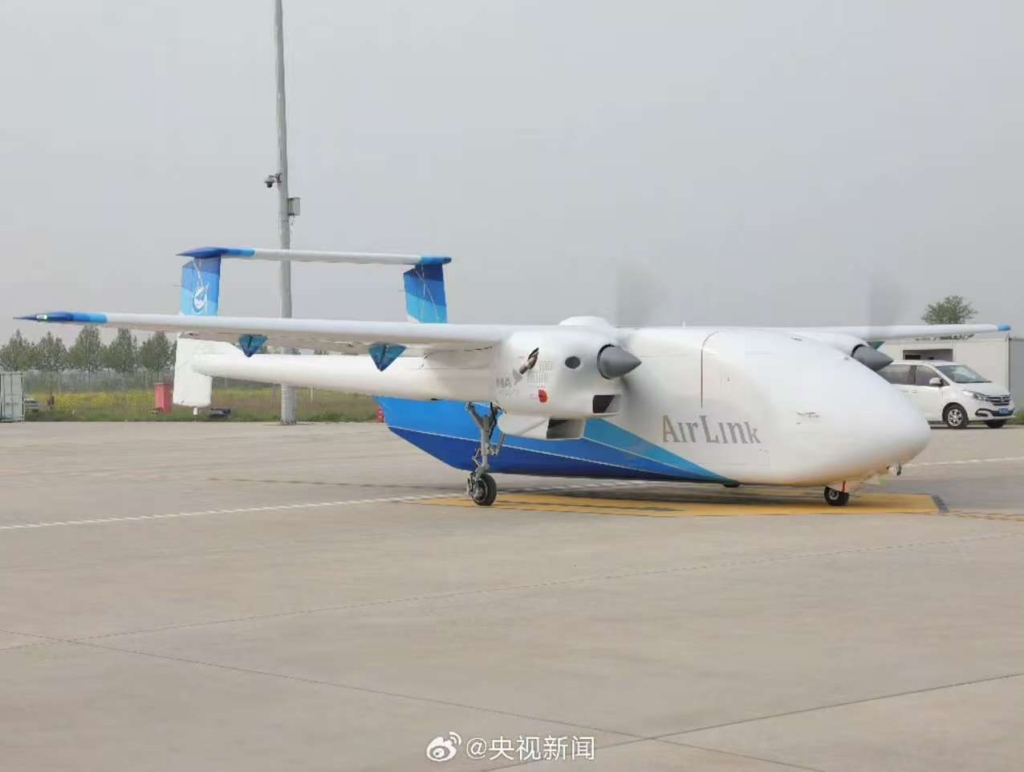
China has announced the successful test flight of another large 1.2-tonne payload cargo drone called the AVIC HH-200. The HH-200 joins a growing line up of Chinese “flying trucks” seeking to transform logistics.
Successful test flight for 1.2 tonne payload HH-200 cargo drone
The Chinese drive to dominate the emerging MALE (Medium-Altitude, Long-Endurance) aerospace market for Unmanned Aerial Vehicles (UAVs) continues to get more impressive.
Yesterday, Chinese state media, Xinhua, reported the successful maiden flight of the HH-200 commercial drone. The flight took place in Pucheng in China’s Shaanxi Province, with the flying truck reported to perform all its test maneuvers well.
22 minutes that could reshape cargo delivery — China’s HH-200 aerial commercial #unmanned transportation system completed its #maidenflight test on April 15.
— Wu Lei (@wulei2020) April 15, 2026
It includes a ground system & a drone with a 1.5-tonne payload and a maximum flight range of 2,360 km. pic.twitter.com/BCbltWdWsS
HH-200 has been developed by China’s state-run AVIC and is part of China’s push to command the MALE market.
According to the publication, the HH-200’s cargo hold comes with a standard volume of 12 cubic metres, which is expandable to 18 cubic metres. It has a maximum payload of 1.5 tonnes, a cruising speed of 310 km/h, and a range of 2,360 km.
The flight of the HH-200, comes after the successful flight of the Chinese NORINCO Changying-8 LUCA large cargo UAV, a massive 7-tonne “flying truck.”
China has also completed the test flight of a quarter-scale future 10-tonne cargo drone called the CAAA YH-1000S. Yet another large cargo drone in development is the 5-tonne Air White Whale W5000.
Get the latest aerospace defence news here on AGN.
Intended role of the HH-200 cargo drone
The aircraft is intended to eventually be used for missions like emergency rescue, firefighting, weather modification, aerial remote sensing, and agriculture. While the Chinese state media did not mention military applications, these types of drones are typically considered dual-use.
Xinhua wrote, “The HH-200 will primarily serve China’s border and coastal regions, cross-border freight routes, inland point-to-point cargo logistics, cross-island freight in Southeast Asia, and air cargo networks in Belt and Road partner countries.”
The flying truck is designed with a service life of 50,000 flight hours or 15,000 takeoff and landing cycles. It is advertised as coming with a full life-cycle operating cost of around 0.69 dollars per tonne-kilometre.
The race to seize the MALE market
The only other country that is seriously in a position to contest the MALE market for commercial cargo drones is the United States. A large number of cargo drones are in development across the United States; these are often adaptations of flying taxis and drones being developed for the US military.
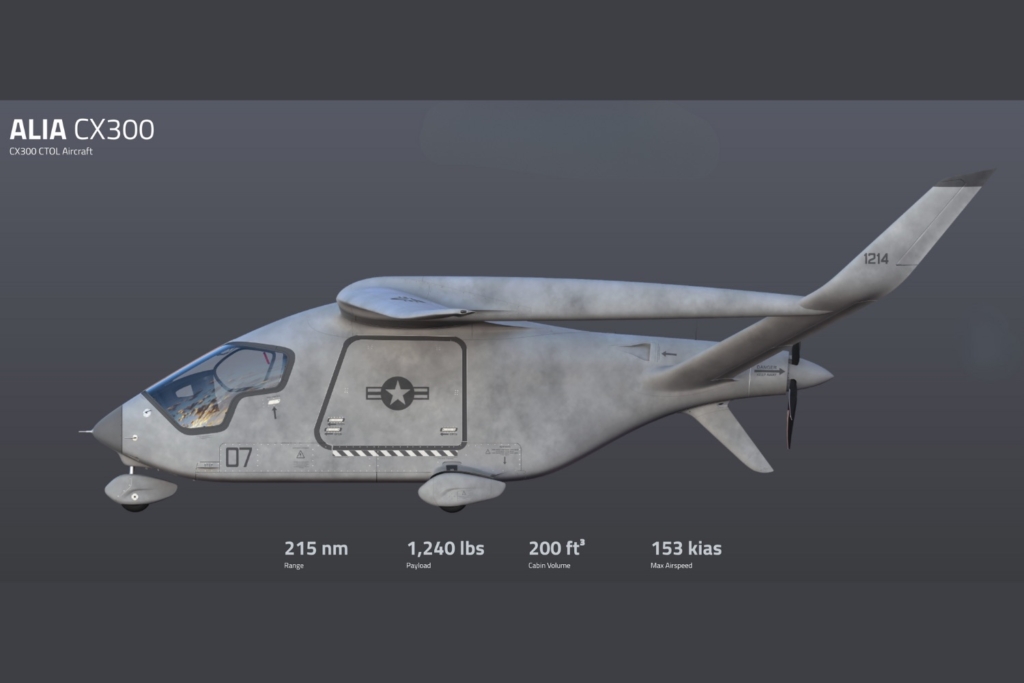
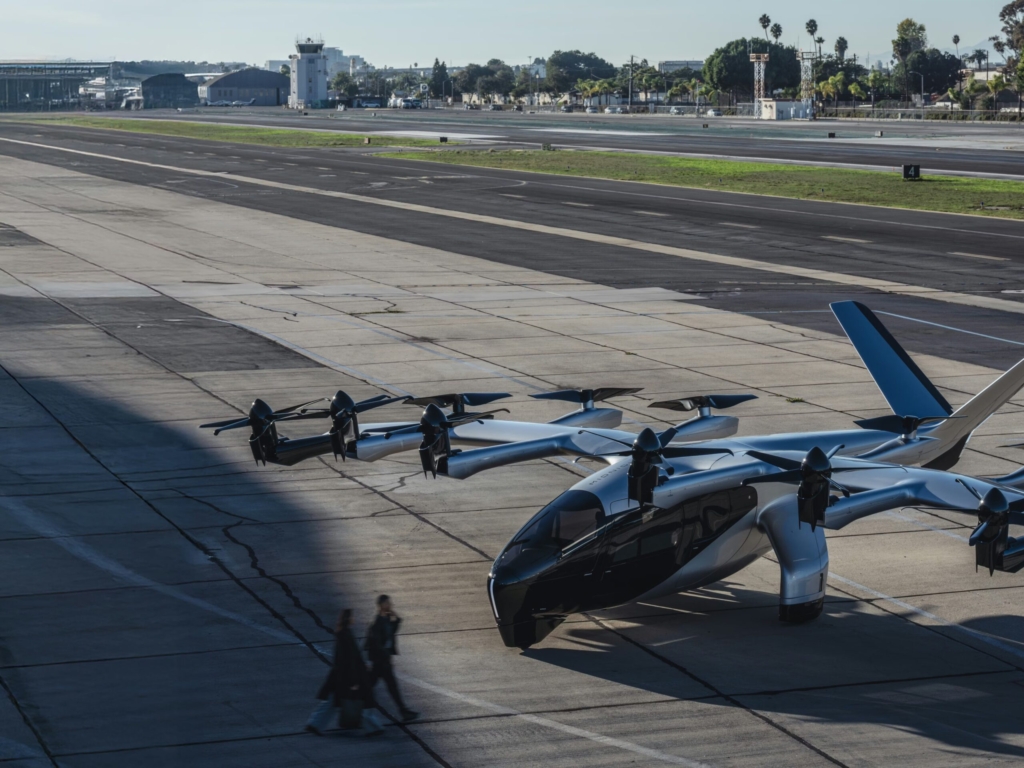
US examples include planned variants of aircraft being developed by Archer, Joby, BETA Technologies, and others. US counterparts are often not the large “flying truck” type being developed in China. Israeli’s Air One is another cargo drone being developed, with the US military as a customer.
Perhaps the best US-counterparts to the large Chinese “flying trucks” are Sabrewing Aircraft’s Rhaegal (around 2.45 tonnes of payload) and Grid Aero’s Lifter Lite (“scaleable thousands of pounds of payload”).
In Europe, Dronamics’s Black Swan flying truck, which is already on the market, is the only large MALE drone made entirely in Europe and is ready for deployment. It is able to carry up to 350 kg of payload at a range of 2,500 km.
However, the Chinese sector benefits from having state backing, with it being the policy of Beijing to dominate the MALE market. This makes it difficult for private profit-driving companies in other countries to compete.
Featured Image: Xinhua/Li Yibo


