Portugal targets aircraft fume event blind spot with AI and sensors

10 min read

When a crew reports a fume event onboard a TAP aircraft, engineers inspect everything from the engines and auxiliary power unit to the air-conditioning system and cabin equipment. Yet an analysis presented at the 2026 Aircraft Cabin Air Conference in London found no associated leak or malfunction in 75% of events involving its Airbus A320-family fleet and 64% of those involving its A330s.
The findings expose a persistent problem: contamination may have dispersed, and aircraft systems may be operating normally again by the time an investigation begins.
TAP now wants to capture evidence while aircraft are still flying. The airline is seeking approval to monitor cabin air during commercial services, potentially giving engineers objective data to compare with crew reports.
Portugal’s National Civil Aviation Authority, ANAC, faces a related challenge – important details are frequently buried in subjective, unstructured reports that require extensive manual analysis. The regulator believes artificial intelligence could help turn those accounts into data capable of revealing recurring aircraft, components and operating conditions.
Portugal’s experience contrasts with evidence heard by the UK All-Party Parliamentary Group on Cabin Air Quality, where witnesses have described aviation workers being reluctant to report suspected fume events for fear of professional repercussions.
ANAC says its commitment to just-culture principles has helped Portugal encourage reporting. The challenge now is extracting enough reliable evidence from those reports to determine what happened.
ANAC considers AI for aircraft fume event reports
Cabin air quality has been added to Portugal’s national aviation safety plan, placing it among the safety concerns ANAC is now actively monitoring.
The regulator is also involved in a national working group, bringing together unions, health officials, the country’s working conditions authority and other organisations. Its early work includes examining technical guidance and considering whether recognised practices could be translated into requirements for Portuguese operators.
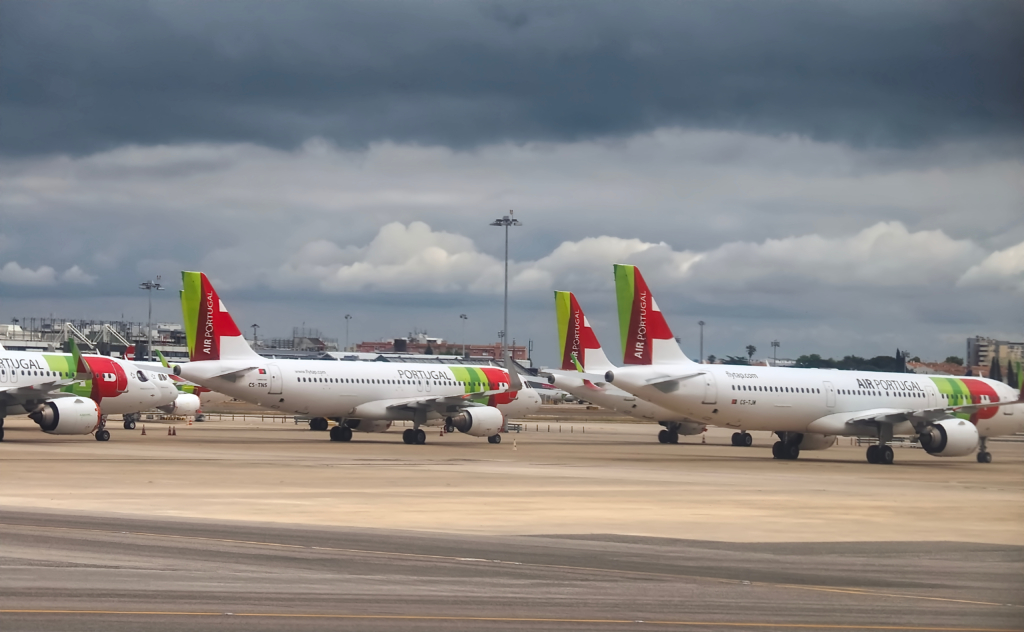
Smoke, fumes, burning smells, contaminated cockpit or cabin air and crew incapacitation are already among the occurrences that must be reported under European aviation rules. But Luís Cândido, a safety analyst and SAFA inspector at ANAC, said the reporting framework does not contain dedicated data fields for cabin air events.
Details are instead placed in narrative accounts, which may say little more than that an oil smell, haze or unidentified odour was present for several minutes.
“Reports typically encompass a degree of uncertainty and subjectivity,” Cândido said. “The information is usually described in the narrative, with no specific data fields for cabin air quality events. That makes the analysis very labour-intensive.”
Follow-up findings also arrive as free text, making it difficult to compare aircraft, fleets and possible causes. Technical and operational data can be examined through regulatory oversight, but medical information is sensitive and generally held separately.
Occurrence reports are also de-identified. While that protects workers, it makes it harder for regulators to connect repeated exposures involving one individual with any subsequent health problems.
ANAC believes large language AI models could help classify the narratives and convert their contents into structured data. Rather than deciding whether contamination occurred, the technology could be used to identify aircraft registrations, smells, phases of flight, maintenance findings and crew symptoms. From this, human analysis could uncover patterns more quickly.
Cândido said AI could “type the text into structured databases” and provide more detailed statistics, paving the way for greater integration and better-informed decisions.
Portugal’s just culture encourages fume event reporting
ANAC warned that fume event reporting remains highly uneven across Europe. Some states have developed greater awareness and stronger reporting cultures than others, making international comparisons unreliable.
“We know that not every event is being reported,” said Bernardo Vilhena Lourenço, ANAC’s head of safety and SAFA national coordinator. “Strong awareness is still needed so that we can capture the whole spectrum of occurrences and show the real dimension of the issue.”
Asked by Aerospace Global News how Portugal had encouraged aviation workers to come forward, Lourenço pointed to its sustained emphasis on just culture, under which safety information should not ordinarily be used to punish people for honest mistakes or good-faith reports.
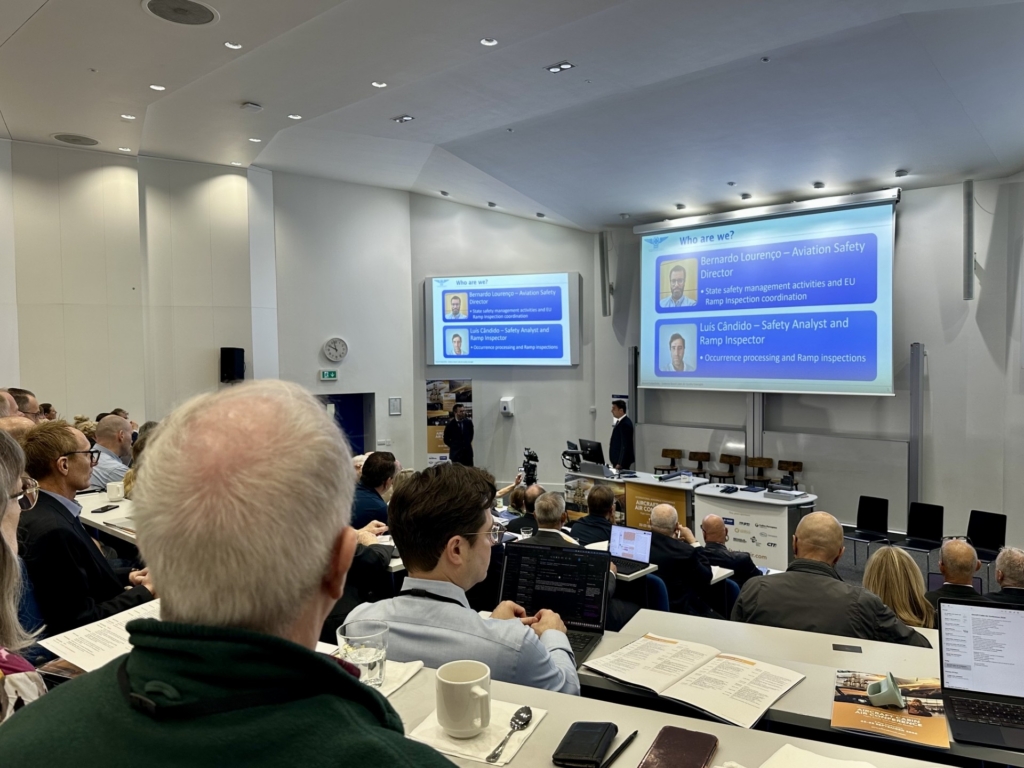
“Most of what contributes to this approach is a strong commitment to just-culture principles,” he said. “As far as I know, there has not been a case of a report being used against a team member who reported such an event.”
He added that responsibility does not rest with the regulator alone, suggesting that airlines must create an internal culture in which workers can report concerns without fearing that doing so will damage their careers.
ANAC examines those arrangements when it oversees an operator’s safety management system. It also provides a separate channel through which aviation workers can contact the regulator directly if they believe an organisation has violated just-culture principles.
“If an airline does the wrong thing, it might hinder its own reporting culture, which will in turn affect the national reporting culture,” Lourenço said.
Most TAP fume event investigations find no fault
For TAP, every crew report sets in motion a maintenance process that can extend well beyond inspecting the engines.
André Serra, an aircraft systems engineer at TAP, said cabin air events may originate outside the aircraft, including de-icing fluid, exhaust gases or smoke from another aircraft. Internal sources can include engine or auxiliary power unit oil, hydraulic leaks, overheated electrical equipment and malfunctioning galley equipment.
TAP’s analysis covered events reported between October 2024 and August 2026 across its mainline Airbus fleet.
No leak or malfunction was identified in 75% of A320-family cases. APU oil leaks accounted for 11%, de-icing fluid for 8%, while the remaining cases included spillages, galley equipment and other cabin sources.
On the A330 fleet, 64% produced no associated maintenance finding. Oil leaks and engine or bleed-air system problems were among the causes identified in the remainder.
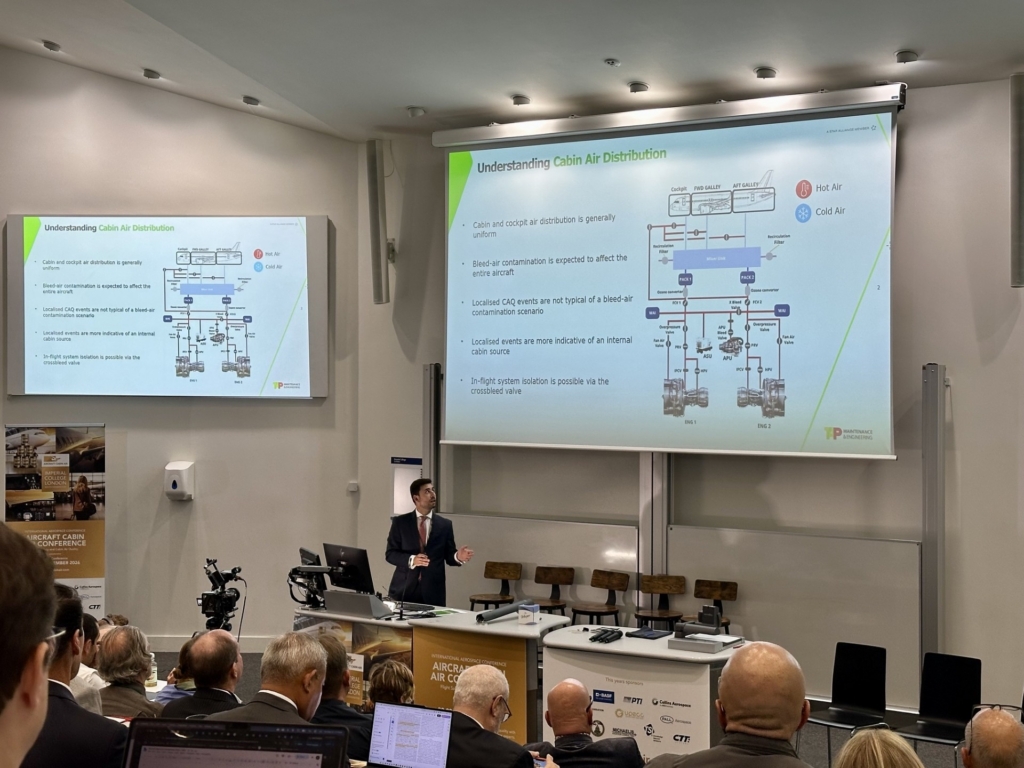
That does not necessarily mean the original report was mistaken. Contamination may be transient, while fumes can disperse and oil seals can behave differently once an engine has cooled or returned to a steady operating condition. EASA itself distinguishes between air quality under normal operating conditions and short-lived contamination events caused by potential leaks.
This makes the crew’s initial account critical.
“The report should be completed by the crew after an event and should be as accurate and precise as possible,” Serra said. “When we troubleshoot the aircraft, we need to know what we are looking for.”
TAP uses the reported location, smell, phase of flight and aircraft configuration to identify the most likely source. Engineers may inspect engines, the APU, air-conditioning packs, electrical systems and cabin equipment, using ultraviolet lighting and borescopes to search for traces of oil.
Corrective work can include replacing seals or components, washing compressors and cleaning contaminated equipment. Once the suspected source has been addressed, TAP can flush the bleed-air ducts and subject the environmental-control system to escalating levels of decontamination.
The most intensive process requires parts of the system to be dismantled and inspected.
How TAP responds to cabin air events
TAP has also introduced preventive measures intended to find leaks before they produce an event.
APU compartments on its A320-family aircraft are inspected every seven to 10 days and cleaned every 1,000 flight hours. On the A330, the airline monitors bleed-system parameters for signs of deterioration and has modified pack-control and oil-distribution components.
TAP has also introduced an operational recommendation to wait three minutes after starting the APU before selecting the relevant air supply, giving seals time to warm and expand.
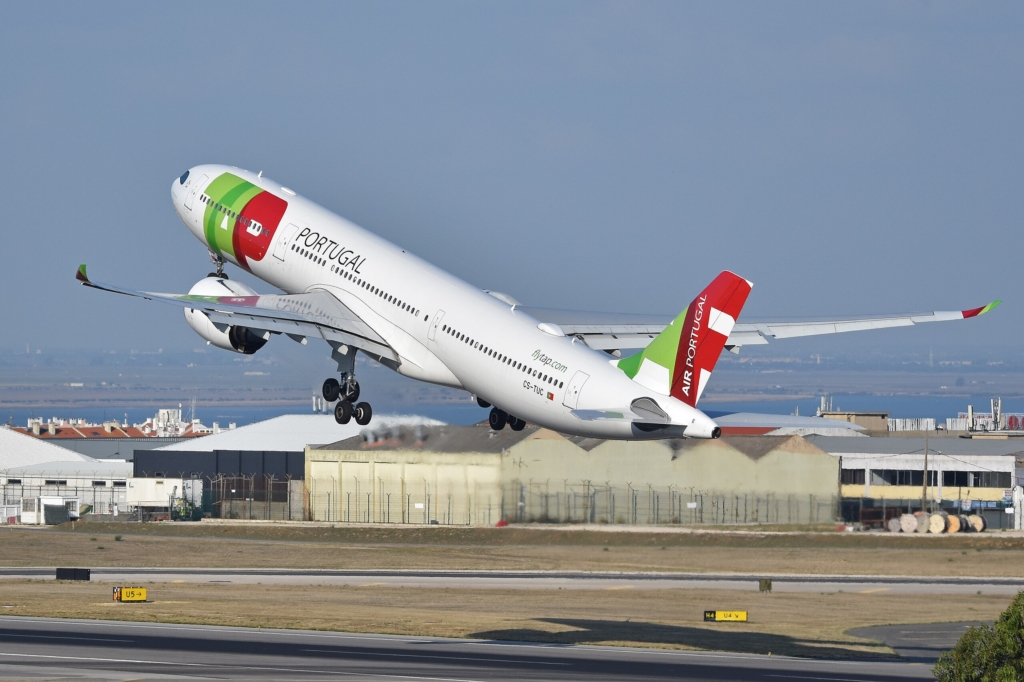
For some A330 conditions, crews can take off with the engine bleed-air supplies switched off and use the APU as the temporary source of air instead. Serra said such procedures were designed to isolate a suspected source while longer-term engineering work continued.
The airline is also fitting modified APU ducting intended to reduce the risk of contaminants being ingested. Four aircraft have so far received upgraded catalytic converters intended to break down odour-producing compounds.
TAP plans in-flight cabin air monitoring
The limits of post-flight investigation strengthen the case for collecting evidence while an event is happening.
TAP has already carried a portable air analyser on 87 flights, with no contamination detected in the air. Three detections were recorded during ground troubleshooting, although the aircraft doors were open, meaning exhaust gases or other external airport sources may have contributed.
The airline is awaiting approval to operate the analyser in the cabin or cockpit and expects that approval by the end of 2026. It is also assessing whether sets of sensors could be installed aboard several aircraft to gather a larger body of operational data.
The findings so far should not be interpreted as proof that reported fume events are unfounded. The monitoring flights did not necessarily coincide with a reported event, while TAP’s own maintenance figures demonstrate how difficult intermittent contamination can be to reproduce.
Real-time monitoring could establish when contamination began, how long it lasted and whether it corresponded with an engine start, power change, APU operation or other phase of flight.

The UK APPG has heard calls for real-time cabin air monitoring to become mandatory on commercial aircraft using bleed air.
Captain Marcus Diamond of the Australian Federation of Air Pilots told MPs that portable equipment was already demonstrating what could be achieved.
“We should mandate real cabin air monitoring on all bleed-air commercial aircraft,” he said. “It is possible because we’re actually doing it now.”
TAP’s programme provides a live European test of that proposition. Portugal may have succeeded in encouraging workers to report, but without measurements taken at the moment of an event, many investigations still end without an answer.
Less hazardous aircraft engine oils remain years away
Sensors could help identify contamination, but TAP is also examining how to reduce the potential hazard at source.
The airline is pressing engine, APU and lubricant manufacturers to review oils approved for aviation use, including formulations without the organophosphate additives of concern in conventional turbine oils.
Serra said TAP would be ready to introduce a suitable alternative once it had received the necessary approvals.
“From TAP’s perspective, we are ready to implement it once it is certified,” he said. “We are not waiting on this side.”
He estimated that approval could nevertheless remain around five years away. Serra stressed that this was TAP’s assessment based on previous certification programmes, rather than a firm timetable supplied by an engine or oil manufacturer.
Air France has also backed the development of alternatives. The airline has said it “fully supports” the launch of NYCO’s TURBONYCOIL 940 SE and looks forward to it becoming a usable option for its propulsion systems. NYCO says the formulation uses non-hazardous anti-wear and antioxidant substances, but it has yet to secure the engine approvals required for widespread commercial use.
Portugal’s work shows how much can already be done within the existing aviation system. Workers can be encouraged to report, regulators can look for patterns and airlines can tighten inspections, alter procedures and install monitoring equipment.
Yet it also exposes where that system continues to fail. Reports remain subjective, medical and engineering evidence are disconnected, most TAP investigations find no lasting fault and potentially less hazardous oils face years of certification work.
The willingness to act appears to be running ahead of the tools the industry is currently permitted to use.
Sign up for our newsletter and get our latest content in your inbox.


More from


October 13, 202612 min read