How long does it take Airbus to build an A320neo?

4 min read
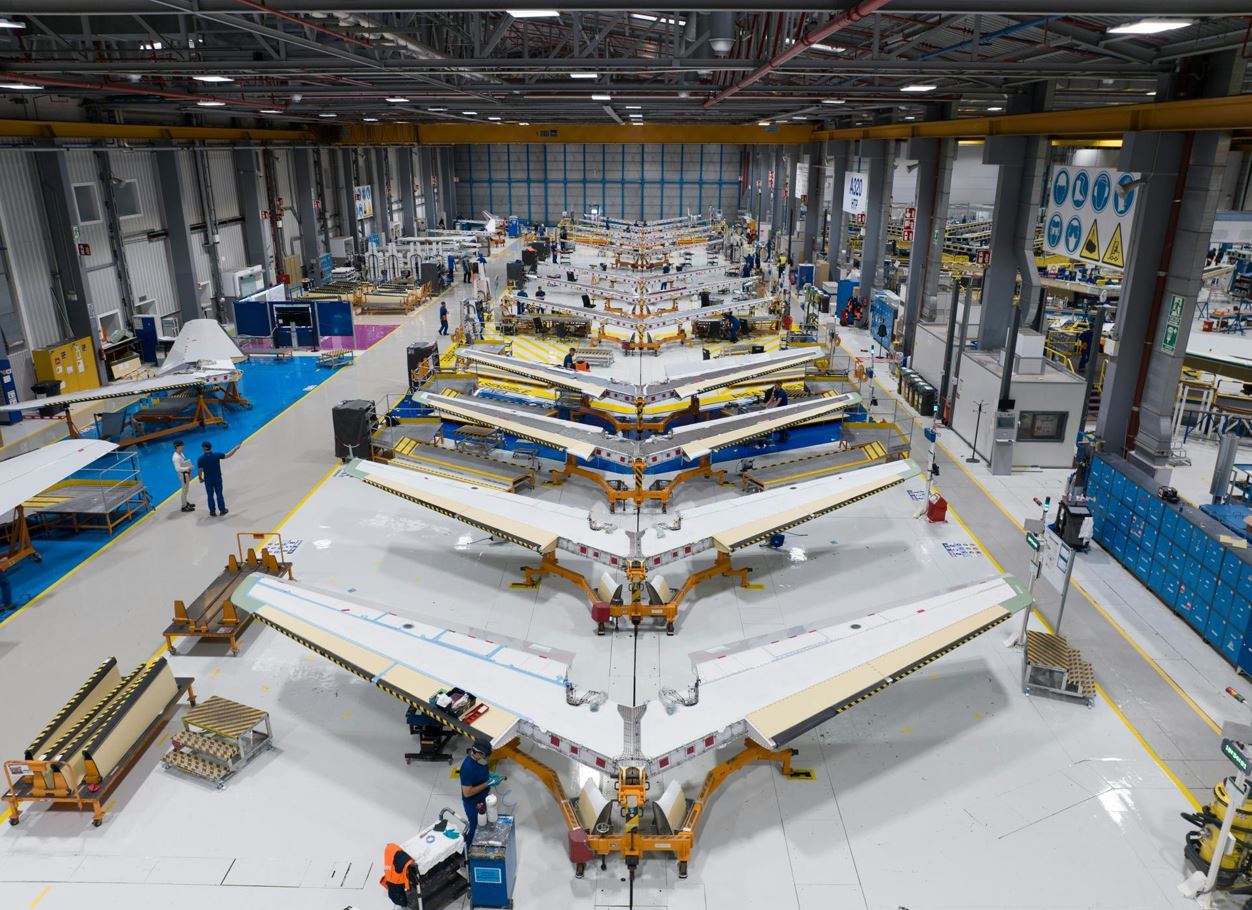
The Airbus A320 family is the best-selling commercial airliner ever built, and airlines are still ordering them in huge numbers. By July 2026, Airbus had delivered 12,798, with another 20,378 on order.
That huge backlog means an airline ordering today could wait more than three years before its aircraft enters production. Airbus is also aiming to build 75 A320 family aircraft a month by 2027, compared with 55 delivered in July alone.
So, how long does it actually take to build an Airbus A320neo? The answer isn’t as straightforward as you might think.

How many Airbus A320neos are being built at the moment?
Airbus currently delivers more than 50 A320 family aircraft every month, with the company aiming to increase that to 75.
But the monthly delivery figure can be misleading. An A320neo is not built from scratch in a single factory. By the time an aircraft reaches final assembly, most of its major components have already been manufactured elsewhere. That is what makes Airbus’ production system so interesting.
Where is the A320neo built?
The A320 family is assembled at several Airbus facilities around the world.
In Toulouse, France, Airbus has two final assembly lines for its single-aisle aircraft. At Finkenwerder in Hamburg, Germany, there are four single-aisle final assembly lines, producing aircraft including the A321neo and A319neo.
There is also an A320 family final assembly line in Tianjin, China, mainly serving airlines in Asia. For North American customers, Airbus has a final assembly line in Mobile, Alabama, which also produces the A220.

So, while you may see an A320neo being assembled in Hamburg, Toulouse, Tianjin or Mobile, the aircraft has actually already had a very international journey.
Which countries make the A320neo’s main parts?
The major sections of an A320 family aircraft are produced across four European countries altogether.
France produces the forward fuselage, cockpit and centre wing box and Germany builds the centre and rear fuselage, vertical tail, flaps and cargo doors. The wings are made in the UK, while Spain produces the horizontal tail and wing/body fairings.
Airbus uses its distinctive BelugaXL transport aircraft to move many of these large components around Europe. The Airbus BelugaST was retired in early 2026.

Other parts come from suppliers around the world, including engines, landing gear, avionics and cabin equipment. But this is also where things can get complicated, as problems anywhere in the supply chain can hold up an aircraft. Engine availability, for example, has been one of the challenges affecting the A320neo production ramp-up.
How long does it take to assemble an A320neo?
Once the major components arrive at the final assembly line, the actual build is surprisingly quick.
A typical A320 family aircraft can take around three weeks to move through final assembly and testing, although the exact time varies depending on the aircraft configuration, airline requirements and testing process.
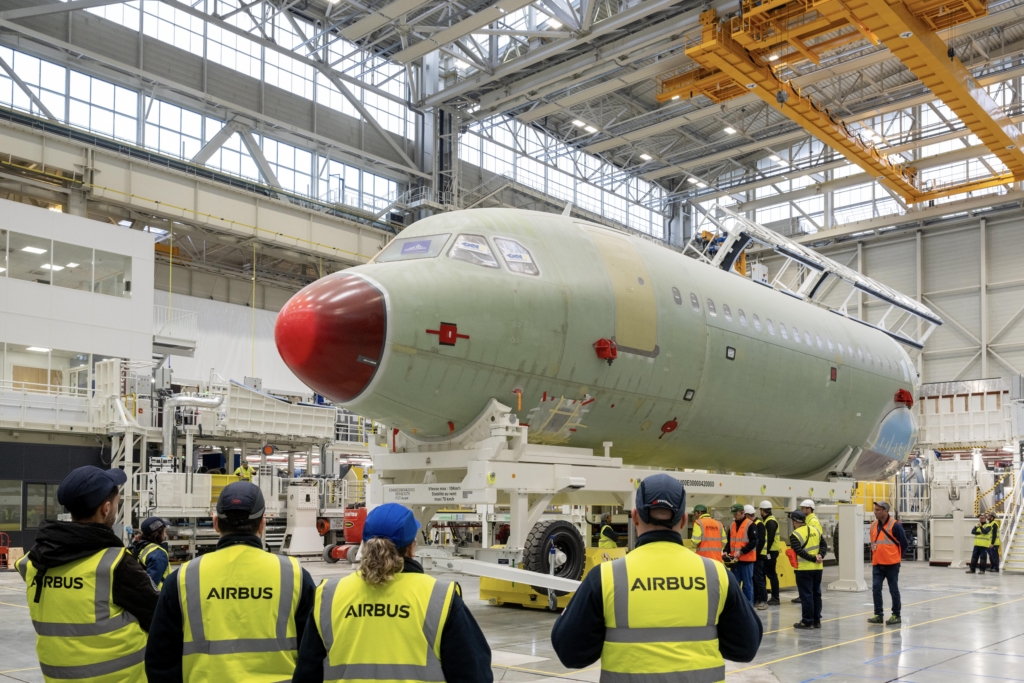
The first couple of days involve putting the major structures together. Fuselage sections, the centre wing box and wings are joined using precision jigs, with automated drilling and riveting used during the process.
What happens during final assembly?
Between roughly days two and seven, engineers install and connect the aircraft’s major systems.
That includes electrical, hydraulic and pneumatic systems, along with avionics, fuel systems and air-conditioning and environmental-control systems.
Mechanical equipment is fitted at the same time. Landing gear, engines and flight-control systems are added, followed by electrical power-up and system checks.
While this is all going on, work is taking place inside the cabin. Teams install insulation, overhead bins, seats, galleys, toilets and passenger entertainment equipment, although the exact layout depends on the airline.

How is an A320neo tested before delivery?
The final stage is about making sure everything works as it should.
The aircraft is painted before undergoing ground tests, including pressurisation, taxi, engine runs and detailed systems checks. It then takes to the sky, where Airbus test pilots check its performance and systems. Any problems must be fixed before delivery.
Finally, the airline’s pilots and Airbus representatives carry out an acceptance flight, while the airline’s quality team checks the cabin and equipment.
Only then is the A320neo ready to enter service.
From thousands of parts to a finished airliner
The short answer is roughly three weeks for final assembly and testing, but that is only the final part of the story.
An A320neo’s journey starts months earlier, with components made across several countries before being brought together at a final assembly line.
The impressive part is not just how quickly Airbus can assemble an aircraft, but how thousands of people, parts and systems are coordinated across continents.
And with Airbus’ ambitious production targets, that challenge is only going to get bigger.