


Exclusive: Cyprus Airways says premium economy introduction “very probable”

4 min read
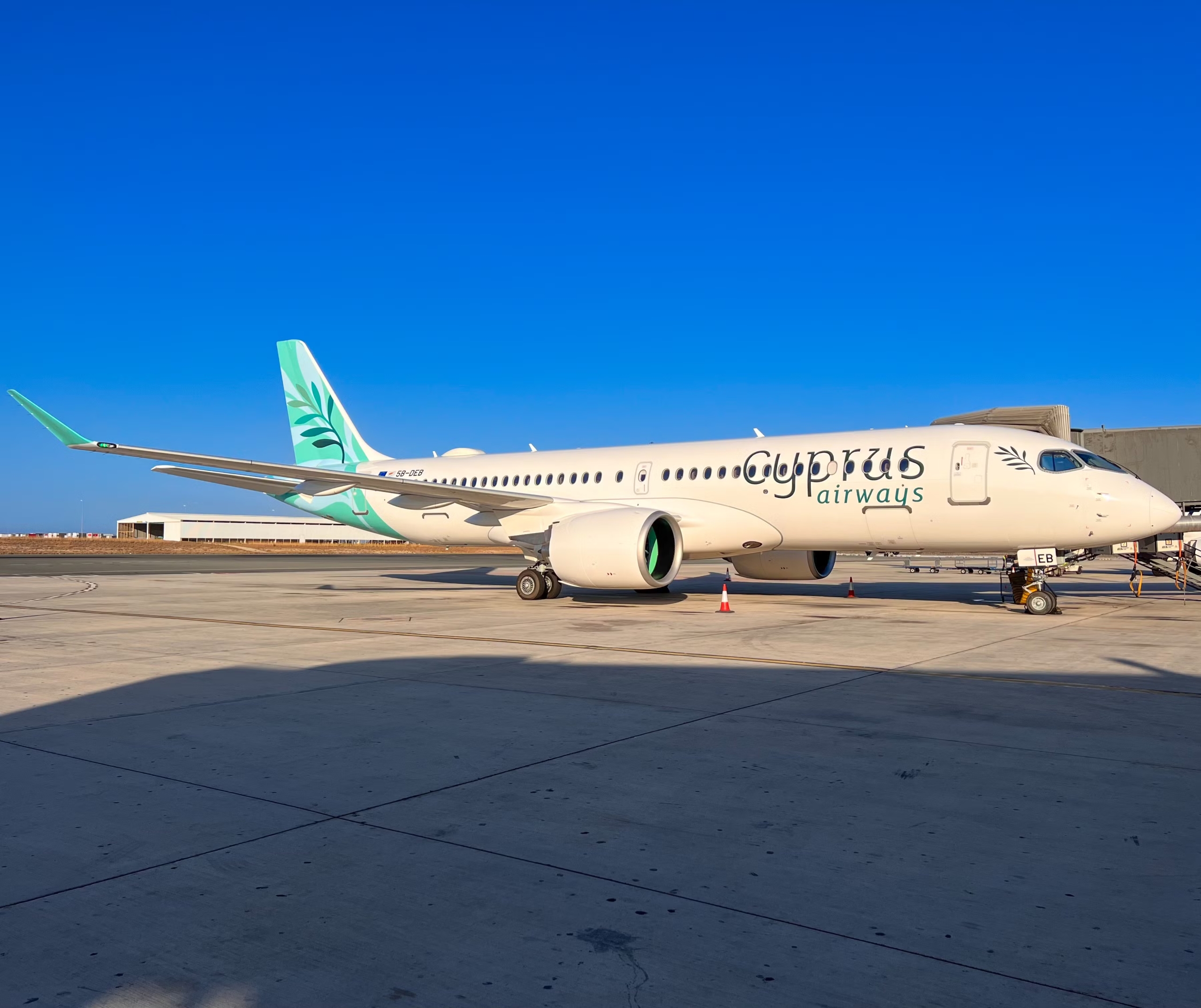
Larnaca-based Cyprus Airways has been expanding rapidly over the last few years. Most recently, it announced plans to launch a daily service to London Stansted Airport beginning in April 2027.
It will join Athens as one of the airline’s most competitive routes with five other carriers flying to the Mediterranean city from various London gateways.
In order to differentiate itself, the carrier is relying on its service culture, hospitality and unique product. In an interview with Aerospace Global News, Cyprus Airways CEO Thanos Pascalis highlighted the company’s focus on premium leisure customers – much unlike its low-cost peers.
Building on this strategy, he exclusively revealed that the airline is evaluating a premium economy cabin and hopes to take a decision shortly. It currently offers business and economy class.
Premium economy introduction is “very probable”
As part of its differentiation strategy and focus on premium leisure customers, Cyprus Airways hopes to introduce a premium economy class.
When asked, Pascalis says: “It’s something we’re actively looking at.”
He added that a final decision has not yet been taken but intends to do so “in the next couple of weeks.”
“We’re reviewing offerings, pricing and cabin status, and we’ll take it from there. So it’s a couple of weeks’ wait until we can give a lot more information, if we do go ahead – but it’s a very probable scenario.”
Premium economy may also become key to its London route as it differentiates itself from the many competitors in the market. “We are planning to make sure we have different sets of offerings, and there is a probable scenario that we will also have a premium economy section or a similar product,” Pascalis says.
Facing the challenge of summer seasonality
One of the key challenges Cyprus Airways has to face is seasonality. Like many Mediterranean destinations, the company faces heavily concentrated summer demand.
“Cramming all the tourists into two, three or four months is obviously not sustainable. Even if you speak to the hotel industry, they will say exactly the same thing. We need to extend the season,” he said.
Nurturing Cyprus into a year-round destination is a slow process, Pascalis concedes. Aside from some charter operations that help cushion lower demand, it hopes its route expansion helps drive interest in Cyprus. He points to Athens as a good example, which has been able to partially smooth out demand peaks and troughs as interest in travel expands beyond the summer months.
It will continue to increase its share of transit passengers, leveraging both online connections into its own network via Larnaca, but also through partner airlines. Pascalis describes this as “imperative” to ease seasonal demand fluctuations.
Pascalis says less than 1% of its passengers currently transit. “We’re trying to increase it two-, three- or fourfold, to get to something that gives us some real connectivity between our different destinations.”
It recently launched its own flights to Munich and Rome. The CEO highlights that both these and London are year-round routes which helps in increasing its transit share.
Cyprus Airways also hopes to build on its cooperation with Air France to funnel additional passengers to/from North America for instance, as well as its partnership with flydubai.
Engine issues, rising jet fuel prices and future growth
Cyprus Airways has been faced with several operational and commercial challenges over the last few years. Supply chain and reliability issues surrounding Pratt & Whitney’s PW1500G geared turbofan engines have historically constrained the airline’s A220 fleet. “The tunnel was long,” Pascalis reflects.
The carrier has four Airbus A220-300s in service, two of which are configured with 12 seats in business class and 115 in economy. The remainder are in an all-economy layout with 140 seats.
“We’ve now passed our first year, this summer, where we had all aircraft flying. We aim to continue in exactly the same way for 2027, but there is a bit of work and planning to be done, and a few engine changes to be made well beforehand, to ensure that occurs.”
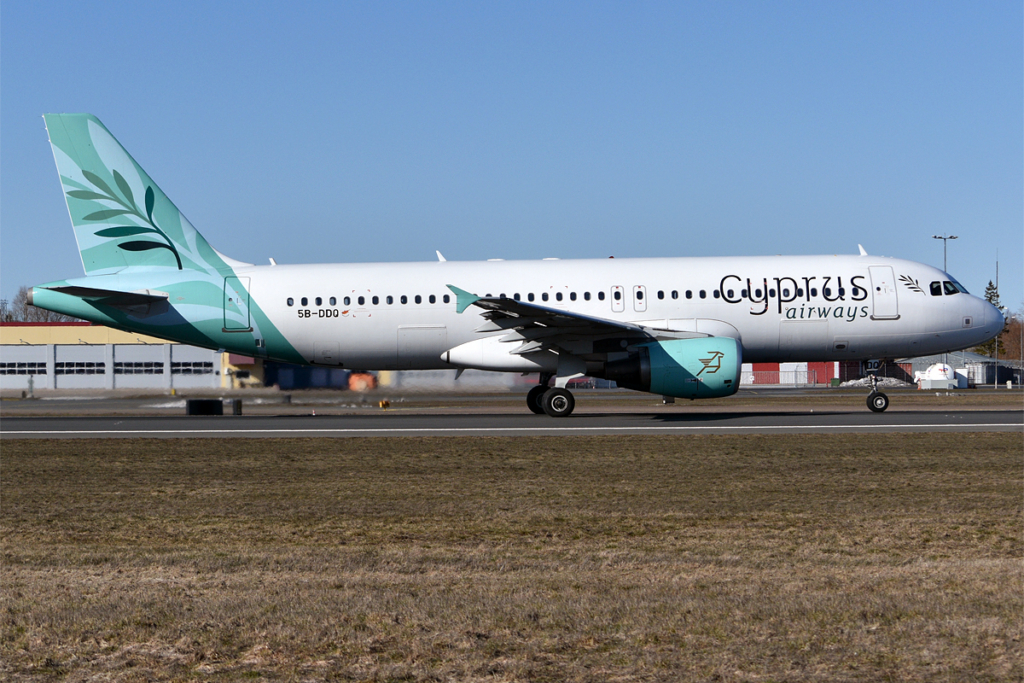
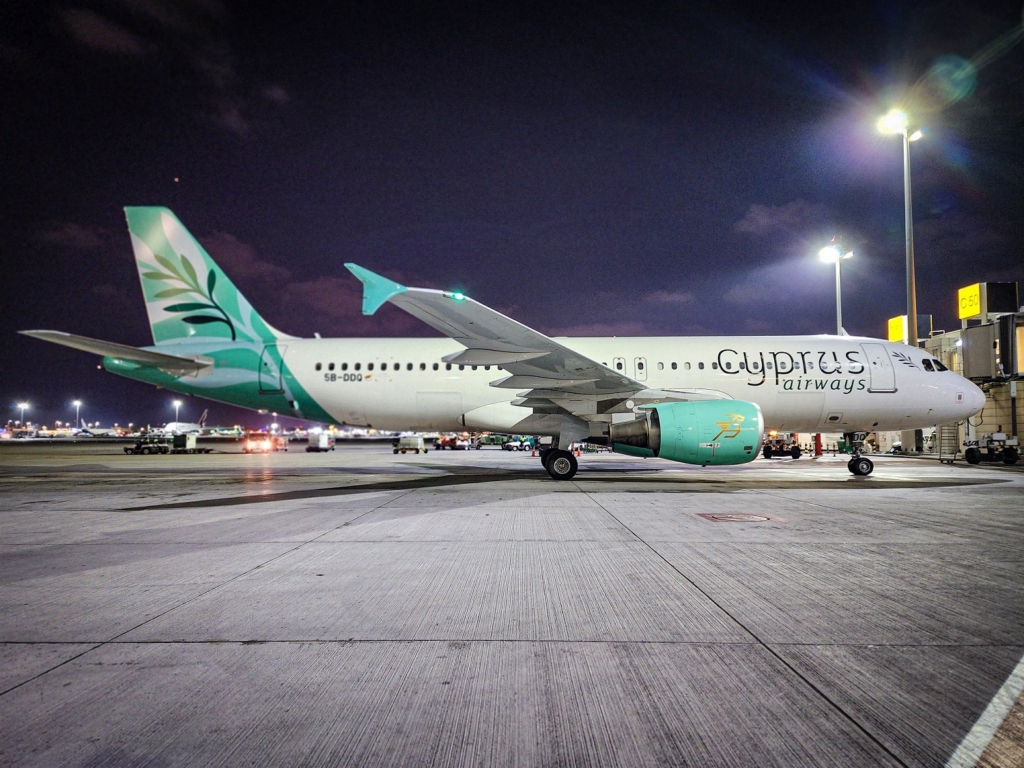
The airline also operates two leased Airbus A320-200s and will take delivery of two former Spirit Airlines Airbus A320neos. The delivery for both is expected in March, one of which is to facilitate its London route.
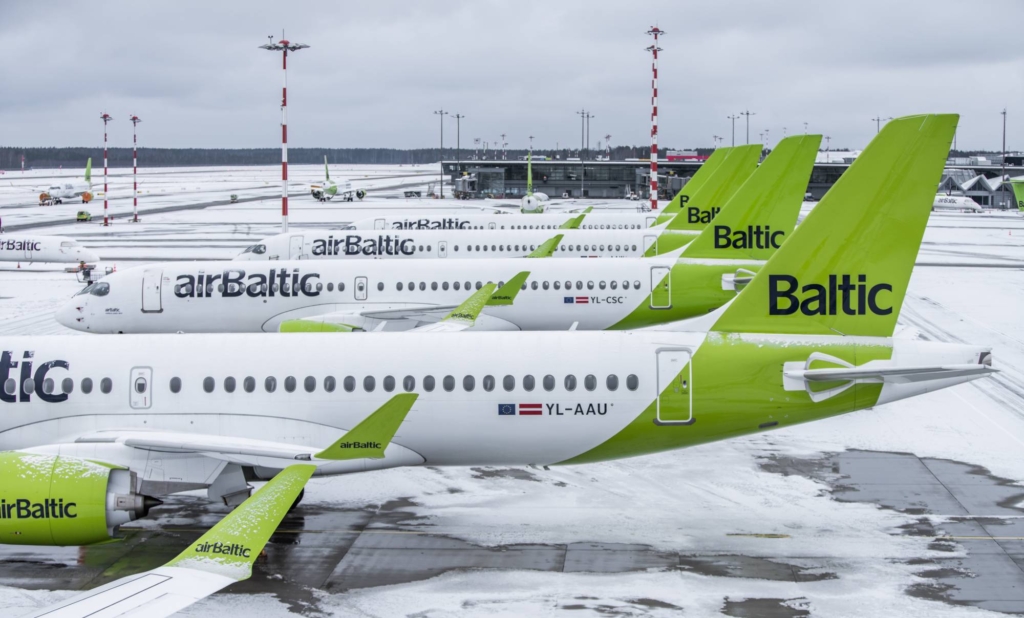
One of the world’s largest A220 operators is airBaltic which recently applied for Chapter 11 bankruptcy protection in the United States. It hopes to downsize its fleet, freeing additional A220 capacity into the market.
When asked if Cyprus Airways was interested, the CEO said: “We have not yet taken a decision on where we’re going to go for any additional lift we’re looking at for 2028, so anything is open. We could go for additional A320s or A220s.”
He pointed to the current fuel crisis as a constraint to its future growth. “So in order to take decisions on further expansion, we also need to see the fuel price subsiding, and some stability in the geopolitics of the region.”


