


65 years since the first flight of the Chinook: Why has nothing replaced it?

7 min read
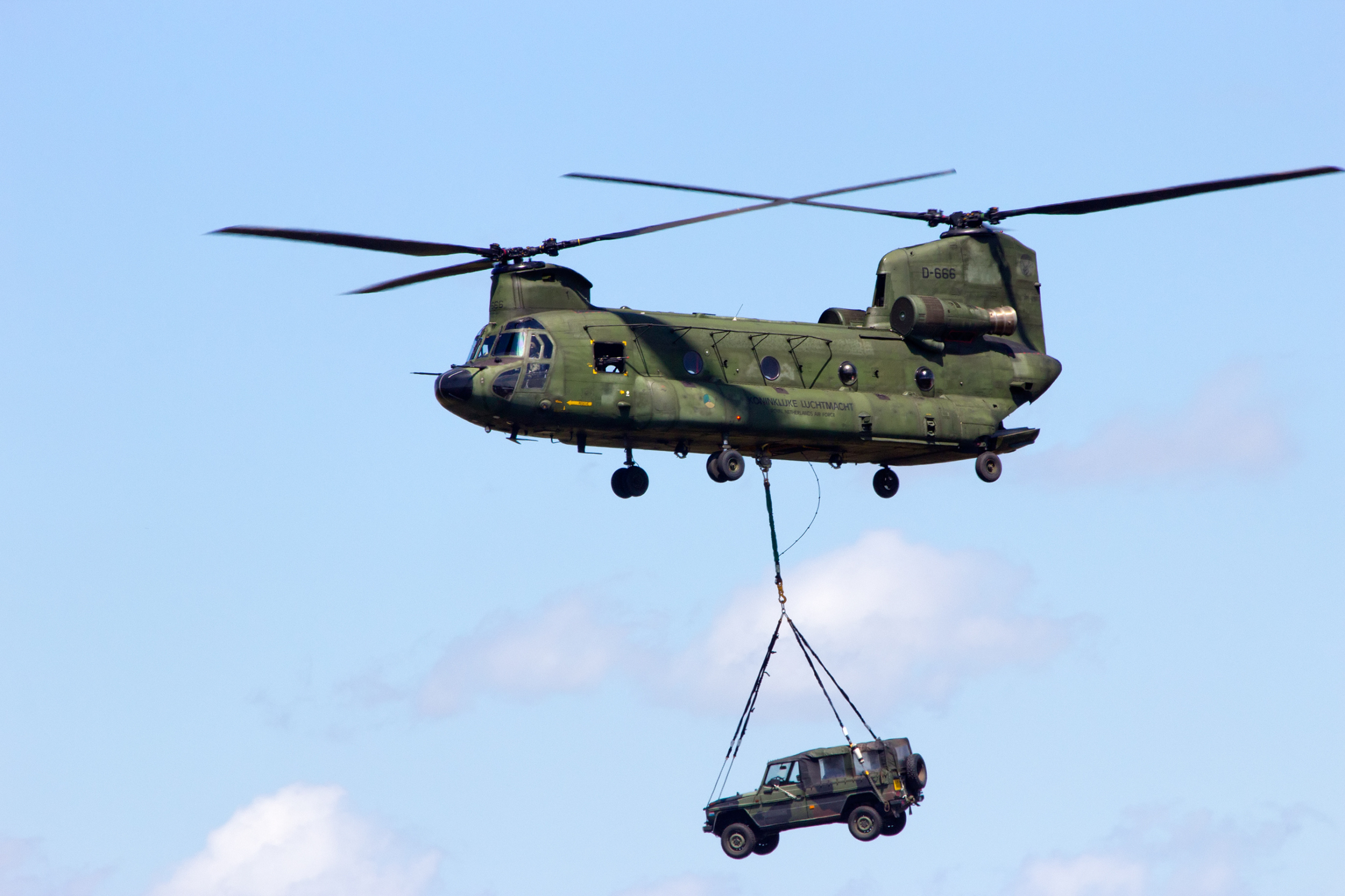
On 21 September 1961, a new helicopter lifted into the air in Philadelphia, Pennsylvania, for the first time. Designated the YCH-1B, it was the prototype of an aircraft that would eventually become the Boeing CH-47 Chinook.
Sixty-five years later, the Chinook remains in production, remains in frontline service, and remains difficult to replace.
That is an extraordinary achievement for any aircraft, let alone a helicopter whose basic configuration dates from the late 1950s. The reason is surprisingly simple – the Chinook solved a particular problem exceptionally well.
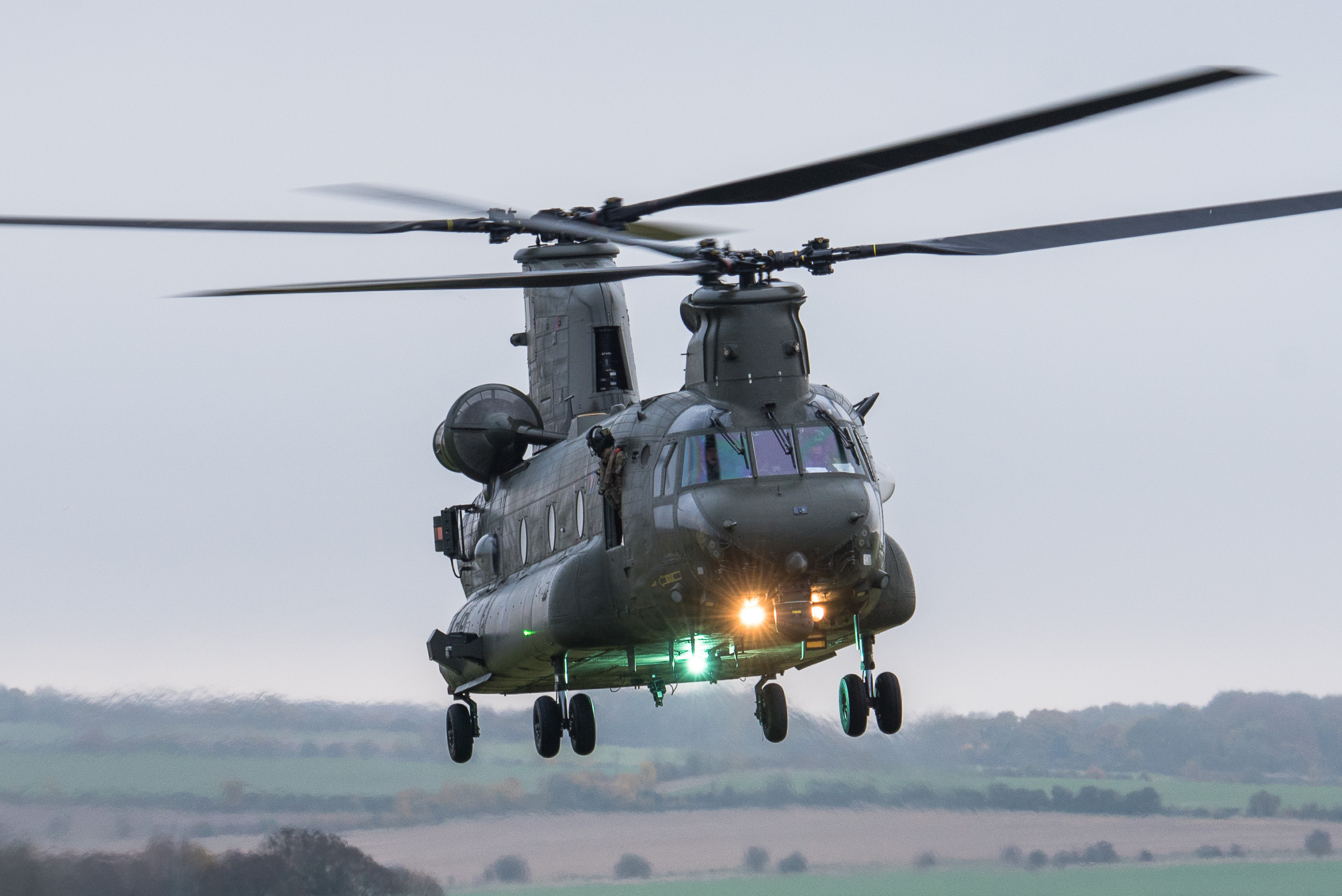
It created a helicopter capable of carrying large numbers of troops, heavy equipment and outsized loads while retaining the flexibility to operate from relatively confined and austere locations.
Despite enormous advances in aviation technology since 1961, no successor has yet offered a sufficiently compelling combination of lifting capacity, range, speed, versatility, maturity and affordability to make replacing it worthwhile.
A radical design that has proved remarkably durable
The Chinook (with its nickname ‘Wokka Wokka’, which emulates the sound it makes in flight) originated with Vertol Aircraft Corporation, which had extensive experience with tandem-rotor helicopters.
The company developed the Model 114 for the US Army’s requirement for a new heavy transport helicopter. Boeing acquired Vertol in 1960, shortly before the new aircraft made its first flight.
The design was distinctive. Instead of one main rotor and a tail rotor, the Chinook has two large rotors, mounted at the front and rear of the fuselage and rotating in opposite directions.
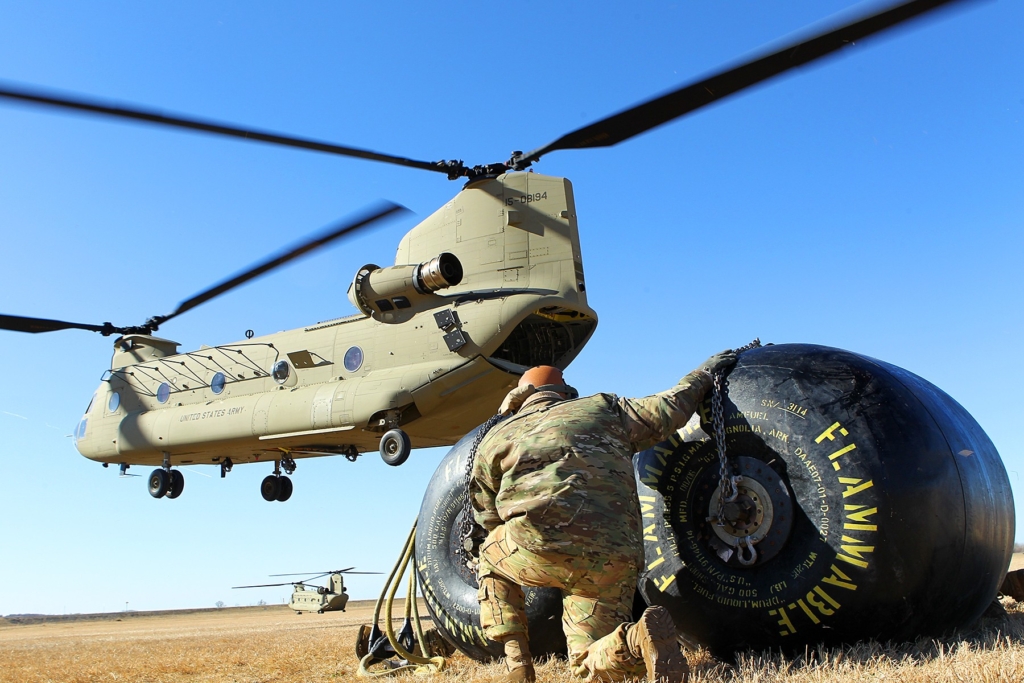
The arrangement had several advantages. The two rotors cancel each other’s torque, eliminating the need for a tail rotor and allowing engine power to be concentrated on lifting and propelling the aircraft.
More importantly, the tandem arrangement provides a large lifting area over a long fuselage, allowing the Chinook to carry substantial loads without requiring an enormous single rotor.
The aircraft was designed around its cargo mission. A rear loading ramp provided straightforward access to the cabin, while external cargo hooks allowed heavy equipment to be carried underneath the aircraft.
The Chinook could therefore function as a troop transport, cargo aircraft and aerial crane, sometimes on the same mission. The first production CH-47A entered US Army service in August 1962.
Why has the Chinook lasted so long?
The first reason for the type’s longevity is its versatility. The Chinook is not simply a large helicopter. It is a platform capable of performing a remarkable variety of tasks.
The Royal Air Force (RAF), for example, uses its Chinooks for troop transport, resupply and casualty evacuation, while their heavy-lift capability can also be used during emergencies and disaster response. The RAF states that its aircraft can carry up to 55 troops or 10 tonnes of cargo.
Its external-load capability is particularly important. A Chinook can move vehicles, artillery, engineering equipment and other loads that would be difficult or impossible for smaller helicopters to carry internally. That ability remains valuable even as militaries introduce faster aircraft, drones and other new technologies.

The second reason is evolution rather than replacement. The Chinook of 1961 bears a strong visual resemblance to today’s aircraft, but the modern CH-47F is a very different machine internally.
Over six decades, the design has received more powerful engines, improved transmissions, modern avionics, better flight controls, structural improvements and increasingly sophisticated defensive and mission systems.
The US Army is now moving from the CH-47F Block I to the CH-47F Block II, rather than developing an entirely new heavy-lift helicopter. Block II increases lift capability and introduces improvements to the drivetrain, engine control, and flight controls. The Army delivered its final Block I aircraft in April 2026 and has begun shifting production towards Block II.
In other words, the Chinook has survived because, rather than standing still, it has evolved and continually been updated since its first flight, and nothing has been designed that can perform the same missions as the Chinook any better.
Why not build something completely new?
Developing a replacement for the Chinook would be an enormous engineering undertaking. A new heavy-lift helicopter would have to provide at least comparable payload and range while improving speed, survivability, reliability, maintainability, and operating costs.
It would also need to work with existing military infrastructure, cargo-handling equipment, training systems and logistics networks. That creates a difficult proposition: how much better would a completely new aircraft have to be to justify replacing a design that already works?

There is also the question of risk. The Chinook has accumulated decades of operational experience. Engineers understand its strengths and weaknesses, maintenance staff have extensive experience with its systems, and operators know how to exploit its capabilities. A clean-sheet replacement would have to develop that ecosystem from scratch.
And unlike a fighter aircraft, where a major improvement in speed, sensors or weapons can fundamentally change its combat value, the central Chinook requirement remains relatively straightforward – to lift heavy things and put them where they need to go. Technology can improve how that is done, but the underlying requirement has not disappeared.
The issue with the Chinook is speed
Modern rotorcraft programmes have increasingly explored compound helicopters and tiltrotors, offering much greater speed than conventional helicopters.
The US Army’s Future Vertical Lift programme, for example, has pursued aircraft designed to provide greater speed and range. But those capabilities do not automatically make such aircraft replacements for the Chinook.
A high-speed aircraft can move personnel rapidly over long distances, but heavy-lift missions impose different requirements.
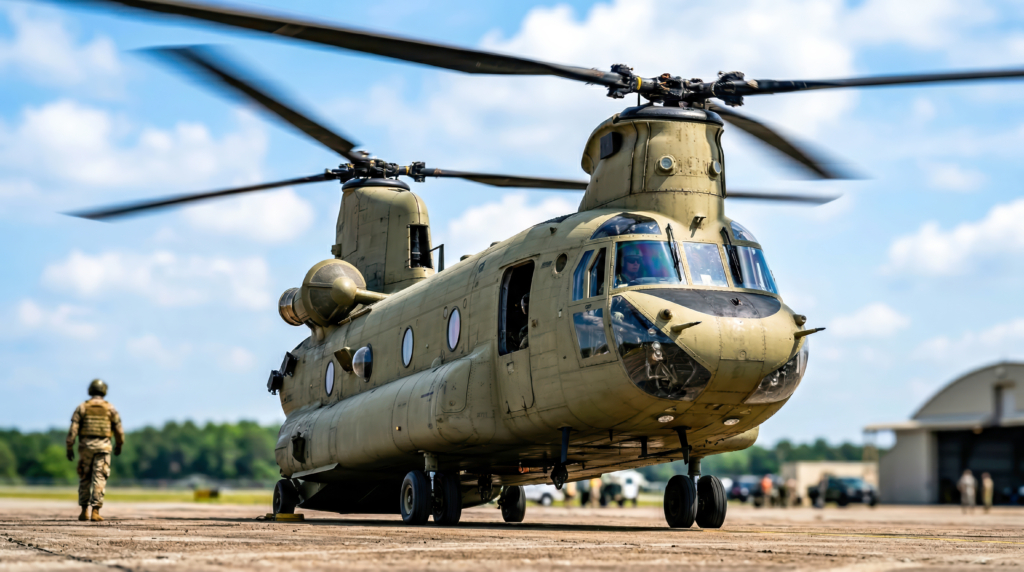
Carrying a large external load, operating from confined landing zones and providing the combination of internal and underslung cargo capacity that the Chinook offers are specialised tasks.
The US Army’s broader aviation modernisation has also changed considerably. The Army cancelled its Future Attack Reconnaissance Aircraft programme in 2024 and has been restructuring its aviation portfolio, while continuing to invest in the Future Long Range Assault Aircraft and other technologies.
The Government Accountability Office noted in 2026 that the Army’s plans for its future vertical-lift fleet were still evolving. For heavy lift specifically, however, the answer remains the Chinook.
A helicopter heading towards 2060?
Perhaps the strongest evidence that the Chinook has not yet found a successor is what its operators are actually doing. The US Army’s current plans call for the CH-47F to remain its heavy-lift helicopter into the late 2030s, with Block II providing additional capability. Boeing says the Chinook is expected to remain relevant into the 2060s.
Britain is taking a similar approach. In July 2026, the UK Ministry of Defence said its Chinook Capability Sustainment Programme would replace legacy aircraft and sustain the UK’s vertical heavy-lift capability beyond 2040.
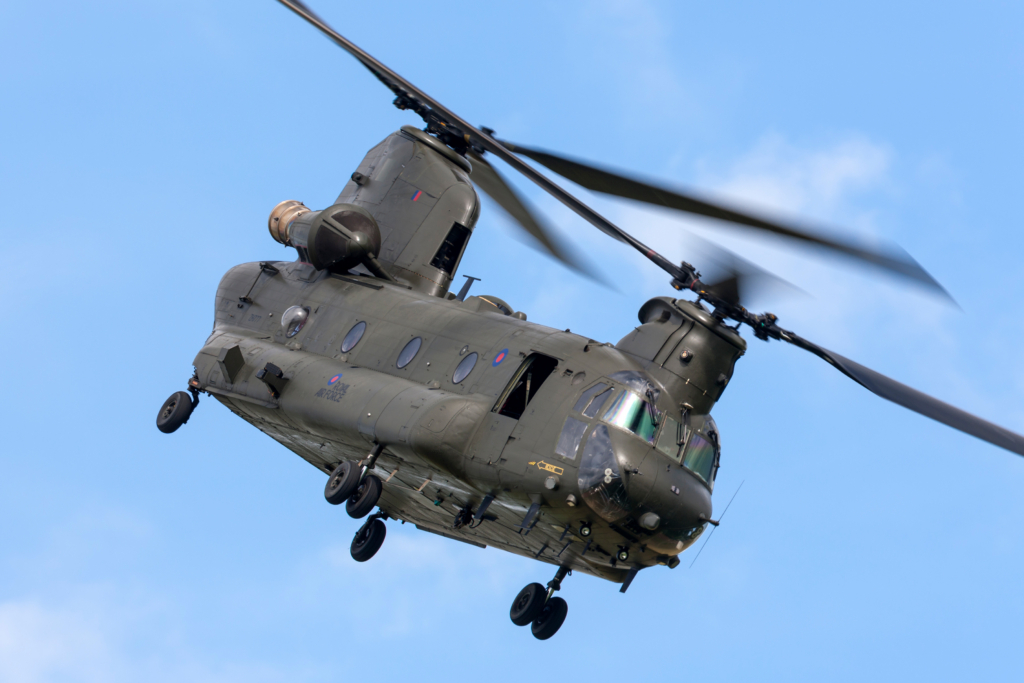
Planning assumptions envisage new Chinook deliveries beginning in the mid-2030s, with further procurement supporting the fleet to at least 2060.
That is perhaps the ultimate testament to the original design. The Chinook has not survived 65 years because engineers stopped trying to improve it.
It has survived because every generation has found that improving the existing concept makes more sense than abandoning it.
65 years of the Chinook and counting
When the YCH-1B first flew on 21 September 1961, nobody could have known that its basic configuration would still be flying 65 years later.
Yet the reasons for its longevity are visible in the original design – two powerful rotors, a spacious cargo cabin, a rear ramp, external lifting capability and the ability to combine heavy-lift performance with the flexibility of a helicopter.
Modern Chinooks are faster, more capable and vastly more sophisticated than the prototype that first left the ground in 1961. But the essential idea remains unchanged. That may explain why nothing has replaced the Chinook.
The aircraft does not need to be reinvented. It simply needs to keep evolving. Now, 65 years after that first flight, the next generation of Chinooks is already being built.
Sign up for our newsletter and get our latest content in your inbox.

More from


October 11, 20263 min read


