How close is AI to beating the best human pilots? Abu Dhabi provided the answer

4 min read

For a few breathless seconds inside an Abu Dhabi race arena, the future of autonomous flight hung on a single missed gate.
On one side was Minchan Kim, a world champion first-person-view (FPV) drone pilot, flying on instinct, muscle memory and years of competitive experience.
On the other was an artificial intelligence system, trained through thousands of simulated laps, reacting only to pixels and mathematics. The contest was tied four races apiece. One final run would decide it.
Kim, the reigning world FPV champion, crossed the line first. The autonomous drone clipped a gate and failed to recover. Human intuition, by the narrowest of margins, had prevailed.
That moment neatly captured the story of the A2RL Drone Championship, an event that was less about spectacle alone and more about measuring how far artificial intelligence has come when pushed to its limits in the real world.
A proving ground for autonomous flight
Held over 21-22 January during UMEX in Abu Dhabi, the championship brought together leading AI research teams and elite FPV pilots to compete across multiple race formats.
Organised by ASPIRE, part of the Advanced Technology Research Council, the event is designed as a public testbed where autonomous systems are exposed to extreme conditions at speed.
The stakes were not trivial. A total prize pool of $600,000 was on offer, but more importantly, teams were competing for bragging rights and data in a field where milliseconds matter and failure is brutally visible.
What is an FPV drone pilot?
An FPV (first-person view) drone is a drone that transmits live video from its onboard camera directly to the pilot.
An FPV pilot is the operator who flies a first-person view (FPV) drone. The pilot wears video goggles that receive a live, low-delay feed from the drone’s camera, allowing them to see exactly what the drone sees.
This immersive view enables precise control, quick decision-making, and agile manoeuvres, making FPV pilots essential for high-speed flying, complex aerial filming, inspections, and specialised tactical operations.
Software, not sensors, drives AI drone racing performance
One of the defining features of A2RL is what competitors are not allowed to use. No GPS. No LiDAR. No stereo cameras. No external positioning systems. Each drone flies using only a single forward-facing RGB camera and an inertial measurement unit, a sensor setup deliberately chosen to mirror the limited perception available to human pilots.
The result is a clean comparison between human and machine, with performance gains driven almost entirely by software.
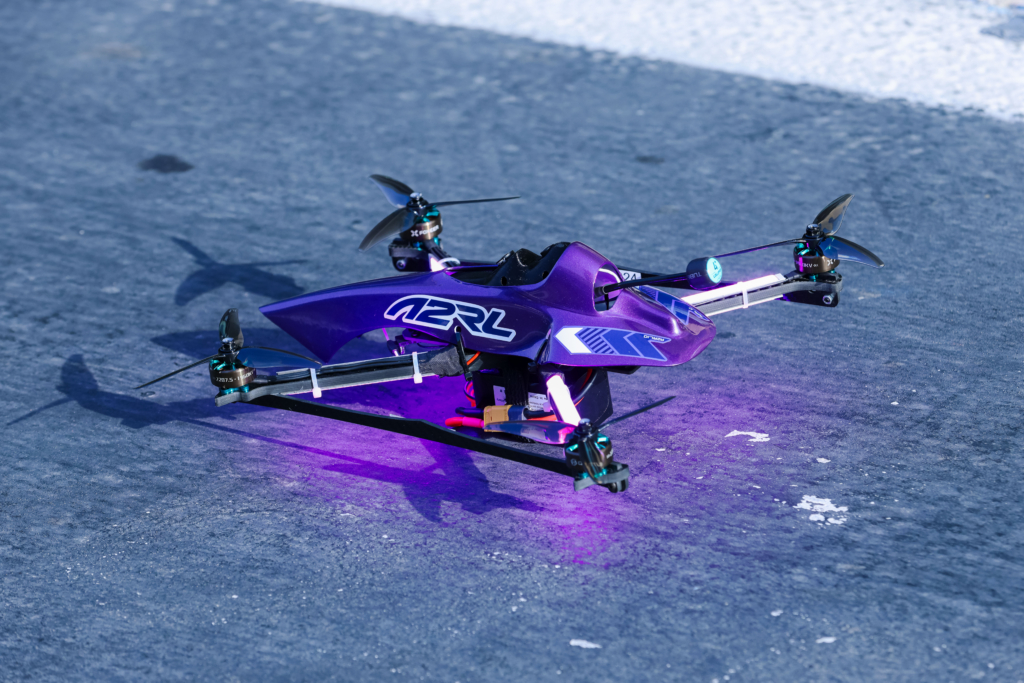
That approach paid off most clearly in the AI Speed Challenge, where TII Racing set the fastest autonomous lap of the championship. Its drone completed the course in 12.032 seconds, the quickest time recorded across all competitors.
For Giovanni Pau, technical director at TII Racing, the lap was a validation of disciplined development rather than hardware advantage.
“Achieving the fastest lap reflects the depth of our software development and testing,” he said. “Performing at this level in a pure autonomy challenge shows what disciplined, vision-led systems can deliver when pushed to their limits.”
Multi-drone racing exposes AI’s toughest challenge
If the speed race tested raw performance, the multi-drone formats explored a harder problem: how autonomous systems behave when the sky gets crowded.
In shared airspace, drones must plan trajectories, avoid collisions and react to unpredictable movements from competitors, challenges that mirror real-world scenarios such as urban logistics or emergency response.
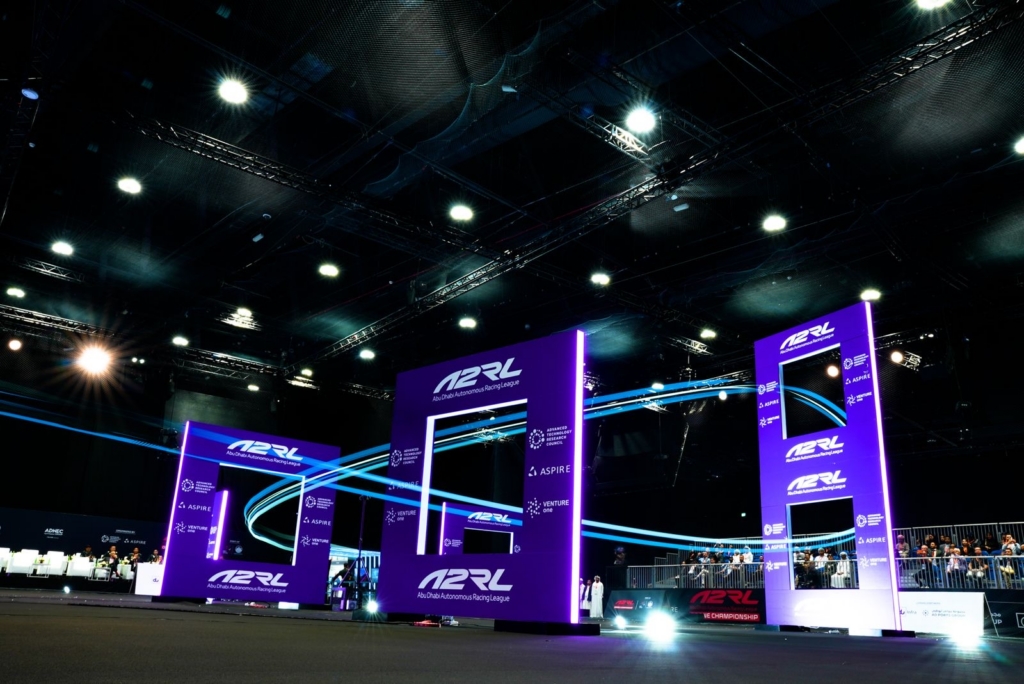
Here, MAVLAB emerged on top, winning the Multi-Drone Gold Race through consistent performance and robust multi-agent planning. FLYBY took first place in the Silver Race, underlining the growing depth of capability across the field.
These races offered a glimpse of where autonomous flight still struggles. Coordination, not speed, remains the hardest problem and one with direct implications for future air mobility.
For observers, the result was telling. Autonomous systems are no longer comfortably behind. They are competitive, fast and increasingly reliable. Yet, under sustained pressure, human adaptability still provides an edge.
The narrowing gap between human pilots and AI
According to Stephane Timpano, chief executive of ASPIRE, the most striking takeaway was how quickly that gap is closing.
“What stands out this year is the collective progress across the field,” he said. “Compared to Season 1, teams are achieving higher speeds with greater stability and consistency, driven almost entirely by software advances. That acceleration shows how quickly autonomous capability is maturing when challenged in an open, competitive environment.”
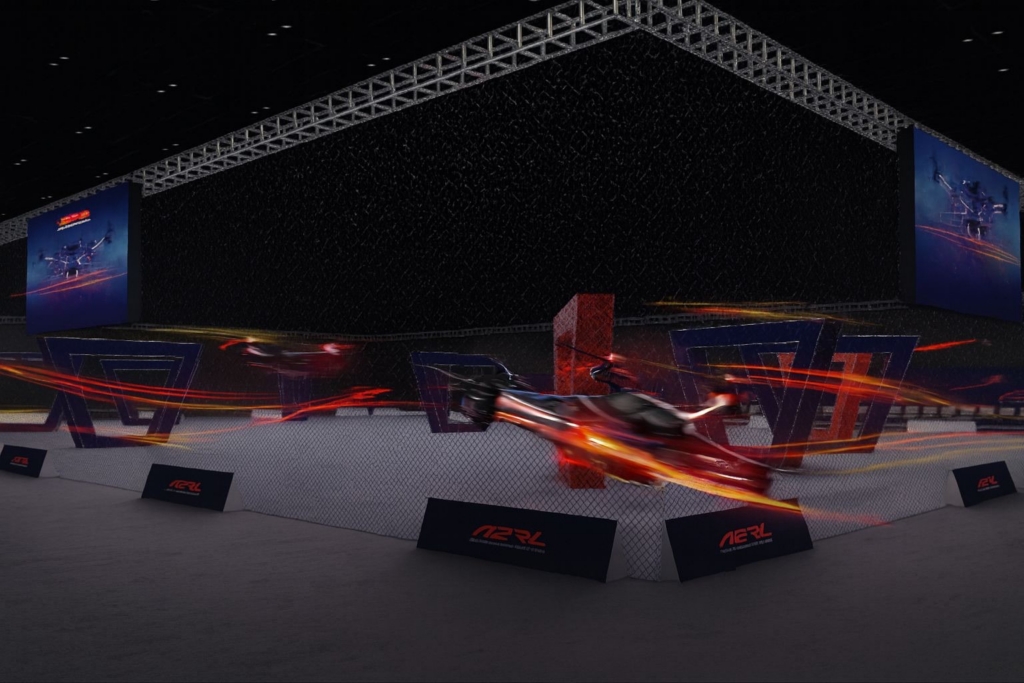
The final image of the championship was not a trophy lift, but a reminder. When the autonomous drone hit the gate in the decisive race, it revealed both how close AI has come and how unforgiving real-world conditions remain.
For now, humans still have the edge. But judging by what unfolded in Abu Dhabi, that margin is narrowing fast.
Featured image: