How Boeing is using AI for rapid parts validation

3 min read

Boeing is at the forefront of advanced technology in its manufacturing processes across locations. Whether it is processing aerospace parts or fabricating aeroplane components, the company leverages Artificial Intelligence (AI) tools to improve accuracy and efficiency.
At its plants in Renton and Everett, Washington, the US manufacturer is using a new AI-based tool to simplify the part validation process.
Developed in-house by Boeing engineers, inspectors take snapshots of parts to validate the installation of correct components on aircraft. The intelligent handheld device saves time in inspection, prevents errors, and automatically populates part information.
Aircraft Readiness Log (ARL) maintains part traceability
Aircraft parts traceability is crucial to maintain safety and regulatory compliance. Not to be confused with airworthiness, traceability refers to documentation of a part’s origin, manufacturing details, usage, and maintenance history.
The Aircraft Readiness Log (ARL) for Boeing consists of all components fitted to a specific aircraft. The component history within the ARL tracks the lifecycle of these parts, ensuring visibility, safety, and compliance.
The document also reduces the risk of unapproved or counterfeit parts from entering the manufacturing supply chain.
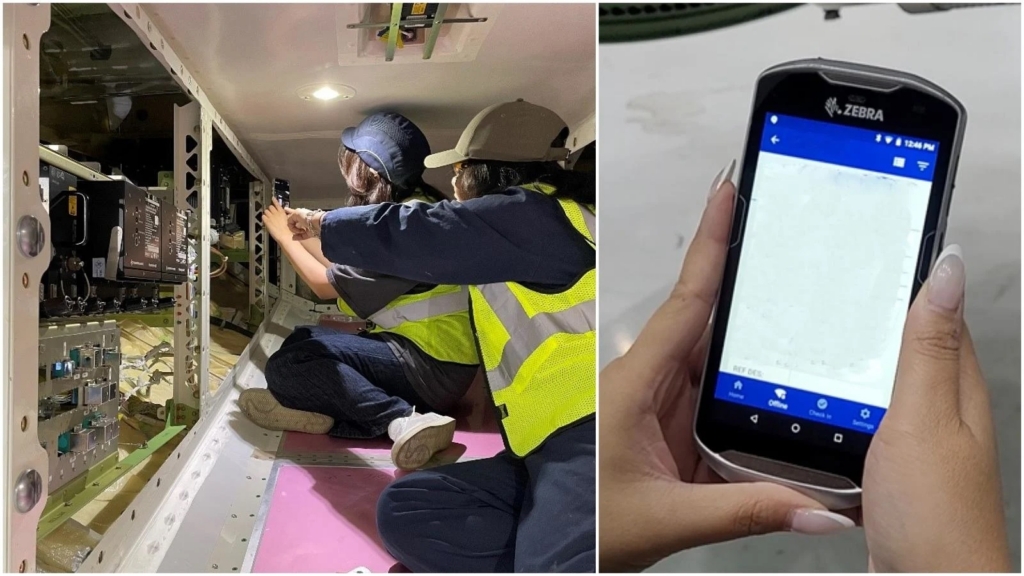
Boeing engineers have developed an efficient AI-based method to streamline the traceability of parts, which improves accuracy and work efficiency.
Engineering teams from Boeing Korea Engineering & Technology Center (BKTEC) and Boeing Artificial Intelligence (BAI) partnered with their US counterparts to design and develop the tool.
“Quality inspectors identified challenges in their current process and guided our design,” said Wanbin Song, Boeing Al team lead at BKETC. “Their insights guided us through the development journey and helped minimise disruption to existing workflows.”
Boeing’s need-based design to improve workflows
Engineers across multiple teams ensured they understood the problem at hand when designing the tool. From observing inspection methods to conducting workshops, Boeing engineers aim to reduce inspection workload while enhancing quality.
| Benefits of the new AI tool | |
|---|---|
| Reduce manual effort | Eliminate typing and tedious data entry, so inspectors can focus on more critical tasks. |
| Improve data quality | Capture serial numbers correctly at the point of entry, increasing first-pass accuracy. |
| Save time and cost | Less rework can help keep production on schedule |
| Ensures data integration | Digital data is integrated across multiple systems and processes |
The Vice President of Regulatory Compliance and Core Quality at Boeing, Hector Silva, states that “engineers spent weeks on the factory floor, meeting with Quality inspectors daily, running workshops and iterating on the tool to minimise disruption to long-standing processes.”
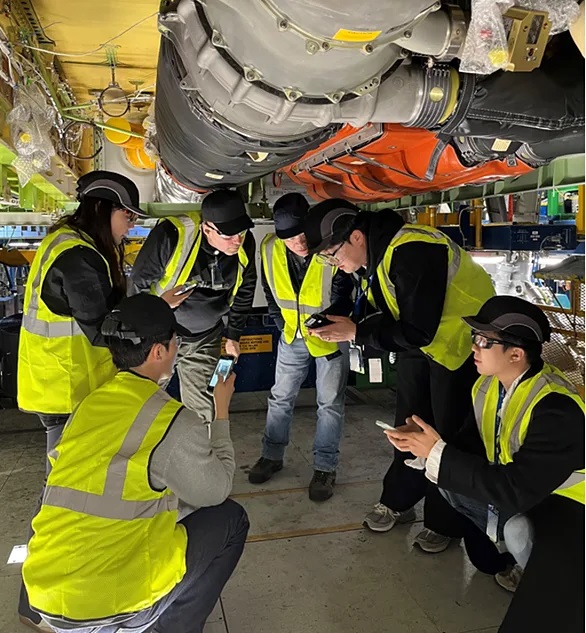
The tool utilises the Optical Character Recognition (OCR) method to recognise text and validates it against the master list, reducing errors and discrepancies. With the help of a quick scan, information on the part is transformed into digital data and automatically populated into the ARL.
While improving workflows, the new tool has reduced the number of devices inspectors must carry on the shop floor.
The tool supports more than 1,400 Boeing 737 parts
Boeing reveals that over 70% of its 737 parts were previously entered manually, requiring additional checks during the process. The new Al-based tool currently supports inspection of more than 1,400 parts, saving over 17 hours of inspection time per aircraft.
Moreover, the quality of data, including accuracy and logging, has been significantly enhanced. The Al model used on the tool is trained on over 2,250 individual part images, amounting to over 38,000 manually-logged text boxes. It continues to learn and improve itself with every part scanned and logged in the ARL.
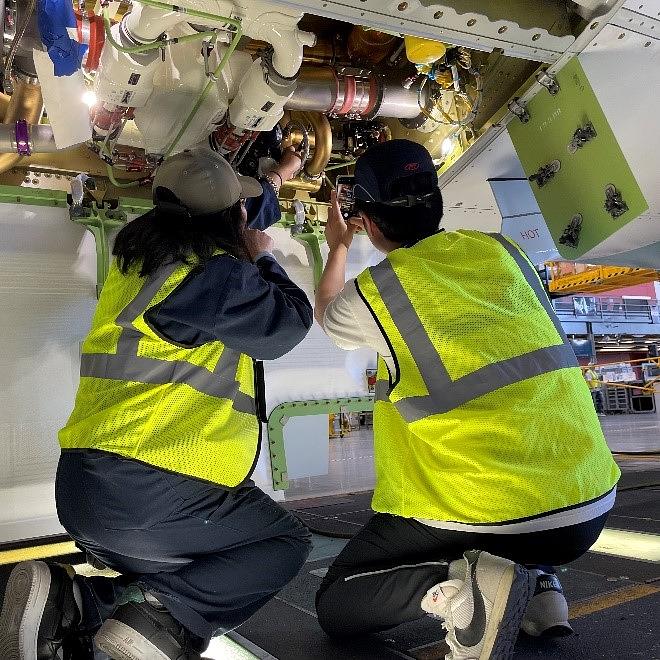
With the tool already in use at Boeing’s Renton and Everett facilities in Washington, the company now plans to launch it at the 787 line in South Carolina. Technical teams at Boeing are busy evaluating other OCR users to streamline and strengthen workflows across the production line.
Featured Image: Boeing