Not just jets: remembering the turboprop era of low-cost giant Ryanair

9 min read
Ryanair may have become a European low-cost leviathan, operating over 600 jet aircraft across Europe and North Africa and setting a benchmark to which other low-cost airlines can only aspire.
Yet it was not always like this. Launching services in 1984 using a single 15-seat turboprop aircraft, no one could have imagined what Ryanair would become in the future – operating a massive fleet of modern aircraft and becoming Europe’s largest airline by passenger numbers.
Aerospace Global News takes a look back at the early years of Ryanair when the carrier specialised in short-haul flights using a small number of turboprop aircraft. In the days before the low-cost airline model really took off in Europe, Ryanair inched along with its small fleet before changing direction to become the world’s leading low-cost carrier.
The start of something big – the early days of Ryanair
The story of Ryanair begins in the middle of 1984. The company (originally called ‘Danren Enterprises’) was founded by three Irish businessmen – Tony Ryan (the founder of Irish aircraft leasing company Guinness Peat Aviation), Christopher Ryan, and Liam Lonergan, the owner of Irish travel firm Club Air.
Tony Ryan’s two sons also took leading roles in the startup, with Cathal Ryan bringing his flying experience as a pilot, while Declan Ryan offered financial expertise gained while working as an accountant.
Given the dominance of the Ryan family within the organisation, the company soon changed its name to Ryanair – a name that would over time become synonymous with low-fare airline travel across Europe.

The early plan for the nascent airline was to tackle the issue of high airfares being charged to passengers flying across the Irish Sea between Ireland and the UK.
The incumbent airlines, Aer Lingus and British Airways, enjoyed a virtual duopoly on routes between the Irish Republic and airports in Great Britain, with almost total freedom to fix their own airfares. Ryanair wanted to address this issue by offering cheaper fares than those being charged by the legacy carriers while still offering a safe and reliable air service.
Ryanair commences passenger flights with a single Embraer Bandeirante
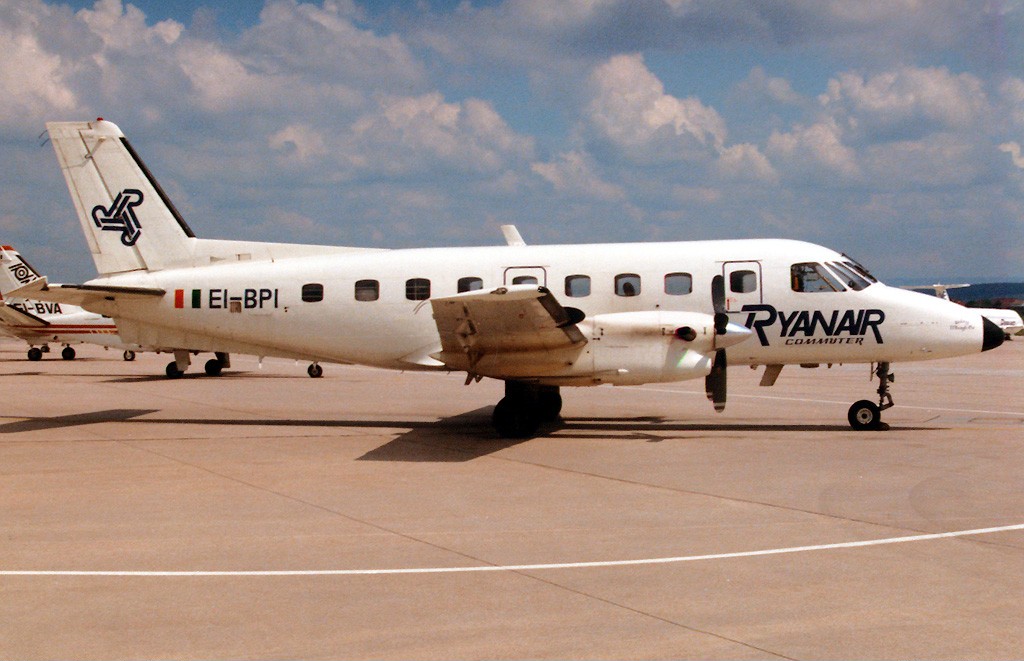
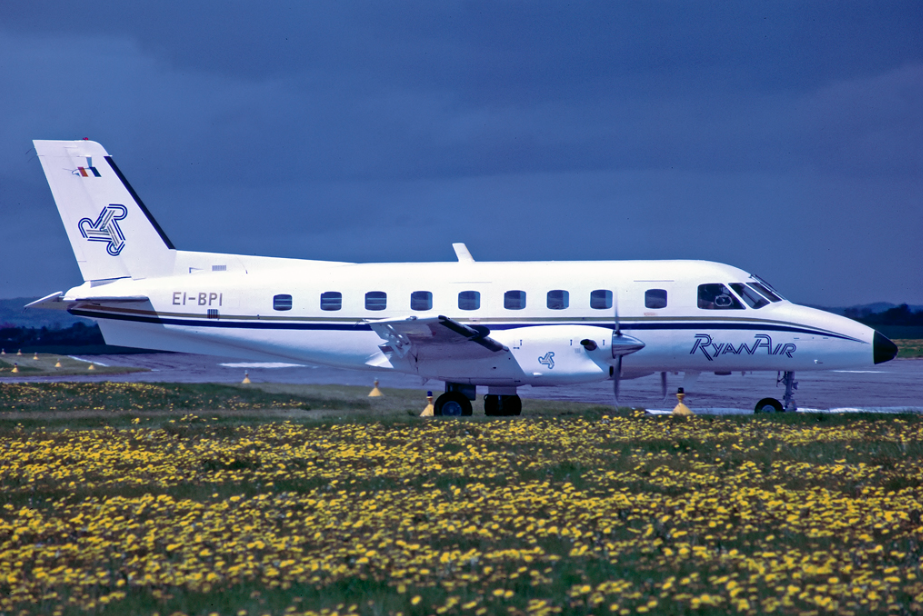
Having been legally incorporated on 28 November 1984, Ryanair’s first flight took to the skies eight months later on July 8, 1985, using a single aircraft and with just 25 employees. The airline’s first aircraft was a pre-owned Embraer EMB-110 Bandeirante, which was around five years old when it began operating for the airline.
The aircraft’s Brazilian/Portuguese name (Bandeirante) translates into English as ‘pioneer’ or ‘trailblazer,’ which seemed rather apt for the nascent carrier, although it was more commonly known as “the Bandit” to many.
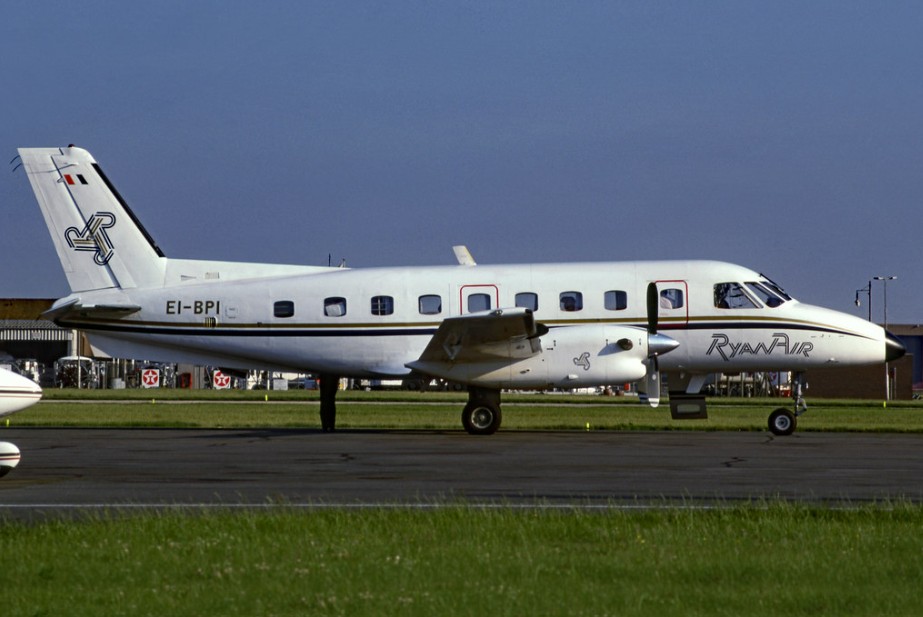
Registered as EI-BPI, the plane carried just 15 passengers and was dedicated to the airline’s only route, flying between Waterford (WAT), a regional airport in the south-east of Ireland, and London Gatwick Airport (LGW).
These early flights were operated under the brand name ‘Ryanair Commuter’ with corresponding titles being worn on the side of the aircraft.
Ryanair’s first flights were offered at a return fare of just £99 ($126), which was less than half that being charged by Aer Lingus and British Airways. Predictably, the competitors soon began to drop their own fares in response to Ryanair’s arrival, in what became one of Europe’s first airline pricing wars since deregulation.
Ryanair flew around 82,000 passengers in its first year of operations on its single route, and having quickly established that it had a viable business model, it soon looked to expand both its fleet and route network.
Wishing to expand further across the Irish Sea, Ryanair later moved its Waterford service from Gatwick to London Luton Airport (LTN) to take advantage of the wide availability of slots at that airport while also benefiting from the large Irish community located north of London and well within Luton’s catchment area.
The Bandeirante served the airline well, offering modest capacity while the airline worked on building up a bank of loyal passengers on its Waterford to London Luton route. However, the switch to London Luton Airport as its UK gateway encouraged more people to try the small Irish upstart.
Soon, the daily flights saw their frequency double to two services in each direction each day, allowing travellers a full business day in London before heading back to Ireland that night.
1985 – Ryanair’s first HS748s arrive with the carrier
Two years after starting operations, the limited capacity of the Bandeirante was beginning to be outstripped by demand. The airline’s directors soon realised that the Bandeirante would need to be supplemented by larger equipment to facilitate growth and upgrade the onboard passenger experience.
Still primarily targeting business travellers, the airline proposed beginning a new route from Dublin Airport (DUB) in the Irish capital to London Luton, going head-to-head with the incumbent airlines on the route in the process.
To spearhead the next stage in the airline’s development, it acquired a pair of ageing Hawker Siddeley HS 748s, a British-made twin turboprop airliner capable of carrying 46 passengers in a single class configuration. Registered as EI-BSE and EI-BSF, the HS748s made their maiden revenue-earning flight for Ryanair on 8 July 1985, operating between Dublin and London Luton.
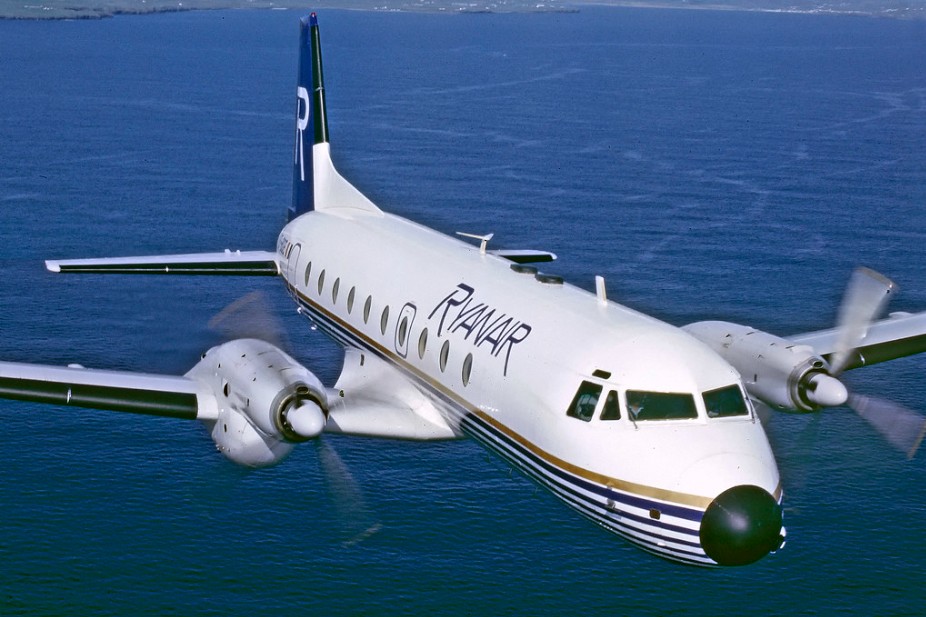
The arrival of these new aircraft, with their far superior cruising speed compared to the Bandeirante, allowed Ryanair to introduce a shuttle-style service between Dublin and Luton, operating multiple flights daily in each direction at peak periods.
The addition of the larger turboprops proved to be a shrewd decision by Ryanair executives. Offering an increased capacity of three times that offered by the Embraer, the airline soon saw its passenger numbers begin to rise substantially.
The single Bandeirante was eventually disposed of, leaving Ryanair with the two HS748s for a time, although these were later supplemented by a Convair 580 leased from Norwegian charter airline Partnair for a few months during the summer of 1988.
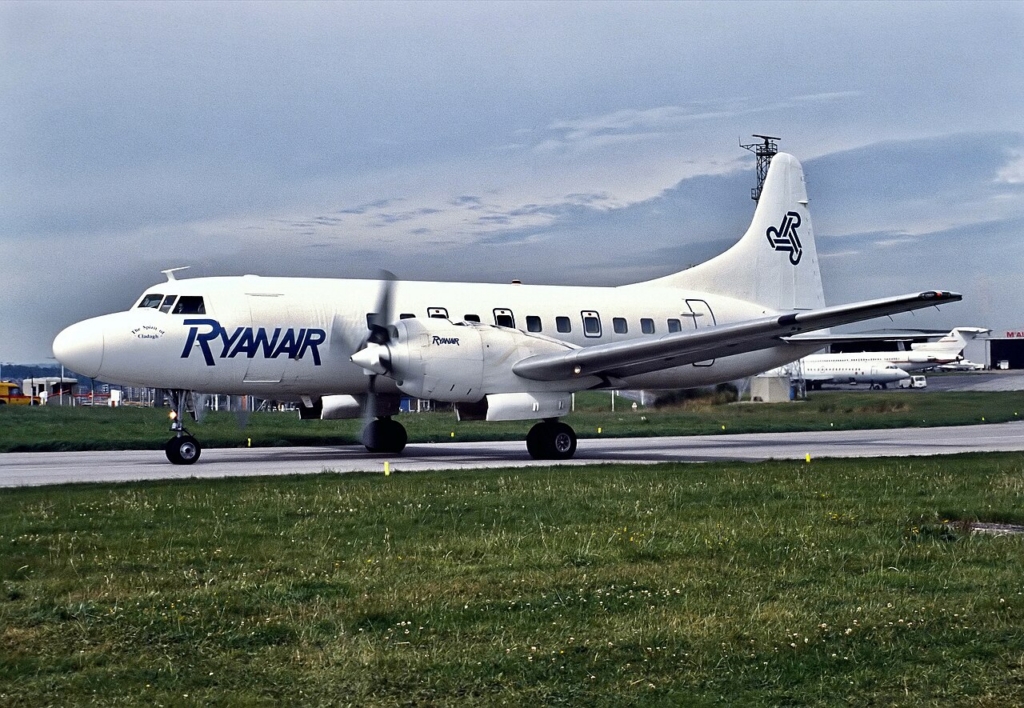
Despite their ruggedness in operating multiple short-sector flights during the peak periods, the HS748s were expensive to operate and, given their increasing ages, were costly to maintain.
In 1990, after four years of service traversing the Irish Sea, the two HS748s were retired. While one was eventually scrapped (EI-BSE), the other went on to fly in Nepal, although it was also scrapped following a ground collision with another HS748 in Nepal in 1997, according to Aviation Safety Network.
1988 – enter the ATR42 into the Ryanair fleet
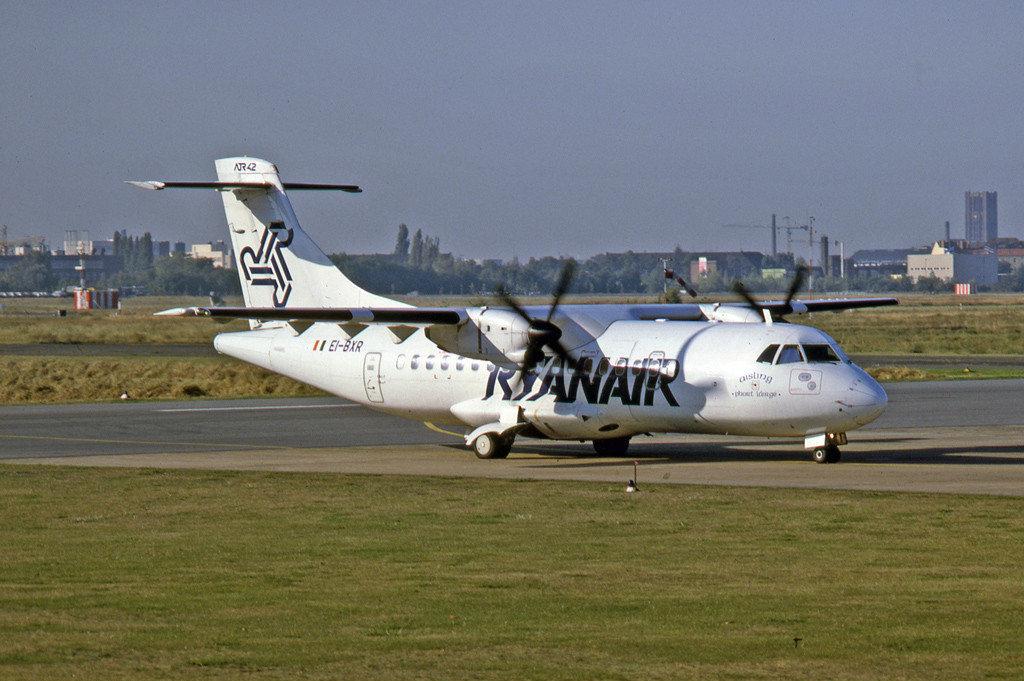
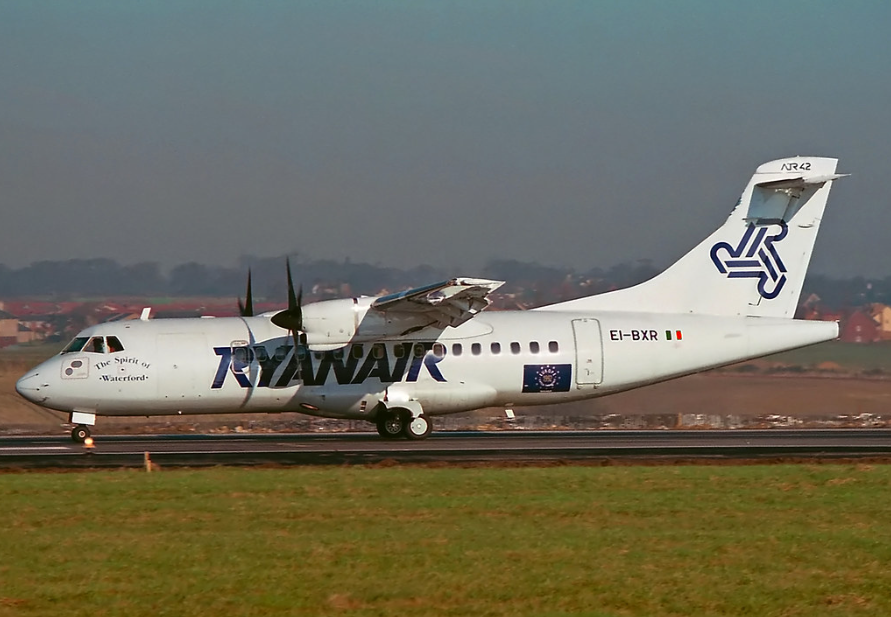
The retirement of the HS748 ushered in the dawn of a new era for Ryanair with the arrival of its first twin-engined Franco-Italian turboprop ATR42-300 in September 1988.
The first aircraft (registered EI-BXR and named ‘Spirit of Waterford initially supplemented the HS748s before they were retired in 1990, by which time two further ATR42s had arrived with the carrier.
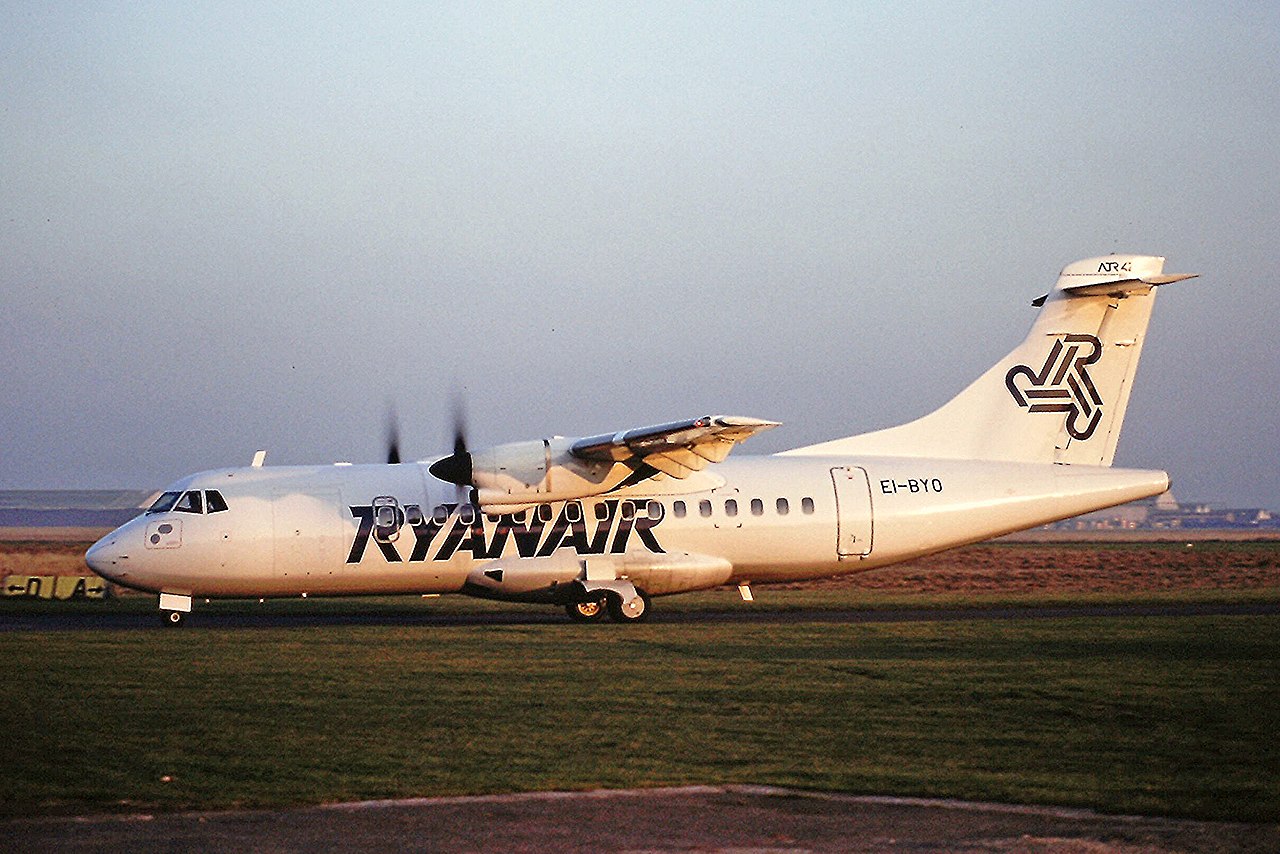
Registered E-BXS (‘Spirit of Kerry) and EI-BYO (‘Spirit of Galway), the aircraft were not only deployed on the regular Dublin to London services but began to open up flights to the UK capital from other Irish regional airports.
The three aircraft would be joined by a fourth example in the shape of C-FIQB, which was leased from InterCandian Airlines for the peak summer of 1989.
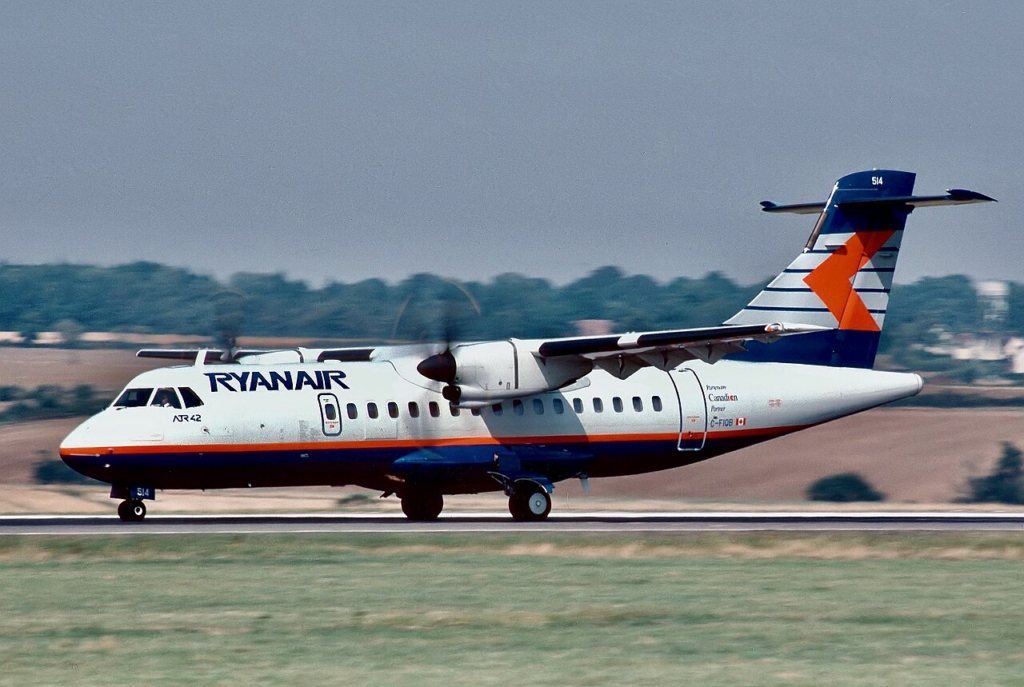
The ATR42 allowed Ryanair to dip a toe in other regional routes, giving the company its first taste of diversification away from its core Dublin to London route.
The ATR fleet remained with the carrier until November 1992, when the last aircraft, EI-BYO, left to join French regional carrier Brit Air. Ironically, this aircraft would end its days operating for Irish carrier Aer Arran on behalf of Ryanair’s rival Aer Lings on the Irish flag carrier’s regional network.
1988 – Ryanair enters the jet age
By 1988, Ryanair had introduced its first jet aircraft in the form of the rear-engined BAC 1-11 twinjet. Nonetheless, while the incoming BAC 1-11s continued operating the Dublin to London trunk route, the ATRs continued to develop Ryanair’s regional network from Dublin.
Destinations included Waterford, Kerry, Galway, Sligo Airport, Donegal, Knock (now Ireland West Airport), Cardiff and Liverpool, and continuing services to London Luton as well as London Stansted (STN) by this time.
As the 1990s progressed, the concept of the low-cost carrier (which had been started by Southwest Airlines in the US) had begun to filter through to Europe. Bosses at Ryanair sent a young employee, a 26-year-old accountant named Michael O’Leary, on a fact-finding mission to Texas to learn more about the US low-cost airline sector and report back. With that trip, everything changed for Ryanair as the company set about emulating its US counterpart.
Soon afterwards, the regional Irish routes were cut, as were the ATR42s. The airline chose to focus its future growth around the BAC 1-11 jets, eventually taking on around 16 of the type and bringing the airline’s turboprop era to a close.
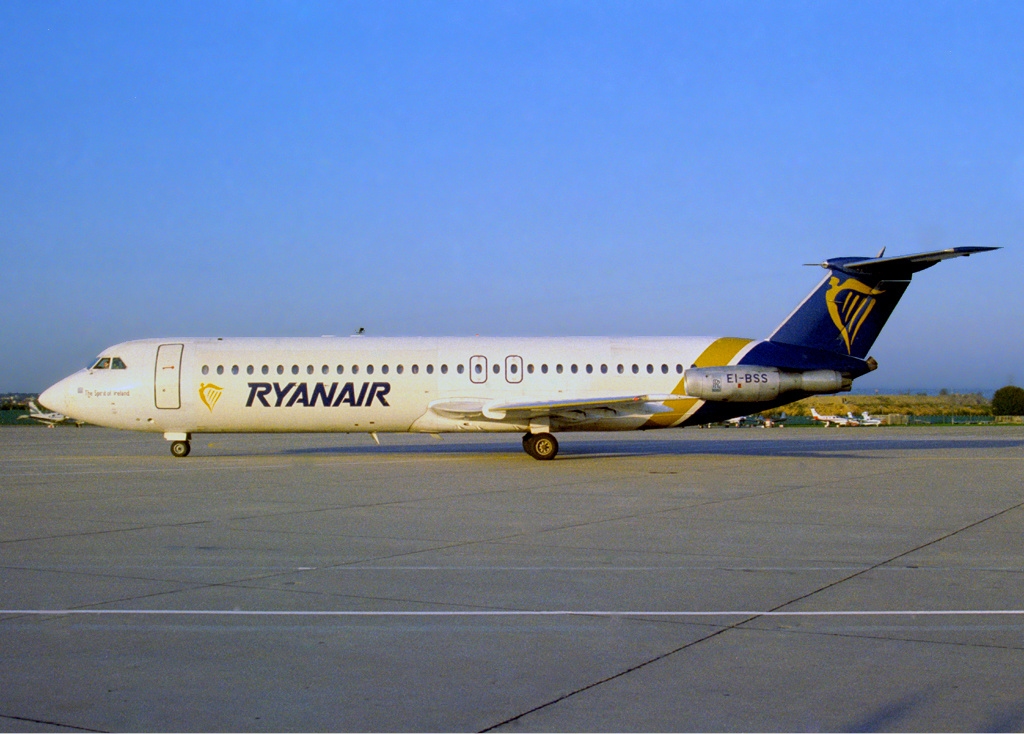
The switch to the BAC 1-11 saw Ryanair begin operating high-frequency, single-class operations targeting cost-conscious travellers for the first time.
By the summer of 1992, the airline was operating up to ten flights daily on its London to Dublin route (now operating from the newly opened Terminal at London Stansted Airport), and offering fleet commonality across the operation.
The turboprops laid the foundations of the modern-day Ryanair
Since then, the carrier has grown beyond recognition. From starting operations with that single 15-seat Embraer Bandeirante, the airline now operates a fleet of 621 Boeing 737s and 26 Airbus A320s. It also operates a small sub-fleet of four Bombardier Challenger 300 business jets, which are used to ferry crews, engineers, and spare parts around the Ryanair network.
The Ryanair Group nowadays also spans several airlines, including Ryanair (Ireland), Ryanair UK, Malta Air, Buzz, and Lauda Europe. It is certainly a far cry from those early days in 1984, when the company’s single Bandeirante would be dwarfed on the apron at London Gatwick by many larger jets.
Nowadays, it is the airline’s blue aircraft tails with the yellow flying harp logo are the ones doing the dominating not only in London, but across Europe and beyond.
Featured image: Ralf Manteufel / Wikimedia Commons