


Britten-Norman moves forward with 5G airborne connectivity trials using specially adapted Islander

5 min read
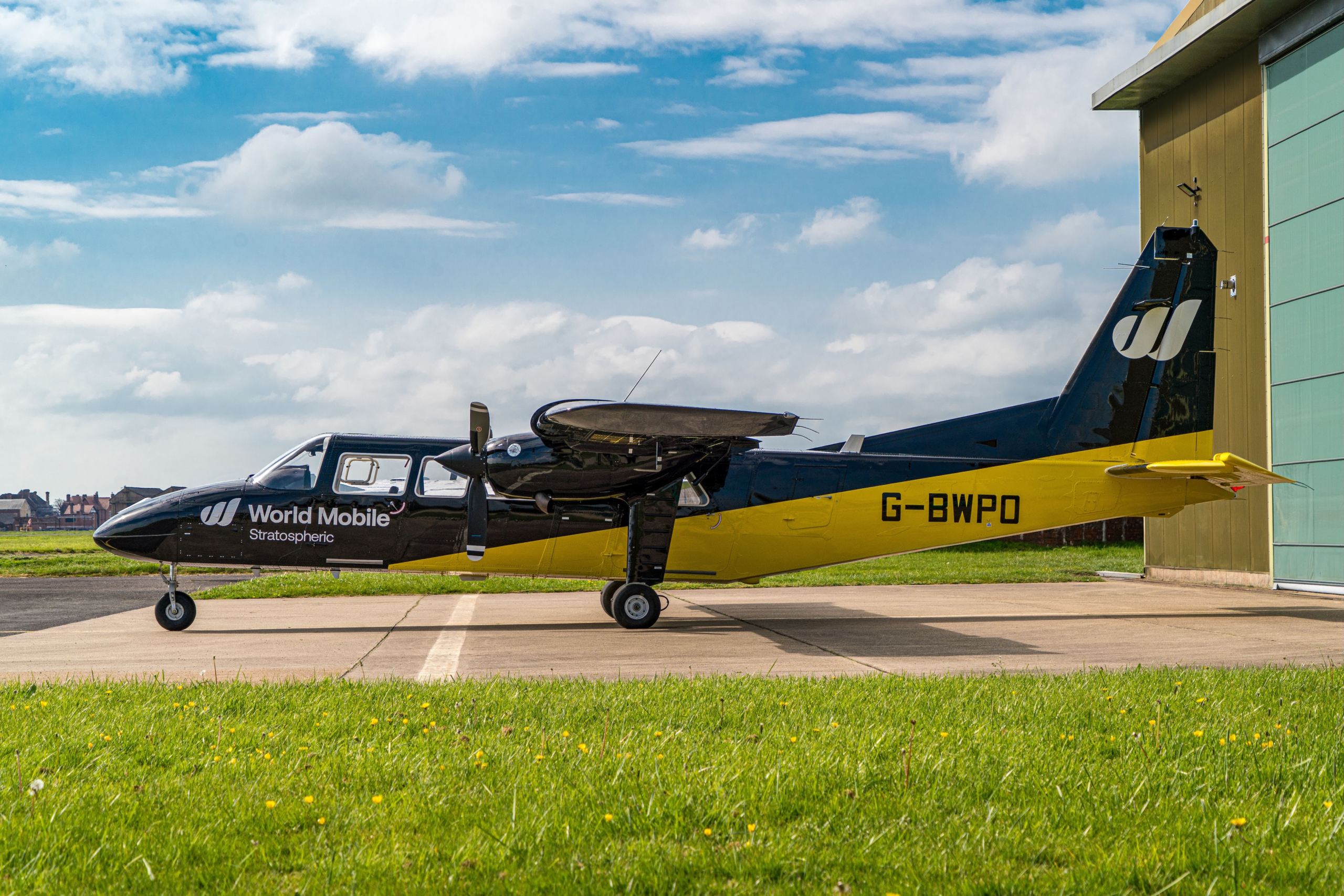
UK aircraft manufacturer Britten-Norman has announced that it has reached the next stage in its 5G airborne connectivity project. In conjunction with World Mobile Stratospheric, a BN2T-4S Islander is being outfitted with an advanced 5G payload for trials that aim to demonstrate how high-altitude aircraft can deliver wide-area coverage to remote and disaster-affected regions.
Britten-Norman to install 5G connectivity equipment on turbine Islander
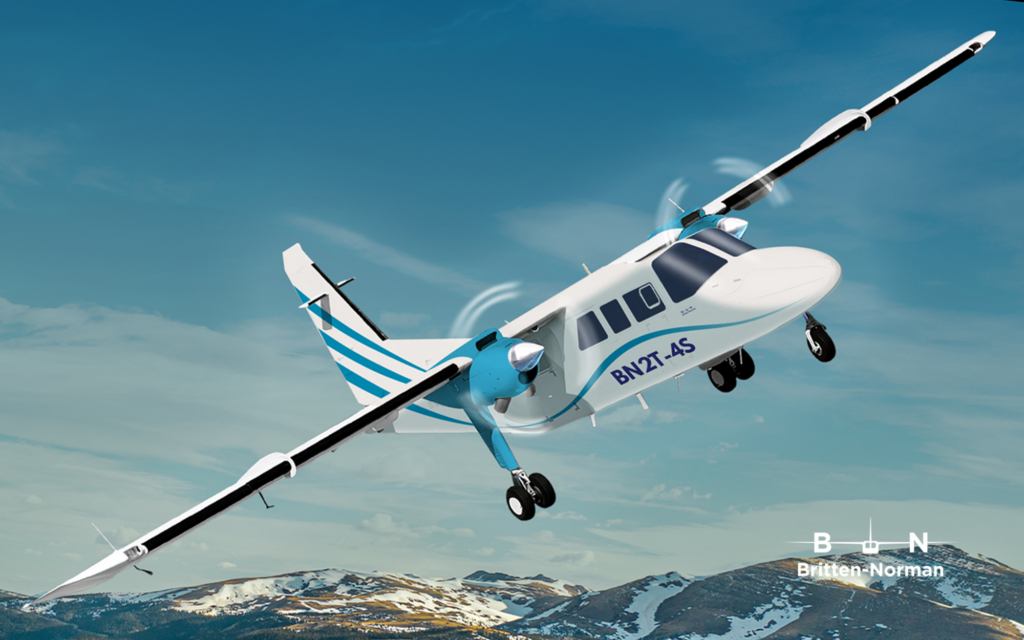
On 27 April, Britten-Norman, the UK-based producer of the versatile twin-engined Islander aircraft, announced that it had reached the next major milestone in its collaboration with World Mobile Stratospheric (WMS), with its dedicated BN2T-4S turbine Islander aircraft supporting the 5G connectivity programme now prepared for the next phase of system integration.
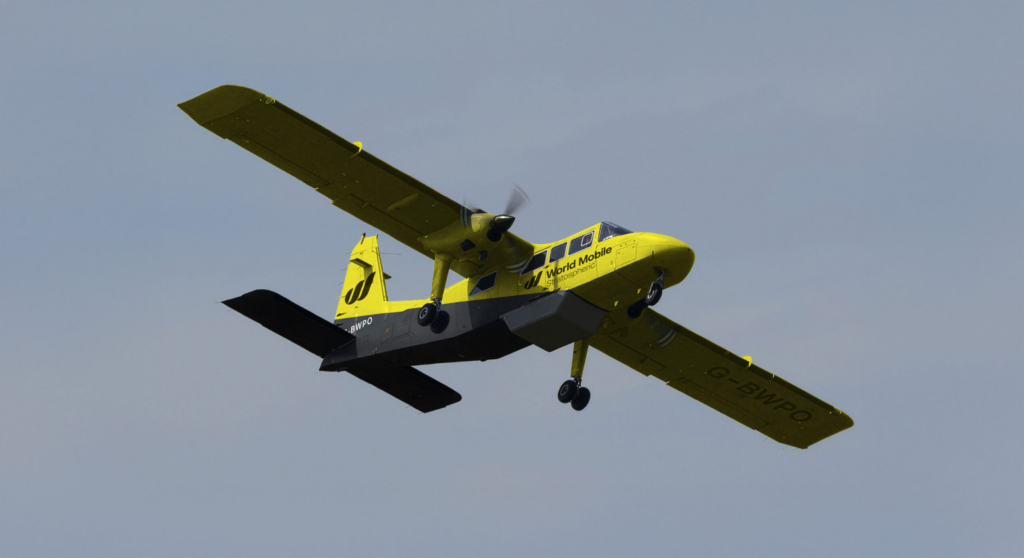
According to the company, the aircraft being used (registration G-BWPO) is now ready for installation of the airborne 5G antenna array system. The development “marks a significant step forward in the development of aircraft-based connectivity solutions,” said a company statement.
The two companies intend to develop airborne 5G connectivity using the Islander as part of a wider movement across aerospace and telecoms to use high-altitude platforms to reach communities that lack reliable connectivity or have seen infrastructure destroyed by natural disasters.
At the centre of this effort is a class of systems known as High-Altitude Platform Stations, or HAPS, effectively radio stations mounted on aircraft or airships flying far above commercial air traffic at roughly 20 to 25 kilometres (12-15 miles).
From this height, an aircraft can view vast areas of ground below and act as an airborne mobile tower, providing broadband coverage that would otherwise require dense clusters of terrestrial sites. Crucially, HAPS can also restore communications quickly in disaster-hit regions where networks are often the first systems to fail.
The turbine Islander will be used for 5G flight testing
Britten-Norman said that the aircraft is now ready to undergo the installation of the advanced phased-array antenna system. The system being installed is capable of delivering real-time 5G signals across an approximate 15-kilometre (10-mile) radius.
The company added that the installation will involve a complex integration challenge, supported by over 100 individual engineering drawings produced by Britten-Norman’s Design Office.
The installation is currently being undertaken on G-BWPO at the planemaker’s Maintenance, Repair and Overhaul (MRO) facility based at Solent-Daedalus Airport (QKB) on the south coast of the UK.
Once fully equipped, the aircraft will be used to validate how airborne, aircraft-based 5G systems can deliver real-time mobile connectivity.
The programme is intended to demonstrate applications ranging from connecting remote and underserved communities to rapidly restoring communications in disaster-affected regions. Assuming the installation continues on schedule, test flights using the aircraft are scheduled to commence this summer.
Flight assessment will be conducted by Britten-Norman’s flight operations team in collaboration with WMS and in cooperation with BT at its Adastral Park Research and Development facility located near Ipswich, UK.
Rather than attempting immediate stratospheric operations, the aircraft will fly at mid-altitudes, allowing engineers to refine the 5G payload, validate beam-forming and assess how airborne equipment performs under varied weather and flight conditions.

Flight-testing will be managed by Britten-Norman under its regulatory approvals, while WMS leads the telecommunications integration. The companies stress that the objective is not simply to show that airborne radios work, as that has already been demonstrated, but to understand how such systems can integrate with live mobile networks, coexist with terrestrial towers and be deployed rapidly in an emergency.
Why the turbine Islander makes an ideal 5G testbed
By using the turbine Islander for the project, the type offers a stable platform combined with additional payload and enhanced endurance over the piston Islander to provide the correct environment in which to test the 5G connectivity of the WMS suite.
“Reaching the installation phase is a significant milestone for the programme,” said Mark Shipp of Britten-Norman. “The scale of the design effort reflects the complexity of integrating advanced communications systems onto the Islander platform and demonstrates the depth of engineering capability within Britten-Norman. We now look forward to progressing into flight assessment and validating the aircraft’s role in enabling airborne connectivity.”
Meanwhile, Richard Deakin, CEO of World Mobile Stratospheric, added that WMS was happy to have reached this next milestone in the development of airborne connectivity to be used in disaster situations and for wider communications coverage from the stratosphere and looked forward to the next phase of the trials.
Why HAPS could be the answer for remote communications
Despite global progress in connectivity, large rural regions still lack robust coverage and building fibre and tower infrastructure in remote or mountainous areas remains costly and slow. In disaster-prone regions, even well-maintained networks can fail for prolonged periods. HAPS offers an alternative: rapid-deployment coverage at scale with minimal dependence on ground assets.
Regulators have been evaluating the concept of 5G airborne communication for decades. In particular, the International Telecommunication Union has been studying high-altitude systems since the 1990s, but only recent advances in materials, plus advances in batteries and antenna technology, have made the idea technically feasible.
At the World Radiocommunication Conference in 2023, governments considered how HAPS might operate using spectrum already assigned to 4G and 5G networks, debating interference risks and how airborne base stations can sit alongside existing services.
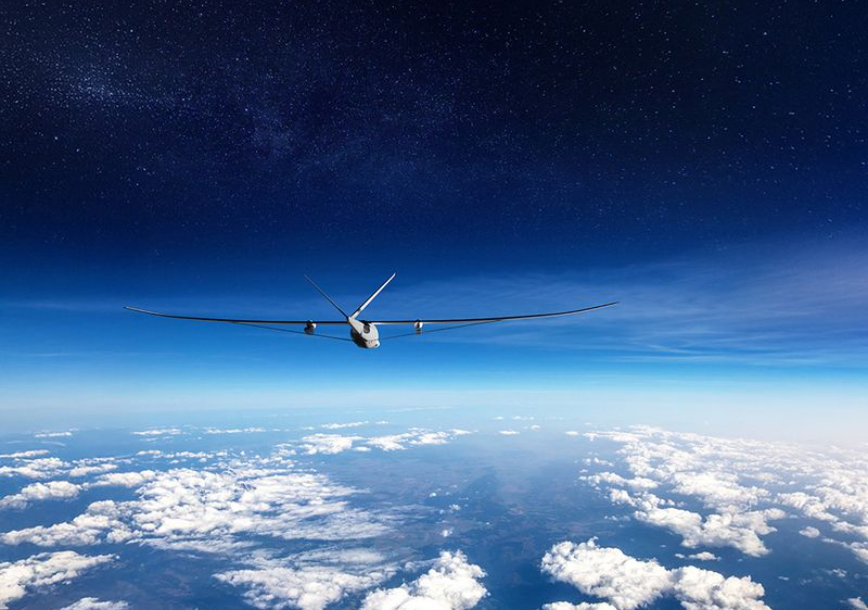
The use of the Islander is just one step along the pathway toward the unlimited development of an unmanned HAPS platform, which will provide direct-to-device 5G communications to more than 500,000 users over a 15,000-square-kilometre footprint from 60,000 feet (18,288 m) in the air, called the Stratomast.
The parties involved in the 5G trial flights hope that the real-time data and expertise obtained from the specially adapted Islander will go a significant way toward developing the technology required to make Stratomast a reality sometime in late 2027.
Featured image: Britten-Norman


