Europe’s FCAS fighter programme drifts towards split as Airbus and Dassault tensions deepen

7 min read
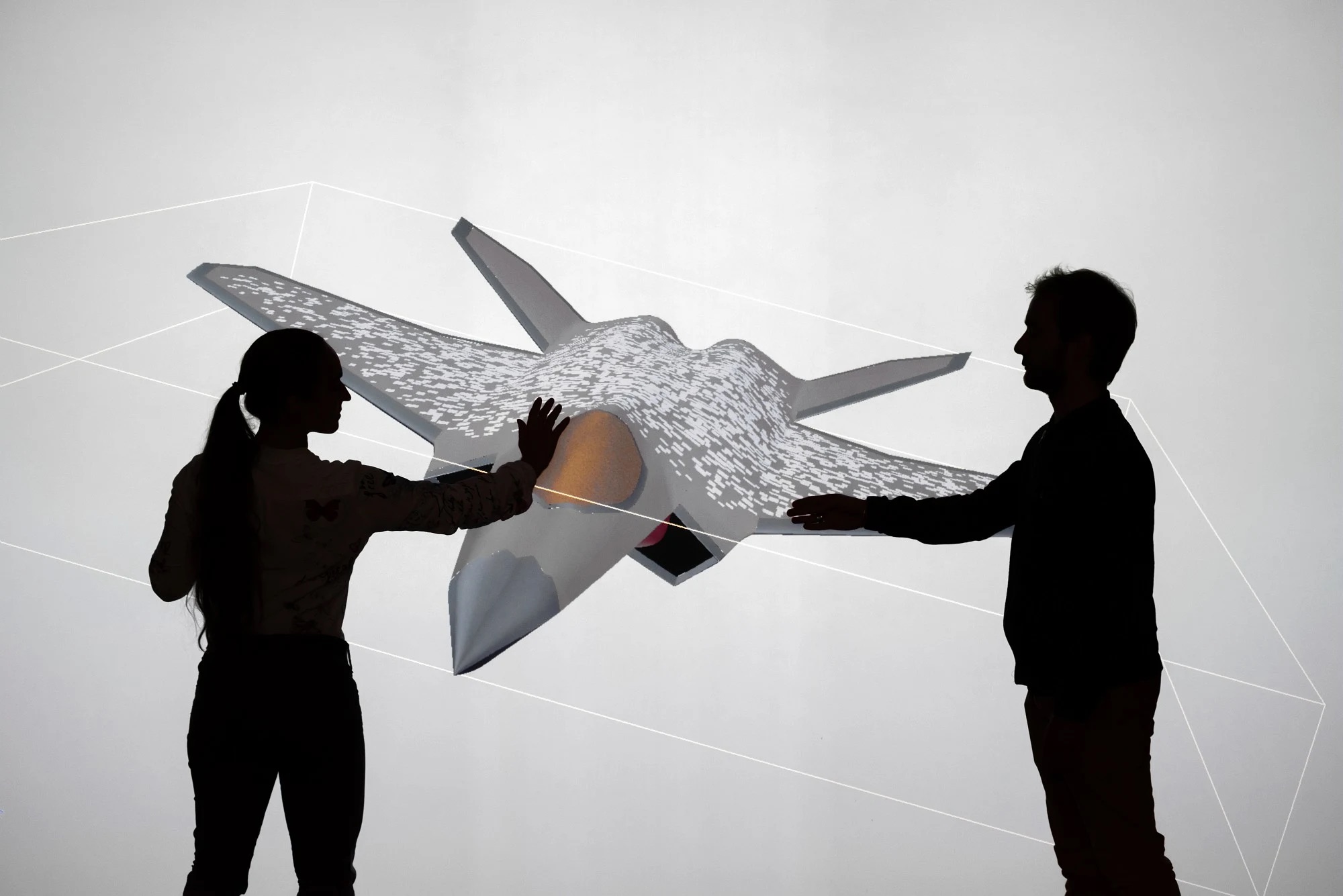
Europe’s flagship Future Combat Air System (FCAS) programme is facing its deepest crisis yet, with Airbus openly backing the possibility of two separate next-generation fighter aircraft.
The comments expose growing political tensions, industrial rivalries and diverging military priorities inside the €100 billion ($115 billion) programme.
What began in 2017 as a Franco-German effort to build a common sixth-generation fighter is increasingly becoming a struggle over leadership, national sovereignty and the future direction of Europe’s defence industry.
France has traditionally favoured sovereign combat aircraft development centred on Dassault Aviation, while Germany has generally supported broader multinational industrial structures through collaborative programmes such as Eurofighter.
Those differing philosophies increasingly sit at the heart of the FCAS dispute.
The latest flashpoint came at Airbus’ Defence Summit in Manching on 20 May, where chief executive Guillaume Faury revived the idea of a two-aircraft approach within the wider FCAS architecture.
“When we look at previous experiences, and in particular the F-35, at the end it is not just one plane,” Faury said. “There are different ways of reaching the same objectives.”
Behind those carefully worded remarks lies a programme increasingly strained by competing operational demands, deteriorating relations between Airbus and Dassault, and growing doubts over whether the assumptions underpinning FCAS before the Ukraine war still hold true today.
Airbus and Dassault are battling for control of the FCAS fighter programme
Officially, FCAS remains a trinational project involving France, Germany and Spain.
Unofficially, it has become a contest between Dassault and Airbus over who controls the heart of the programme, the New Generation Fighter (NGF).
Dassault leads the fighter pillar on behalf of France and has consistently demanded clear authority over aircraft design and supplier selection.
Airbus, representing Germany and Spain, has pushed for a more balanced partnership structure, similar to previous multinational fighter projects.
The dispute has already delayed movement into the next development phase, including work on a flying demonstrator.
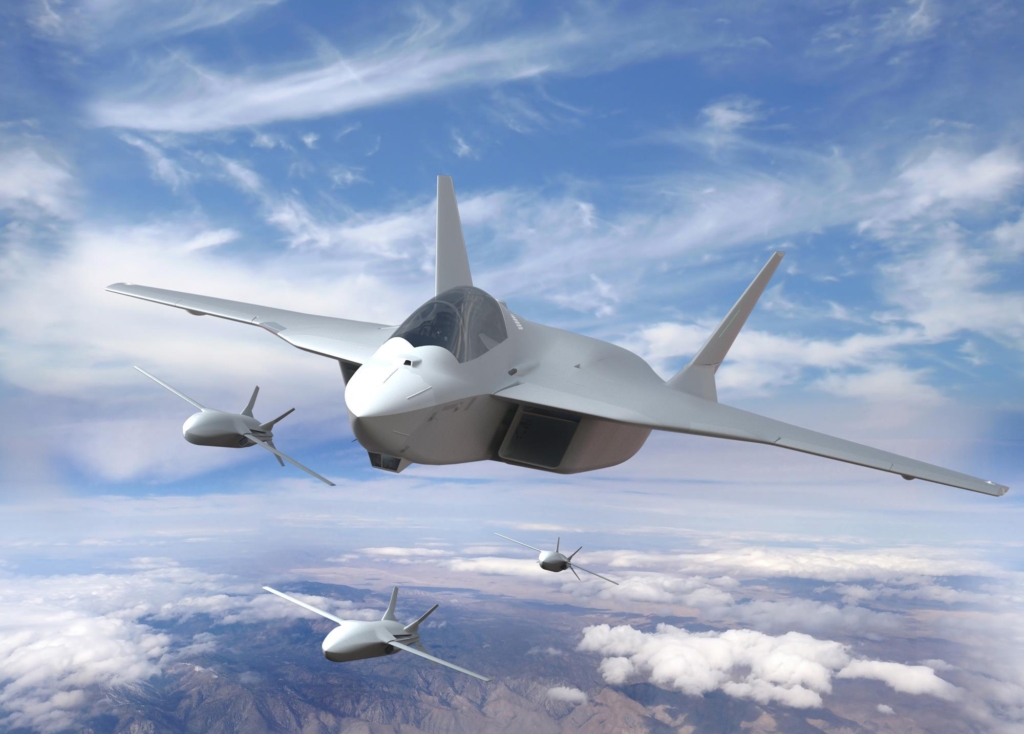
In March, Dassault Aviation chairman Eric Trappier bluntly declared the programme “dead” unless Airbus changed its approach.
“Airbus doesn’t want to work with Dassault, full stop,” Trappier said during a Paris press conference.
He accused Airbus of trying to recreate a cumbersome Eurofighter-style industrial arrangement and argued that effective combat aircraft programmes require clear leadership rather than distributed management structures.
“I have said from the start that I want clear leadership and not just on paper,” he added.
Airbus, meanwhile, has increasingly hinted that it may be willing to move forward without Dassault if political backing exists for an alternative structure.
“Currently, it looks like that collaboration with Dassault is not going as we had planned it,” Airbus Defence and Space chief executive Mike Schoellhorn said in Manching. “There are alternatives that we need to assess at the right point in time.”
Ukraine war is reshaping Europe’s sixth-generation fighter requirements
The FCAS crisis is no longer simply an industrial dispute.
Executives on both sides now openly acknowledge that the war in Ukraine has reshaped assumptions about future air combat.
Faury admitted that many compromises built into the programme during its launch phase no longer reflect today’s security environment.
“At the time the programme was launched, compromises were made to get to a product at minimum cost,” he said. “Now we are in a scenario of potential conflict, real conflict or war, the specifications become more important.”
That shift has widened differences between the partner nations.
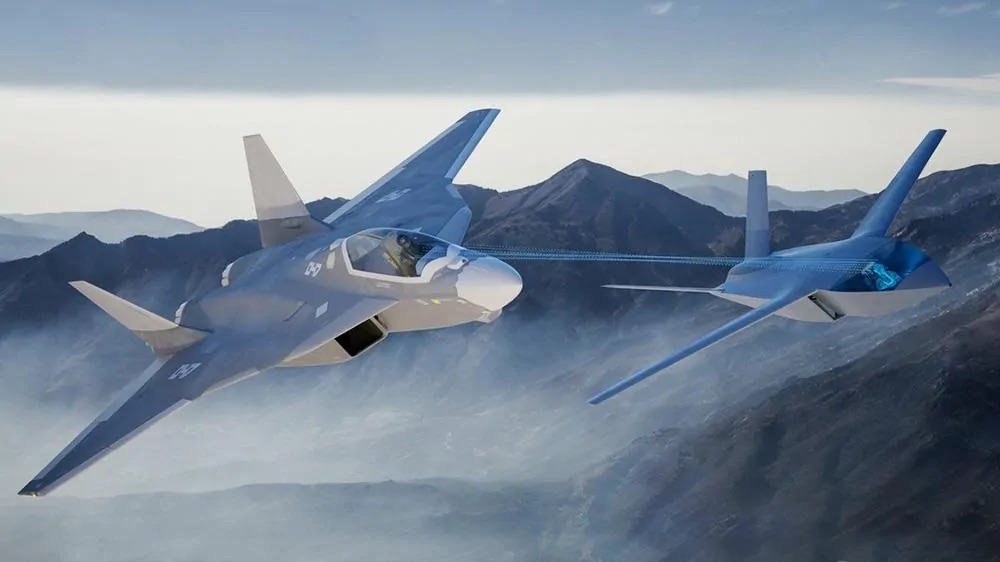
France wants a carrier-capable aircraft able to support its airborne nuclear deterrent mission. Germany and Spain, meanwhile, place greater emphasis on air superiority, NATO integration and command-and-control functions linked to unmanned systems.
Those diverging requirements are increasingly raising doubts over whether a single aircraft can realistically satisfy all three nations.
Airbus increasingly appears to believe the answer is no.
Schoellhorn said a one-aircraft compromise was becoming “less and less achievable”.
“I’m supportive of finding a solution, and if the solution cannot be or would not be a one-fighter solution, then I support a two-fighter solution,” he said.
FCAS is designed as a wider combat cloud and drone ecosystem
Part of the confusion surrounding FCAS is that the programme is often described simply as Europe’s next fighter aircraft.
In reality, the fighter itself is only one part of a much broader combat architecture.
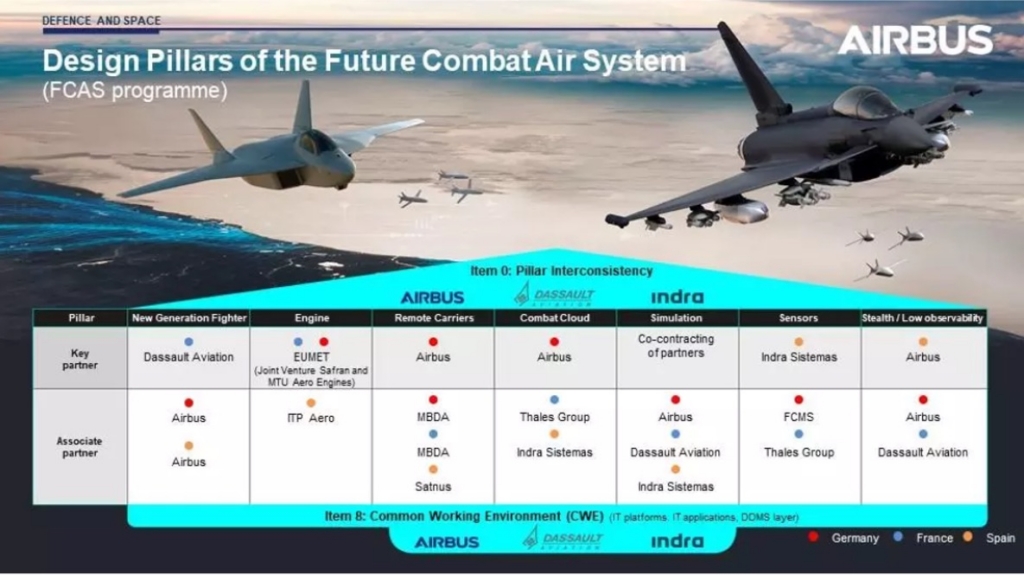
FCAS is designed around a “system of systems” concept linking crewed aircraft, remote carrier drones, sensors and a digital Combat Cloud capable of sharing battlefield data in real time across multiple domains.
At the centre sits the Next Generation Weapon System, which combines the NGF with unmanned loyal wingman platforms and networked mission systems.
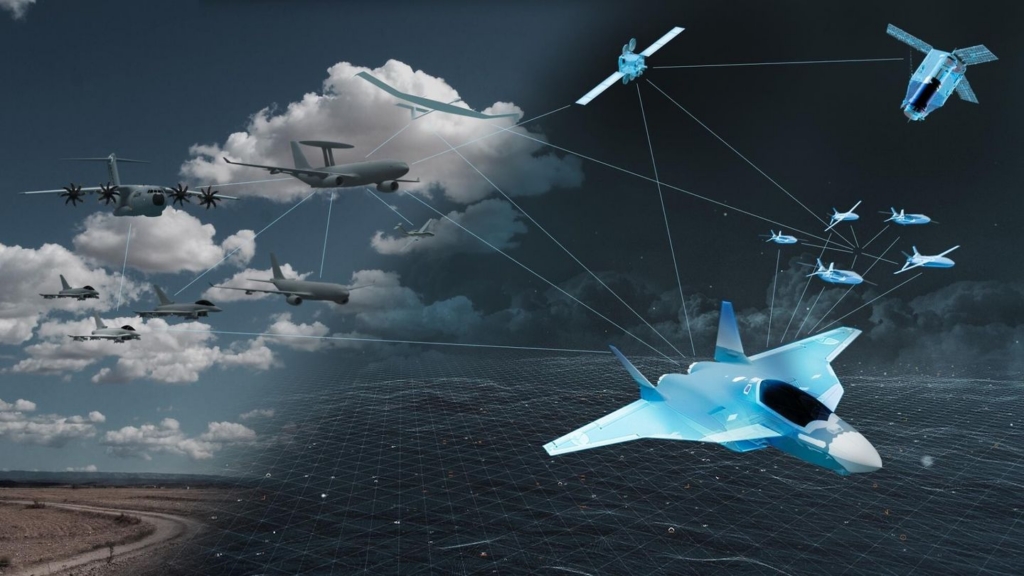
The broader architecture is still viewed by most participants as strategically valid.
“The architectural idea is still very relevant,” Schoellhorn said. “Ukraine has changed the face of the air battle.”
That is one reason Airbus continues to argue for preserving the wider FCAS ecosystem even if the single-fighter concept fractures.
“We don’t speak a lot about the other pillars because they’re working well,” Faury said. “All the attention is on the fighter jet because this is where we have difficulties.”
Those other pillars include remote carrier drones, future engines, sensors, low observability technologies and the Combat Cloud network itself.
FCAS tensions could reshape Europe’s rivalry with GCAP
As tensions deepen inside FCAS, interest from external countries is beginning to reshape the political discussion around the programme.
Airbus executives suggested that a restructured FCAS with multiple fighter tracks could potentially allow additional international partners to join.
“We believe if there is a way forward with two fighters, it could be an opportunity to have other partners with us,” Faury said.
As tensions deepen inside FCAS, interest from external countries is beginning to reshape the political discussion around the programme.

India has emerged as one of the countries quietly monitoring developments particularly closely.
Airbus executives suggested that a restructured FCAS with multiple fighter tracks could potentially allow additional international partners to join.
“We believe if there is a way forward with two fighters, it could be an opportunity to have other partners with us,” Faury said.
India’s interest is hardly surprising.
New Delhi is simultaneously pursuing its own Advanced Medium Combat Aircraft programme while also studying longer-term sixth-generation technologies.
Participation in selected FCAS pillars could potentially give India access to future networking, combat cloud and unmanned teaming technologies without fully joining the core fighter dispute.
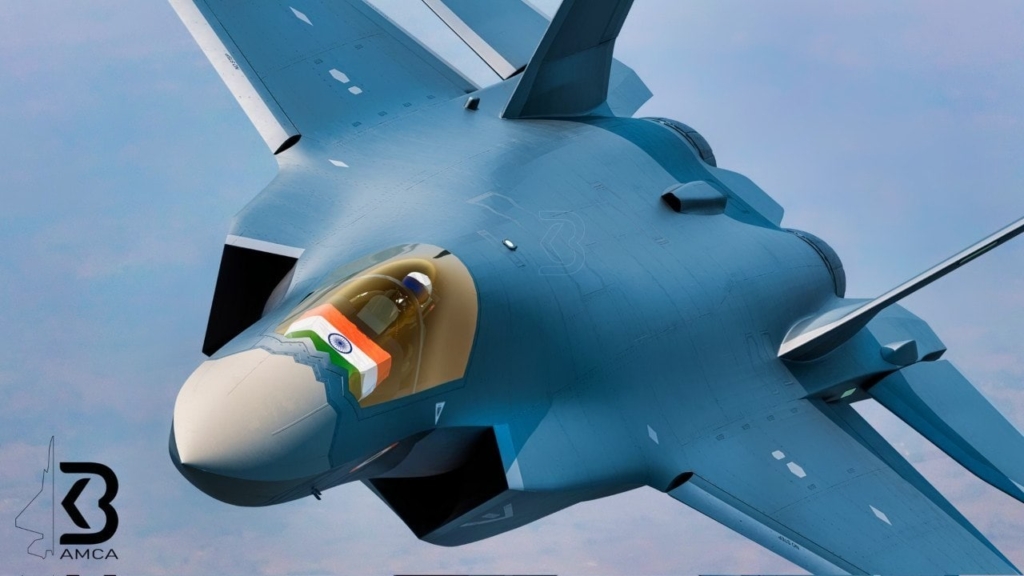
The growing instability around FCAS is also being watched closely in London, Tokyo and Rome.
A collapse or fragmentation of FCAS could strengthen the rival Global Combat Air Programme (GCAP), which already links the United Kingdom, Japan and Italy in a separate sixth-generation fighter effort.
That possibility has increased pressure on European governments to prevent a total breakdown.
France and Germany intervene as FCAS political tensions grow
The crisis has now escalated beyond industry.
Paris and Berlin have both stepped in directly amid concerns that the programme could drift into paralysis.
French President Emmanuel Macron and German Chancellor Friedrich Merz have tasked their defence ministers with finding a path forward after repeated industrial negotiations failed to produce an agreement.
Merz recently acknowledged publicly that Germany and France no longer appear to want the same aircraft.
Germany does not require a nuclear-capable fighter, while France views nuclear strike capability as central to its strategic doctrine.
That divergence now sits at the core of the FCAS problem.
Analysts increasingly believe the programme may eventually split into separate French and German-led fighter aircraft while retaining shared networking systems, drones and Combat Cloud architecture.
Such a compromise would preserve parts of the broader FCAS vision while acknowledging the political reality unfolding inside Europe’s defence industry.
The alternative could be far more damaging.
Failure of the programme altogether would not simply delay a future fighter jet.
It would raise larger questions about whether Europe can still build major strategic defence programmes collectively in an era where national requirements, industrial interests and geopolitical pressures are rapidly pulling in different directions.
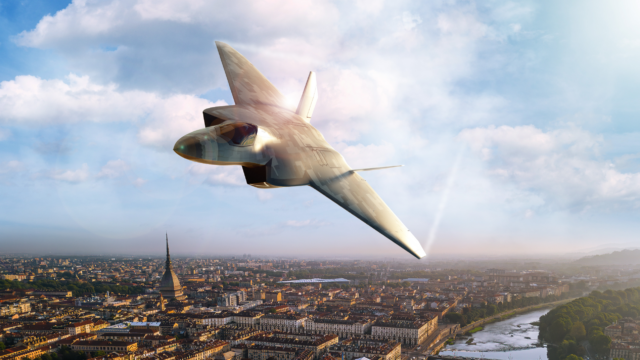
Featured image: Dassault