The A-10 Warthog is now flying in the Middle East with new refuelling and EW capabilities

5 min read
A-10 Thunderbolt II attack aircraft operating in the Middle East are now flying with new aerial refuelling and electronic warfare capabilities that have been rushed into operational service at remarkable speed during ongoing combat operations.
US Air Force A-10s were recently used during Operation Epic Fury against Iranian naval targets, even as the aircraft quietly received a series of rapid battlefield upgrades.
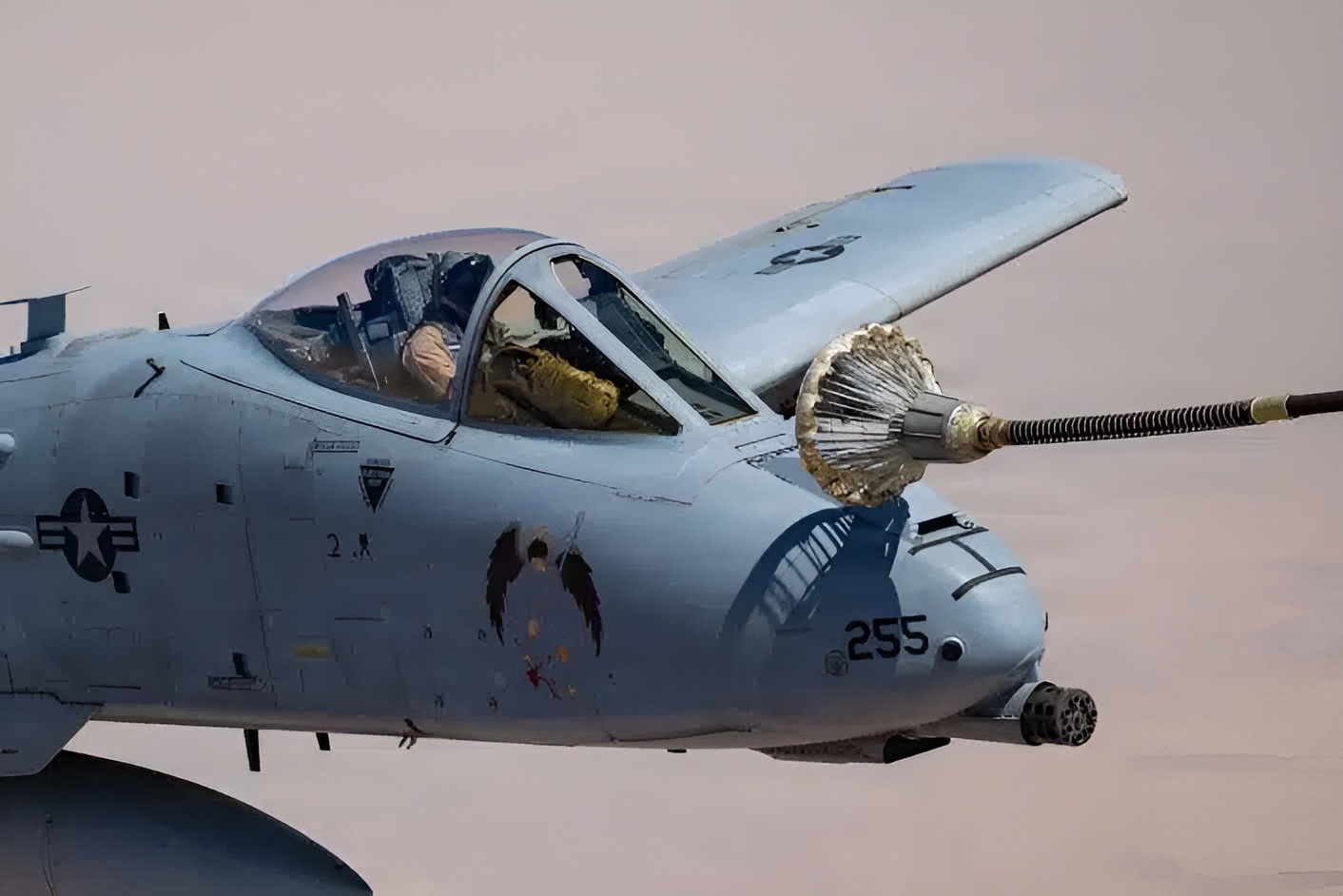
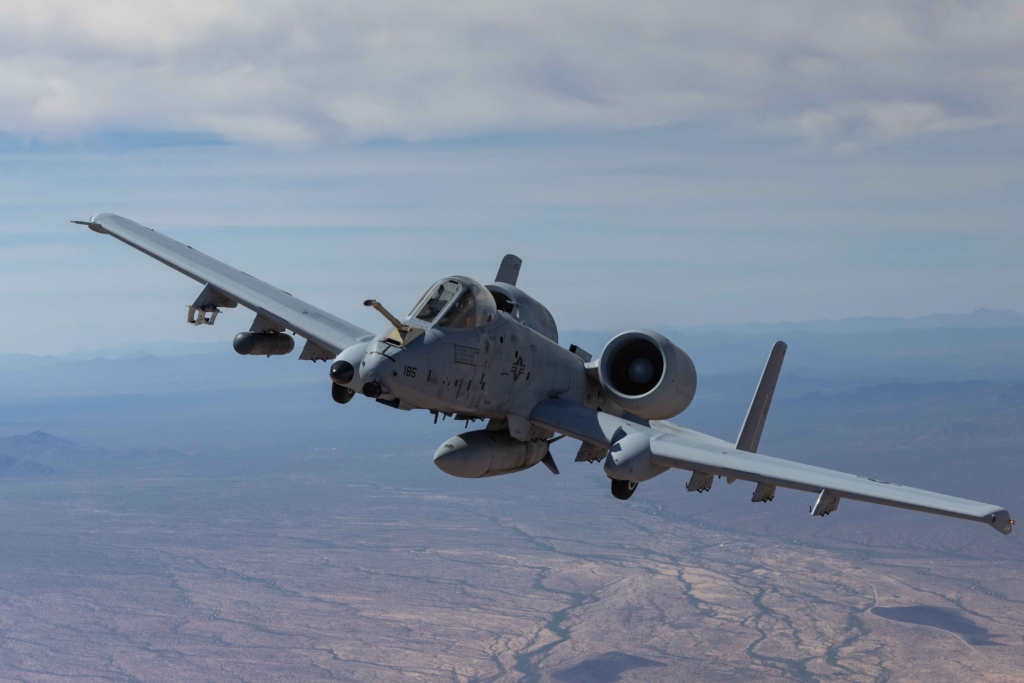
Fresh imagery released from the US Central Command area shows deployed A-10C Thunderbolt IIs operating with two additions never previously seen together on operationally deployed aircraft: a new probe-and-drogue aerial refuelling system and the Angry Kitten electronic warfare pod.
The development marks a striking turnaround for an aircraft the US Air Force has repeatedly attempted to phase out. Even more remarkable is how quickly the upgrades arrived.
The new aerial refuelling capability went from testing to operational deployment in barely a month, highlighting a growing trend across Western air forces where urgent operational demands are increasingly overriding traditional acquisition timelines.
A-10 Warthog gains new aerial refuelling capability
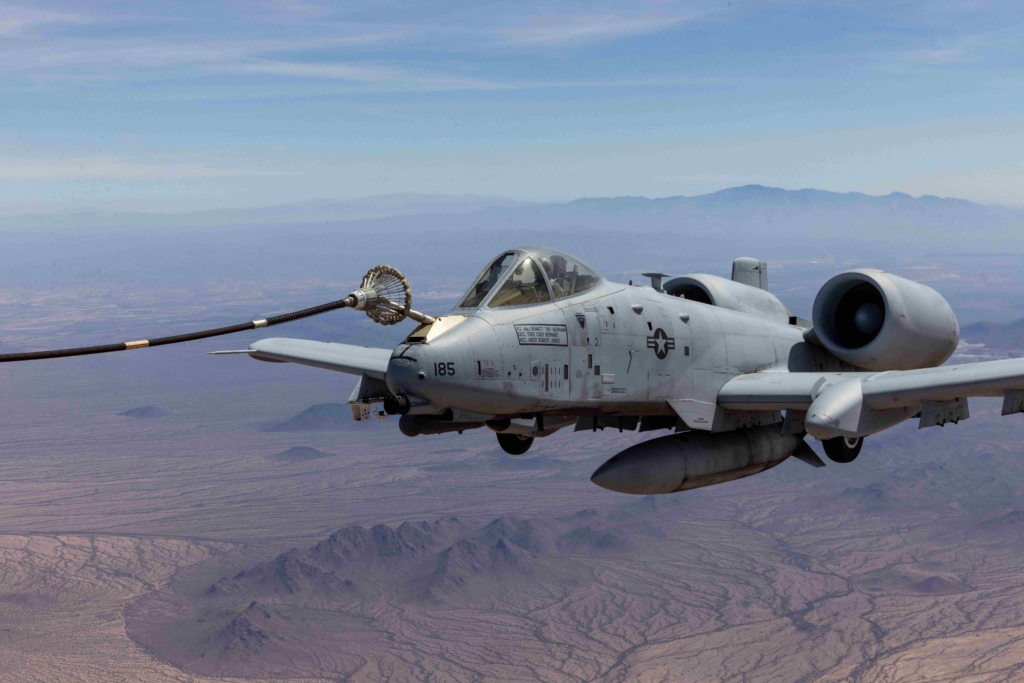
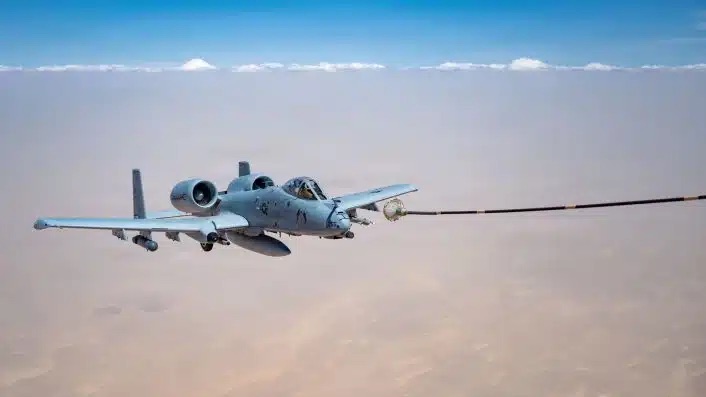
The most visible change sits directly on the aircraft’s nose. The newly developed Probe Refuelling Adapter fits over the A-10’s existing boom-refuelling receptacle, allowing the aircraft to refuel from hose-and-drogue-equipped HC-130J Combat King II aircraft.
That may sound like a relatively minor modification. Operationally, it is far more significant.
The A-10 has traditionally depended on KC-135 Stratotankers for aerial refuelling because it is still not fully cleared to refuel from the newer KC-46 Pegasus fleet.
With KC-10 tankers retired and KC-46 certification delays continuing, deployed A-10 units have found themselves increasingly constrained by tanker availability.
The problem is compounded by the Warthog’s unusually low operating speeds.
While most US fighter aircraft refuel at roughly 300 knots, the A-10 typically refuels at closer to 200 knots — a speed range that can prove difficult for large jet tankers operating at heavy fuel loads.
C-130-based tankers, however, naturally operate within that flight envelope.
The solution was rapidly developed after combatant commanders requested expanded tanker options for deployed aircraft.
According to the Air National Guard Air Force Reserve Command Test Center, the adapter can be installed or removed by flight-line crews in only a few hours without requiring depot-level modifications.
The first successful refuelling test took place on 2 April this year. By May, operational aircraft were already using the system in the Middle East.
A-10 refuelling upgrade moved from testing to combat in weeks
Military aircraft modification programmes rarely move quickly.
Even relatively simple changes often take years to clear testing, certification and procurement processes.
The A-10 probe programme moved from requirement to operational deployment in a matter of weeks.
The Air National Guard Air Force Reserve Command Test Center coordinated the effort alongside the A-10 System Program Office, industry partners and ARCWERX rapid acquisition mechanisms.
“Nothing was shortcut or compromised from a technical or safety standpoint,” Lt Col Luke Hayman said after the initial tests. “We just accelerated every step we could.”
The rapid fielding reflects a broader shift already visible across several Western air forces.
The RAF’s Eurofighter Typhoon fleet, for example, moved the Advanced Precision Kill Weapon System (APKWS) laser-guided rocket from testing to operational deployment within weeks during Middle East operations.
The A-10’s new refuelling capability appears to reflect the same wartime urgency.
Angry Kitten pod could significantly expand A-10 survivability
The aerial refuelling probe was not the only detail attracting attention in the newly released images.
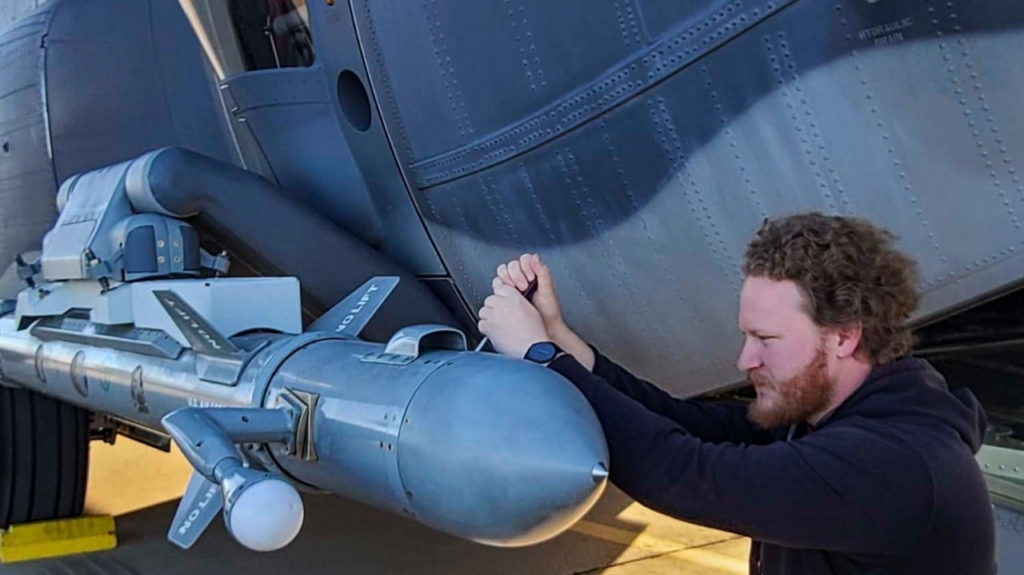
The deployed aircraft were also carrying the Angry Kitten electronic warfare pod.
Originally developed by the Georgia Tech Research Institute, the pod is designed to disrupt and deceive enemy radar and air defence systems using software-defined electronic warfare techniques.
The system had previously been associated with F-16 suppression of enemy air defence missions during Operation Epic Fury.
Its appearance on the A-10 is particularly significant because it suggests the aircraft is now being prepared for operations in more heavily contested environments.
That is notable for an aircraft whose survivability against modern integrated air defence systems has long been questioned.
The A-10 was originally designed during the Cold War for close air support missions against Soviet armour formations in Europe. Its titanium armoured cockpit, redundant flight systems and ability to survive direct hits from 23mm fire became legendary during conflicts from Desert Storm onwards.
Modern radar-guided missile systems, however, present a far more dangerous operating environment. Electronic warfare support could therefore significantly alter how the aircraft is employed in future operations.
The aircraft the USAF keeps trying to retire is adapting again
The irony surrounding the A-10 has become increasingly difficult to ignore.
The US Air Force has spent much of the past decade attempting to retire the aircraft in favour of newer multirole platforms, while Congress has repeatedly intervened to slow or block those plans.
Meanwhile, the aircraft has remained heavily involved in real-world operations.

Recent deployments linked to Operation Epic Fury reportedly included maritime interdiction missions against Iranian Revolutionary Guard fast attack craft, armed overwatch sorties and combat search and rescue support operations.
Those missions continue to play directly to the aircraft’s strengths.
The A-10 can loiter near battle areas for extended periods, operate from austere locations and carry large mixed weapons loads while flying at low altitude and relatively low speeds.
That combination still makes it difficult to replace entirely.
Once again, the aircraft many expected to disappear from frontline service is adapting faster than expected to a changing battlefield.
Featured image: CENTCOM