59 years ago today: The 1967 Airbus Memorandum and the beginning of a global aviation giant

7 min read
In the late 1960s, the commercial aviation industry was dominated by American manufacturers. Companies such as Boeing, Douglas and Lockheed had established themselves as major forces in the rapidly expanding jet-airliner market, while European aircraft manufacturers were divided among several countries and lacked the financial resources to compete with the United States on equal terms.
Against this background, the governments of France, West Germany and Britain began discussing a new form of industrial cooperation. Their objective was to develop a large, twin-engine, wide-bodied passenger aircraft that could compete in the emerging market for high-capacity commercial airliners.
In July 1967, the three governments reached a framework agreement to strengthen European cooperation in aviation and to pursue the joint development and production of an “air bus”.
This agreement was an important milestone in the history of what would eventually become Airbus. Although the modern Airbus company did not yet exist, the 1967 agreement established the principle on which the company would be built.
European aerospace manufacturers could pool their technical expertise, industrial capacity and financial resources to undertake projects that would have been difficult for any one European country to complete alone.
Why was the Airbus A300 needed?
The proposed aircraft emerged from changing conditions in the airline industry. The introduction of jet aircraft during the 1950s had transformed international air travel.
Aircraft could fly faster and farther than the previous generation of piston-powered airliners, while growing passenger demand created a market for increasingly capable aircraft.
European manufacturers had considerable experience in commercial aviation. France’s Sud Aviation had produced the successful Caravelle, while British manufacturers had developed aircraft such as the BAC One-Eleven and were involved in the Anglo-French Concorde programme. West Germany, meanwhile, was rebuilding its aerospace industry and developing new capabilities.
However, developing a completely new large commercial aircraft was extremely expensive. European manufacturers faced the additional problem of competing against American companies with much larger domestic markets and established production programmes.
The proposed A300 therefore represented more than a new aircraft design. It was an attempt to create a European industrial response to American dominance of civil aviation. Airbus itself later described the cooperation among France, Germany, Britain and Spain as the foundation of today’s company.
The 1967 memorandum and the A300 concept
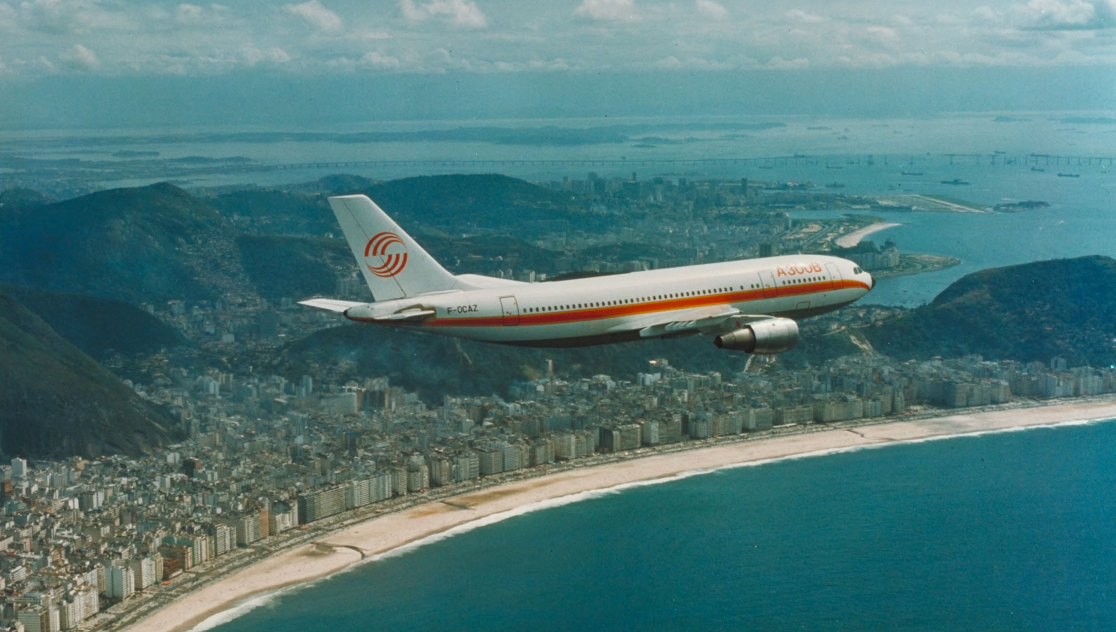
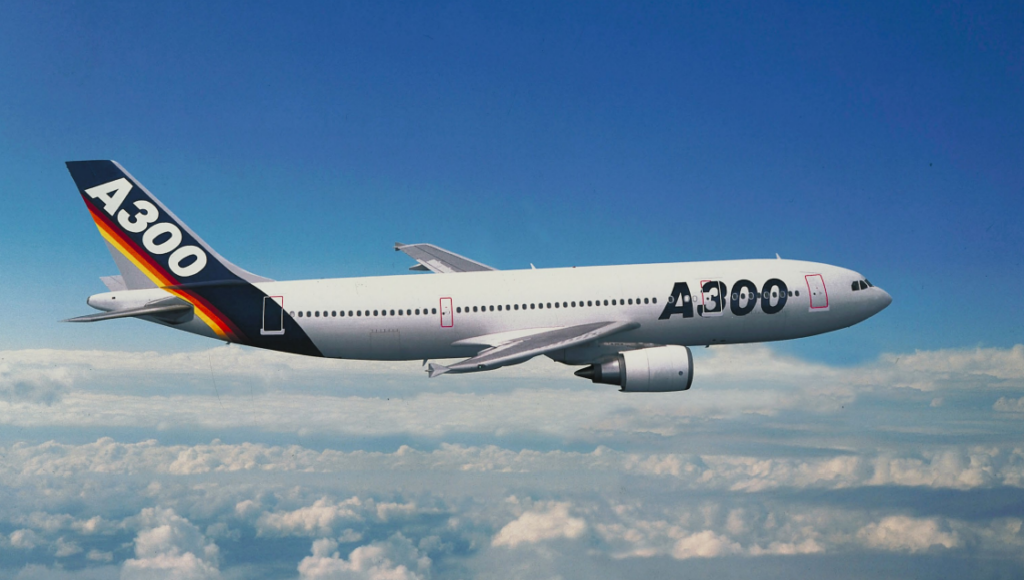
The aircraft envisaged in 1967 was initially intended to carry approximately 270 to 300 passengers, which explains the eventual designation A300. The word “Airbus” was not originally a company name – “air bus” was a generic industry term used at the time for a commercial aircraft of substantial size and range.
The three governments envisaged their national aerospace industries playing complementary roles. France was represented by Sud Aviation, West Germany by Deutsche Airbus, and Britain by Hawker Siddeley. Engine development was initially associated with Britain’s Rolls-Royce, which proposed the RB207 engine for the aircraft.
On 26 September 1967, the governments of France, West Germany, and the United Kingdom signed a historic Memorandum of Understanding (MoU) in London to officially start development of the Airbus A300.
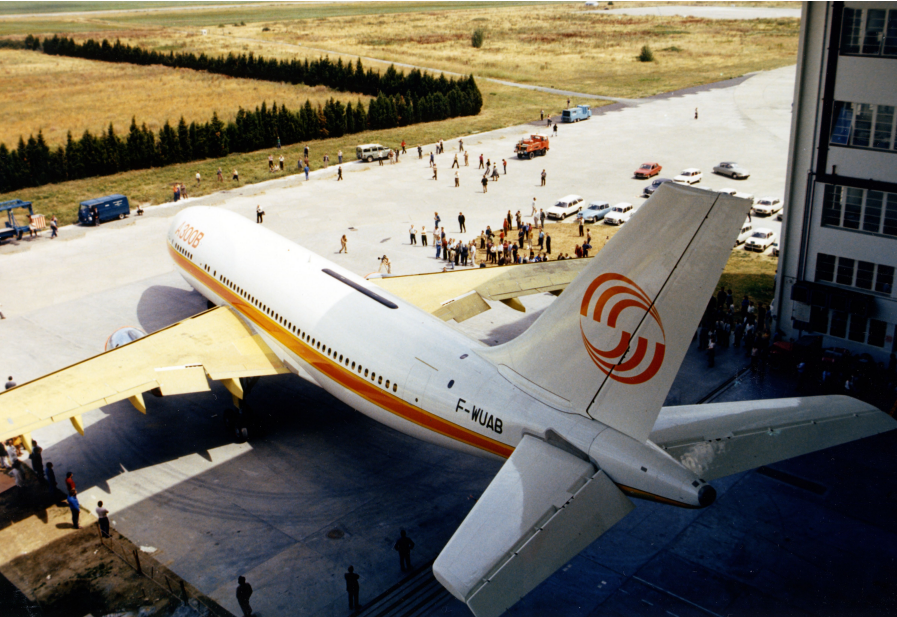
The arrangement was significant because it required cooperation across national borders at a level that was unusual for the European aerospace industry. Instead of one company designing and manufacturing the complete aircraft, production and engineering responsibilities could be distributed among different national partners.
This approach created challenges, particularly concerning management, industrial responsibilities and political priorities. Nevertheless, it offered a way of sharing the enormous costs and risks associated with developing a new wide-bodied jet.
From the 1967 agreement to the A300B
The project did not simply proceed unchanged from the 1967 agreement. During the following years, engineers and prospective airline customers reconsidered the aircraft’s size and configuration.
Air France and Lufthansa, which became important prospective customers, did not require an aircraft capable of carrying the originally envisaged 300 passengers. The design was consequently reduced in capacity.
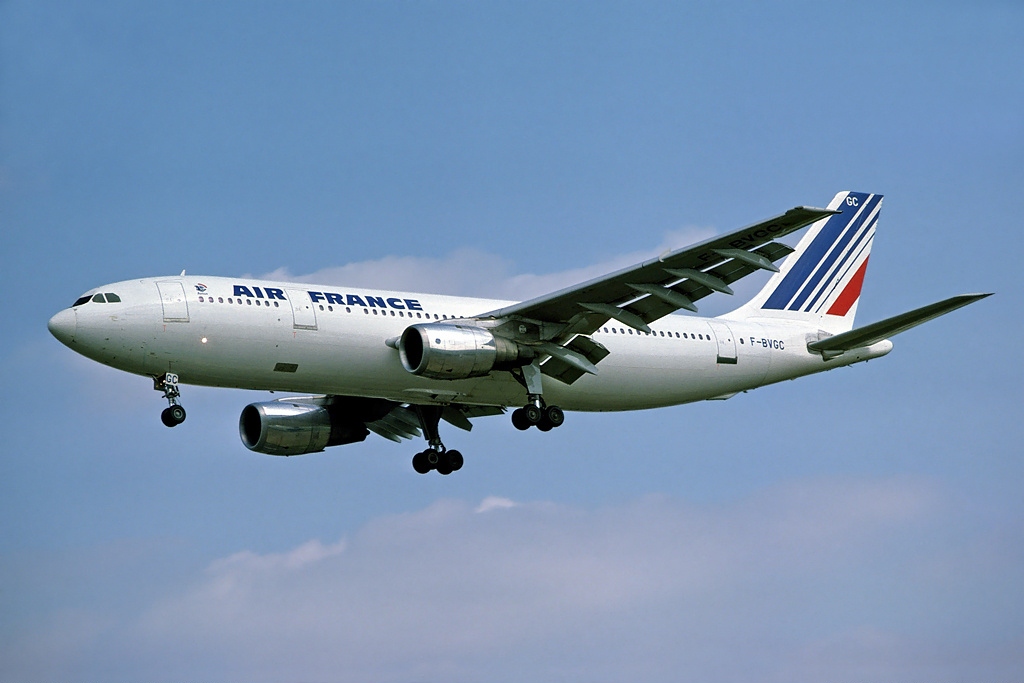
Engineers also developed a new fuselage cross-section that could accommodate eight seats across the cabin and two aisles while allowing two standard LD3 cargo containers to be carried side by side beneath the passenger deck. The resulting aircraft became known as the A300B.
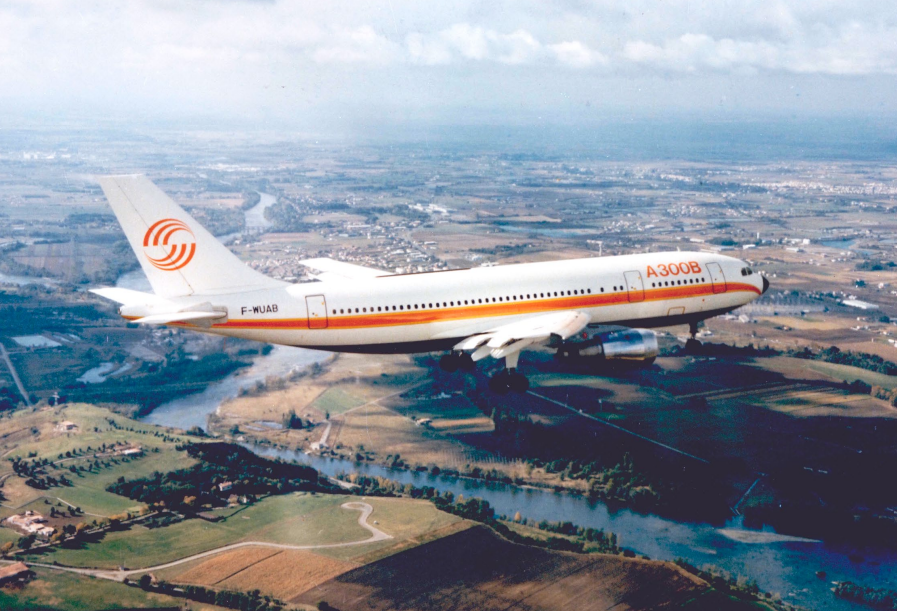
This redesign illustrates an important feature of Airbus’s eventual approach to aircraft development: responding closely to airline requirements rather than simply building the largest or most technically ambitious aircraft possible.
The political commitment also evolved. Britain ultimately withdrew from the government-backed programme in 1969, partly because of doubts about the project’s commercial prospects and because Rolls-Royce chose to concentrate on the RB211 engine for the Lockheed TriStar.
However, Britain’s Hawker Siddeley continued to participate privately and supplied the A300’s wings.
The formal launch of the A300
The A300 programme received a further boost at the 1969 Paris Air Show at Le Bourget. On 29 May 1969, French Transport Minister Jean Chamant and West German Economics Minister Karl Schiller signed an agreement formally launching the joint development of the A300.
This was a decisive step. The project had moved from an ambitious multinational concept towards an actual aircraft programme.
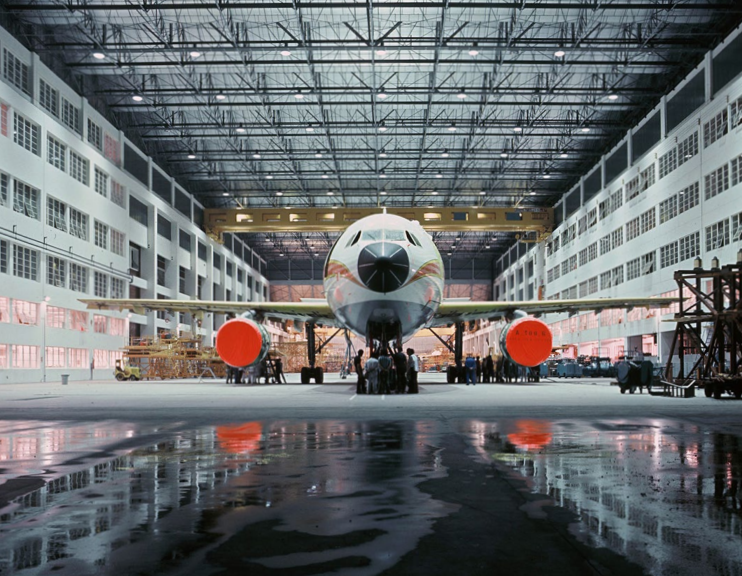
Airbus Industrie itself was subsequently established in December 1970 as a Groupement d’Intérêt Économique (GIE), or European Economic Interest Group. Its initial partners were France’s SNIAS and West Germany’s Deutsche Airbus, with Spain joining the consortium in 1971.
Although the British government had withdrawn, Hawker Siddeley remained involved in producing the A300’s wings, and Britain later rejoined the Airbus consortium through British Aerospace in 1979.
The first A300B1 finally took to the air on 28 October 1972, demonstrating that the idea developed through the European governmental agreements of the late 1960s had become a functioning aircraft.
Why the A300 mattered
The A300 was significant not simply because it was a new passenger aircraft, but because of the industrial model behind it. It demonstrated that European countries could cooperate on a highly complex technological project despite differences in language, government policy, industrial organisation and national interests.
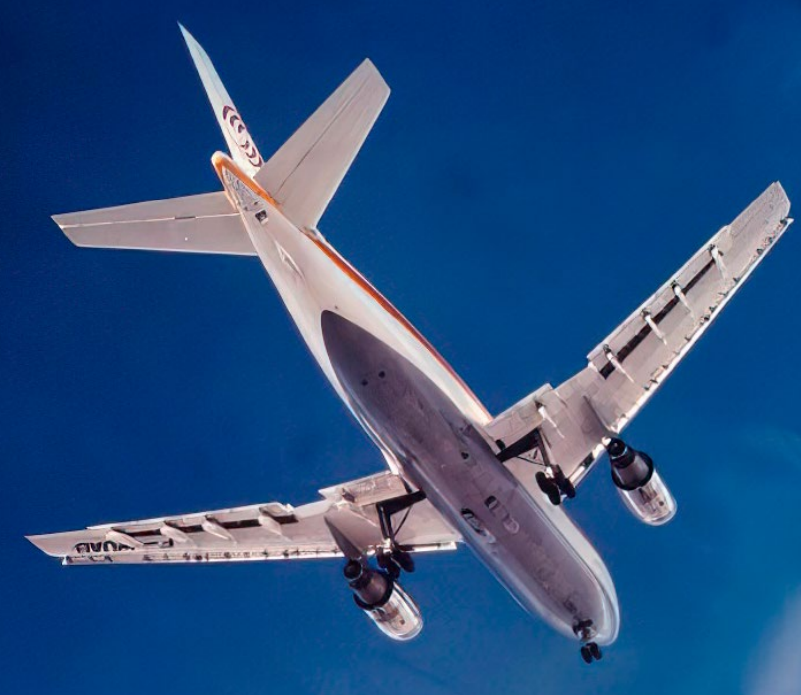
Technically, the A300 was also important. Airbus describes it as the first twin-engine wide-body airliner. Its twin-engine configuration offered airlines an alternative to the larger three- and four-engine wide-body aircraft then being developed.
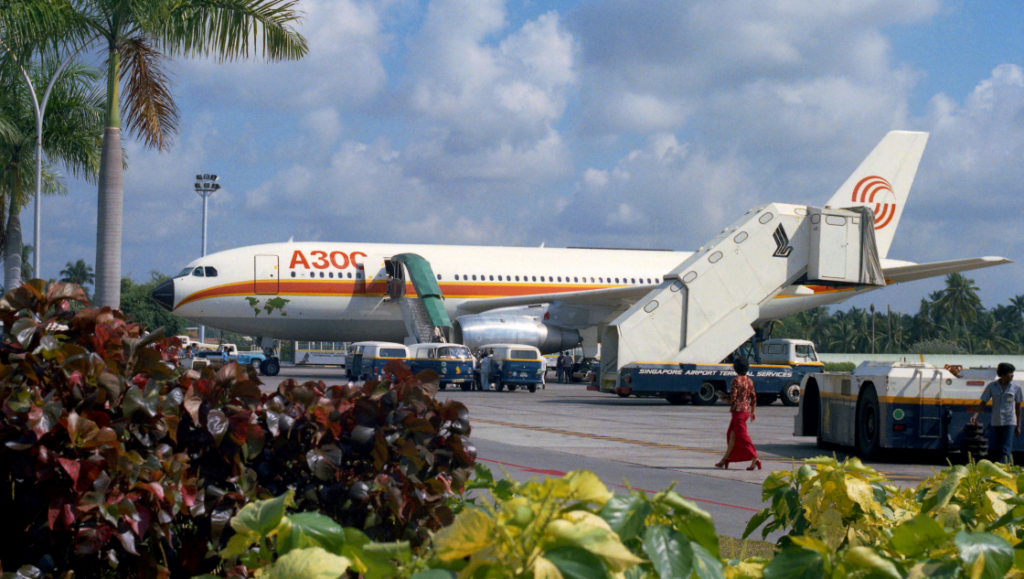
The aircraft established design features that would have a much longer life. For example, the A300’s fuselage concept influenced later Airbus wide-body aircraft, including the A330.
More broadly, the programme established an industrial network in which aircraft components could be designed and manufactured across several European countries before being brought together for final assembly. This became a defining characteristic of Airbus.
From a pan-European project to today’s Airbus
The significance of the 1967 memorandum becomes particularly clear when viewed from the perspective of Airbus today.
What began as cooperation between three European governments eventually developed into a multinational aerospace company with operations spanning commercial aircraft, helicopters, defence and space. Airbus states that its origins lie in the cooperation among France, Germany, the United Kingdom and Spain during the late 1960s.
The scale of the transformation is striking. At the end of 2025, Airbus reported an order backlog of 8,754 commercial aircraft, while delivering 793 commercial aircraft during the year. By June 2026, its commercial-aircraft backlog had risen to 9,222 aircraft.
During the first half of 2026, Airbus delivered 351 commercial aircraft, including A220s, A320-family aircraft, A330s and widebody A350s.
The company’s current product range is therefore vastly different from the single aircraft conceived in the 1960s. The A300 has long since ceased production, but its descendants include successful wide-body families such as the A330 and A350.
At the same time, the A320 family has become one of the most important aircraft programmes in modern commercial aviation.
The enduring legacy of 1967
The 1967 memorandum can therefore be viewed as an important starting point in a much larger story. It did not create the modern Airbus company overnight, nor did the original three-country arrangement survive unchanged. Britain withdrew from the government-backed programme, Spain later joined, and the corporate structure evolved considerably.
Nevertheless, the fundamental principle survived: European aerospace industries could achieve more by cooperating than by attempting to develop competing large aircraft programmes independently.
The A300 provided the proof of concept. Its development demonstrated that a multinational European industrial programme could produce a technologically advanced commercial aircraft and establish a viable alternative to American manufacturers.
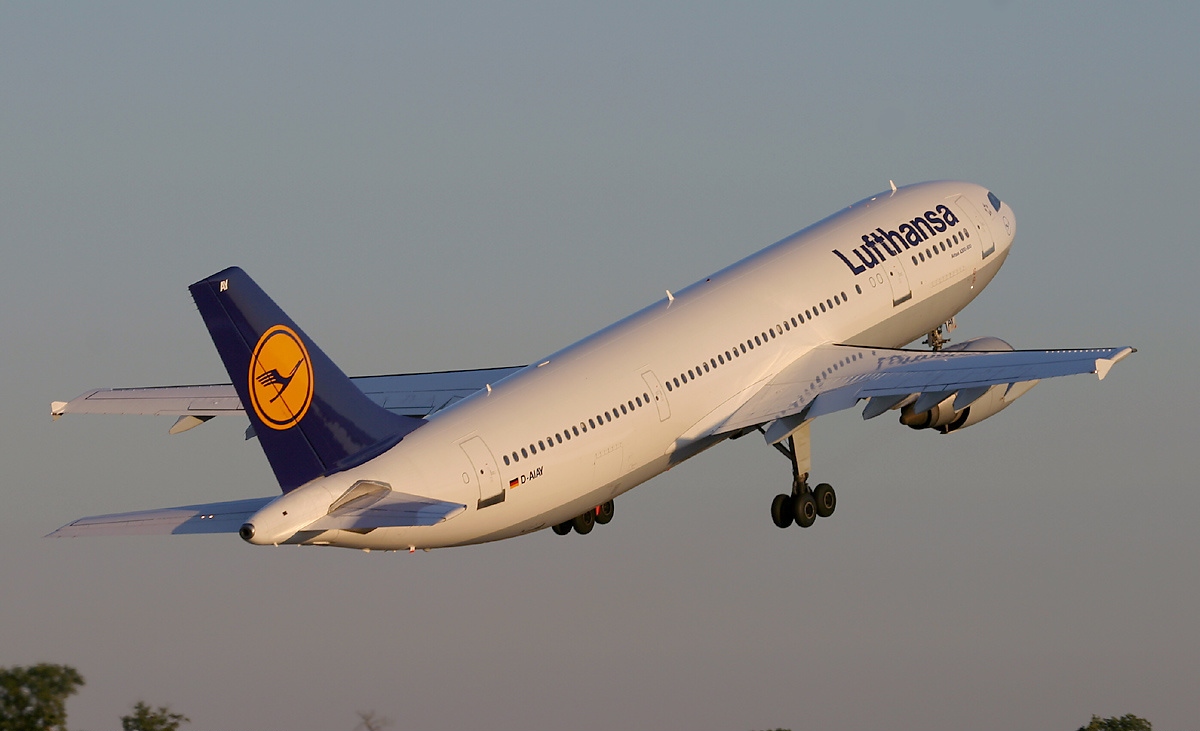
More than half a century later, the scale of Airbus illustrates just how far that original idea travelled. The memorandum of 1967 concerned the development of one new wide-bodied aircraft.
Today, Airbus is a global aerospace company whose commercial aircraft backlog alone numbers in the thousands and whose activities extend well beyond passenger aviation.
The story of the A300 is consequently not only the story of an aircraft. It is the story of an industrial experiment in European cooperation.
The agreement reached by France, West Germany and Britain in 1967 helped establish the foundations upon which Airbus was built, turning a politically and technically ambitious proposal into one of the world’s major aerospace enterprises.