Airbus A220-500 and A350-2000: Why the stretches are still on hold

5 min read
Airlines have been asking for a larger A220 since before the aircraft carried an Airbus badge. At the other end of the range, Emirates has been pressing for bigger long-haul aircraft since the demise of the A380, and has expressed interest in a stretched A350.
Yet neither project has secured approval. Airbus now says decisions should come before 2030, but what’s stopping it from committing to this future direction today?
Speaking at Airbus’s media briefings in Toulouse on October 14, commercial aircraft chief executive Lars Wagner indicated that decisions would depend on viable business cases and board approval, but admitted there would be customers waiting for both.
AirAsia is one such customer, with president Tony Fernandes saying at its May order of 150 A220-300s that the airline would buy another 150 aircraft if Airbus developed the larger version. Other prospective customers include Air France-KLM, Delta Air Lines, Air Canada and Lufthansa, which Aviation Week identified this month as supporters of a larger A220.
The A350’s customer picture is less explicit. Emirates president Tim Clark told Reuters in February that the airline would consider a larger variant, but that falls short of a launch commitment.
What’s holding Airbus back from its A220 and A350 stretch?
Airbus must fit both projects around an industrial system already under pressure.
The manufacturer delivered 547 aircraft through September against a full-year target of approximately 870, leaving more than 320 deliveries for the final quarter. Wagner nevertheless maintained confidence in that target at this week’s briefings.
Engine availability remains an obstacle. Airbus has yet to agree on Pratt & Whitney supplies beyond 2026 for the A320 family, although disruption affecting A220 engines has substantially eased. Cabin seat delays also continue to affect widebody production.
For the A220, increasing output is an immediate priority. Airbus Europe president Johan Pelissier told Aviation Week that the existing variants’ production ramp-up comes ahead of a stretch decision. The company is targeting 13 A220s a month by 2028, supported by expansion of its Belfast wing facility.
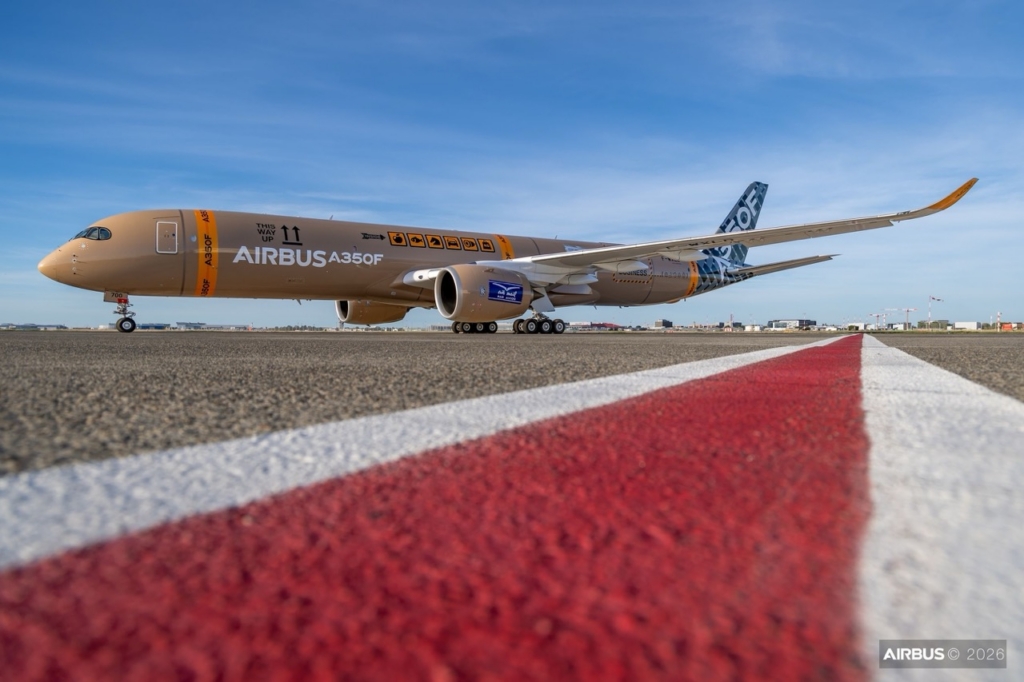
The A350 team also has an aircraft to certify. The A350F made its first flight on September 29, beginning a flight-test campaign Airbus says will last more than nine months. Meanwhile, Airbus is considering additional A350 production capacity. Increasing output beyond the existing assembly line’s approximately 12–13 aircraft a month would require another line and industrial system.
Aside from the workforce and industrial resources needed for a stretched A350, the stretch itself could generate a substantial propulsion commitment. Rolls-Royce chief executive Tufan Erginbilgic told the Financial Times in July that a design requiring a larger, more powerful turbine would mean developing a new engine.
Airbus widebody chief Julien Puyou confirmed this week that an A350 stretch decision would not come in 2026.
What could change the calculation? Firm commitments from several substantial customers, a settled design and confidence that suppliers can support development alongside higher production would make approval easier to justify.
Is bigger always better for Airbus?
The A321neo offers Airbus a compelling precedent. Its largest narrowbody has become its best-selling model, showing an airline preference for larger, denser aircraft that can shift more passengers per turn.
The economics are simple: more passengers sharing the cost of operating a flight leads to a lower cost per seat. However, that doesn’t guarantee a profitable route; the airline must still fill every seat.
At the same time, another shift has been happening in the airline world, and it’s around right-sizing the equipment for the route operated. More airlines are making use of Boeing’s smallest and largest 787s, for example, to ensure they are filling all the seats while still providing optimal capacity.
Nevertheless, variety within an aircraft family can be a benefit.
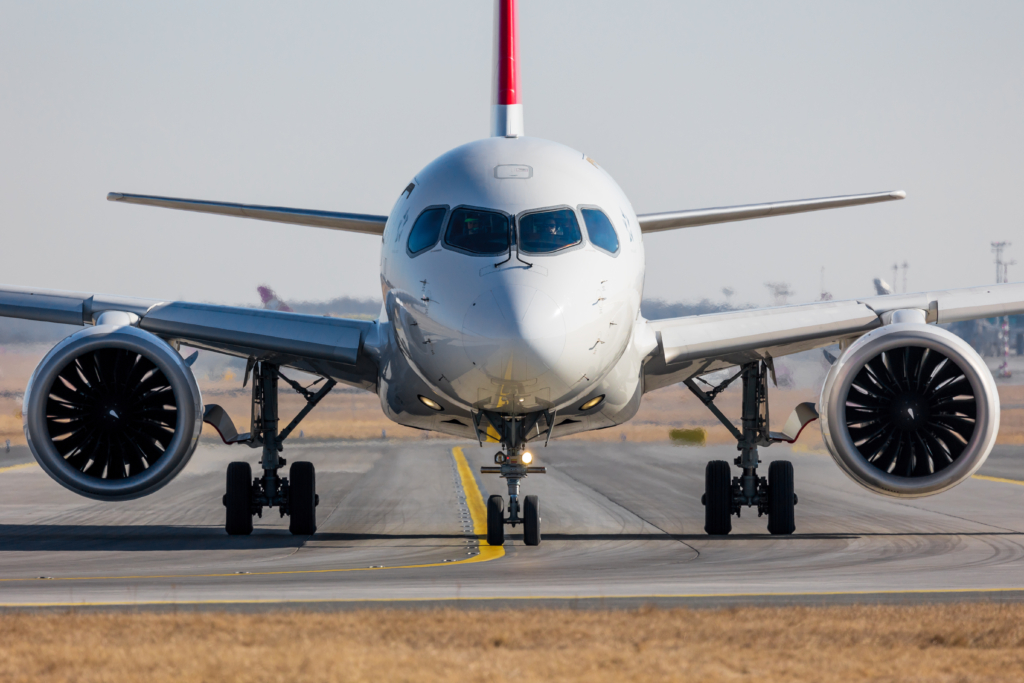
For the A220, Airbus is not entirely starting from scratch. Back in the days when it was the Bombardier CSeries, plans had already been drawn up for a longer CS500, although the aircraft was never built or certified.
To date, questions have remained over whether a larger A220 would begin to cannibalise sales of the smaller A320neo. But with the benefits of fleet commonality, Airbus could see this as a way to keep more customers in the Airbus ecosystem without needing to move between aircraft families.
At this week’s briefing, A320-family chief Christoph Zammert pointed to new-order delivery slots extending into 2034 as evidence of demand sufficient to support both products.
For the proposed A350-2000, the opportunity is more about competing directly with the Boeing 777-9 at the upper end of the widebody market. The end of A380 production gives that debate additional relevance, although an enlarged A350 would not replicate the double-decker’s capacity.
Would anyone beyond Emirates want it? Airbus says demand exists, but the publicly identified customer base remains less developed than for the A220 stretch. Airliner World reported interest from an unnamed airline already operating A350s and holding 777X orders. That is encouraging, but insufficient to establish the breadth of the market.
Nor does the growth of point-to-point flying automatically eliminate demand for larger aircraft. Direct routes can mature into high-volume markets, while congested airports can reward airlines that carry more passengers per departure. Airbus’s 2025 market forecast explicitly anticipated aircraft sizes increasing as routes develop.
Boeing’s latest outlook also envisages more than 8,000 widebody aircraft in service by 2045. That supports a substantial long-haul market, although it does not reveal how much demand belongs to its largest aircraft.
The two stretches will face different tests before Airbus commits to either. The A220-500 needs to turn visible airline demand into a profitable addition to an overlapping narrowbody portfolio, while the larger A350 needs to demonstrate a sufficiently broad market to justify potentially expensive development.
The A321neo shows what Airbus could gain. It does not make either decision automatic.