


US Air Force upgrades X-62 VISTA to test the next wave of combat AI

3 min read
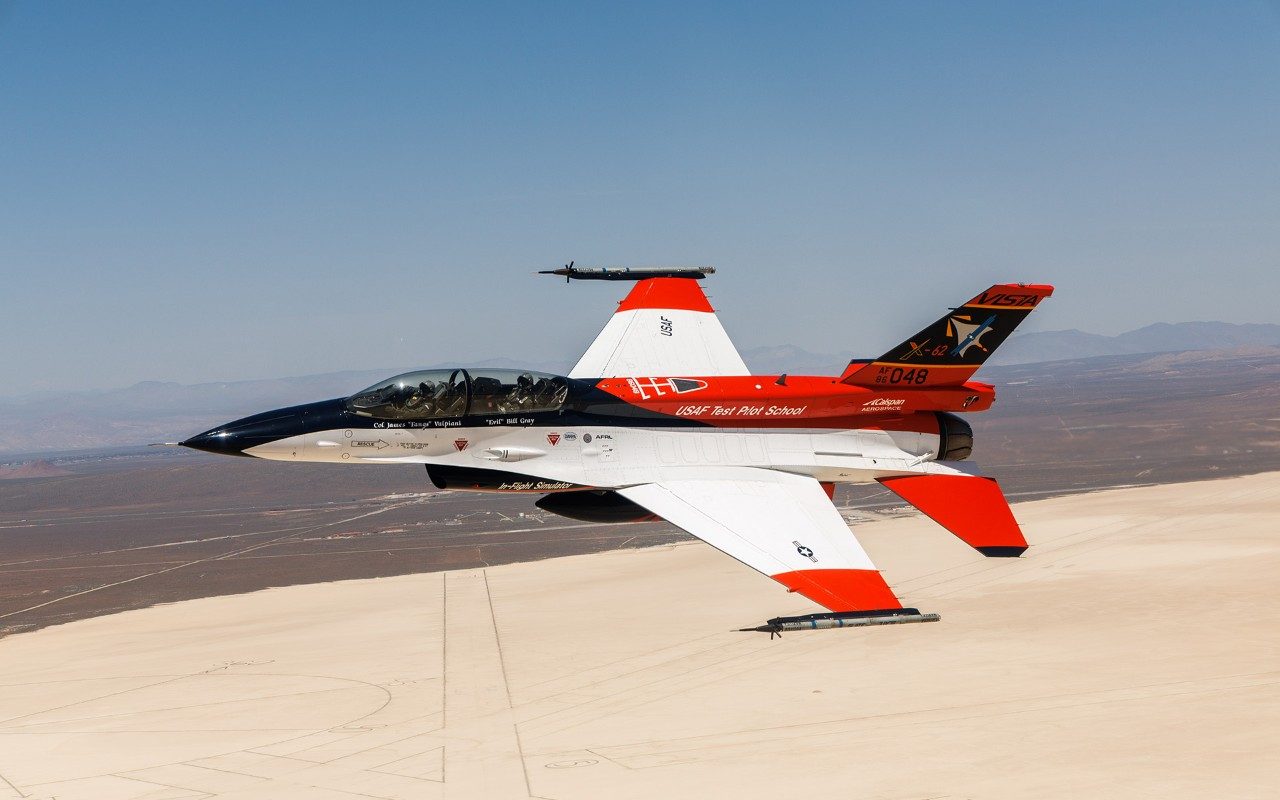
In August, the Air Force Test Pilot School campus at Edwards Air Force Base hosted the inaugural X-62 Research Symposium, where it outlined recent and planned AI and autonomy research involving its unique X-62 VISTA testbed.
VISTA is an important testbed for developing and evaluating the AI and autonomy technologies expected to underpin future uncrewed combat aircraft and increasingly autonomous crewed fighters.
X-62’s role in developing autonomous combat systems
On Tuesday, the Air Force said that the three-day summit “quickly set the foundation for future research in autonomy-enabled combat aviation through the nation’s first AI X-plane.”
The event included briefings from the Air Force, DARPA, the AFRL, the MIT Lincoln Laboratory, and others. Operational aircrew from an Air Combat Command fighter squadron also provided real-world operational perspective on “bridging the gap between pilot trust and machine learning.”
The key AI fighter testbed is the X-62A Variable In-Flight Simulation Test Aircraft (VISTA), which Lockheed Martin describes as a one-of-a-kind training aircraft. The highly modified F-16 was originally designated the NF-16D VISTA.
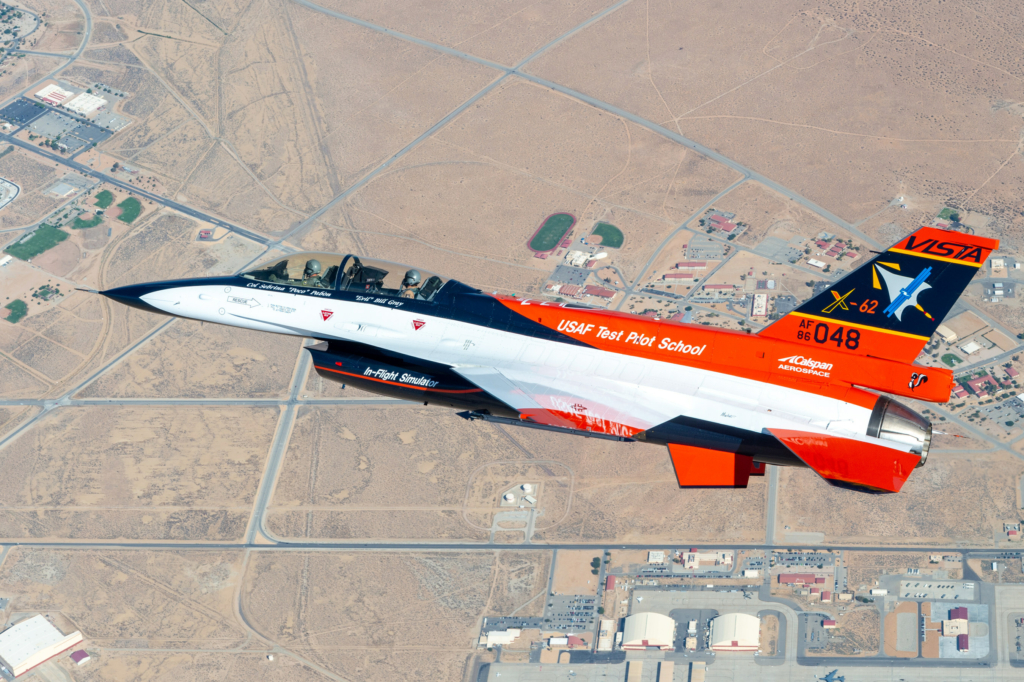
The VISTA made history in 2023 when it completed the first known live-fly artificial intelligence (AI) dogfight against a human-piloted F-16.
With its open systems architecture, VISTA is modified to test artificial intelligence (AI) and autonomy capabilities that allow it to mimic the performance characteristics of other aircraft.
Air Force rapidly upgrading VISTA with two accelerated test programmes
In August, the Air Force detailed two accelerated test programmes, HAVE HEAT and HAVE HOLIDAYS, that had been conducted on VISTA in April. The wider Mission Systems Upgrade is adding an advanced radar, expanded sensor and computing capacity, and modern network communications.
HAVE HEAT includes autonomous AI sensor-to-vehicle control, while HAVE HOLIDAYS is concerned with integrating the framework required for advanced technology evaluation.
With the upgrades, the X-62 is better able to complement existing combat autonomy systems (e.g., VENOM) and rapidly pathfind emerging uses.

The work forms part of the broader US effort to develop autonomous combat aircraft, including Collaborative Combat Aircraft (CCA), that can complement crewed fighters and perform missions without a pilot aboard.
Next-generation manned fighter jets, like the F-47, GCAP/Tempest, and even Block 4 upgrades for the F-35, include a large amount of AI and autonomy, although they remain piloted.
HAVE HOLIDAYS programmes
The X-62 is looking forward to a high-workload test schedule. To prepare it, its HAVE HOLIDAYS tests were performed in parallel to the HAVE HEAT AI interception milestones.
HAVE HOLIDAYS includes HAVE BALLDROP, HAVE THANKS, HAVE DREIDEL, and HAVE SANTA.
HAVE BALLDROP was the integration of a non-prime, third-party autonomous agent into the X-62 derived from the AFRL’s xFACTOR programme. The software opens the door to partnerships across government, industry, and academia.
HAVE THANKS also saw the integration of the BirdBox open-architecture software framework designed for next-generation Assisted Target Recognition sensor data exploitation at the tactical edge. HAVE DREIDEL evaluated runtime-assurance technology designed to prevent autonomous systems from violating user-established operational limits.
The fourth, HAVE SANTA, is particularly eye-catching. This was a collaboration with IBM and Lockheed Martin that investigated the feasibility of an on-platform parallel simulation using IBM’s NorthPole neuromorphic chip, a lower-power neural inference processor for edge AI.
IBM’s NorthPole chip was integrated into VISTA’s onboard computing environment to assess its environmental performance under flight conditions. The chip successfully accelerated Lockheed Martin Skunk Works’ custom “Supermassive” simulation.
In 2023, IBM said that NorthPole represented a breakthrough in chip architecture that promises to deliver massive improvements in energy, space, and time efficiencies.
It said NorthPole “could potentially be the sort of device that’s needed to move autonomous vehicles… to ones that can think and react to the rare edge-case situations that make navigating in the real world so challenging even for proficient human drivers.”
Sign up for our newsletter and get our latest content in your inbox.


More from


October 13, 202612 min read





