


Shield AI and Honeywell demonstrate autonomous drone teaming with Hivemind

4 min read
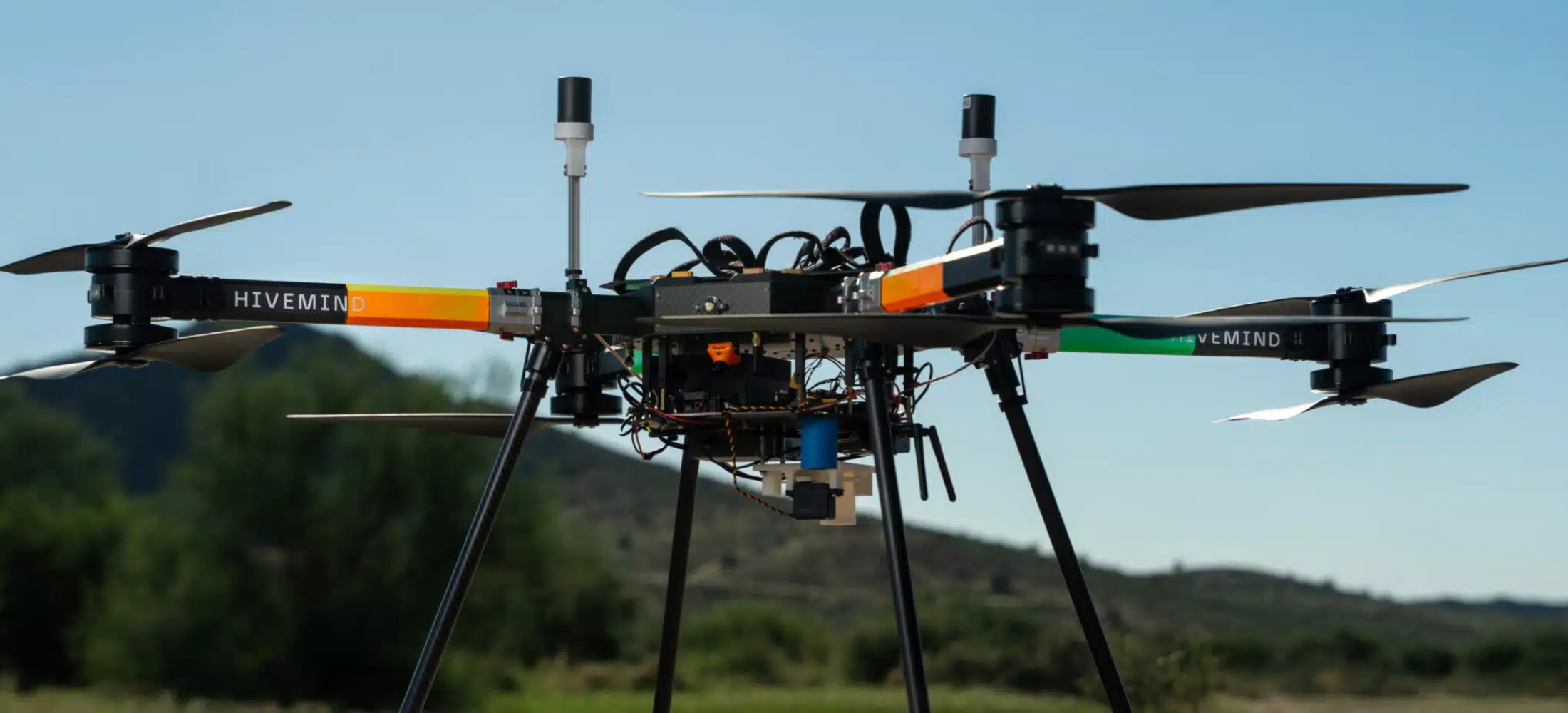
Yesterday, Shield AI and Honeywell Aerospace announced the completion of two autonomous flight demonstrations using Shield AI’s Hivemind, culminating in a coordinated intelligence, surveillance, and reconnaissance (ISR) mission involving two aircraft.
Honeywell integrated Shield AI Hivemind on demo drone in six weeks
Shield AI claims it helped Honeywell Aerospace compress an estimated 54-week autonomy-development cycle into six weeks before progressing to multi-aircraft teaming.
Within six weeks, Honeywell’s autonomy team trained on, integrated, and flew Hivemind on their BFD-SE8 multirotor drone. The drone flew using an autonomy stack built on the Hivemind Enterprise.
The first official demonstration flight took place on the eighth of July in Plymouth, Minnesota. During that mission, the Hivemind-enabled drone took off on its own, flew a planned route, and rerouted around a no-fly zone before returning to base.
Powered by Hivemind: autonomy development reduced from one year to six weeks @Honeywell_Aero engineers began training on Hivemind Enterprise in late April. Six weeks later, they flew their first autonomous aircraft. Hivemind handled route planning, mission management, and communication between aircraft so the team could focus on its target detection and tracking model. That work culminated in a two-aircraft ISR mission. Honeywell’s model detected and tracked the target on one aircraft. Hivemind passed the target location to a second aircraft, which delivered a payload and returned to base. More to come from Shield AI + Honeywell Aerospace! Autonomy for the world. The greatest victory requires no war.
— Shield AI (@shieldaitech) October 13, 2026
Tom Schaefer, vice president of Hivemind Enterprise at Shield AI, noted that Hivemind Enterprise handled autonomy basics, but the Honeywell team built its “own detection and tracking model.”
Second demo flight, a glimpse of ‘teaming’ not yet ‘swarming’
Since then, two drones have run Hivemind and have been equipped with Honeywell Aerospace’s HGuide o480 inertial navigation system. They have completed a coordinated ISR mission near Phoenix.
One drone detected, identified, and tracked a target, passing the information onto the second drone, which then autonomously flew to the target, delivered a payload, and returned to base with the scout drone.
Shield AI says these drones shared target information and divided mission tasks autonomously, “demonstrating multi-aircraft teaming built by Honeywell engineers on Hivemind Enterprise.”
Work on this demonstration flight began immediately after the July flight, with Honeywell training, deploying, and testing its own target detection and tracking model over a period of three months.
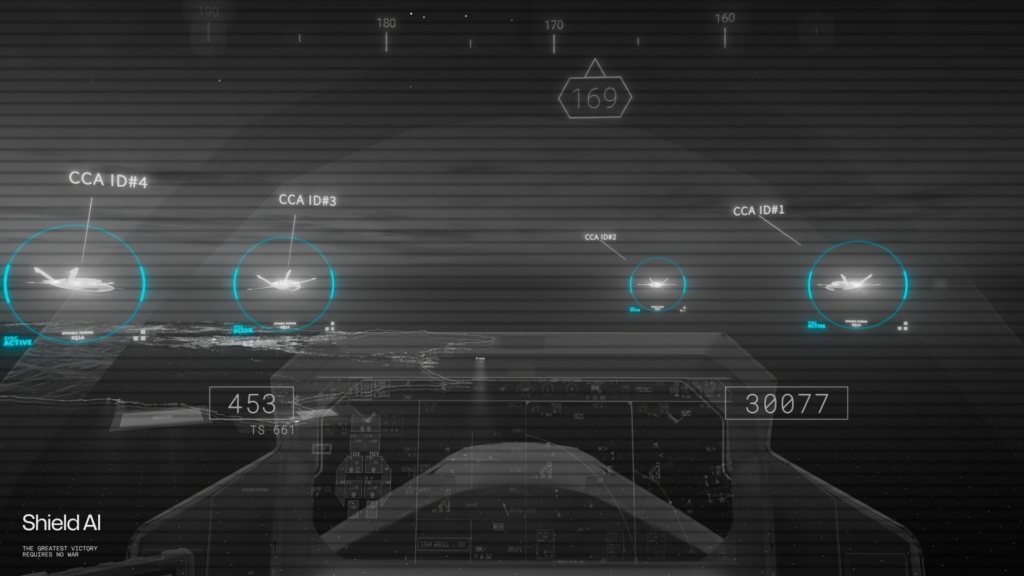
Especially pre-2022, one of the buzzwords in military drone development was ‘swarming,’ which is a concept often poorly understood. Swarming does not simply mean a ‘swarm’ of drones flying together or carrying out pre-programmed manoeuvres (e.g., a light show).
Swarming is multiple drones operating as a coordinated group—communicating, collaborating, and often making collective or decentralised decisions—to engage targets from multiple directions simultaneously, overwhelm defences through mass and saturation, or achieve other effects in a denied environment.
This Honeywell demonstration is more specifically an example of autonomous multi-aircraft teaming: one aircraft found and tracked the target, while another acted on the information and performed the subsequent task.
Shield AI has previously stated that Hivemind is a mission autonomy software designed to make autonomous multi-aircraft teaming and swarming a reality.
Hivemind’s open architecture
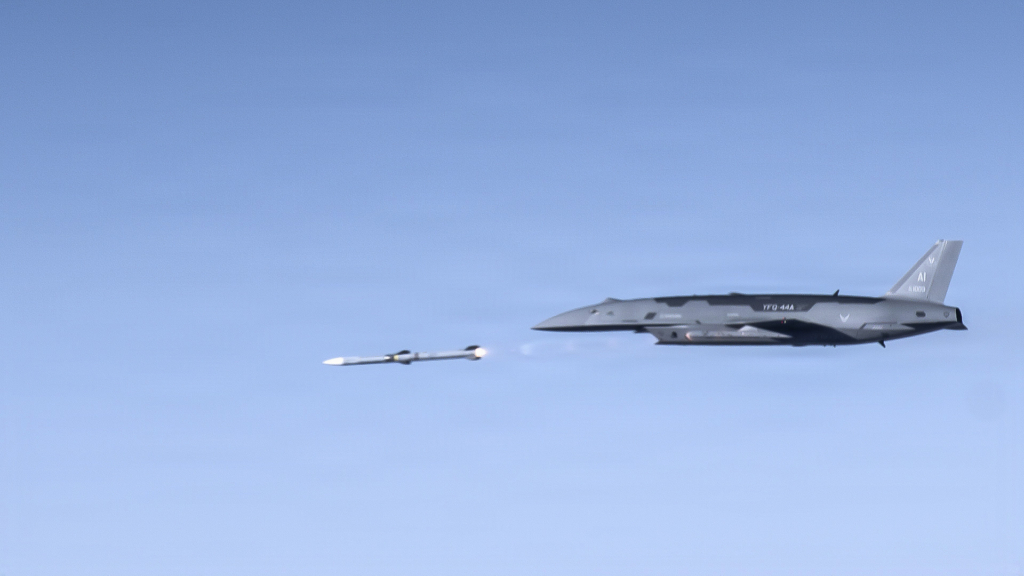
In 2026, the US Air Force issued separate contracts for its Increment 1 Collaborative Combat Aircraft for the aircraft themselves (General Atomics’ FQ-42 and Anduril’s FQ-44) and the mission autonomy software (Shield AI’s Hivemind and Collins’ Sidekick).
This highlights the importance of the mission autonomy software on next-generation autonomous aircraft.
Hivemind is built with an open architecture that allows it to be adapted by partners and evolve rapidly. Honeywell’s Todd Giles, SVP Engineering and Chief Technology Officer, noted, “Open architectures are changing the pace of innovation in aerospace.”
Giles explained the tests demonstrate how quickly Honeywell can translate advanced autonomy into real-world capability and create a “scalable foundation for the next generation of autonomous aircraft and mission systems.”
Shield AI says that Hivemind provides core capabilities such as route planning, mission management, and communication between aircraft. This enables companies to focus on integrating their own AI models, sensors, and mission capabilities.
Shield AI and Honeywell plan to move on to defining how Hivemind connects with Honeywell’s integrated avionics, navigation, and sensing capabilities. The companies will work to find applications for larger uncrewed aircraft and for commercial aviation.
Sign up for our newsletter and get our latest content in your inbox.


More from


October 13, 202612 min read






