


US Air Force selects Anduril FQ-44 and General Atomics FQ-42 for CCA programme

4 min read
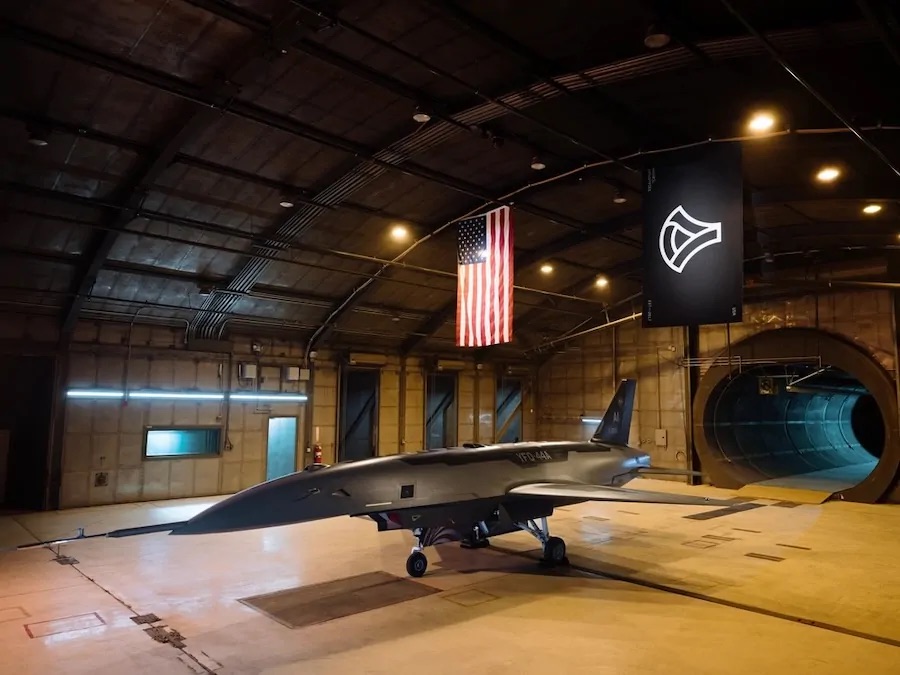
Yesterday, the US Air Force awarded the engineering and manufacturing development and production contracts to General Atomics for the FQ-42 and Anduril for the FQ-44. This clears both aircraft to move forward with Increment 1 of the Air Force’s CCA programme.
Air Force awards CCA contract to Anduril and General Atomics
In a statement, Anduril says the contract to move forward with the production phase of the Collaborative Combat Aircraft (CCA) programme. This comes weeks after Anduril said its FQ-44 was entering production.
Today, the @usairforce selected Anduril for the production phase of the Collaborative Combat Aircraft program.
— Anduril Industries (@anduriltech) June 17, 2026
We are now on contract to deliver production FQ-44 fighter aircraft to support continued testing, validation, and, ultimately, operational fielding.
From prototype… https://t.co/XsNLcS0wlX pic.twitter.com/RaVNlxsEG9
In a statement, Anduril said it will “deliver an initial set of production FQ-44 semi-autonomous fighter aircraft to support continued testing, validation, and, ultimately, operational fielding.”
It adds that the contract establishes a structure for the Air Force to purchase more lots of production of the FQ-44 over the next several years.
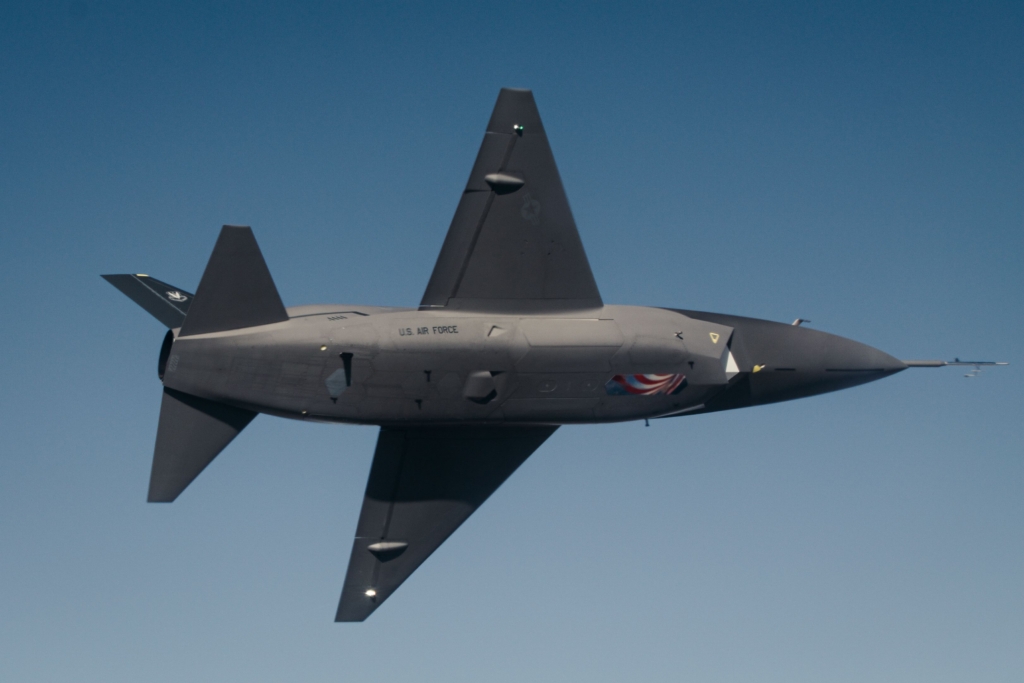
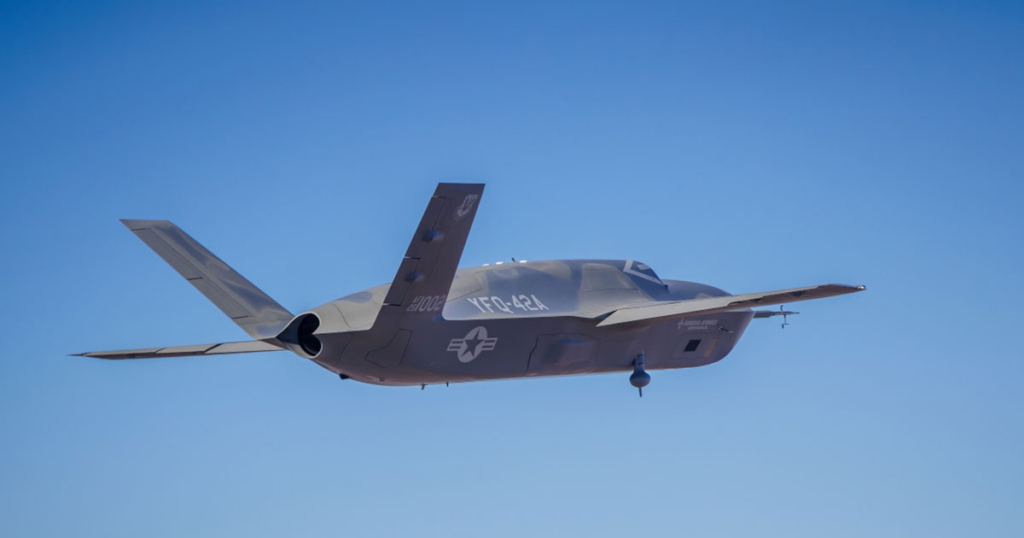
For its part, General Atomics said its FQ-42A has been “designed, developed, and flight-tested FQ-42A on an accelerated schedule unlike any fighter in recent history.”
The Department of the Air Force has awarded multiple contracts under the Collaborative Combat Aircraft program, including Increment 1 air vehicles and mission autonomy software.
— U.S. Air Force (@usairforce) June 17, 2026
Details on accelerating efforts to rapidly field next-generation combat capability:… pic.twitter.com/L7AO64ucsj
The Air Force plans to purchase 150 CCA aircraft by the end of the decade.
The ‘brains’: Shield AI’s Hivemind & Collin’s Sidekick
The Air Force stated, “Equally critical to the CCA ecosystem is the mission autonomy software. The Air Force awarded mission autonomy production contracts to a pool of six vendors, establishing a competitive marketplace for the program.”
The U.S. Air Force awards GA-ASI production contract for FQ-42A Collaborative Combat Aircraft.
— General Atomics Aeronautical Systems, Inc (GA-ASI) (@GenAtomics_ASI) June 17, 2026
Read the news: https://t.co/PmPUCWx9K1 pic.twitter.com/fum9EzbU79
The six vendors are Anduril, General Atomics, Lockheed, Northrop, Collins, and Shield AI. Of these, the Air Force also awarded production options to Anduril, RTX Collins Aerospace, and Shield AI to accelerate the delivery of critical mission autonomy software.
A primary mission autonomy provider for CCA Increment 1 is expected to be awarded by summer 2027, after a six-month period to assess progress.
Following the Air Force announcement, Shield AI proclaimed it had been awarded a production contract by the U.S. Air Force to “implement Hivemind mission autonomy software for the Collaborative Combat Aircraft (CCA) program.”
Hivemind is the primary “brain” of FQ-44A aircraft, where it operates separate mission autonomy software alongside Anduril’s own Lattice system.
Shield AI emphasises that its system is platform-agnostic and can be used across the broader CCA ecosystem rather than being tied to a single aircraft platform. It says Hivemind assumes “the role of a human pilot or operator, enabling unmanned systems to sense, decide, and act.”
The other “brain” selected by the Air Force is Collins Aerospace’s (RTX) Sidekick, which is the mission autonomy software for the General Atomics FQ-42A.
While Shield AI was quick to report on the Air Force awarding the contract, there does not appear to be a similar announcement by Collins Aerospace/RTX.
Having learned from mistakes made in awarding the F-35 contract, the Air Force now has a policy of Autonomy Government Reference Architecture (A-GRA) to ensure open architecture and avoid a contractor lock.
Get the latest aerospace defence news here on AGN.
Air Force’s choice for two CCAs
Both General Atomics and Anduril were selected in 2024 to build production-representative flight test articles for the ambitious CCA programme. Both conducted their maiden flights last year.
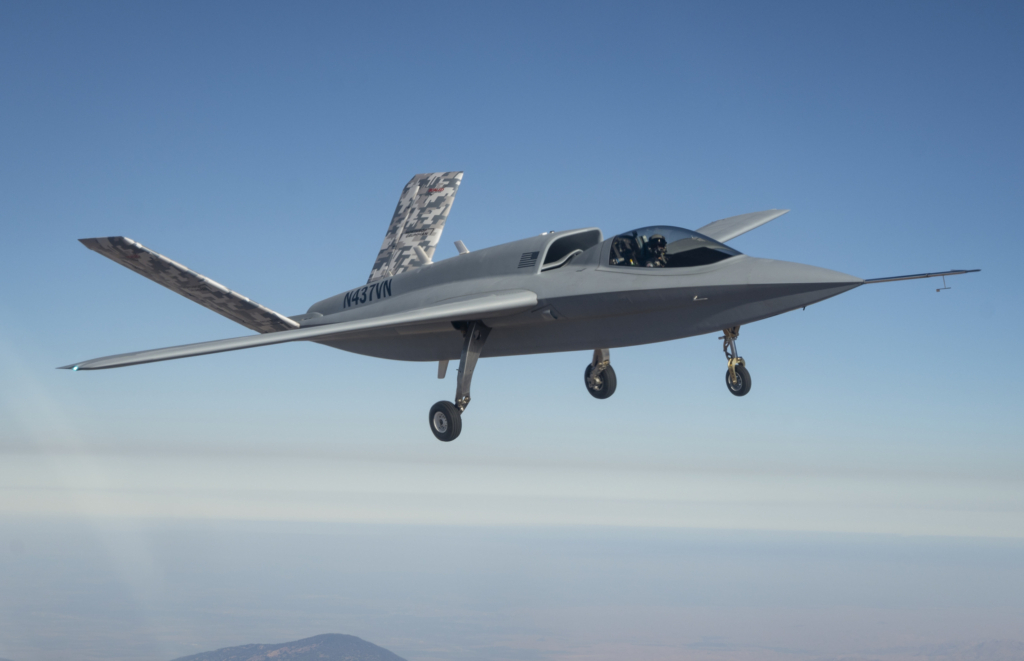
The solutions offered by Lockheed Martin, Boeing, Northrop Grumman, Kratos, and others were rejected.
However, Increment 1 is partially the Air Force’s effort to rapidly develop the CCA programme and get the autonomous aircraft type into service.
From there, the Air Force will move on to the more important Increment 2. This is considered the stage where the more important and difficult engineering is done. At this stage, aircraft need to solve many more challenging issues, such as operating over the distances of the Pacific.
Being selected for Increment 1 is seen as an advantage but not a deal-breaker for Increment 2. Lockheed is pressing forward with its high-end Vectis CCA, Boeing is continuing to develop its MQ-28 Ghost Bat, while Northrop is rapidly developing its option now designated the YFQ-48 Talon.
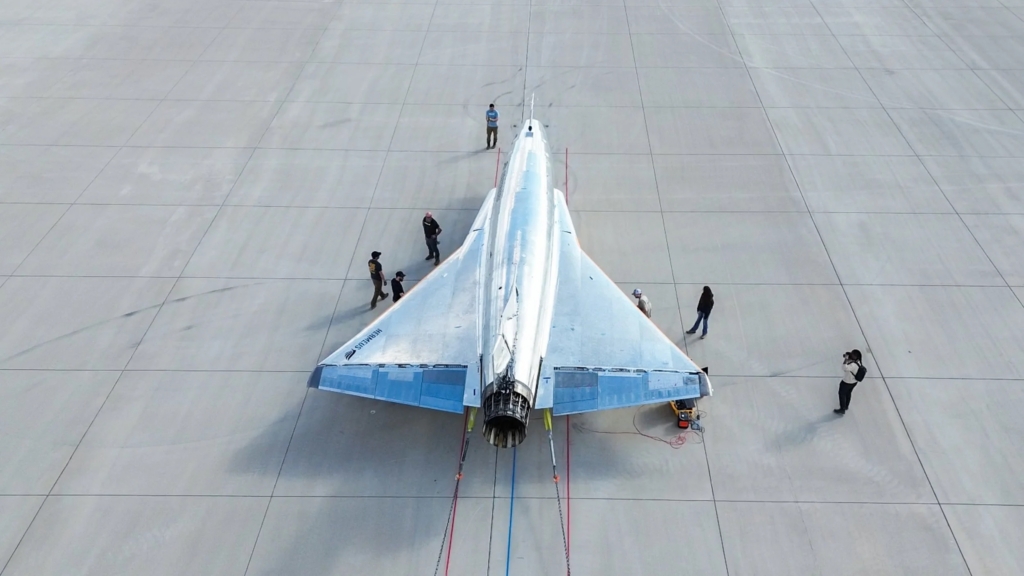
Shield AI has suggested a different approach with fully-fledged unmanned fighter jets (its X-Bat concept), while Hermeus thinks there is a need for supersonic or even hypersonic CCAs and is developing its Quarterhorse.
Featured Image: Anduril


