


Switzerland’s first F-35A takes shape in Italy ahead of 2027 pilot training

4 min read
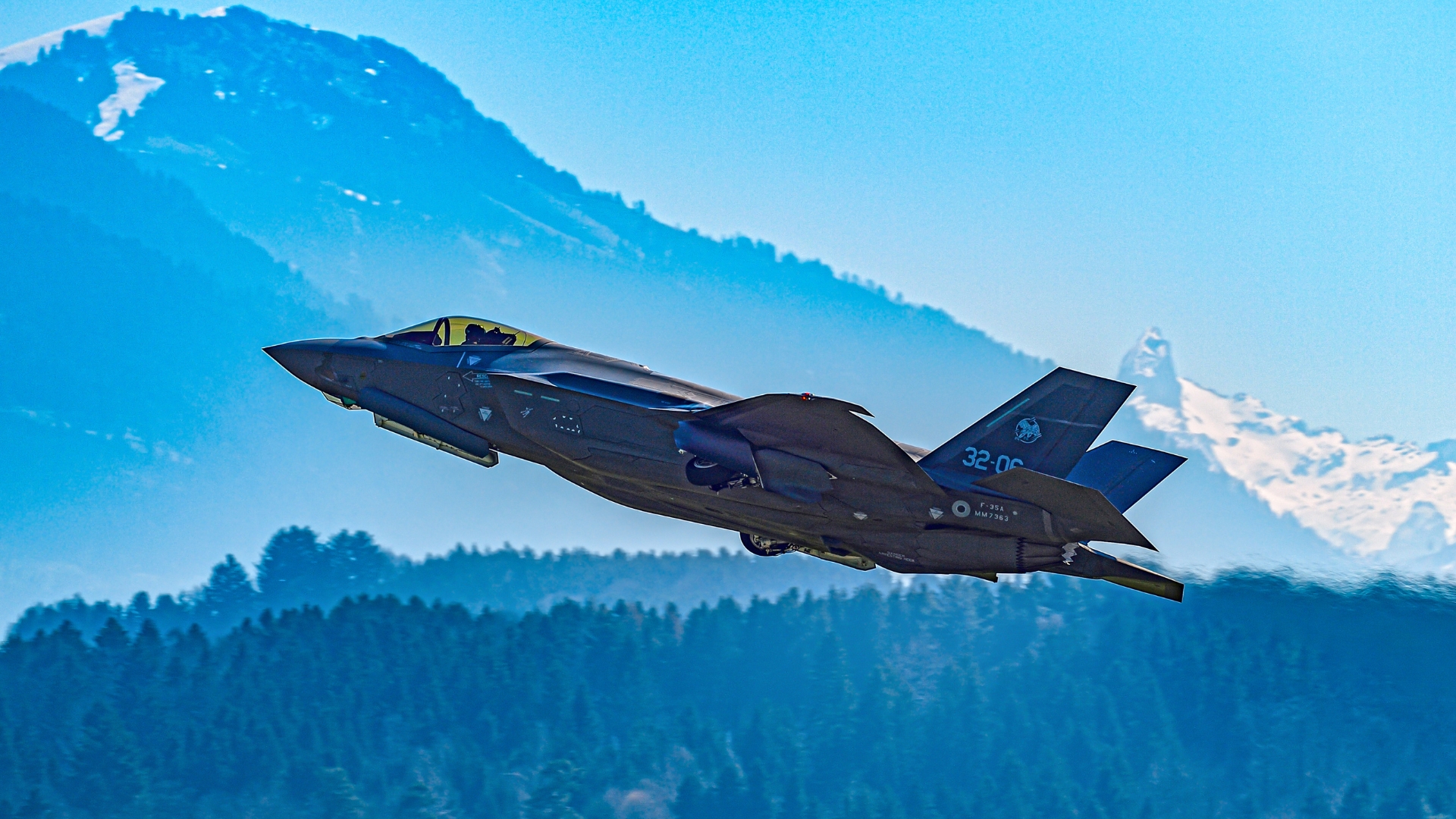
Switzerland’s long-awaited F-35 programme has reached a milestone moment, with the first components of a future Swiss fighter jet taking shape at Leonardo’s Cameri facility in northern Italy.
The Government of Switzerland has announced that the first fuselage section and wing of its future F-35A fleet have been assembled. The news comes as the finishing touches are being applied to the first German F-35A in Fort Worth.
The F-35A aircraft forms part of a fleet that will begin training operations in the US in 2027, before entering service in Switzerland in 2928.
First Swiss Air Force F-35A section being assembled
The first structural sections of Switzerland’s future F-35A fleet are being manufactured at Leonardo’s Cameri facility before being shipped to Lockheed Martin in Fort Worth for final assembly.
The Swiss State Secretariat for Economic Affairs shared this pixelated image, below, and said, “In the Leonardo plant in Cameri in the Italian province of Novara, important components for the first Swiss F-35A are currently being manufactured.”
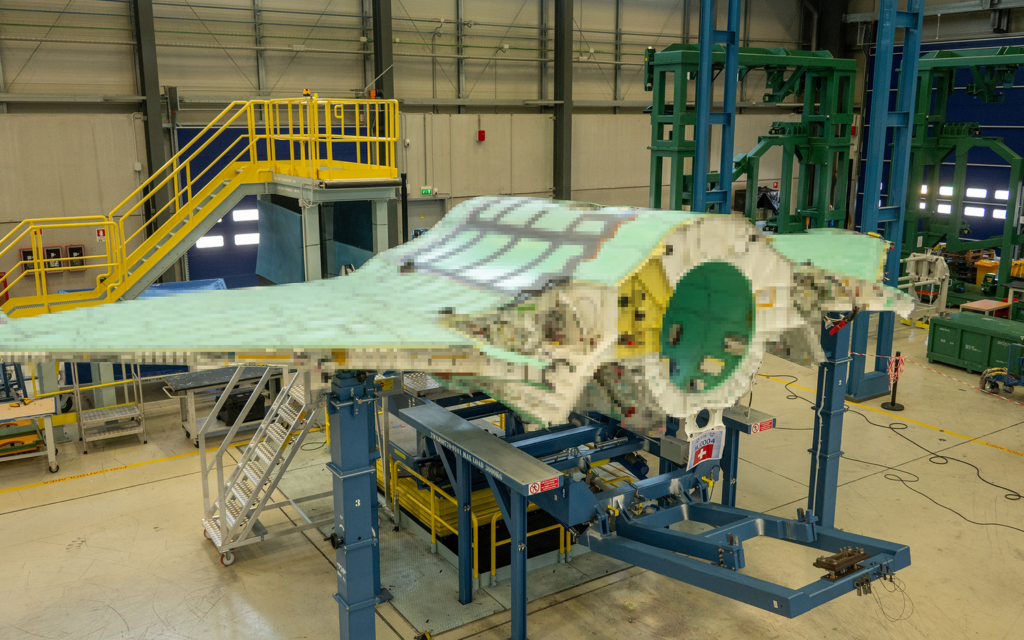
The first forward fuselage section and the first wing for Switzerland’s F-35A fleet have entered assembly. The aircraft will eventually have the military Swiss registration J-6004. This will not be the first Swiss F-35 flown by Swiss pilots.
A batch of eight F-35s, initially intended for Swiss training, is to be assembled in Fort Worth. Some of their structural elements are being produced at Cameri and will then be transported to the US for assembly. The first eight Swiss F-35As are expected to be deployed to Ebbing from mid-2027.
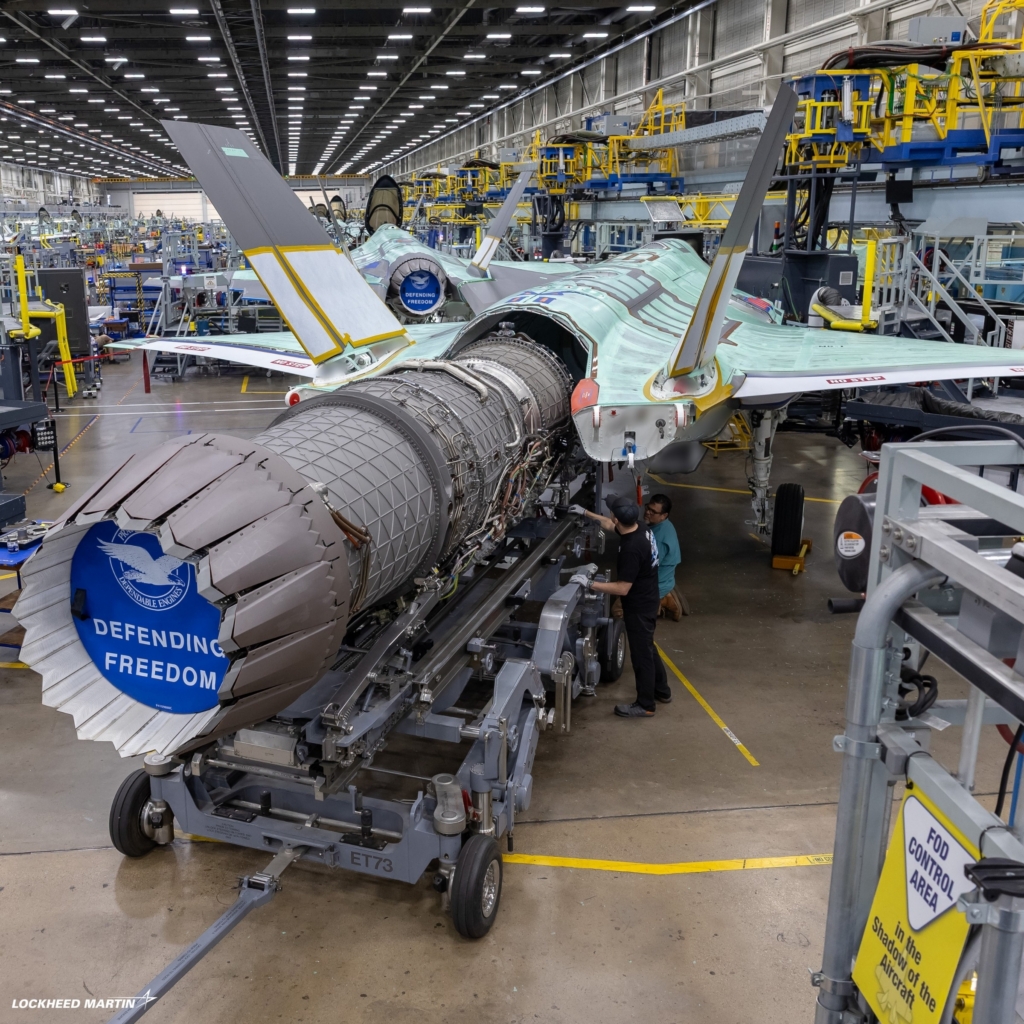
The first Cameri-produced F-35A is scheduled to be transferred directly to Switzerland in mid-2028, while J-6004 – the airframe whose fuselage is now being built – is expected to arrive at the end of 2029.
The Swiss F-35A production schedule
The current plan for Swiss F-35As is for the first eight to be manufactured and assembled in the United States and then delivered to Ebbing Air Force Base. The next 24 are to be produced at Cameri and then delivered directly to Switzerland.
The original industrial plan envisaged the final four aircraft being assembled by RUAG in Switzerland as an offset project, although more recent government statements suggest all remaining aircraft may instead be delivered through the Cameri production line.
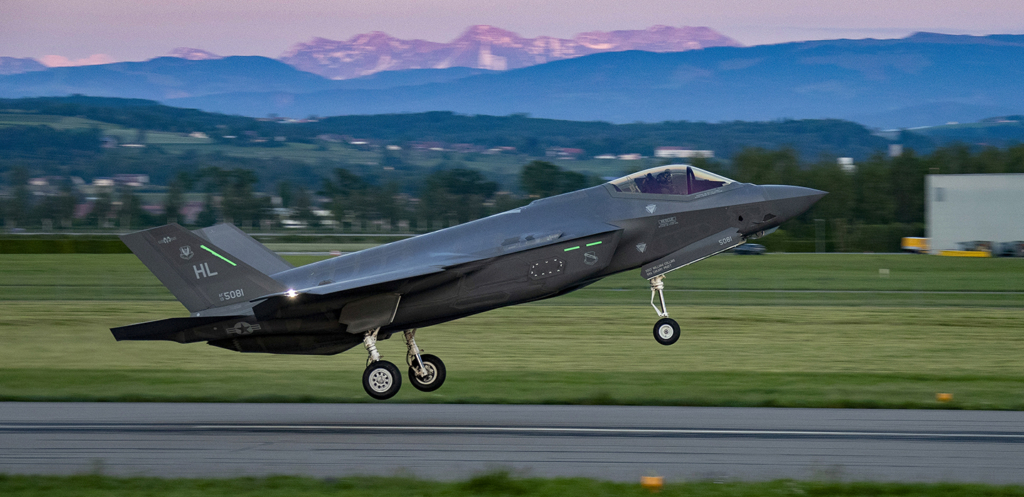
Switzerland has a referendum-imposed cap (fixed price of 6 billion francs or around $7.7 billion) on fighter jet spending. These was deemed enough for 36 F-35s, but the programme later became the subject of a pricing dispute. Consequently, Swiss Info reported in May that the country is considering reducing from 36 to 30 F-35As.
Switzerland is gearing up to operate the F-35As at its Payerne (from 2028), Meiringen (from 2030), and Emmen (from 2032) air bases. They will replace the country’s aging fleet of F/A-18 legacy Hornets.
Replacing legacy Hornets with Europe-infused F-35As
The F-35A was selected as the winner to replace its Hornets, beating out Sweden’s Saab Gripen E, France’s Dassault Rafale, and the European Eurofighter Typhoon. At the time, Switzerland claimed the F-35A was the most cost-effective option with the lowest bid and highest capability.
Finland similarly elected to purchase the F-35A to replace its legacy Hornets. It deemed the F-35A useful for its version of dispersed airfield operations that the Gripen is often marketed towards.
An F/A-18C Hornet with the Swiss Air Force lands at Meiringen Air Base in Central Switzerland, located inside a cow farm-filled steep-sloped alpine valley in the Swiss Alps.
— OSINTdefender (@sentdefender) November 17, 2025
Video credit goes to https://t.co/dOGeE2zaNQ on Instagram. pic.twitter.com/0GA4WIJIao
Components of Swiss F-35As are produced by various countries, with the middle fuselage coming from Germany, the rear fuselage, ejection seat, and more from the United Kingdom, and other states like the Netherlands and Canada. The US has the bulk of the workshare in aircraft by value, although its share could be lower on Cameri-built aircraft.
Lockheed Martin has a stable production rate of around 156+ F-35s annually; only the Chinese J-20 likely comes close to these numbers. Most of the F-35s are assembled at Fort Worth, although Cameri has an annual production capacity for up to 20 F-35s (As & Bs). Japan’s Nagoya facility has a capacity for up to six per year.


