Space mirror startup faces criticism over plans to bring sunlight to Earth at night

5 min read

A California startup planning to reflect sunlight from orbit onto Earth after dark is facing mounting criticism from scientists, environmental groups and local residents, following a ground demonstration that illuminated part of the California desert at night.
Reflect Orbital, which hopes to deploy thousands of mirror-equipped satellites to provide sunlight on demand, has defended its technology as a potential tool for emergency responders and solar power operators. Critics warn that deliberately lighting the night sky could disrupt wildlife, interfere with astronomy and expose communities to illumination they never requested.

The controversy intensified after the company staged a demonstration near Lone Pine, California, earlier this month, using powerful ground-based lights to simulate the effect of sunlight reflected from space.
According to The Guardian, which reported the demonstration on October 26, some residents were startled by the unexpected illumination. One described the lights as “blinding”.
The demonstration was conducted using equipment on the ground, not an orbiting reflector.
Reflect Orbital said the exercise was designed to show how its proposed service could support search-and-rescue operations in remote areas.
“Search-and-rescue teams are expected to be our first customers, so this was a real-world test conducted alongside teams who would use our technology,” a company spokesperson told The Guardian.
But the demonstration has added to a dispute that began even before the US Federal Communications Commission (FCC) authorised the company’s first experimental spacecraft in July this year.
Environmental groups challenge FCC approval
As Aerospace Global News reported in August, the FCC granted Reflect Orbital permission to operate Earendil-1, a satellite designed to deploy an 18-metre by 18-metre reflector and direct sunlight towards selected locations on Earth.
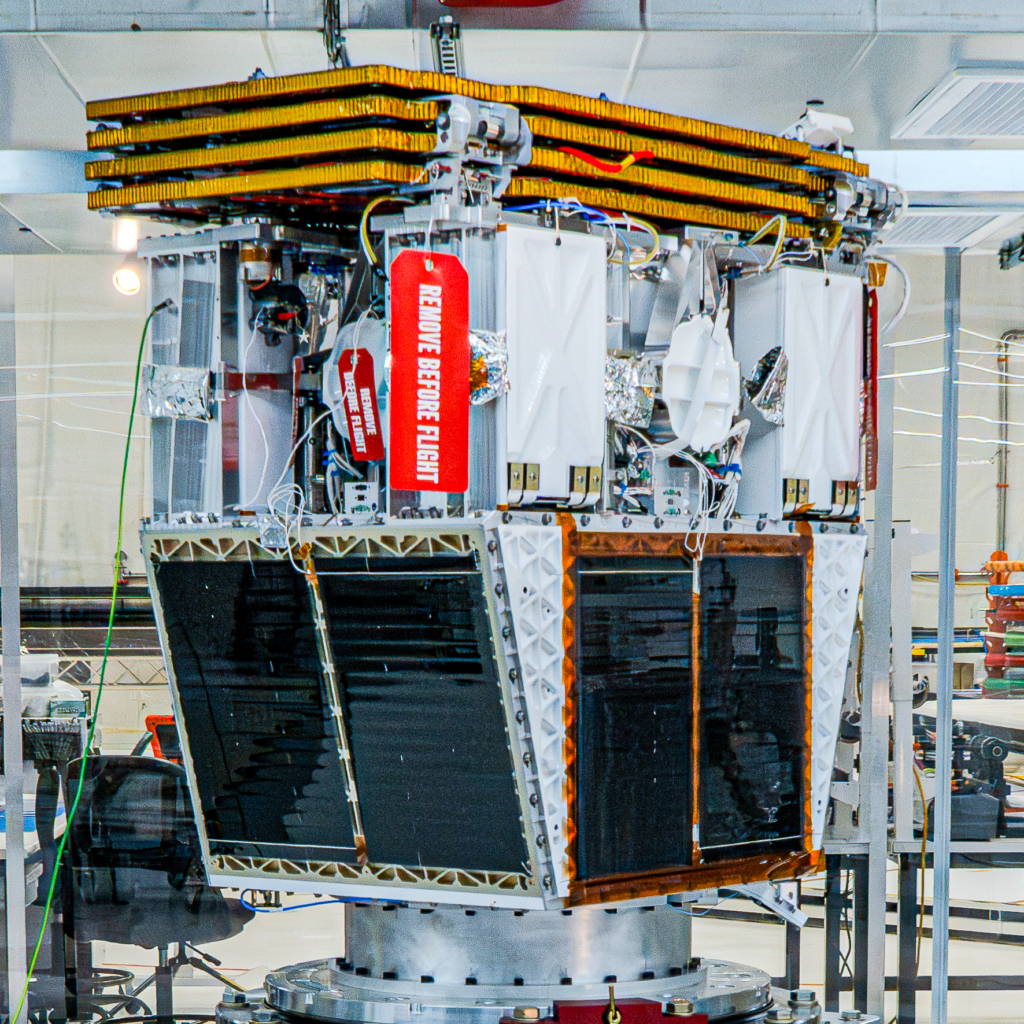
The spacecraft is intended to demonstrate whether reflected sunlight can be controlled accurately enough to support commercial applications, including extending the operating hours of solar farms after sunset.
The FCC authorisation, issued on July 9, covers a single demonstration satellite, not the much larger constellation envisaged by the company.
Four environmental organisations subsequently challenged the decision, arguing that the regulator had failed to consider the potential consequences for astronomy, wildlife and public safety.
DarkSky International, Environment America, the American Bird Conservancy and Public Employees for Environmental Responsibility asked the FCC to reconsider the approval.
Jan Hasselman, a senior attorney at Earthjustice, which represents the groups, delivered a particularly sharp assessment in comments to The Guardian.
“This is an idiotic project,” he said, warning of unresolved questions about its environmental effects.
He argued that the natural cycle of daylight and darkness is fundamental to life on Earth and that large-scale deployment of orbital mirrors could fundamentally alter the night sky.
The environmental groups want the FCC to conduct a broader review before allowing the technology to proceed.
Astronomers warn of damage to observations
Astronomers are particularly concerned about the brightness of the proposed reflectors.
Unlike conventional satellites, which unintentionally reflect sunlight as they pass overhead, Reflect Orbital’s spacecraft would be designed specifically to direct light towards Earth.
Scientists fear that the resulting glare could overwhelm sensitive telescope detectors and compromise observations of faint objects.
Samantha Lawler, an associate professor of astronomy at the University of Regina, told NBC News in August that the effects could extend far beyond a satellite’s intended illumination area.
“They have made no indication of how they will coordinate with observatories,” she said. “That could destroy a camera on a telescope. It can also damage people’s eyes.”
Environmental campaigners have raised similar concerns about migratory birds, insects and other nocturnal wildlife that depend on natural darkness for navigation, feeding and reproduction.
There is also the question of who gets to decide where reflected sunlight falls.
A study discussed in an October 26 article by astronomer Richard de Grijs in The Conversation suggests that atmospheric scattering could spread illumination well beyond the intended target. The modelling concerned a proposed larger reflector rather than Earendil-1 itself.
Even communities outside a paying customer’s property could therefore experience additional night-time brightness.
India enters the debate as launch plans advance
On October 14, Reflect Orbital announced that it had purchased two dedicated launches from Indian private space company Skyroot Aerospace to deploy future spacecraft. The first mission will use Skyroot’s Vikram-1 rocket, while the second will fly aboard the more powerful Vikram-1U, which remains under development. The company said the agreement would provide additional launch capacity alongside its planned missions from the United States.

“There’s a real launch capacity shortage right now. We’re excited to work with a new launch provider, Skyroot, to help ensure access to space,” said Reflect Orbital co-founder and CEO Ben Nowack. He added that the company would continue working with astronomers, local communities and regulators as it developed the technology.
Skyroot co-founder and CEO Pawan Kumar Chandana described the agreement as an opportunity to support an ambitious international space project. “We are pleased to partner with Ben and the Reflect Orbital team across two dedicated launches, providing schedule certainty and mission flexibility,” he said.
While the American regulator authorised Earendil-1’s radio communications and satellite operations, the question of who should approve deliberate illumination of the Earth’s surface remains unresolved.
The FCC authorisation specifies an operating altitude of approximately 625 kilometres, but does not constitute a general licence to illuminate locations anywhere in the world.
The proposed Indian launches also raise questions about responsibility when a US-owned satellite, launched from India, directs light towards another country’s territory.
Although a launch has been discussed for the end of 2026, the latest reporting from The Guardian places the initial orbital demonstration in 2027. A firm launch date remains unconfirmed.
Company defends its technology
Reflect Orbital maintains that its technology could help emergency responders, increase renewable electricity generation and reduce dependence on fossil fuels.
It has also sought to reassure critics that sensitive locations would be protected.
“We welcome oversight and want to play a role in shaping it,” a company spokesperson told The Guardian.