Retiring Indian Air Force chief flies final sortie in the same Kiran trainer he first flew in 1984

5 min read
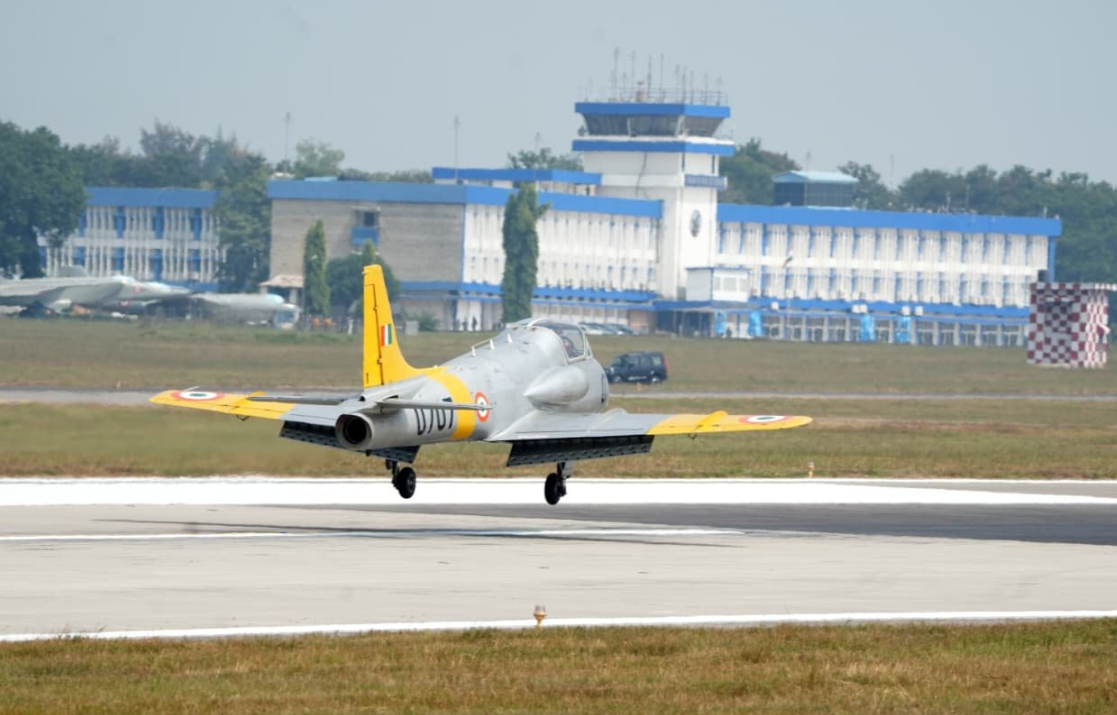
For Indian Air Force chief Air Chief Marshal AP Singh, the final flight of his military career was not in a frontline fighter jet, but in the modest training aircraft in which he first learnt to fly more than four decades ago.
On 20 October, Singh returned to the Air Force Academy at Dundigal, near Hyderabad in central India, and climbed aboard an HJT-16 Kiran Mk-1 trainer with the man who had taught him to fly, retired Wing Commander VS Kochar.
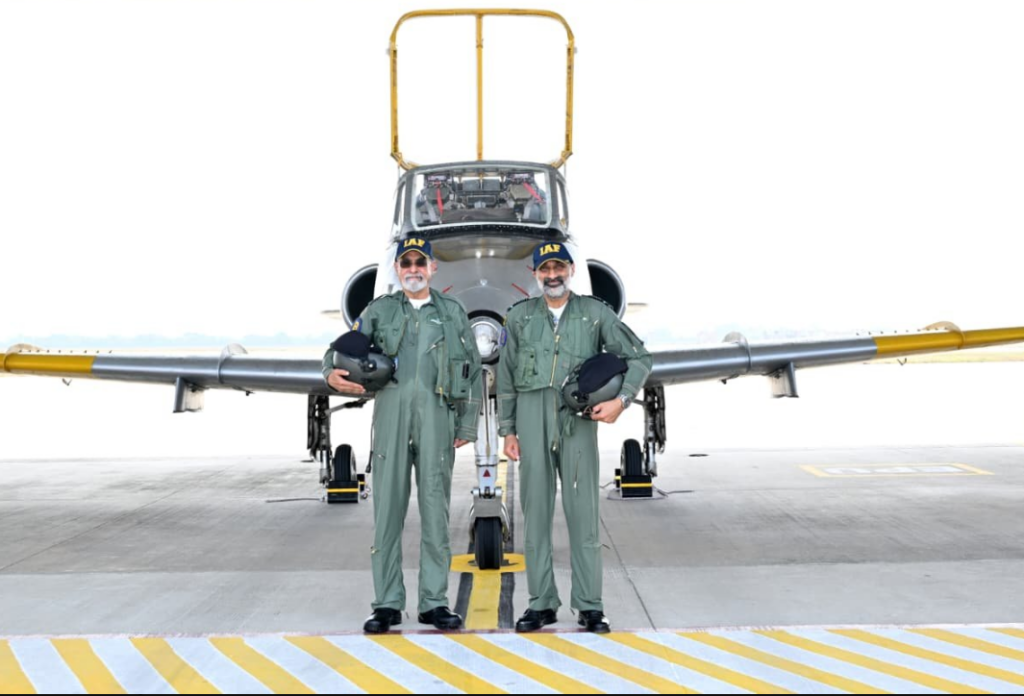
The 55-minute sortie brought together the same instructor, the same aircraft type and the same training establishment where Singh had taken his first flying lesson on 28 January 1984.
There was even a familiar aircraft awaiting him. The Kiran used for the flight carried the registration U-707.
Singh, who is due to retire as Chief of the Air Staff on 31 October, had wanted his final sortie in uniform to take him back to where his flying career began.
“I think I must be the only chief who’s retiring while the basic aircraft he flew is still serving.”
For a pilot who has spent more than four decades flying military aircraft, the occasion was as much about the instructor sitting beside him as the aircraft itself.
“I’m very grateful to my instructor, VS Kochar sir, who taught me flying in the beginning in this place itself,” Singh said.
“So I just wanted the circle to be complete. And I did my first sortie on 28 January 1984, in this very place with him, and today I did my last sortie in uniform with him in the same aircraft.”
The instructor who started it all
Flying instructors occupy a special place in military aviation. Long before a pilot learns to operate a fighter aircraft, it is an instructor who introduces them to the fundamentals of flight, teaches them to recognise mistakes and develops the judgement needed to handle an aircraft safely.
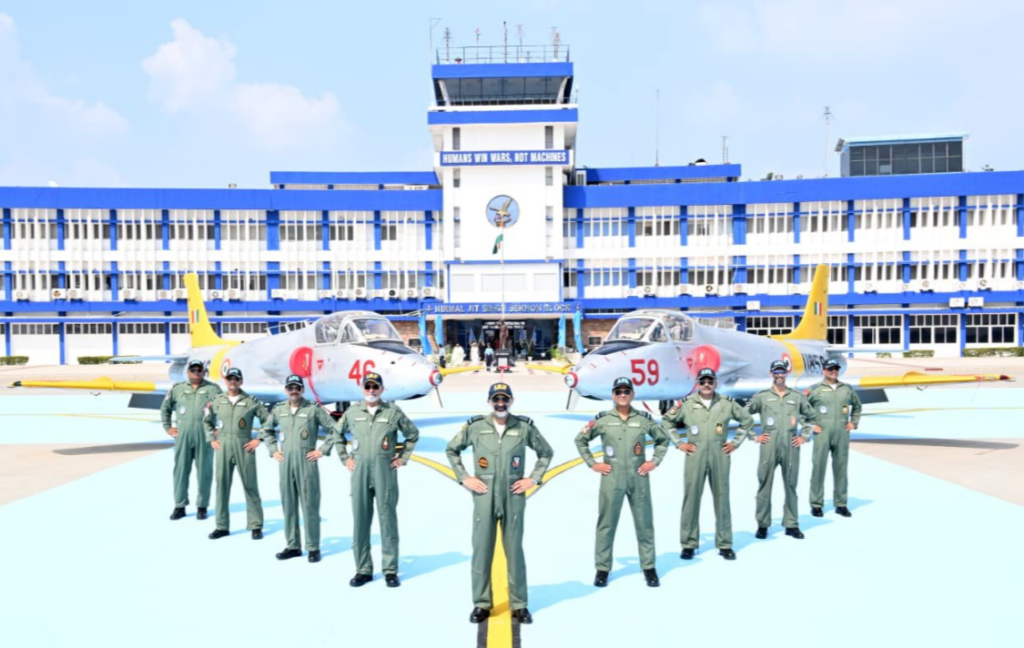
For Singh, that instructor was Kochar, who was back in the cockpit with his former pupil after 42 years.
The reunion was equally meaningful for the retired officer.
Kochar, now 73, described Singh as his “brightest pupil ever” and the “best chief”, according to comments reported by the Press Trust of India. He said getting another flight with his former student was a dream come true for him as well.
The two men had returned to the academy in very different circumstances from their first flight together. In 1984, Singh was a young trainee beginning his military flying career. This time, he was returning as the head of the Indian Air Force.
Their flight ended with a ceremonial water cannon salute, with jets of water forming an arch over the aircraft as it returned.
The IAF described the occasion as a tribute to the veterans and flying instructors who have shaped generations of its pilots.
Why the Kiran matters
Developed by Hindustan Aeronautics Limited (HAL), the Kiran is an Indian-designed, single-engine jet trainer that first flew in 1964. It was introduced to prepare pilots for the transition from basic flying instruction to more demanding military aircraft.
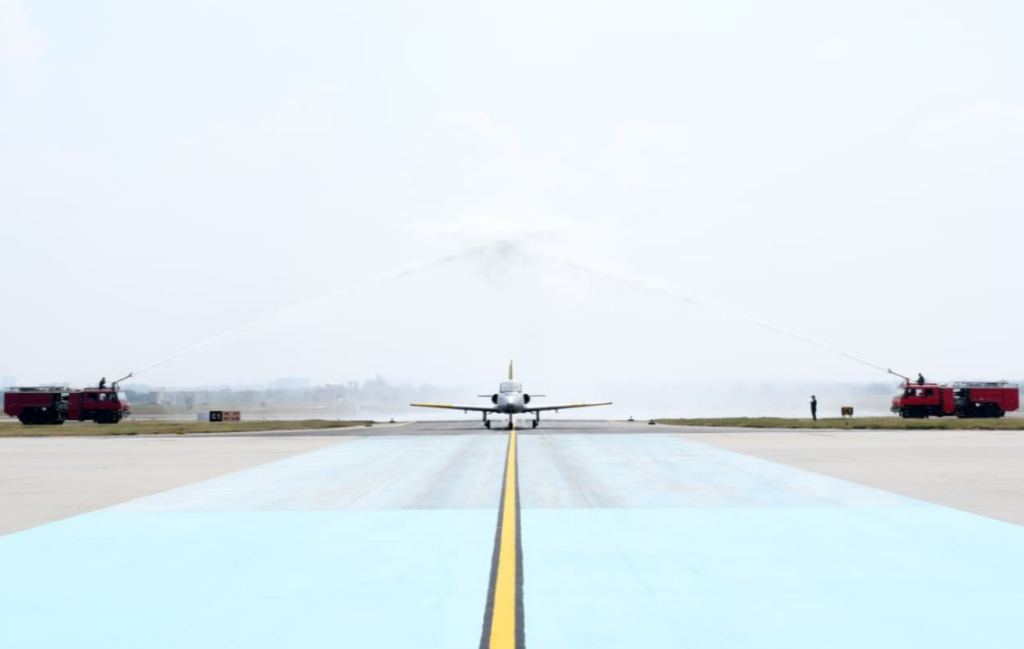
The HJT-16 Kiran has been one of the most recognisable aircraft in Indian military flying training.
Its two-seat cockpit allows an instructor and student to fly together, making it particularly suited to teaching jet handling, instrument flying, aerobatics and formation flying.
Unlike modern combat aircraft, the Kiran was not designed around sophisticated sensors, digital displays or advanced weapons. Its principal purpose was to teach pilots how to fly a jet and develop the skills needed for subsequent operational training.
Over the decades, the aircraft became a familiar sight at Indian Air Force training establishments and served as a stepping stone for generations of fighter pilots.
It was also used by the IAF’s Surya Kiran aerobatic team before the team transitioned to the Hawk advanced jet trainer.
The Kiran’s continued service makes Singh’s final sortie particularly unusual. The aircraft type on which he began flying in 1984 was still available for him to fly in October 2026, more than six decades after the design’s first flight.
The IAF has progressively modernised its training fleet with newer aircraft, including the Pilatus PC-7 Mk II basic trainer and the BAE Systems Hawk advanced jet trainer.
However, the Kiran has remained part of the service’s training history, linking successive generations of pilots.
From trainee pilot to air force chief
Singh graduated from the Air Force Academy in 1984, receiving the Sword of Honour, an award recognising outstanding performance during training.
He was commissioned into the fighter stream of the IAF in December that year.
Over the following decades, he qualified as a flying instructor and experimental test pilot, accumulating several thousand hours of flying experience across fixed-wing and rotary-wing aircraft.
His career eventually took him to the highest appointment in the service, becoming Chief of the Air Staff in September 2024.
The return to Dundigal came just over a week after another significant flight.
On 12 October, Singh flew his final fighter aircraft sortie in an indigenous Tejas light combat aircraft at Jodhpur Air Force Station during Exercise Tarang Shakti.
That flight marked the conclusion of his time flying frontline fighter aircraft. The Kiran sortie, however, was intended to close his flying career in uniform on a more personal note.