Anduril YFQ-44 flies with Shield AI’s Hivemind in US Air Force collaborative combat aircraft test
The US Air Force’s effort to field a new generation of semi-autonomous combat aircraft has crossed an important technical milestone, with

6 min read
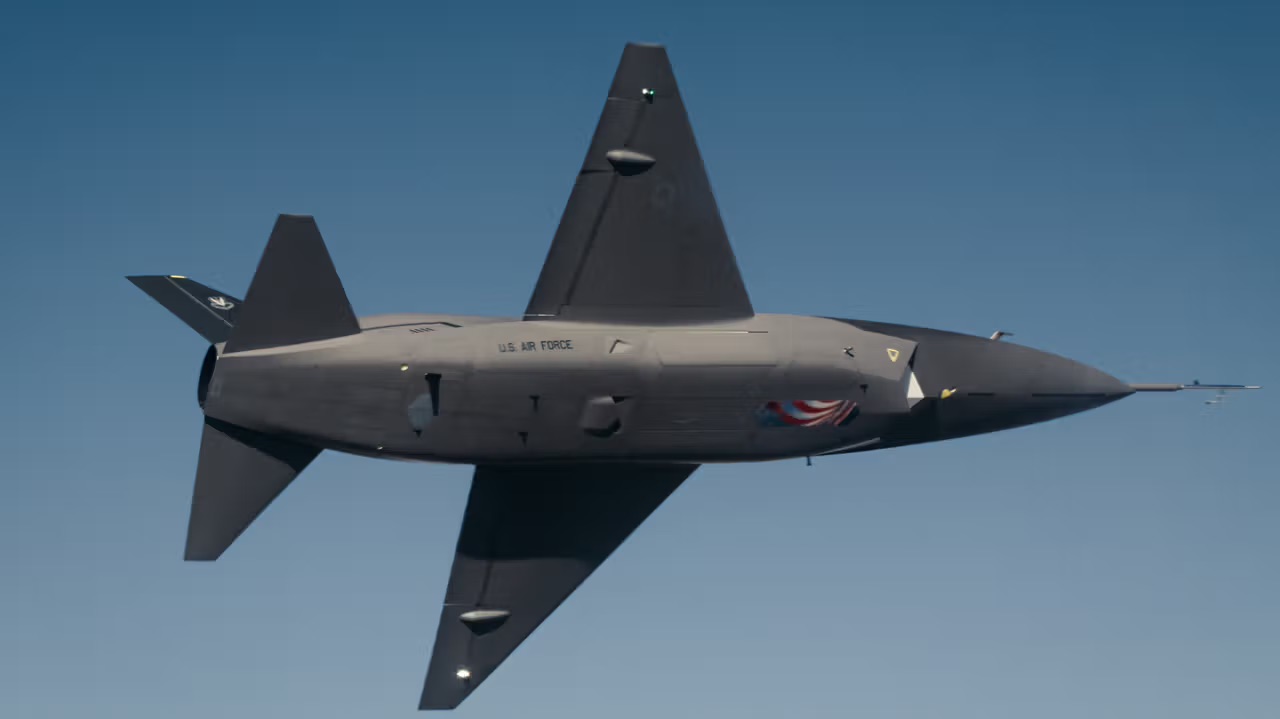
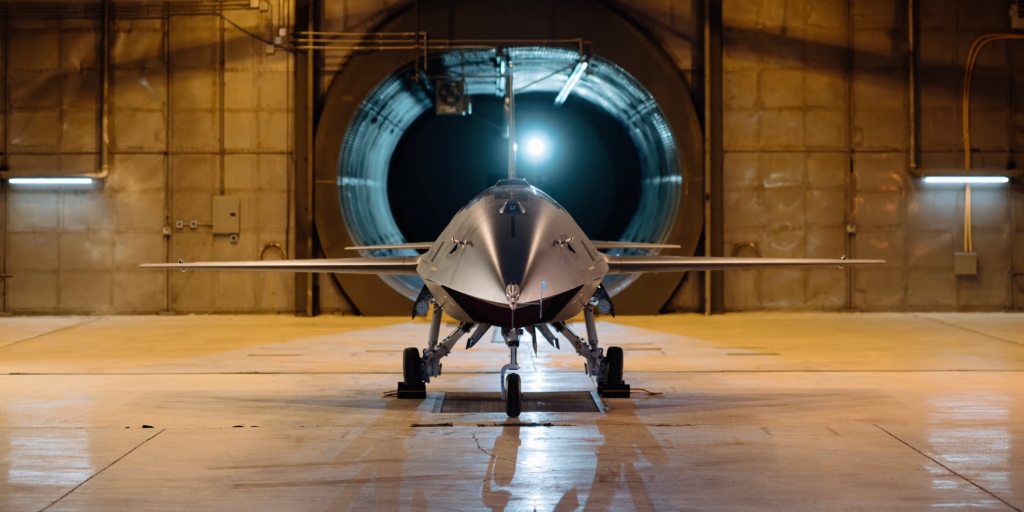
The US Air Force’s effort to field a new generation of semi-autonomous combat aircraft has crossed an important technical milestone, with Anduril’s YFQ-44A prototype successfully flying with two different mission-autonomy software systems during the same sortie.
The test saw the aircraft complete mission tasks under Shield AI’s Hivemind autonomy stack before switching mid-flight to Anduril’s Lattice autonomy system, repeating the same flight objectives before returning safely to base.
For the Air Force, the exercise demonstrated something central to the Collaborative Combat Aircraft (CCA) concept: a combat aircraft able to operate with interchangeable autonomy software rather than being tied to a single vendor’s architecture.
The milestone comes as the service moves the CCA programme steadily from concept and experimentation toward developmental testing, weapons integration and eventual production decisions expected later this decade.
YFQ-44A Fury switches to Shield AI’s Hivemind mid-flight
During the sortie, the YFQ-44A took off and autonomously navigated to a designated point where Shield AI’s Hivemind software was activated to execute a series of mission-representative test points.
Once those test cards were complete, the aircraft transitioned to Anduril’s Lattice autonomy system, which then carried out the same manoeuvres.
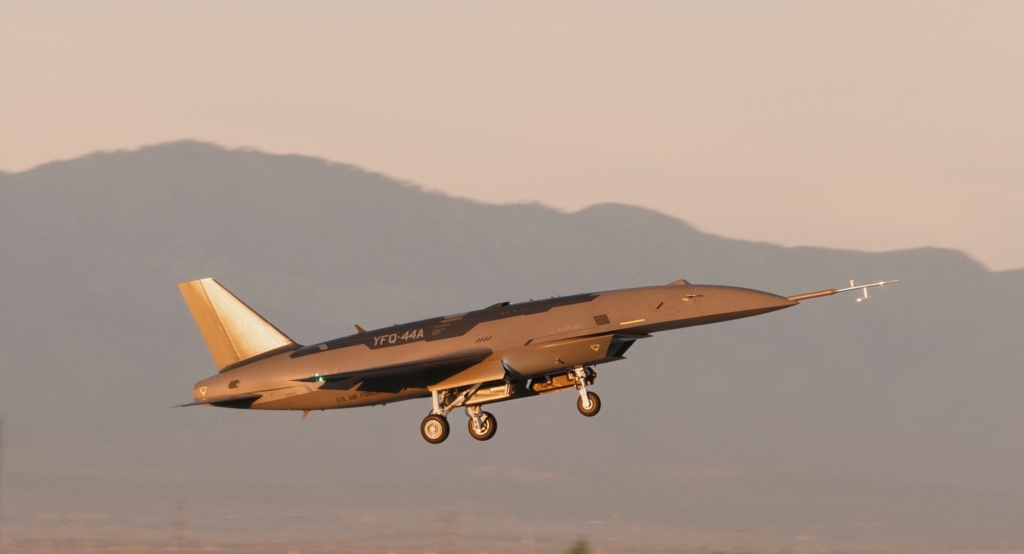
Switching between autonomy stacks in a single flight was made possible by the Autonomy Government Reference Architecture (A-GRA), a software framework developed by the Air Force to standardise interfaces between aircraft systems and autonomy software.
The architecture is intended to ensure that multiple companies can compete to provide autonomy capabilities for the same aircraft. By avoiding proprietary software lock-in, the Air Force hopes to accelerate innovation while retaining the ability to introduce improved algorithms or capabilities without redesigning the aircraft itself.
Engineers from Anduril and Shield AI spent several months integrating Hivemind with the aircraft’s flight-control software before the test flight. The system underwent extensive validation through software-in-the-loop simulations and hardware-in-the-loop test events before being cleared for airborne evaluation.
Anduril accelerates YFQ-44A development under US Air Force CCA programme
The latest flight marks another step in what has been an unusually fast development timeline.
The Air Force selected Anduril in April 2024 to build prototype aircraft for the programme’s first development phase. Just 556 days later the company achieved the aircraft’s first semi-autonomous flight.
The aircraft itself is based on the Fury unmanned platform developed by Blue Force Technologies, which Anduril acquired in 2023 with the aim of adapting it into a high-performance multi-mission aircraft suitable for the CCA role.
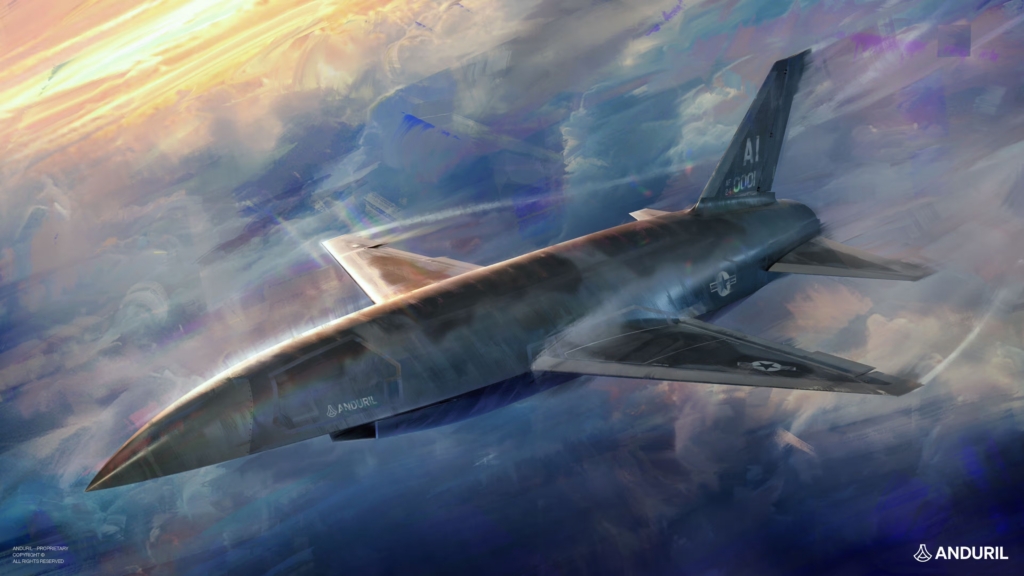
In March 2025 the Air Force formally designated the prototype as the YFQ-44A. The aircraft completed its first flight later that year, entering a test campaign focused on autonomy integration, flight performance and mission systems.
Anduril has also begun preparing for potential production by announcing plans to build the aircraft at a new manufacturing facility in Columbus, Ohio.
Weapons integration begins on US Air Force collaborative combat aircraft
Alongside autonomy development, the Air Force has begun the next stage of developmental testing: integrating weapons with the aircraft.
Recent flights have included captive-carry tests using inert munitions. These tests allow engineers to evaluate how the aircraft performs while carrying external stores and to verify structural integrity, aerodynamic behaviour and safe separation characteristics.
“We are following the same detailed approach used in every other aircraft developmental test programme to validate structural performance, flight characteristics and safe separation,” said Air Force Chief of Staff Gen. Ken Wilsbach.
“This ensures the CCA can safely integrate inert weapons before future employment.”
The tests are strictly developmental at this stage. Inert weapons are used so that engineers and test teams can assess flight characteristics and integration risks in a controlled environment before progressing toward live weapons employment.
How the US Air Force collaborative combat aircraft will enable human-machine teaming
The CCA programme represents a major shift in how the Air Force intends to conduct air combat in the future.
Rather than replacing crewed aircraft, CCAs are designed to operate alongside them as part of a human-machine team. The jet-powered unmanned aircraft could carry sensors, electronic warfare payloads or weapons, performing missions that would otherwise expose human pilots to higher levels of risk.
Potential roles include air-to-air combat support, strike missions, electronic warfare, targeting and intelligence, surveillance and reconnaissance.

The aircraft would take direction from human pilots but rely on artificial intelligence to perform tasks autonomously, allowing a small number of crewed fighters to control multiple uncrewed wingmen.
According to Air Force planners, this approach could significantly increase combat mass while reducing costs.
Modern fighter aircraft have become increasingly expensive to develop and operate, contributing to a steady reduction in fleet size since the 1990s. Officials estimate that CCAs could cost roughly one-third as much as a traditional fighter aircraft.
Lower costs could allow the Air Force to field larger numbers of aircraft, complicating an adversary’s air-defence calculations.
CCA programme’s role in US Air Force Next-Generation Air Dominance strategy
The programme forms part of the broader Next-Generation Air Dominance (NGAD) initiative, which aims to develop a family of systems centred on a future crewed fighter supported by sensors, weapons and uncrewed aircraft.
Within that framework, CCAs would accompany advanced fighters into contested airspace, helping overwhelm enemy defences and extending the reach of crewed platforms.

“CCA is a critical part of a larger, integrated system-of-systems that will give our warfighters the overwhelming advantage,” Wilsbach said. “This programme is about delivering a network of effects that will sense, strike and shield our forces in contested environments.”
The concept also aligns with the Air Force’s Agile Combat Employment doctrine, which emphasises dispersing aircraft across smaller operating locations rather than concentrating them at large bases.
Operating from such locations, CCAs could provide additional sensors or long-range weapons while reducing risk to human pilots.
YFQ-44A and YFQ-42A compete for US Air Force CCA production decision
The YFQ-44A is one of two aircraft currently competing in the programme’s first development phase.
General Atomics Aeronautical Systems is developing a rival platform designated the YFQ-42A, derived from the company’s experimental XQ-67A unmanned aircraft.
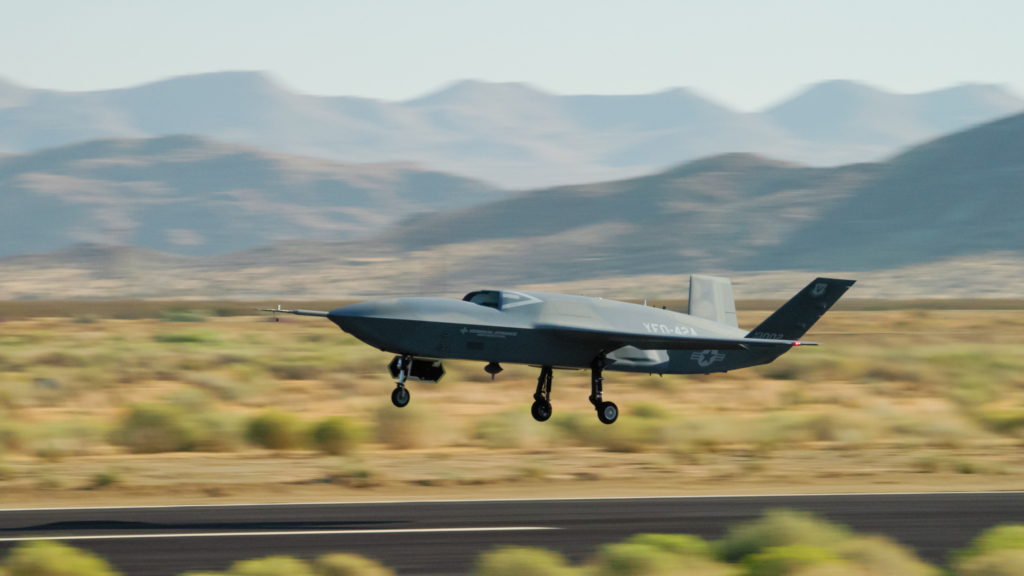
Both aircraft are undergoing developmental testing in California and operational evaluation with an Experimental Operations Unit at Nellis Air Force Base in Nevada.
Over the coming year, the Air Force plans to conduct further demonstrations that will see the aircraft operating alongside crewed fighters.
Col. Timothy Helfrich, portfolio acquisition executive for fighters and advanced aircraft, said the service will soon reach a key decision point.
“We’re going to be doing lots of demonstrations and testing, whether it’s with weapons, with quarterbacks, coming up this year,” Helfrich said. “One of the big events will be making that decision to go into what we call engineering and manufacturing development light and production.”
That decision, which is expected later this year, will determine which aircraft and autonomy systems move forward into the first production phase of the programme.
US Air Force moves toward large-scale autonomous combat aircraft fleet
The Air Force has suggested that it could eventually acquire around 1,000 collaborative combat aircraft, pairing two autonomous systems with each advanced crewed fighter.
Funding for the effort has already begun to increase. Congress allocated hundreds of millions of dollars for research and development in recent budgets, with additional funding requests submitted for the coming fiscal year.
For now, however, the focus remains on proving the technology.
The YFQ-44A’s latest flight, demonstrating two competing autonomy systems in a single mission, may appear incremental. Yet it illustrates a fundamental shift in how future combat aircraft will be developed.
Featured image: Anduril